

The Tour de France Femmes 2027 route has been unveiled today alongside the men’s route, with nine stages starting in Leeds on Friday 30th July and coming to a dramatic finale on the legendary Puy de Dôme on Saturday 7th August.
Three stages in England get things underway including a central London team time-trial – a first for the Tour de France Femmes, before heading across the Channel, where a couple of punchy stages and a sprint await before the climbs come calling.
Two of the three stages in the mountains are summit finishes, including the enormous finale on the steep slopes of the Puy de Dôme, which finishes off a stage that packs in nearly 4,000m of elevation.
Tour de France Femmes 2027 key information
 A.S.O./Billy Ceusters
Dates: Friday 30th July – Saturday 7th August
Grand Départ: Leeds, England
Finale: Puy de Dôme, France
Total kilometres: 1,156km
Total elevation gain: 17,665m
Total prize money: €250,000
Live television coverage: TNT Sports, HBO Max, TG4, SBS, Sky Sport, NBC/Peacock, FloBikes, France Télévisions, ARD
2026 winner: Demi Vollering (FDJ United-Suez)
Most overall wins: 2 – Demi Vollering (FDJ United-Suez)
Tour de France Femmes 2027 route
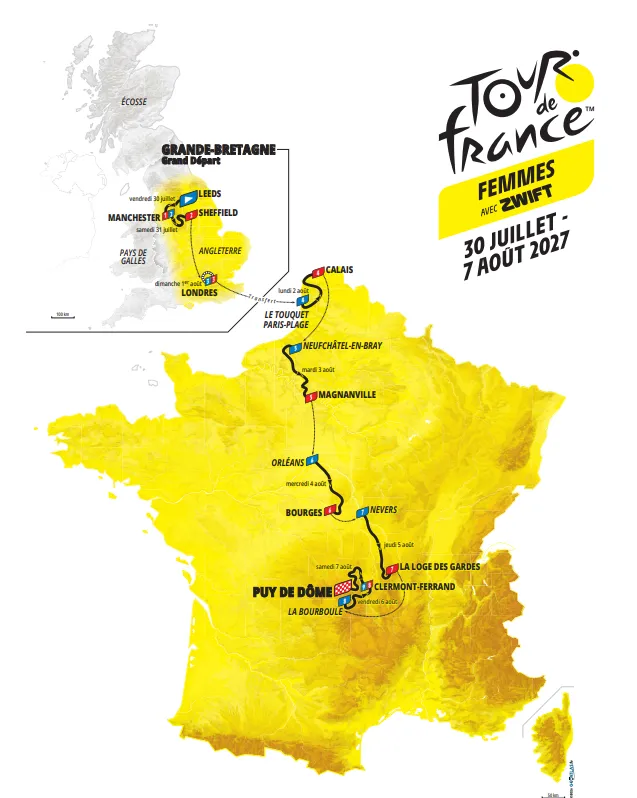
The 2026 Tour de France Femmes starts in Leeds, which welcomed the men’s peloton for the 2014 Grand Départ. But while that day culminated in a sprint at Harrogate, this race will see the women battle it out in Manchester to decide the first yellow jersey of the race. With Manchester to Sheffield on Stage 2 comes the hills, including several British classics, and that should see the maillot jaune change hands straight away.
Stage 3 hosts the first team time-trial in the Tour de France Femmes’s short history. There will be no individual TT in 2027, so the specialists will have to rally their teams to make the most of the 18km route and those GC contenders who are weaker against the clock will be hoping their teammates can keep them in the fight.
After that it’s over to France for Stage 4 for what should be a sprint, but there are enough hills for an attack to get away. Stage 5 is a true hilly day out, with six climbs at the tail-end of the route plus an uphill finish. There’ll be chance for a breather the following day, which is flat as a pancake.
The mountains come calling on Stage 7, which features the first of two proper summit finishes on La Loge des Gardes, where climbing legs should still be relatively fresh. Stage 8 sees the road to Clermont-Ferrand packed with ascents with six categorised climbs before a downhill run into town for the finish.
Stage 9 is the jewel in the crown of the 2027 Tour de France Femmes. It’s the longest day of the race, with elevation topping over 3,800m, with climbing straight out the gate. Seven categorised climbs will soften the legs before the explosive last dance on the legendary slopes of the Puy de Dôme volcano.
Tour de France Femmes 2027 stage-by-stage preview
Stage 1: Friday 30th July, Leeds – Manchester, 86km
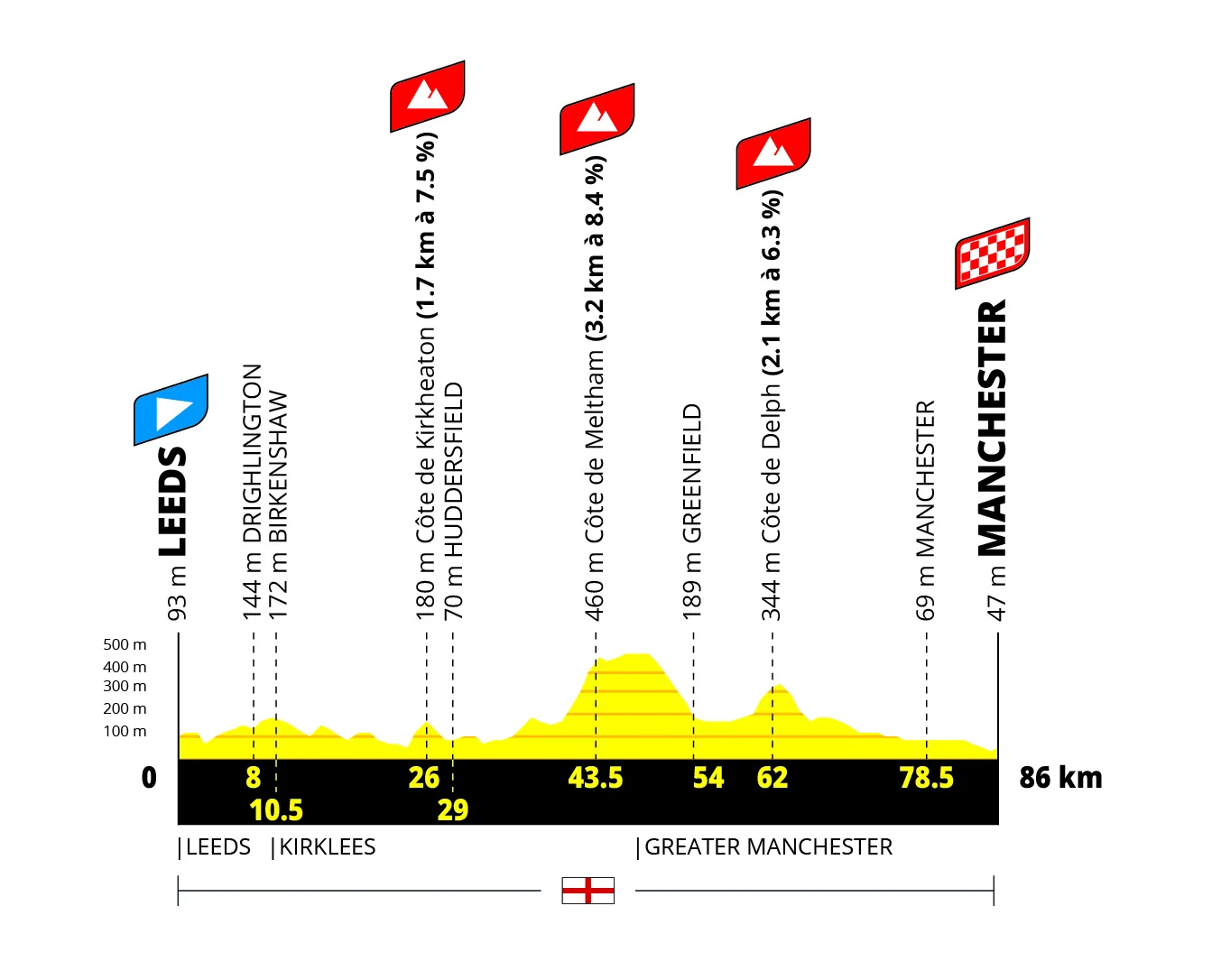
The Tour de France Femmes begins in Leeds in 2027. Home to cycling greats including Millie Robinson, who lived there in 1955 when she won the first ever women’s Tour de France, Leeds hosted the men’s Tour for the start of the race in 2014, and will host the Tour de France Femmes’s UK debut next year.
After rolling out into Yorkshire a trio of Francified climbs will keep riders on their toes as they leave the county to finish the first stage in Manchester, where it will almost certainly be a bunch sprint.
Stage 2: Saturday 31st July, Manchester – Sheffield, 154km
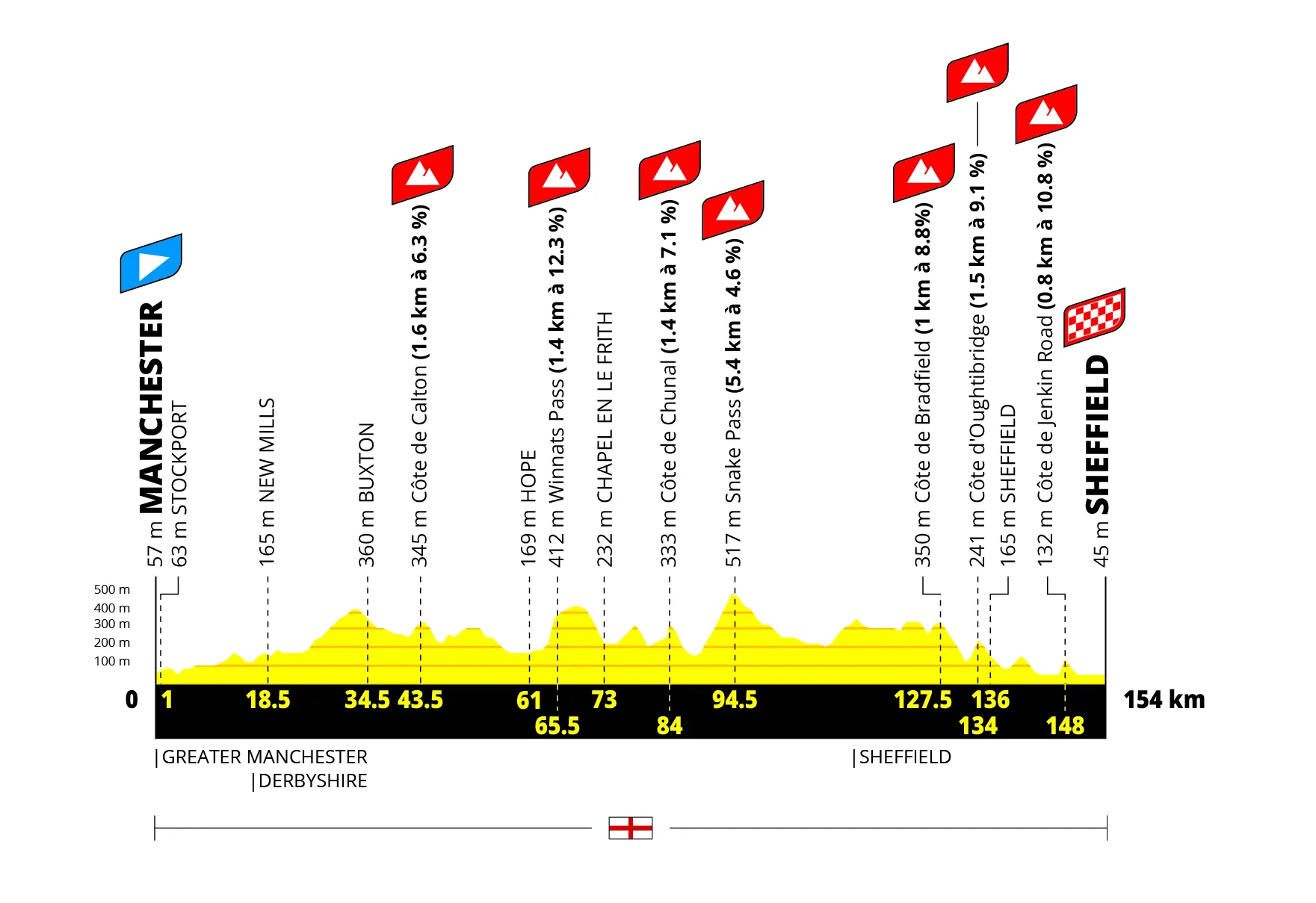
The race stays in Manchester overnight to get an early night before a hectic Stage 2 to Sheffield via a selection of classic British hills. Staples of the hill climb scene in Winnats Pass and Snake Pass – which not even the Tour de France dares to rename – will split the bunch, and a trio of climbs will make the selection for the finale in Sheffield. Even Lorena Wiebes will struggle to hold onto yellow on a day like this.
Stage 3: Sunday 1st August, London – London, 18km (TTT)
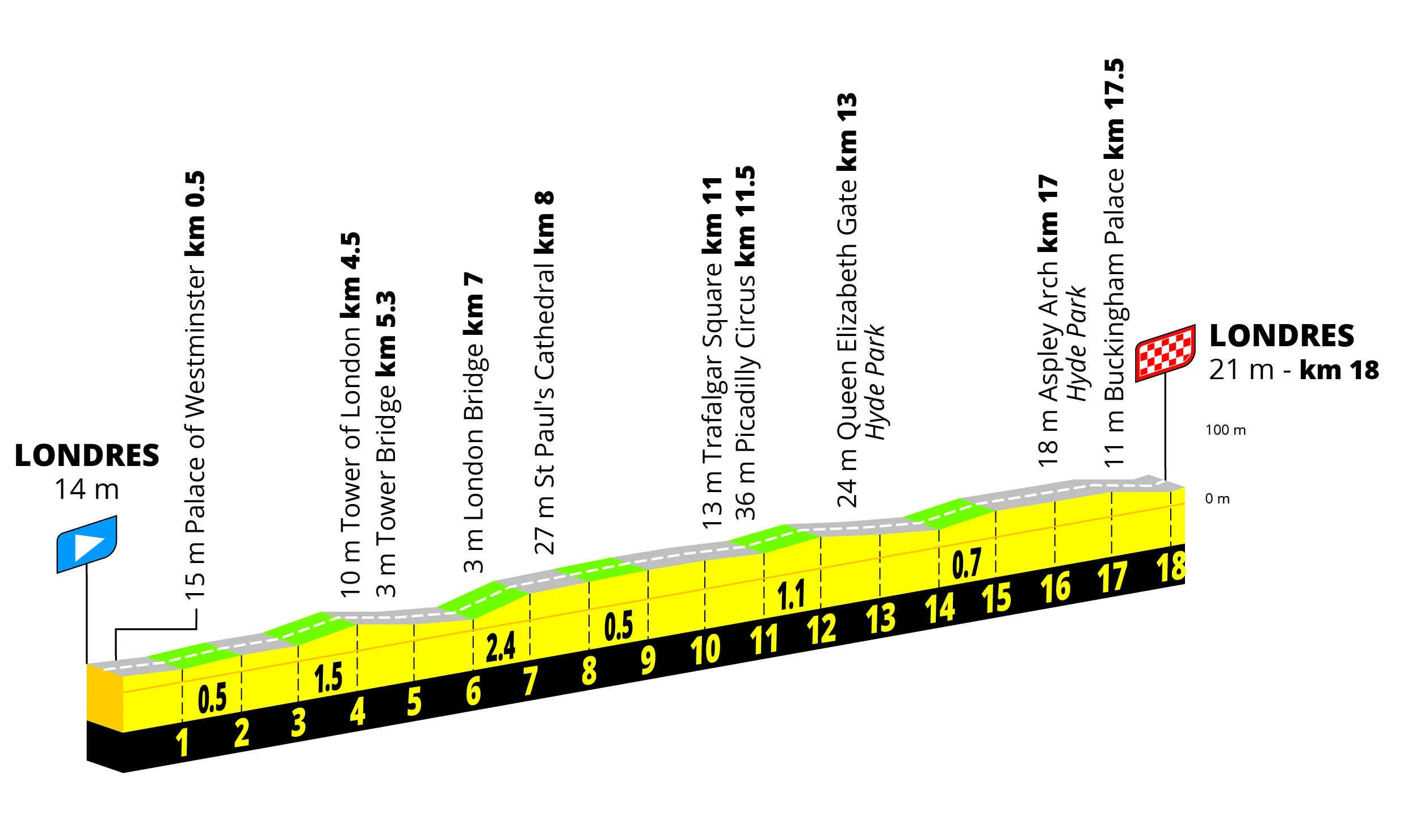
On Stage 3, the Tour de France Femmes’s first ever team time-trial hits central London, where they should be met by big crowds on the 18km route, which takes in pretty much every landmark possible on the way to the finish on the Mall.
Stage 4: Monday 2nd August, Le Touquet-Paris-Plage – Calais, 123km
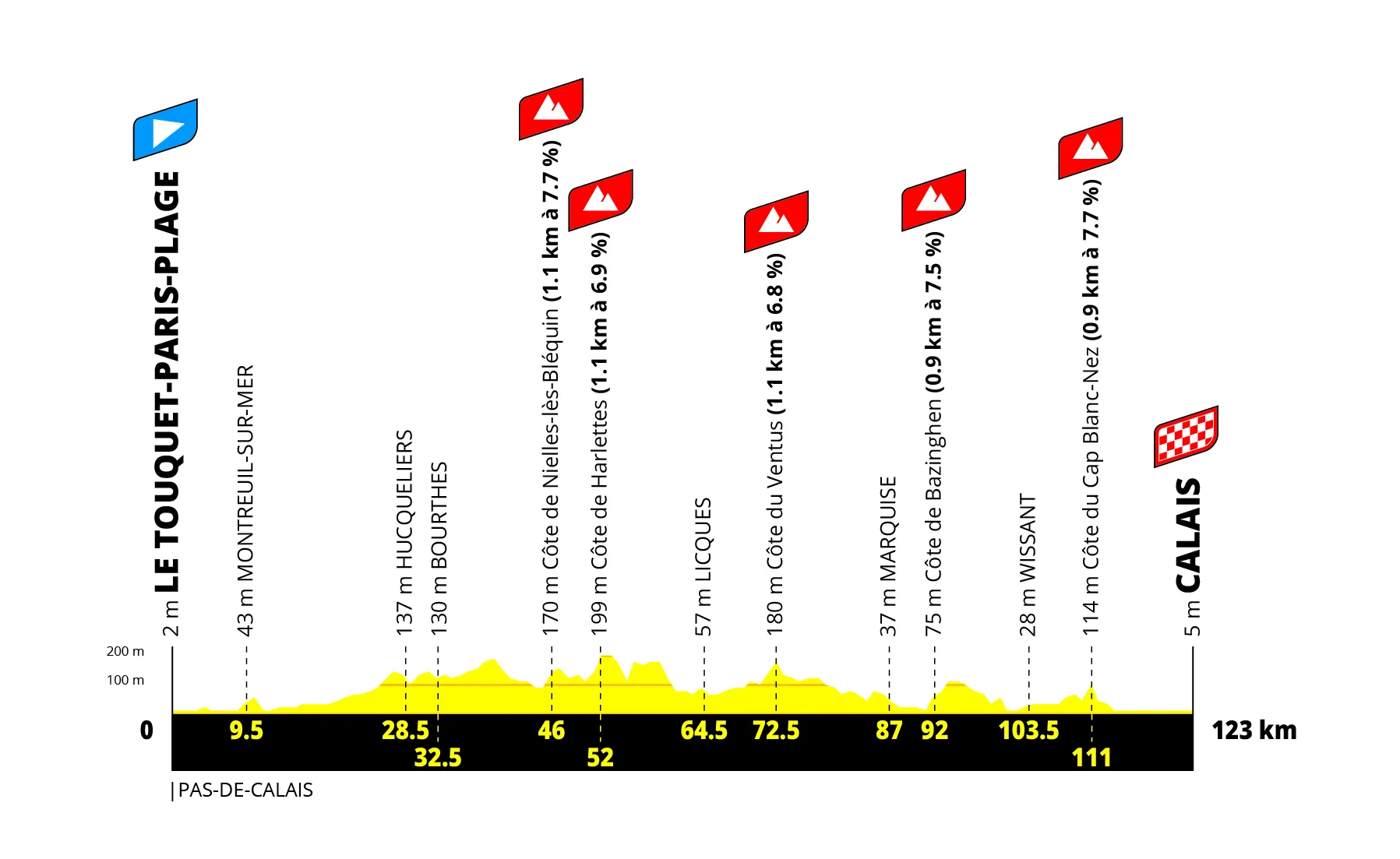
Stage 4 begins in the same location on the north coast of France as Stage 4 in the 2014 men’s Tour, when Marcel Kittel won the sprint finish.
Riders will navigate a series of short but punchy hills towards Calais, with the final climb the Côte du Cap Blanc-Nez, which featured in the 2022 men’s Tour, where Wout van Aert took a solo win in the yellow jersey. With that in mind, this could well see a split bunch reach Calais, but teams will be well aware of what could happen, so don’t rule out a sprint.
Stage 5: Tuesday 3rd August, Neufchâtel-en-Bray – Magnanville, 161km
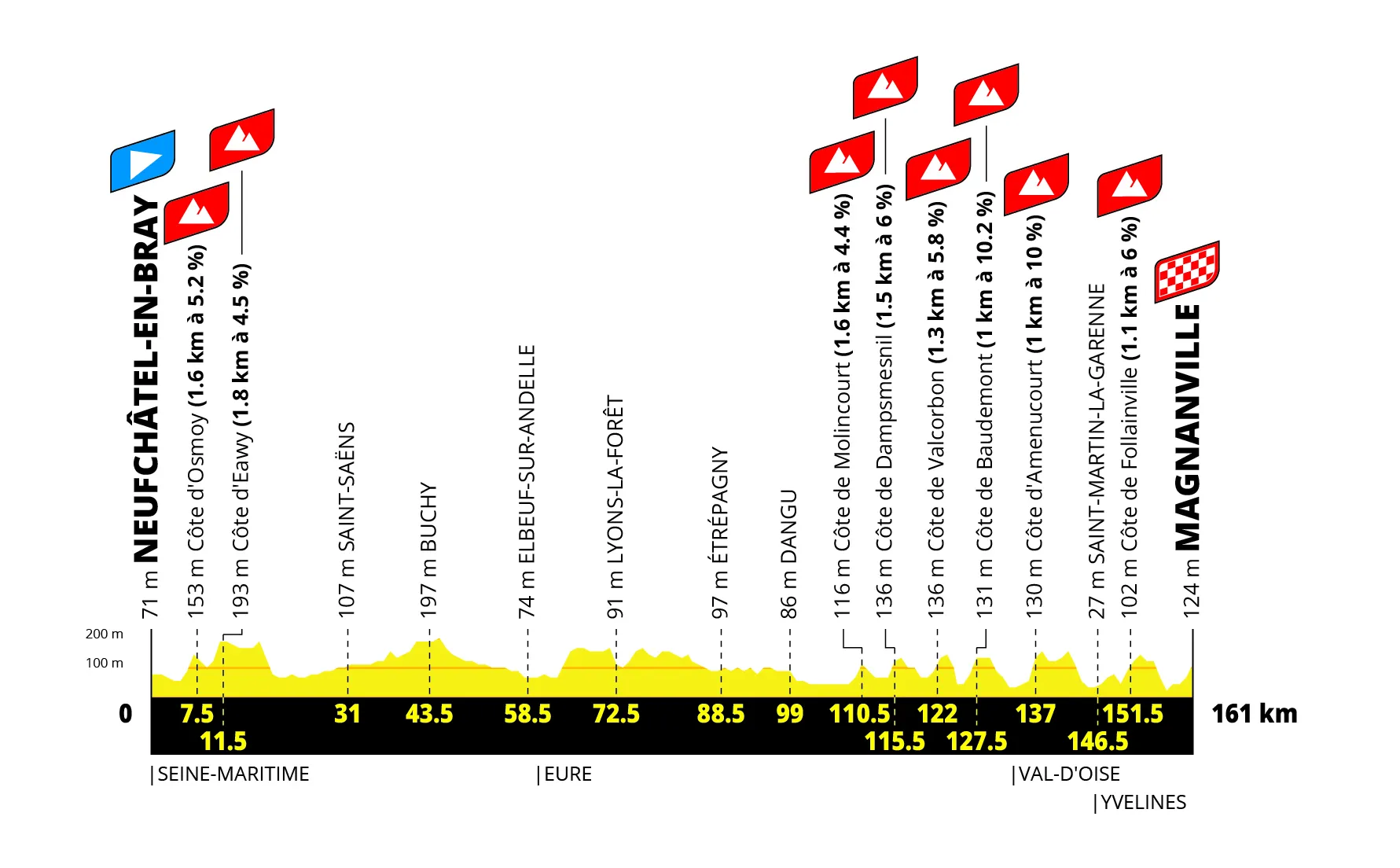
Eight categorised climbs are packed into the Classics-like Stage 5, which will almost certainly see a very select group reach Magnanville for a punchy uphill finish. They’re far from the hardest climbs in the race, but all just about tick over a kilometre in length and hide stinging gradients, including a couple average north of 10%.
Stage 6: Wednesday 4th August, Orléans – Bourges, 138km
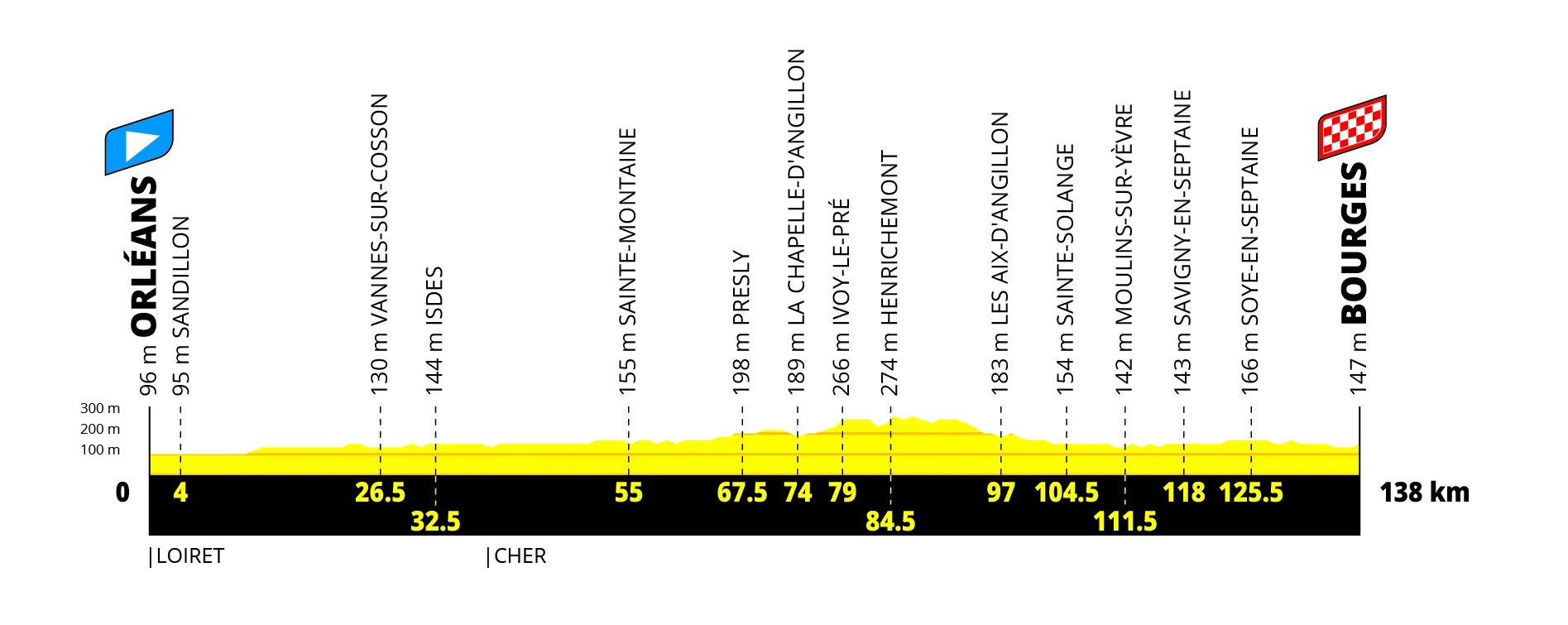
At long last, Stage 6 provides a certified sprint stage, and it will be the last one as the mountains are coming. Given the lack of flat days, this could be decisive for the green jersey competition.
Stage 7: Thursday 5th August, Nevers – La Loge des Gardes, 155km
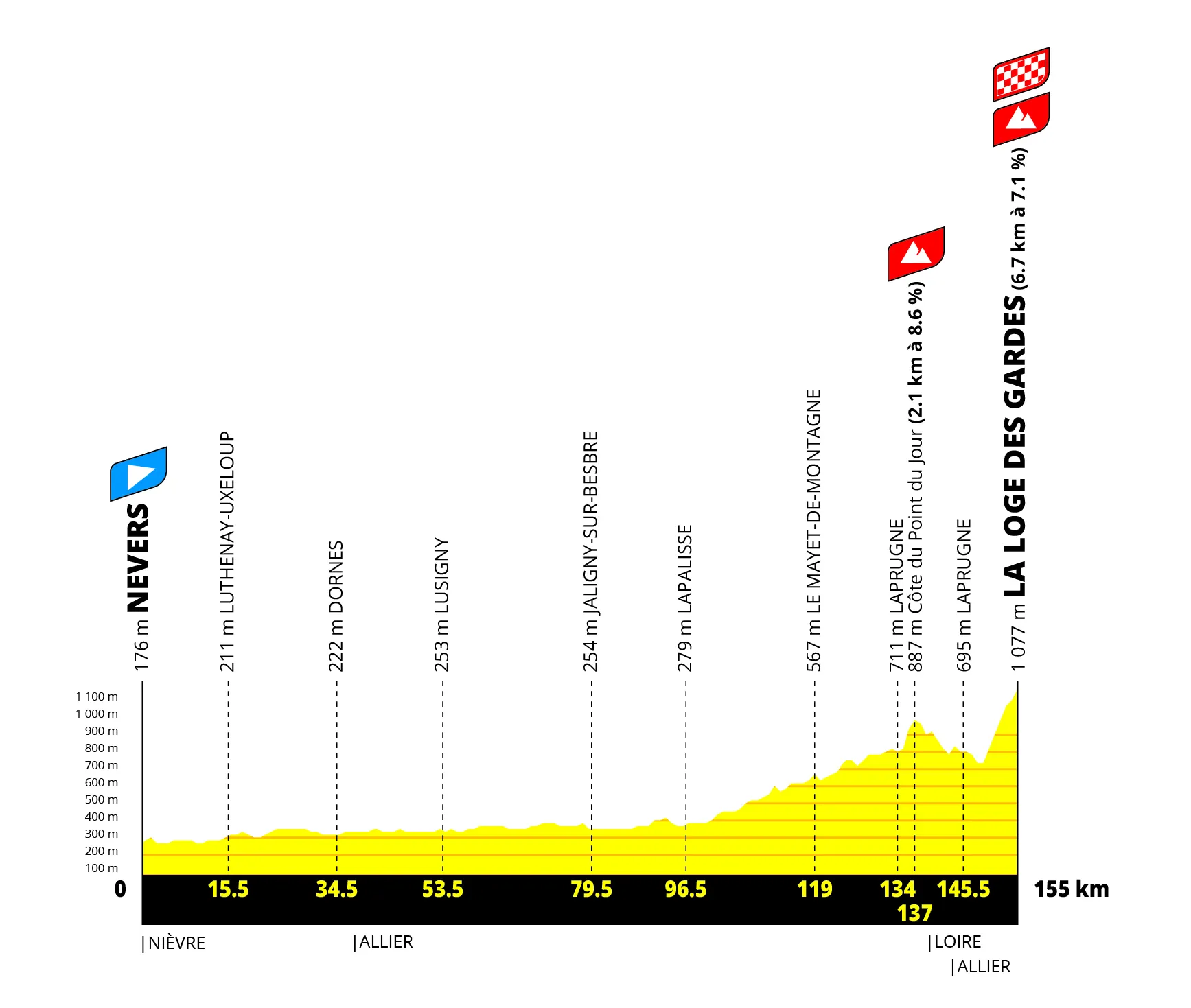
Stage 7 will be a tense affair, with 100km of pan flat riding before the climbing starts. The road starts to head upwards long before the race officially hits a categorised climbs, with plenty of uncategorised climbing before the 2.1km of the Côte du Point du Jour brings the first mountain points of the day.
A brief downhill follows before the peloton hits La Loge des Gardes.
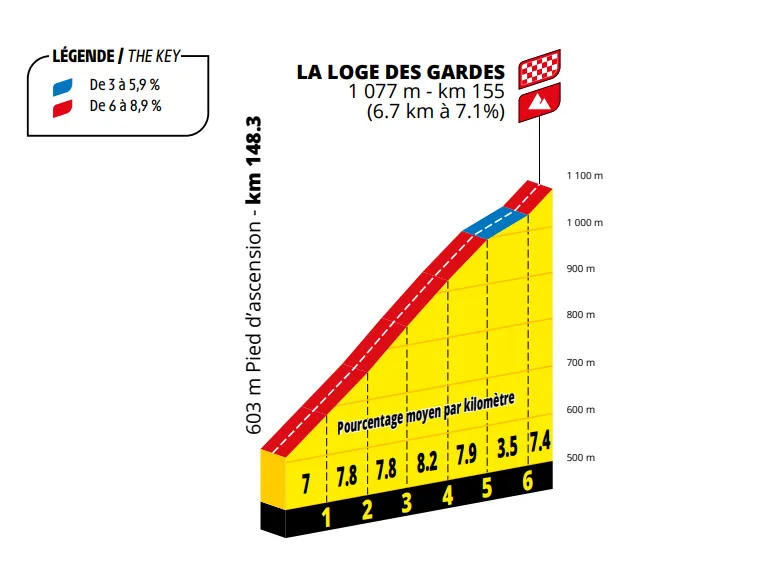
At nearly 7km in length, it’ll be enough for a proper GC battle, with the gradient sticking around 8% for almost the entire climb. This test should see the hierarchy start to form, but there are two tough stages incoming to defend positions.
Stage 8: Friday 6th August, La Bourboule – Clermont-Ferrand, 151km
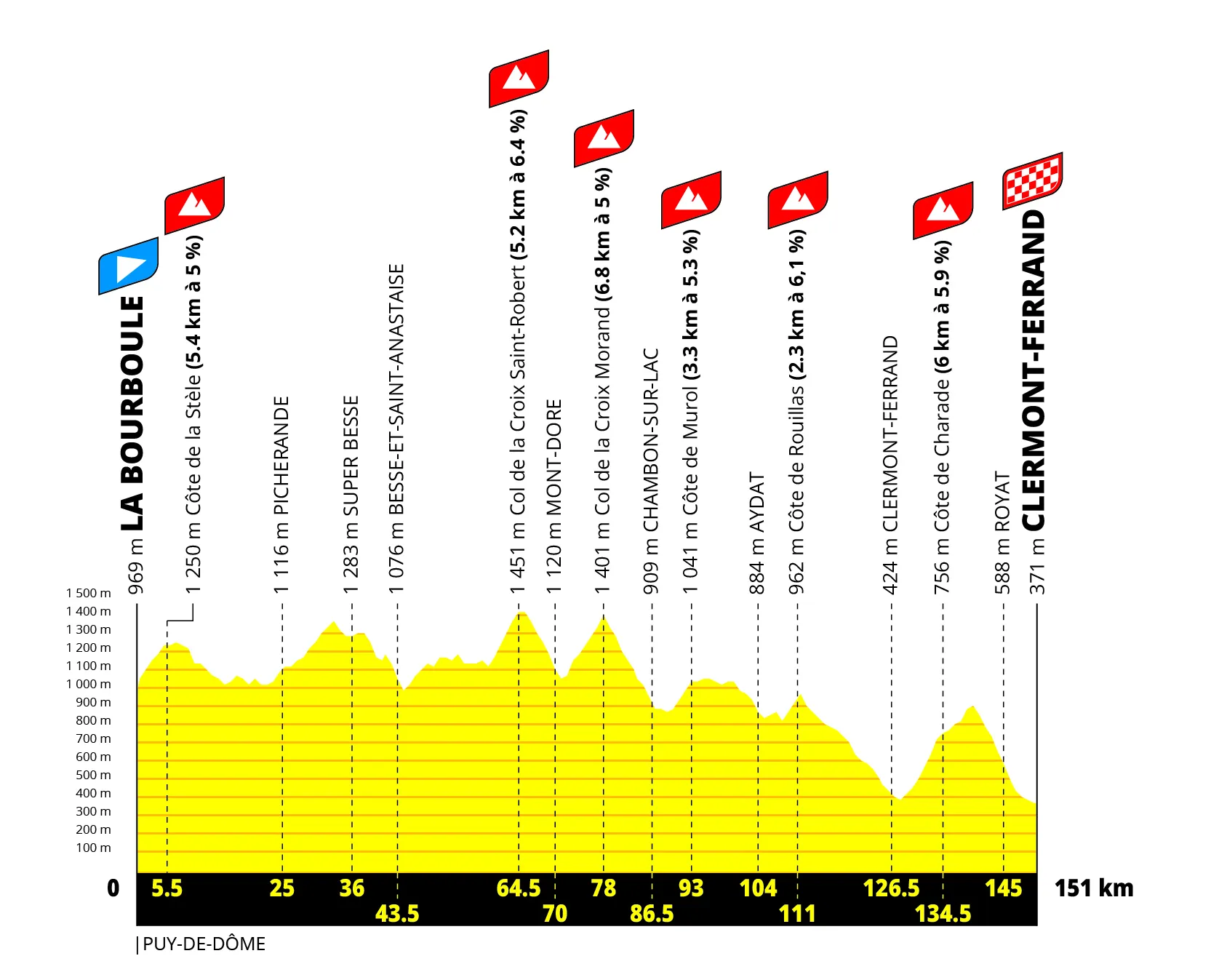
Stage 8 has climbing from the start in La Bourboule, with six categorised test to battle it out on. After the final ascent on the Côte de Charade, the peloton speeds descends into Clermont-Ferrand for a fast finish, likely either for one solo leader or a sprint for just two or three.
Stage 9: Saturday 7th August, Clermont-Ferrand – Puy de Dôme, 170km
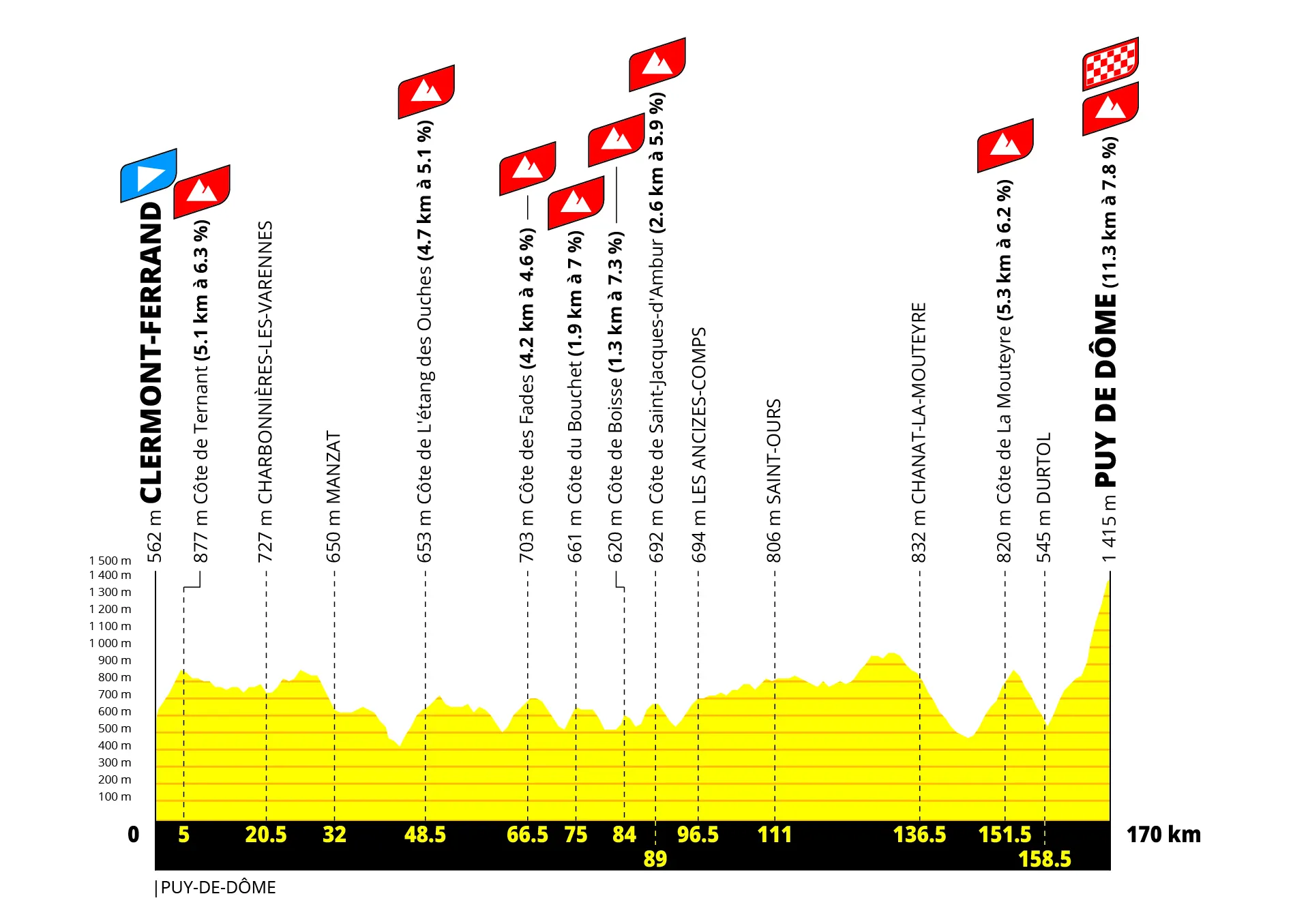
The final stage is the Queen Stage in its truest form, with the most kilometres and the most elevation – it’s also this year’s Etape du Tour de France Femmes. Unlike 2026’s Mont Ventoux stage, which was flat before the Bald Mountain, there are a mass of smaller climbs to contend with before the decisive finish on the mythical Puy de Dôme.
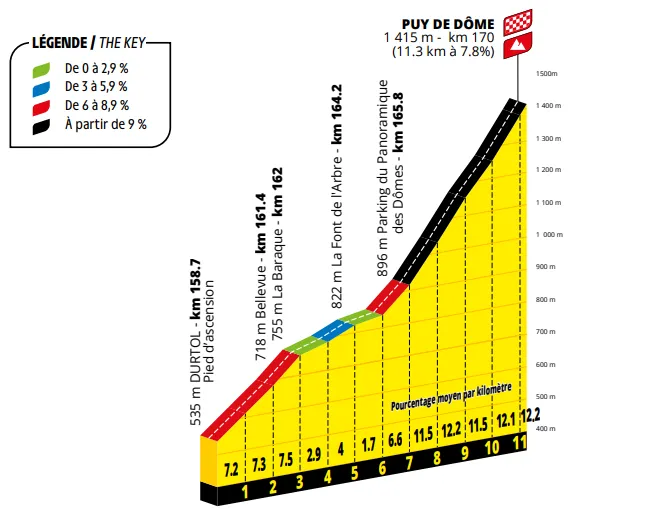
Whoever wins on the Puy de Dôme will write their name into cycling folklore, with its list of conquerors packed with big names including in the Tour de France Féminin, with Maria Canina taking the stage in both 1986 and 1988. It was last scaled in the men’s race in 2023 when Michael Woods broke Matteo Jorgenson’s heart with no fans watching roadside.
It has a deceptive start, easing off from its 7.5% gradient after just 3km, but the final 4km are consistently over 11% for a brutal sting in the tail.
Will Demi Vollering make it three yellow jersey wins or will someone else be crowned atop the volcano?