
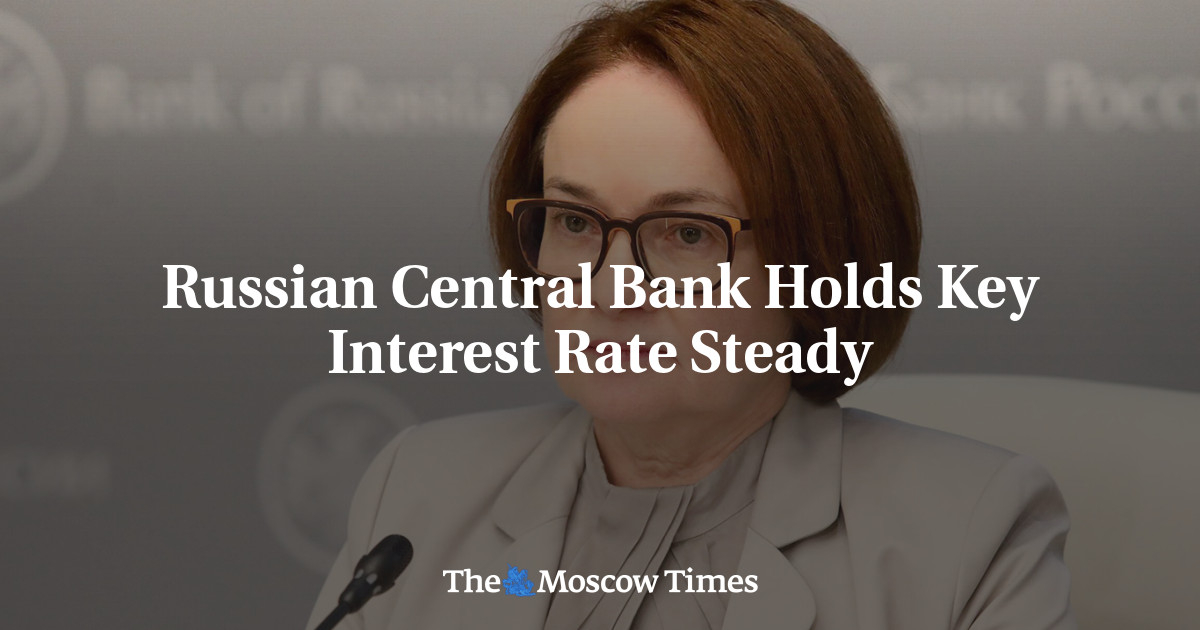
Russia’s Central Bank decided to hold its key interest rate at 14% during its latest meeting on Friday, weighing inflation risks against the need to lower currently high borrowing costs for businesses and consumers as the Kremlin prioritizes spending on the war against Ukraine.
The Central Bank reported that annual inflation hit 6.8% earlier in the week. Policymakers slightly increased their full-year inflation forecast, now at 7.1% to 7.6%, though they still expect price growth to fall toward the 4% target next year.
Inflation expectations remain high, the Central Bank said, though officials have argued that some of the more recent price increases are rooted in one-time factors, like Ukraine’s strikes on oil refineries raising the cost of gasoline and diesel.
“Underlying price growth has not yet decreased… primarily due to the impact of a temporary reduction in production capacities in certain sectors,” it said in a press release, while also alluding to inflation risks associated with the war in Iran and its impacts on global energy markets.
Policymakers also hiked the projected key rate range for next year by two percentage points, now at 12.5 to 13.5%.
The rate hold, which analysts widely expected, comes as spending on the war in Ukraine continues to strain the Russian government’s finances, while Ukrainian drone and missile attacks on energy infrastructure and commercial sites in recent months have raised the cost of some goods and services.
Despite its more bearish outlook on inflation, the Central Bank raised its forecast for economic growth this year, with GDP now expected to come in at 0.5% to 1% by the end of 2026, according to Friday’s press release.
Sofia Donets, chief economist at T-Investments, said policymakers appeared to leave room for another rate cut this year, “especially since the signal in the press release remained neutral with no explicit guidance on the future direction.”
Inflation is a growing concern across the globe as the war in Iran drives up the price of oil, which rose above $114 per barrel for the first time since May on Friday. For Russia, Ukrainian attacks against oil refineries have compounded the problem.
Yet at the same time, a long period of high borrowing costs has weighed down economic growth, leaving business leaders pressing for a lower key interest rate to stimulate investment.
Central Bank Governor Elvira Nabiullina is expected to speak to reporters at a press conference later on Friday afternoon.
The Central Bank’s next rate meeting takes place on Dec. 18.