
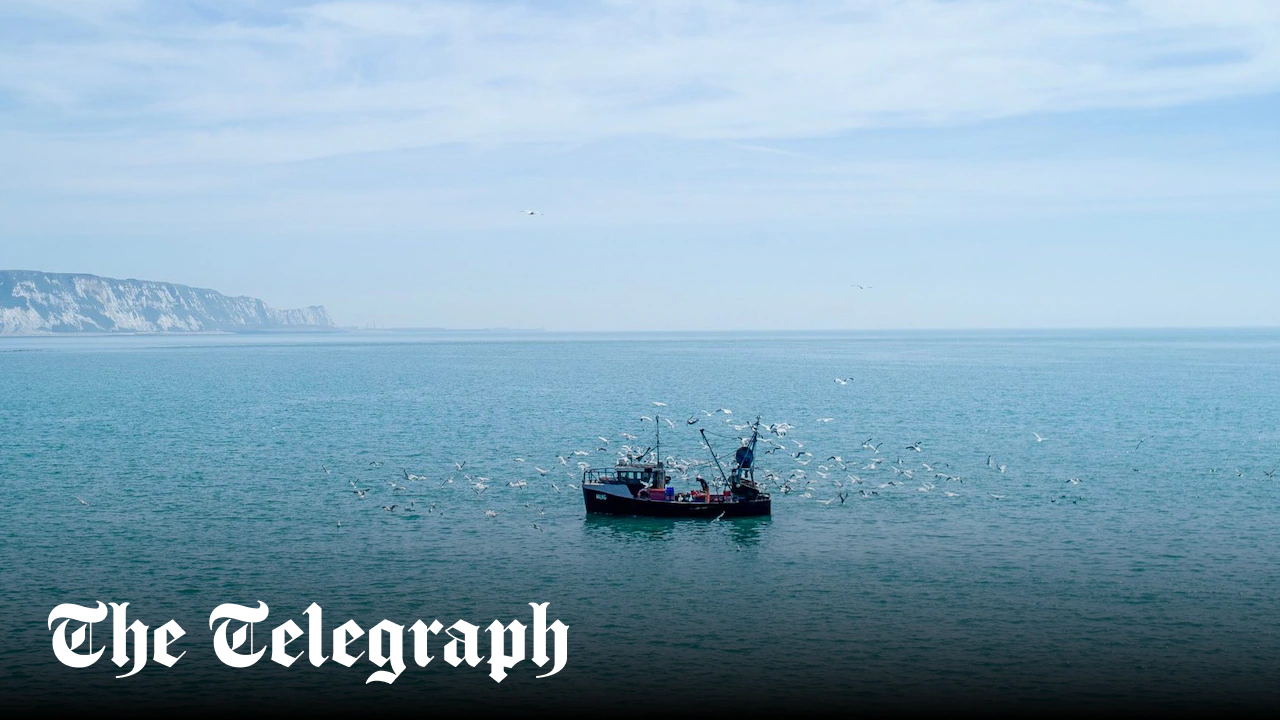
Britain’s fishing fleet is on the brink of collapse, industry bosses have warned.
The heads of the country’s four regional fishing bodies have written to the Chancellor to warn that “the persistently high fuel price poses an existential threat to the industry”.
“An increasing number of fishing businesses are no longer viable as the cost of taking on fuel for a trip now exceeds what they could hope to earn by selling their catch,” they said.
Fishing industry leaders have called on the Government to meet them to discuss how emergency support for purchasing fuel could be provided. Ministers have yet to respond.
The price of marine diesel has doubled since March, driven by global market shocks and soaring crude costs following the outbreak of war in Iran and the effective closure of the Strait of Hormuz, through which 20pc of the world’s oil passed before the conflict.
European fishermen receive diesel subsidised under an EU emergency framework for periods of exceptional energy costs. Under the scheme, continental vessels receive rebates of up to €0.35 (30p) per litre.
By contrast, UK fishermen must pay open-market rates for red diesel, which can reach up to £1.25 per litre.
Mike Cohen, the chief executive of the National Federation of Fishermen’s Organisations, told The Telegraph that without support the UK would be forced to buy fish caught in British waters by foreign boats.
He said: “With current prices we’ll see the fish caught in British water caught by foreign boats and sold elsewhere. We’ll be paying to re-import our own fish.”
Under post-Brexit trade arrangements, licensed European vessels can still fish in UK waters.
Mr Cohen said many British fleet owners had already exhausted their overdrafts and personal savings paying crew wages and essential maintenance in an effort to stay afloat, but reserves were now running out.
The fuel spike comes alongside mounting ecological restrictions. The International Council for the Exploration of the Sea, an advisory body, recently recommended a zero-catch limit for Northern Shelf cod in 2027 across the UK fleet’s core fishing grounds.
When the recommendation was made, Mike Park, the chief executive of the Scottish White Fish Producers Association, said it was a severe blow alongside the fuel crisis.
The letter to John Healey was signed by Mr Cohen; Lynn Gilmore, of the Northern Ireland Fish Producers’ Organisation, Elspeth Macdonald, of the Scottish Fishermen’s Federation; and Mark Gray, of the Welsh Fishermen’s Association.
The industry warned that a failure to support local fishing boats would be a threat to national food security.
“It has often been observed by the Labour Government that food security is national security. If so, it is imperative that we safeguard our domestic food production systems,” the industry warned.
The Government was contacted for comment.