
Fears are mounting over the future of the Queen Elizabeth Hospital in King’s Lynn and the James Paget in Gorleston, after this newspaper revealed both could be downgraded under options being drawn up by hospital bosses.
Both are understood to be at risk of losing their A&E, intensive care and maternity services as the county’s hospital group weighs up centralising services at the Norfolk and Norwich University Hospital, the third hospital it runs.
A Clinical Advisory Group made up of medical professionals across the three sites is currently analysing different options for the future of healthcare at the hospitals.
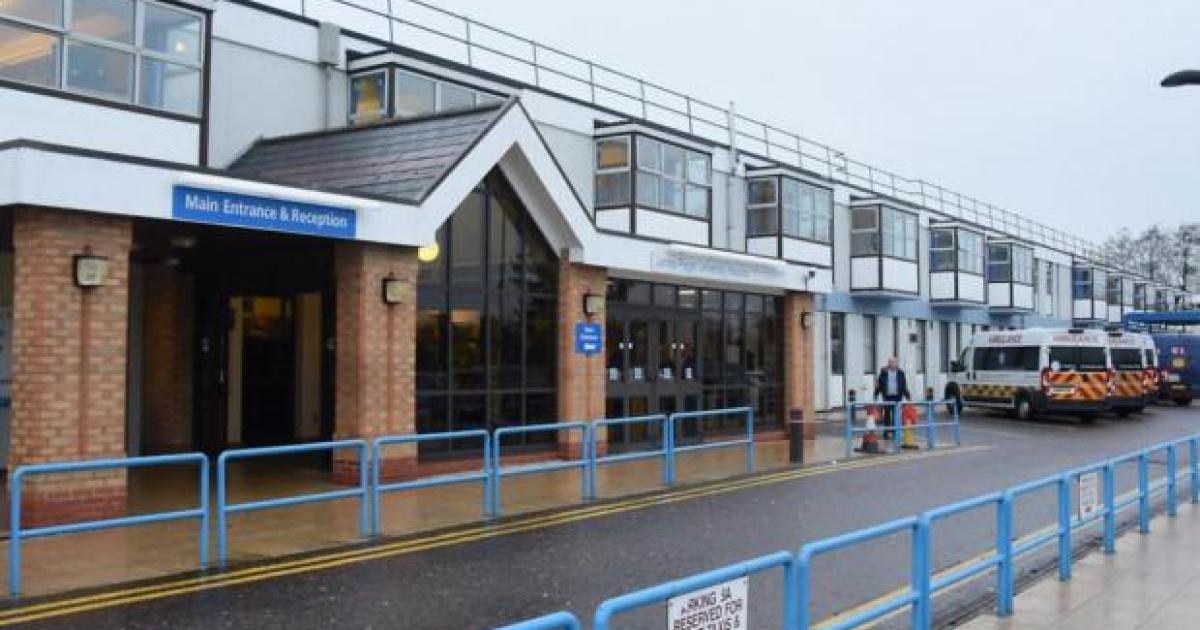
The entrance to the Queen Elizabeth Hospital in King’s Lynn (Image: Sonya Duncan)
Documents seen by this paper show bosses are modelling three preliminary options for emergency care, two of which would downgrade A&E at both the QEH and the Paget.
Under the most drastic, both would lose their emergency departments and intensive care units.
While maternity services are not mentioned directly in the papers, it is understood that this provision is also facing potential downgrades.
Bernard Brett, the chair of the Clinical Advisory Group, told the BBC on Tuesday that both sites should retain 24/7 emergency care.
However the continued uncertainty has caused significant concern in west Norfolk and the Great Yarmouth area, with many fearing the possibility of long travel times to receive care.
The Norfolk and Waveney University Hospitals Group has said no decisions have been made and that no preferred option has been identified.
Around 500 people attended a protest in King’s Lynn this month to protest about the downgrade talks (Image: Chris Bishop)
While the potential loss of A&E has sparked the loudest public reaction, including a 500-strong protest in King’s Lynn at the weekend, local leaders and campaigners have also raised concerns about the loss of maternity care.
Those fears were sharpened this week when Matthew Hopkins, director of acute care at the NHS Alliance, which represents health managers, warned that up to 20 of England’s 155 consultant-led maternity units could close or change their role.
Smaller rural and coastal units delivering between 1,500 and 2,000 babies a year are said to be most at risk.
In recent years both hospitals have tended to deliver around 1,800 babies a year, according to the Care Quality Commission and hospital reports.
The group itself has confirmed both the QEH and Paget units are among the 12 smallest consultant-led maternity units in England.
The main entrance to the QEH (Image: Google Maps)
The case for change is understood to rest largely on the falling birth rates in the county.
It is understood the group is forecasting a nine to 13pc fall in births by 2032, despite west Norfolk’s slightly higher than average birth rate and thousands of new homes planned for the area.
Those involved with the Clinical Advisory Group have argued that with births falling and caesarean rates rising, midwives at the smaller units would deliver as few as one baby a month, not enough to keep their skills up.
‘DEVASTATING’
Rupert Lowe, the leader of Restore Britain, Great Yarmouth MP and a vocal opponent of the potential downgrades, said the impact of any closures could be “devastating”.
“Maternity care already lacks across Norfolk, particularly in Great Yarmouth, so any further reduction in access will be met with fierce local opposition,” he said.
Rupert Lowe is the leader of Restore Britain and the MP for Great Yarmouth (Image: Ben Whitley/PA)
“James Paget capacity must be drastically increased, not cut, in any shape or form. That would be devastating and put local women at great risk.
“Taxpaying men and women of Great Yarmouth deserve better services, with shorter wait times.”
James Wild, Conservative MP for North West Norfolk and a staunch supporter of the QEH, also highlighted the risks to women.
He said: “NHS services should be designed around patients, providing care as locally as possible.
North West Norfolk MP James Wild at the King’s Lynn protest on Saturday (Image: Chris Bishop)
“Last year 1,700 babies were born at the QEH and if services were closed, women across North West Norfolk and surrounding areas would face much longer journeys to get maternity care and give birth adding unnecessary stress and potentially increasing risks.
“Expert reviews have highlighted that maternity safety is fundamentally about culture and leadership, rather than simply the size of the unit.
“Rather than removing or reducing services, NHS bosses should focus on ensuring maternity units have the staff, resources and support they need to provide safe care. Women and families in rural and coastal areas should not be disadvantaged, and the priority must be to improve services and outcomes, not make access to care more difficult.
“I will continue to press for maternity services at the QEH to be protected and improved, so women and families in West Norfolk can access the safe, high-quality care they deserve close to home.”
‘NO LONGER ACCESSIBLE’
The prospect of closures has also alarmed AIMS, the Association for Improvements in the Maternity Services, a charity which campaigns for women’s rights and choices in maternity care.
A spokeswoman said: “AIMS is very concerned about the impact that these closures would have on women and families in Norfolk.
“We have long called for all place of birth options, including obstetric units, midwife led units and homebirth to be available and accessible to all within every NHS Trust/Board across the UK, in line with the NHS Choices Framework and the Better Birth report.
“The journey times resulting from these closures would mean that an obstetric unit is no longer ‘accessible’ to many women in Norfolk, and this is likely to be particularly problematic for those with lower socioeconomic status or others who are reliant on public transport.”
WHAT HAPPENS NEXT?
The group’s clinical strategy is due to go before Norfolk County Council’s health overview and scrutiny committee next month.
Dr Rob Sherwin, group chief medical officer for Norfolk and Waveney University Hospitals Group, said: “As we plan for the future, our clinical strategy is examining many of the same issues highlighted by the NHS Alliance.
Dr Rob Sherwin, group chief medical officer for Norfolk and Waveney University Hospitals Group (Image: Norfolk and Waveney University Hospitals Group)
“This includes how we ensure maternity services remain safe, high quality and sustainable, particularly as the units at the James Paget and The Queen Elizabeth hospitals are among the 12 smallest consultant-led maternity units in England.
“Our Clinical Advisory Group, which includes senior doctors, nurses, midwives and obstetricians, is examining a range of factors that are changing the way healthcare is delivered including falling birth rates, rising Caesarean section rates, workforce pressures and the increasing complexity of some pregnancies.
“At this stage, no decisions have been made about future service models and no preferred option has been identified. Underpinning all of this work is an absolute commitment to patient safety.
“We also want to provide as much care as possible locally or closer to home, while ensuring patients who need specialist care can access the right expertise when they need it. Any proposals that might arise for significant service changes would be subject to the appropriate scrutiny, engagement and consultation before any decisions are made.”