
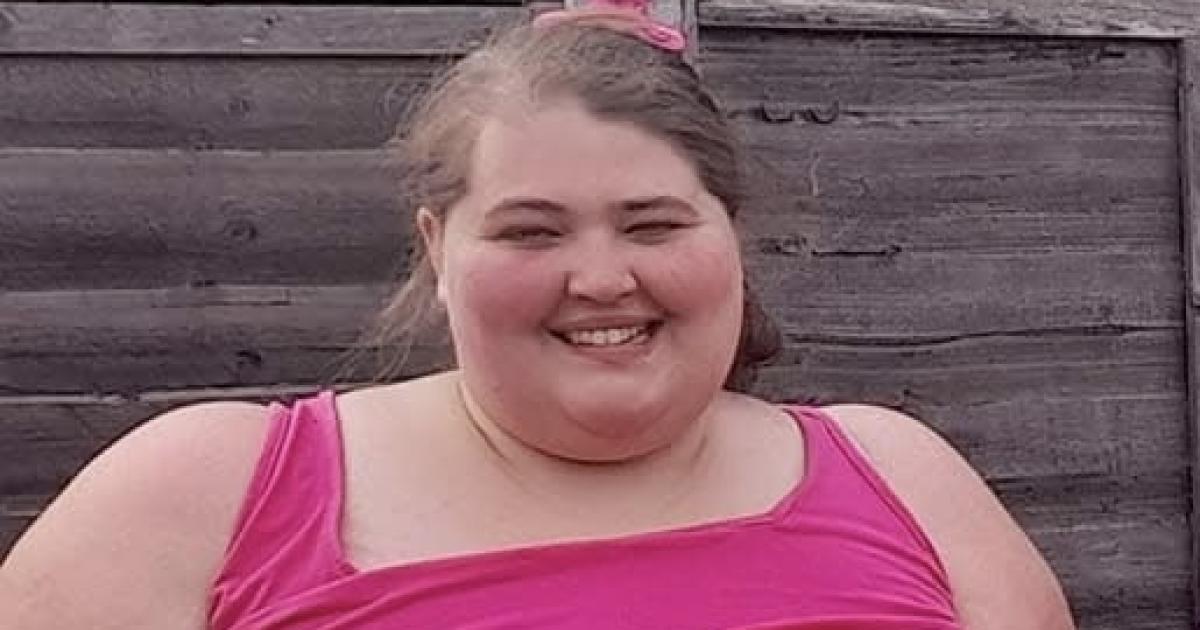
Karah Jayne Masterson, 30, says she and her partner Michael, 40, have been left emotionally and physically broken by the death of their daughter Elora, who was born weighing just 50 grams.
Floral tributes to baby Elora who was delivered at 19 weeks (Image: supplied)
She believes staff at the Norfolk and Norwich University Hospital (NNUH) missed opportunities to investigate warning signs during her high-risk pregnancy.
Now she wants the hospital to answer questions about whether earlier treatment could have saved her daughter’s life.
The couple had spent almost a year trying to conceive, with Ms Masterson taking the fertility drug Clomid because polycystic ovary syndrome (PCOS) prevented her from ovulating.
After losing 14 stone 7lbs in her determination to become a mother, discovering she was pregnant in April was a moment of overwhelming happiness.
“I never thought I’d be a mum and I cried tears of joy when I got the positive pregnancy tests – we both did,” she said.
“We got to that 12-week mark and the relief we both felt was incredible; the anxiety just lifted.”
But within weeks, that happiness turned to fear.
Ms Masterson, whose body mass index (BMI) was 46 during pregnancy, claims hospital staff failed to respond adequately when she reported a dramatic reduction in her unborn daughter’s movements.
Baby Elora was delivered at 19 weeks at the Norfolk and Norwich University Hospital (Image: Newsquest)
She also questions whether her risk of developing blood clots was correctly assessed, given her obesity, family history and fertility treatment.
At her initial booking appointment, she says the hospital calculated her clotting risk score as three, with preventative blood-thinning injections planned from 28 weeks.
However, she believes her fertility treatment should have increased the score to four, which would have potential qualified her for earlier treatment.
Royal College of Obstetricians and Gynaecologists (RCOG) guidance recommends considering preventative anticoagulants throughout pregnancy for women with four or more specified risk factors.
Although the guidance awards an additional point for assisted reproductive technology or IVF, it does not explicitly identify Clomid, and whether its use alone qualifies remains unclear.
Ms Masterson says consultant obstetrician Beth Revell subsequently confirmed the hospital does not routinely allocate an additional point for Clomid.
Karah Masterson arranged a funeral for her daughter Elora (Image: supplied)
But now she wants an independent assessment of whether her risk was correctly calculated.
Her concerns intensified after a private ultrasound at Window to the Womb in Norwich on July 18 showed Elora alive and active, with a strong heartbeat.
The following week, while suffering from a kidney infection, she noticed a dramatic reduction in movements.
She contacted an out-of-hours GP service, where a clinician consulted an obstetric registrar at the hospital.
According to Ms Masterson, she was advised that movements before 24 weeks were not significant.
Four days later, she raised concerns again with her community midwife, who she says was unable to locate Elora’s heartbeat using a handheld Doppler device.
She claims she was reassured that detecting a heartbeat at 16 weeks could be difficult and sent home without further investigation.
“I was full of so much anxiety and felt broken and didn’t know why, but I now know it was because my body was trying to tell me something was wrong.”
Three weeks later, a scan showed Elora had died. She was delivered with no signs of life on August 15, 2026.
A treasured scan of baby Elora (Image: supplied)
Ms Masterson says Michael noticed their daughter’s umbilical cord appeared unusually thin, describing it as resembling a “piece of string”.
She believes this, together with Elora’s extremely low weight, raises questions about possible placental problems and restricted growth.
However, neither the cause of death nor a connection between the cord’s appearance, blood-clotting risk and Elora’s death has been independently established.
Preventative anticoagulants reduce maternal blood-clot risk but would not necessarily have prevented the pregnancy loss.
Ms Masterson is seeking an independent review to determine whether earlier investigations or treatment could have made a difference.
The couple were able to bring Elora home for almost two weeks in a cuddle cot before her funeral at Holy Trinity Church in Bungay.
Karah Masterson is demanding answers after her baby died at 19 weeks (Image: Brittany Woodman)
She was buried on September 3 at Bungay Cemetery, beside her great-grandmother Glenda.
“The time we had with her was so precious and emotional,” her mother said.
“We didn’t want her to be alone. The cuddle cot kept her at a cool enough temperature to stay at home with us until just before her funeral.”
Since losing Elora, both parents have struggled with severe psychological distress.
Ms Masterson says neither is currently working because of health difficulties, and the tragedy has compounded existing mental health problems.
“Every single day is an agonizing battle,” she said.
“I am suffering from constant, terrifying flashbacks of the delivery and nightmares that wake me up in a panic.
“The grief and trauma are so overwhelming that I cry every single day, and most days it leaves me completely drained, unable to find the strength to even get out of bed.”
She credits Michael with helping her survive the darkest moments, adding: “He is what has kept me going and able to see any way forward.”
The couple are now trying for another baby, although Ms Masterson says she remains frightened about how any future pregnancy will be managed.
She claims the hospital has declined to prescribe preventative blood-thinning injections before another positive pregnancy test, despite her concerns about her risk factors.
Karah Masterson conceived after losing more than 14 stone (Image: supplied)
She has submitted a formal complaint and is seeking support from Action against Medical Accidents. The couple are due to attended a meeting at the hospital on Friday which they hope will provide answers.
Dr Tarnya Marshall, interim medical director at the Norfolk and Norwich University Hospitals NHS Foundation Trust, said: “Our deepest condolences remain with Karah and her family following their devastating loss.
“We are currently investigating a complaint and have offered to meet with Karah to discuss all her concerns with her and her family.”
‘SHE MADE ME A MUMMY’
Despite their grief, the couple hope one day to give Elora a younger sibling.
“Another baby will never replace Elora, ever,” she said.
“She will always be my first-born and Michael’s fourth – the baby girl who made me a mummy.”
They hope to create a specially designed gravestone incorporating a sandpit, allowing any future children to play beside their sister.
“Her memory will always live inside of us.”