

‘The situation was unbelievable’
Joan Jones was left ‘rolling over in pain’ after she suffered a collapsed gallbladder(Image: Family Handout)
An 86-year-old gran was left ‘rolling over in pain’ during a nightmare 30-hour A&E wait at Royal Albert Edward Infirmary, her family has said.
Joan Jones was rushed to the Wigan hospital by ambulance in the early hours of Sunday (October 18) after she suffered a collapsed gallbladder. She was then forced to endure an agonising wait to be seen.
Her son Barry Jones, 62, from Ashton-in-Makerfield, said he watched in despair as alleged criminals were seemingly admitted for treatment immediately as they arrived with police, the Mirror reports.
Click here to get the biggest stories straight to your inbox in our Daily Newsletter
Barry said: “The situation was unbelievable. Mum was so tired and weak. Even other people in the waiting room were saying ‘what’s she doing in here?’.
“Police were bringing [alleged] criminals in and they were going straight in to get treatment. The whole system is upside down. It’s wrong that those people are getting seen first.”
Joan was eventually given a pillow and put on a trolley bed in the corridor, but only after staff were repeatedly asked to help.
Daughter Angela said her mother was put through a ‘traumatic experience’ at the hospital. It came after the NHS responsible for the hospital was issued a warning notice in September after concerns were raised over services.

Barry Jones said his mother faced an ‘agonising’ wait(Image: Family Handout)
It was found by inspectors to be among the worst in the country for the number of patients spending more than 12 hours in A&E. In the month prior to the inspection, 253 people had a wait of 12 hours or longer – an average of 12 patients a day.
Inspectors criticised ‘excessively long waits’ for speciality beds, with one patient waiting 44 hours. ‘Significant’ patient flow issues ‘across the hospital’ were found the Care Quality Commission added.
Additional delays were found at discharge, with the trust again among the worst performers. Late paperwork meant some patients missed transport and care package cut-off times, in turn delaying discharge itself.
CQC inspectors reviewed two services – urgent and emergency services and medical care. Both received a rating of ‘requires improvement’, down from ‘good’.
The CQC said patients were ‘negatively affected’ by system pressures. Most were critical of arrangements in the waiting room, which was described as ‘cold, overcrowded and uncomfortable’.
While severe, the infirmary is not the exception to the rule in the UK, with 12-hour waits for a hospital bed having surged in recent years.
Health and Social Care Secretary Yvette Cooper said: “For Joan and her family to have to go through this is just awful, and incredibly distressing. Nobody should be treated on a trolley or in a corridor, or have to endure this kind of wait in our A&Es. We cannot accept this standard of care, particularly when people are at their most vulnerable.
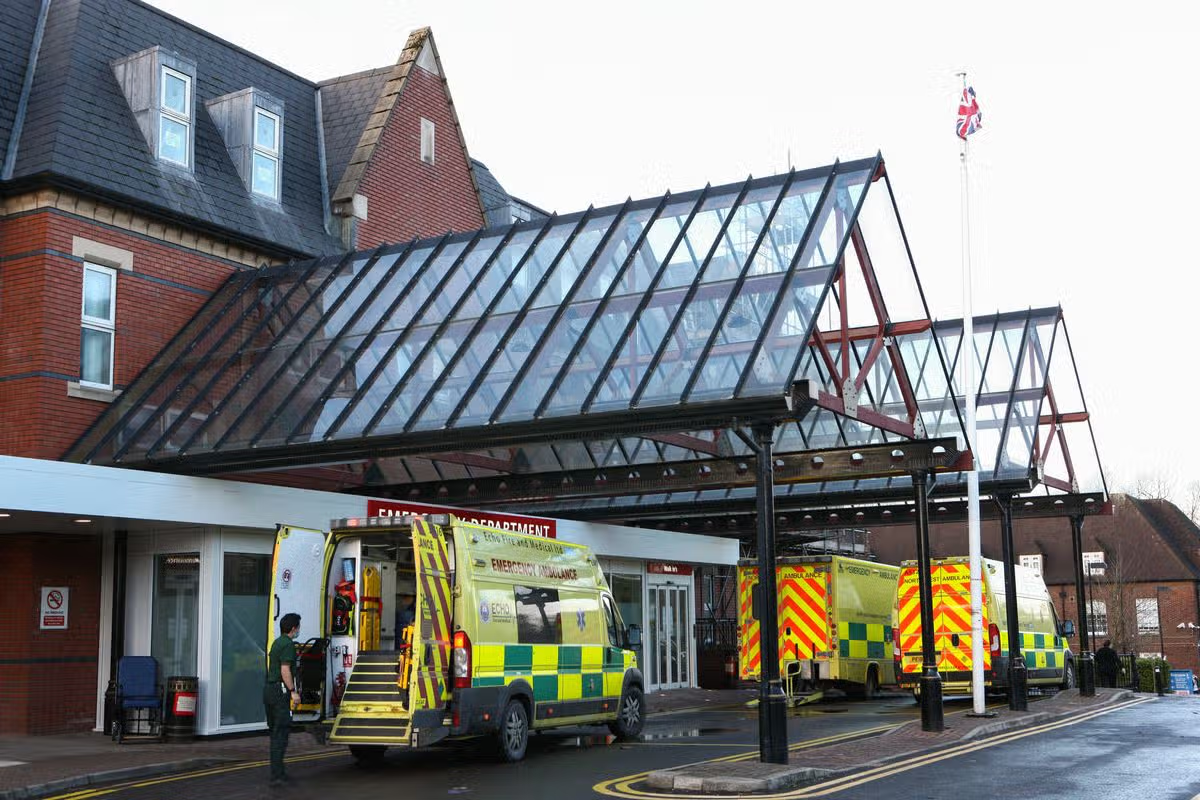
Wigan’s Royal Albert Edward Infirmary(Image: Adam Vaughan)
“We have a major turnaround programme underway across the NHS, after years in which it was neglected, but there is a lot of essential work to do, especially for hospitals to turnaround A&E, and I have made clear that tackling corridor care must be a priority.
“On Sunday, we announced £140m for 14 more urgent care schemes, on top of the 25 due to open in time for this winter, to boost NHS capacity, free up hospital beds and help tackle the unacceptable corridor care and waits so patients like Joan are treated quickly and in an appropriate space.”
Mary Fleming, the CEO of the Wrightington, Wigan and Leigh Teaching Hospitals NHS Foundation Trust (WWL) said: “We welcome the opportunity to speak with [Joan’s] family directly, understand their concerns and provide any additional support we can. Because of increased demand across our urgent and emergency care services and delays in discharge, some patients are experiencing longer waits than we would ever want.
“We understand how worrying and stressful it can be when someone you love needs urgent care.” Ms Fleming added that the hospital is trying to reduce wait times following ‘unprecedented demand’ for services.
She added: “We’re working hard to develop alternatives to Emergency Department but while we do experience periods of unprecedented demand, we will continue to treat patients in order of clinical priority and to ensure people receive the right care, in the right place, at the right time.”