
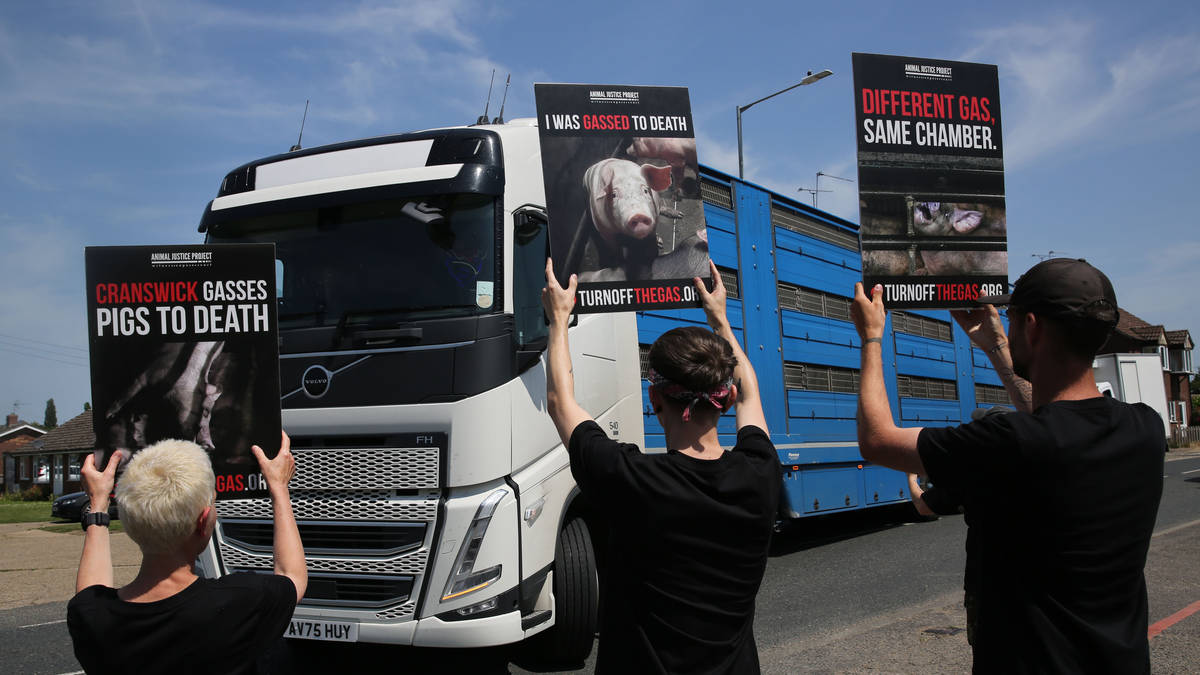
Campaigners expressed “relief” that the practice of using high-strength carbon dioxide to gas pigs would be phased out
Stunning pigs with carbon dioxide before they are slaughtered will be banned following a high-profile campaign condemning the practice.
The Department for Environment, Food and Rural Affairs (Defra) has outlined proposals to end the method of using CO2 to stun pigs before they are slaughtered, saying it causes “unnecessary pain and distress”.
High-strength carbon dioxide is used to stun more than 90 per cent of pigs in British slaughterhouses.
Phasing out the practice forms part of the government’s animal welfare strategy.
Read more: Three animal rights activists sentenced to unpaid work for theft of King’s lambs
Read more: Britain’s hidden pet welfare crisis is forcing owners to choose between essentials and their animals
Defra said: “Pigs are highly sentient and intelligent animals, capable of experiencing pain and fear.
“Minimising distress during handling and slaughter is an important part of safeguarding their welfare.
“High concentration carbon dioxide is widely used to stun pigs in British slaughterhouses, but independent evidence has highlighted serious concerns about the suffering it causes animals.”
The move follows a campaign by animal rights group Project Slingshot, featuring several public figures including comedian Diane Morgan.
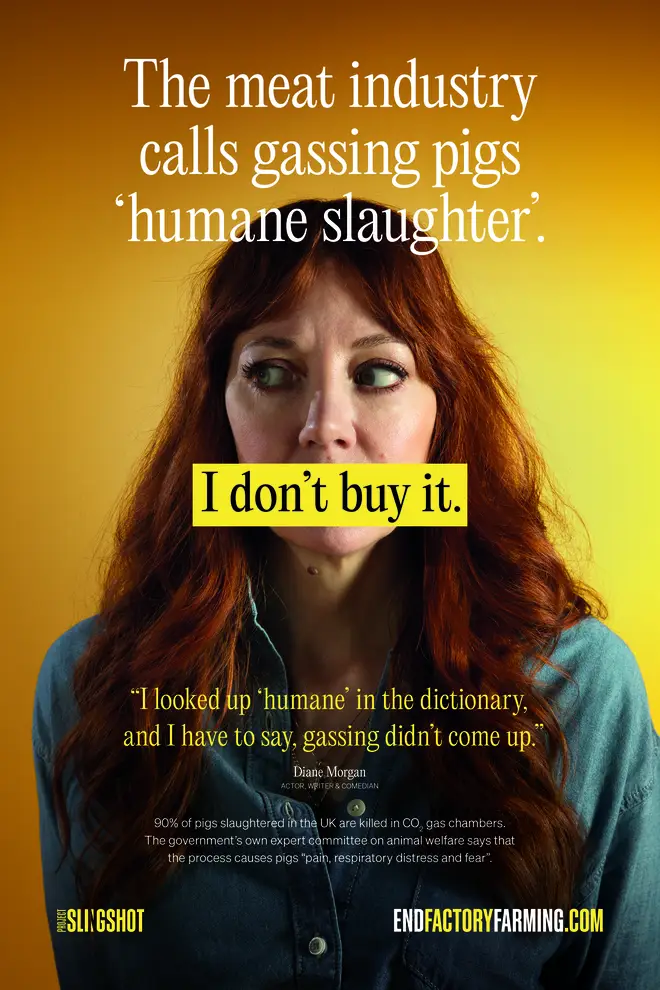
A campaign by Project Slingshot featured posters of the comedian Diane Morgan plastered across the London Underground.
Picture:
Project Slingshot
Posters plastered across the London Underground condemned the practice of “gassing pigs” for slaughter, and encouraged consumers to stop buying pork products.
The campaign group also projected adverts onto the Houses of Parliament and Buckingham Palace.
Reacting to the government’s announcement Naomi Hallum, the head of Project Slingshot, said: “We are relieved that the horrors of CO2 are coming to an end, and are glad to have played our part in that.
“When the public was given the information about what CO2 slaughter means for pigs through our ads, stunts and social media posts, they were horrified too.”
However, the National Pig Association and the British Meat Processors Association (BMPA) said the move risked threatening the UK’s food security.

Adverts were projected onto the Houses of Parliament and Buckingham Palace.
Picture:
Project Slingshot
The group, said there was currently “no viable alternative” to using CO2 to stun pigs and that the practice of stunning was more efficient by enabling large numbers of pigs to be slaughtered at once.
Chair of the Animal Welfare Committee, Madeleine Campbell, said: “It was the clear view of the Animal Welfare Committee that the continued use of high concentration CO2 when more humane, legally permitted alternatives are available is ethically unacceptable.
“The evidence-based argument for moving away from the use of high-concentration CO2 on animal welfare grounds is incontrovertible.
“I hope that all stakeholders will now work together to overcome the acknowledged challenges for industry which such a move presents and deliver that change within a transition period which is as short as possible.
Defra has proposed replacing the practice with “more humane” methods including argon gas and electric stunning.
Project Slingshot opposes these methods, arguing they are poorly researched and inhumane.
A government spokesman said: “The public want to know the meat they buy in the shops is produced in a way that supports high standards of animal welfare. These plans will help deliver that and reduce unnecessary suffering.
“We’ve worked closely with industry to make sure this change delivers better welfare for pigs without burdening the businesses and abattoirs that supply our pork.”