
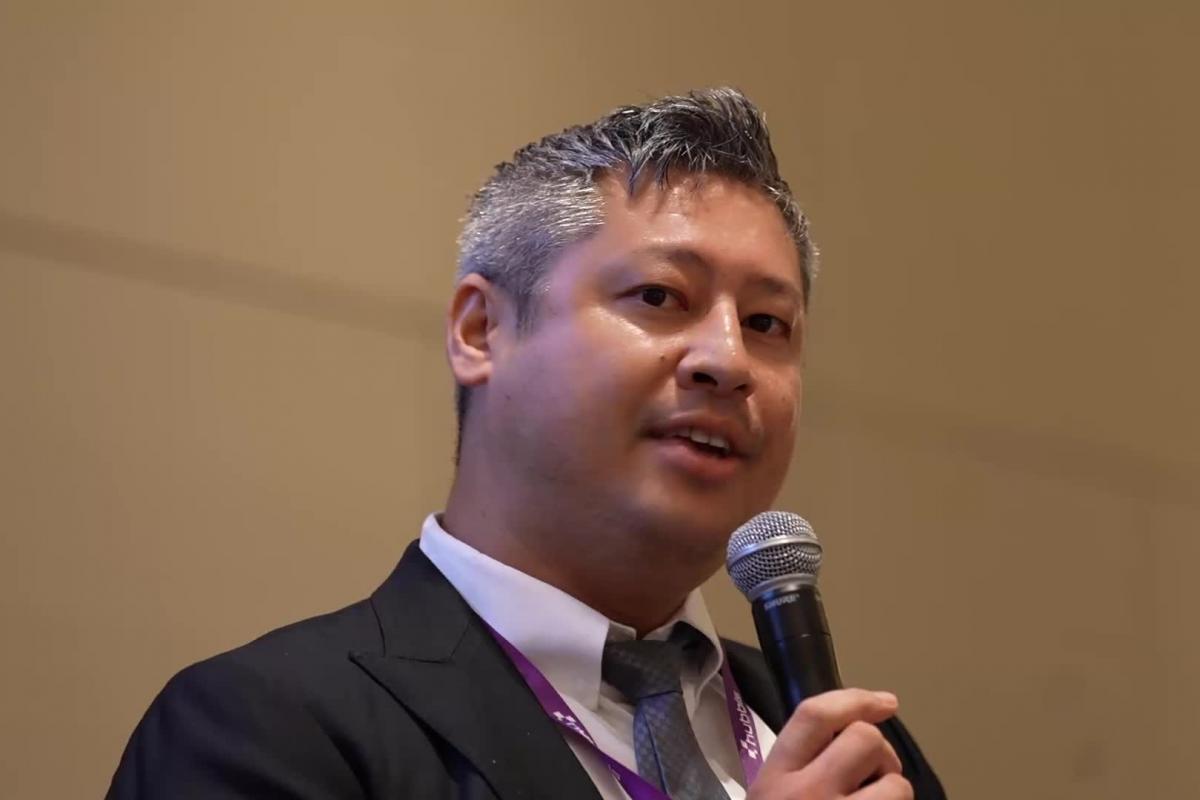
Tokenisation needs to improve an investment product or make it accessible to investors who could not readily reach it before. That was the case Andrew Scott, Head of Digital Assets at Marketnode, made during his In The Hubbis Hot Seat session at the Hubbis Digital Wealth Forum in Singapore – 2026. He described the firm’s ambition to build an investment offering for Asian private wealth clients, with asset quality and the rights attached to an investment taking priority over the act of creating a token.
Scott placed that work in the context of a younger, increasingly digital investor base. As wealth passes between generations, he expects demand for portfolios managed on-chain to grow. His message to wealth managers was to begin understanding the infrastructure and the available products now, while judging each application by the access or efficiency it can deliver.
Key Takeaways
The Product Must Improve: Scott sees better access or a more efficient investment product as the reason to pursue tokenisation.
Asset Quality Comes First: He said much of Marketnode’s work lies in sourcing investments and establishing the legal rights behind them.
Institutional Backing Supports Development: Scott highlighted Marketnode’s shareholders and the time they have allowed the platform to develop.
Younger Investors Shape the Opportunity: He expects generational wealth transfer to increase demand for on-chain portfolio management.
Building Infrastructure With Institutional Backing
Scott introduced Marketnode as a Singapore-headquartered digital market infrastructure business focused on tokenisation at scale. He traced its origins to a joint venture between Singapore Exchange (SGX) and Temasek, followed by HSBC’s participation in its 2024 Series A and Euroclear’s arrival as a shareholder.
For Scott, those names helped explain the company’s development. He joked that the shareholder register might look unusually conventional for a digital assets business, but argued that the backing had provided time and patience to build the platform and its products.
The resulting focus is longer term. Rather than basing the offering solely on what trades on-chain today, Marketnode is working towards the range of investments it believes private wealth clients will ultimately want to hold there.
Starting With the Asset and the Investor Rights
Scott challenged the idea that creating the token is the most demanding part of the work. “It’s not a very big lift from a technological perspective to tokenise any asset,” he said. “Where we spend most of our time is originating high-quality assets and then bringing them into a portfolio.”
That shifts attention to the investment itself and the legal rights that connect it to the token. Scott stressed the need for those arrangements to be compliant with regulation. The purpose is to offer investors a useful financial product through a different form of infrastructure.
He described two directions for that work. One is to widen access to investments that clients have historically found difficult to reach, citing private credit, hedge funds and selected digital asset strategies. The other is to improve the efficiency of products that investors already use, including structured products.
Structured notes illustrated the second opportunity. Scott pointed to work involving HSBC’s structured product notes programme and described the potential to reduce costs and shorten settlement. His example envisaged moving a ten-day process to two days, returning eight days of working capital to investors and corporates. He presented those savings as the practical reason to change the underlying infrastructure.
Preparing for the Next Generation of Investors
Scott’s argument about demand began with a familiar observation. He asked the audience to think about younger people in their families and the amount of time they spend online. For a generation accustomed to conducting much of its life digitally, he considered it plausible that portfolio management would increasingly move on-chain as well.
He connected that behaviour to intergenerational wealth transfer in Asia. As more assets reach younger owners, he expects wealth platforms to face growing demand to manage investments through digital-asset infrastructure.
His invitation to the industry was to begin the discussion before demand makes it unavoidable. Wealth managers can use that time to understand the products, the rights investors hold and the operating improvements on offer. For Scott, the case for tokenisation ultimately rests on those details: what clients can access and how effectively their investments can be managed.