
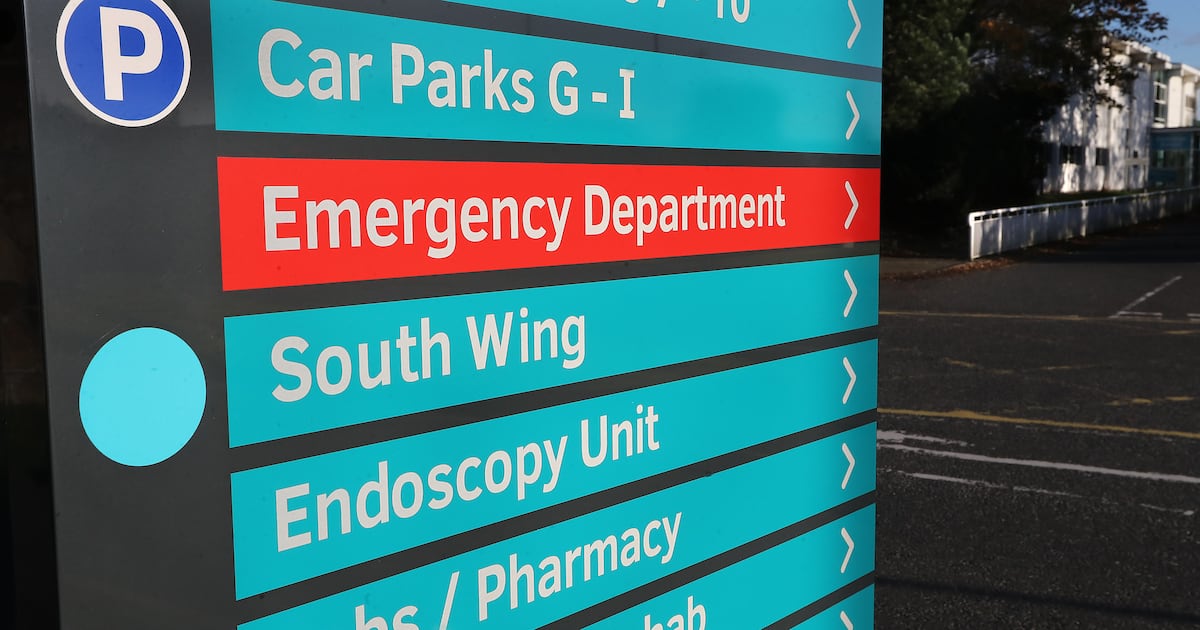
A key mental health programme for young people discharged from A&E has been “temporarily stood down” for budget reasons, the Western Trust has confirmed.
Known as the ‘Card Before You Leave’ pathway, the service had ensured young people presenting out of hours with mental health concerns were given a mental health assessment the following day.
It’s now no longer operating at weekends, and only offering appointments Monday-to-Friday – meaning a young person discharged from an Emergency Department on a Friday evening will now have to wait until Monday at the earliest for a follow-up.
The Western Trust, in a statement, said the change affects “only those young people who present out of hours and are assessed as low risk”.


Young people assessed as high risk, or as moderate-to-high risk through the deliberate self-harm pathway, continue to receive the same assessment and support, with the latter group admitted to a hospital ward.
The Trust also confirmed there has been no reduction in the number of CAMHS (Children and Adolescent Mental Health Services) staff.
A Trust spokesperson said: “There has been no change to arrangements for young people assessed as high risk, who continue to receive the appropriate assessment and support based on their clinical needs.
“Young people assessed through the deliberate self-harm pathway as moderate to high risk are admitted to a hospital ward.
“The Trust remains committed to providing safe and effective mental health services for children and young people.”
A Western Trust spokesperson also confirmed the change is being made for financial reasons, saying: “This change has been introduced as part of the Western Trust’s savings plans.”
This comes after the Trust Board approved a £30 million savings plan in late August, after the Department of Health had asked each of Northern Ireland’s Health and Social Care organisations to cut back spending by around four per cent of their budgets during the financial year.
The Trust has said its savings programme is “not solely about reducing expenditure” but also about “changing how services are delivered in response to increasing and changing demand,” and that it has sought to protect frontline services and minimise the impact on service users.
The mental health cutback, meanwhile, also came into effect in August – the same month the £30 million savings plan was approved by the Trust Board.
The Trust, in a statement, said anyone concerned about the mental health of a child or young person should still come forward for help.
“If parents are worried about their child’s mental health out of hours, the most important thing is not to wait alone with these concerns,” the Trust spokesperson said. “We would encourage parents / carers to talk openly with their child, and listen to any concerns they may have. Open and supportive conversations with your child are an important first step.
“If concerns are urgent, or if you are worried about your child’s safety you should seek advice and help immediately from out of hours service or the local Emergency Department, or contacting emergency services if there is an immediate risk to life for your child.”
The statement added: “For less urgent concerns, it might be helpful to use the support of family or friends and contact your GP or CAMHS the next working day if your child is known to them, for further advice and support.
“The Western Trust CAMHS Website contains a range of information, advice, resources, frequently asked questions and guidance for parents / carers, young people and professionals. It is a useful contact for anyone seeking information about children’s mental health and the support available.”