
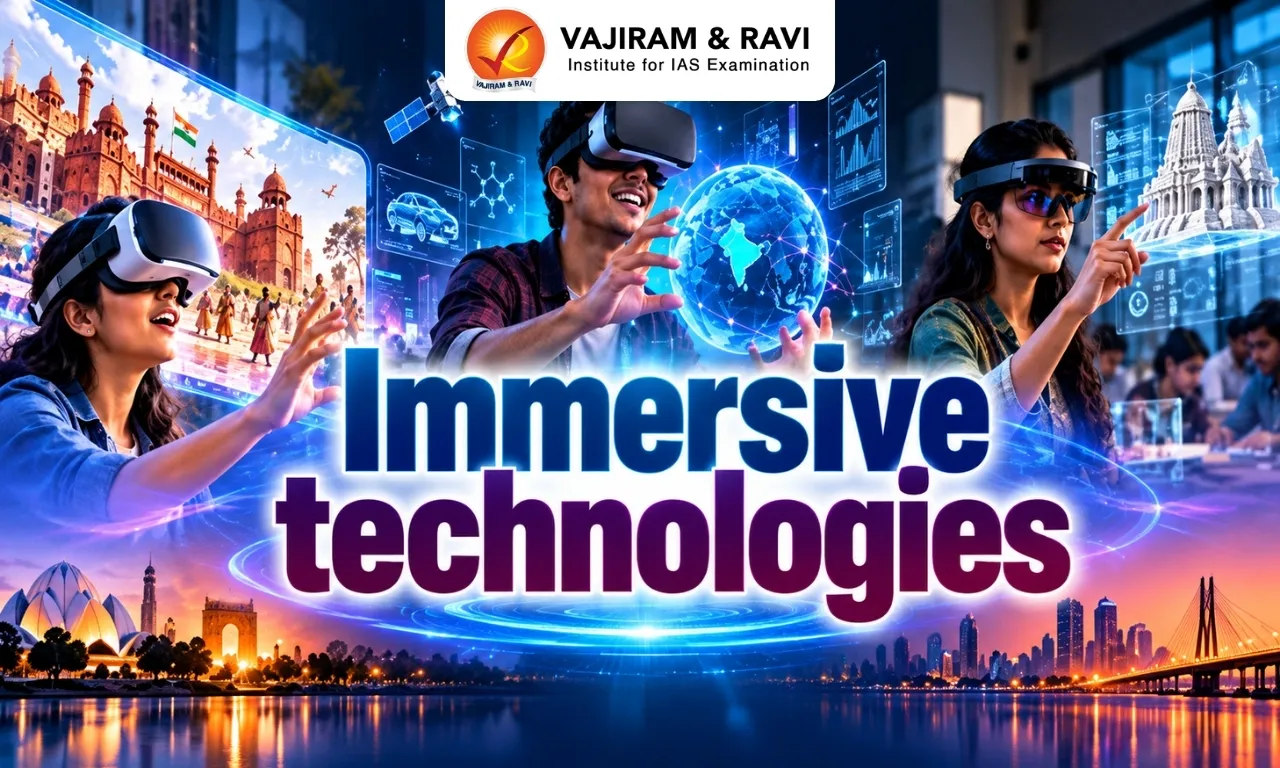
India’s immersive technology market, estimated at $1.26 billion in 2023, is projected to reach about $7.82 billion by 2030, according to figures cited in a government backgrounder.
Immersive Technologies Latest News
According to figures cited in a government backgrounder, India’s immersive technology market generated revenue of about $1.26 billion in 2023 and is projected to reach approximately $7.82 billion by 2030.
About Immersive Technologies
Immersive technologies are an emerging suite of technologies that create interactive, engaging and realistic digital experiences.
Features
These can combine the physical and digital worlds.
They enable users to interact with digital content in ways that feel more natural and experiential.
Users can interact with digital objects and respond to simulated situations.
Unlike conventional digital media, these technologies can engage multiple senses and create a stronger sense of presence.
Examples
A student can explore a virtual laboratory instead of only viewing diagrams on a screen.
A tourist can virtually explore a heritage site before visiting it physically.
The three most common forms of immersive technology are Virtual Reality (VR), Augmented Reality (AR), and Mixed Reality (MR). Collectively, these technologies are often referred to as Extended Reality (XR).
Extended Reality (XR)
It refers to technologies that combine real and digital environments through computer systems and wearable devices.
It creates different levels of interaction between people and digital content. XR includes Virtual Reality (VR), Augmented Reality (AR) and Mixed Reality (MR).
Virtual Reality (VR)
It creates a completely digital environment that surrounds the user.
It mainly engages sight and sound to create a strong sense of presence.
Users can explore and interact with this simulated environment using specialised devices.
Augmented Reality (AR)
It adds digital information to the user’s existing physical surroundings. It can engage sight and sound, while keeping the real-world environment visible.
For example, AR can display directions, information or digital objects over the physical world.
Mixed Reality (MR)
It combines the physical and digital worlds in an interactive environment.
It can engage sight and sound, while allowing digital objects to interact with physical surroundings. Users can see and interact with digital objects as if they were part of the real environment.
Source: PIB
Immersive Technologies FAQs
Q1. What is Immersive Technologies?+
Q2. What is the feature of Immersive Technologies?+
Tags: immersive technologies
Previous Article
Study Examines SGLT2 Inhibitor Benefits and Risks in Adults Aged 80 and AboveNext Article
Greater Flamingos Spotted at Veeranam Lake in Tamil Nadu, Researchers Point to Changing Rainfall
At Vajiram & Ravi, our team includes subject experts who have appeared for the UPSC Mains and the Interview stage. With their deep understanding of the exam, they create content that is clear, to the point, reliable, and helpful for aspirants.Their aim is to make even difficult topics easy to understand and directly useful for your UPSC preparation—whether it’s for Current Affairs, General Studies, or Optional subjects. Every note, article, or test is designed to save your time and boost your performance.
Related Posts
Courses

UPSC Sureshot Mains Test Series
₹27000