
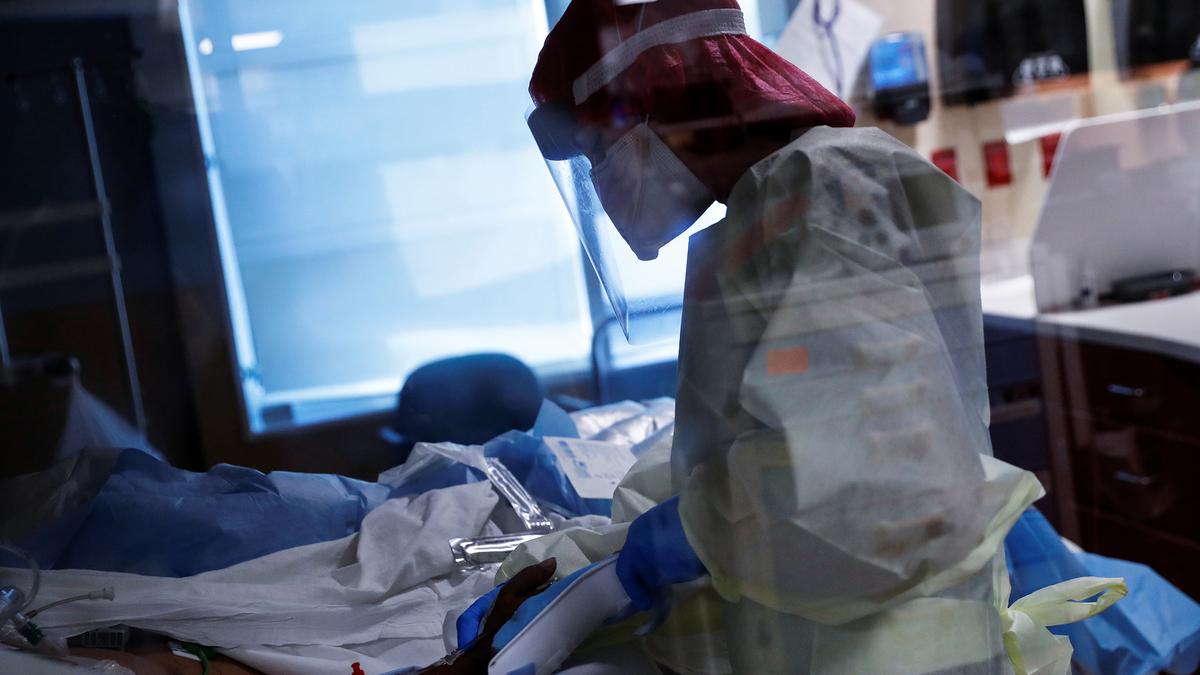
I’m bent over a patient, starting an IV. I hear the steady beep of monitors, the constant hum, and then a scuffle and profanity. The commotion lands on the other side of the curtain. I finish taping up the IV, excuse myself, and slip out.
There, surrounded by paramedics, nurses and police, I find a yelling, kicking, spitting woman who smells of a long day of drinking. ‘Grab that leg, Anita!’ someone calls. I move quickly, dodging a surprisingly well-aimed kick by inches, and grab her shin with both hands, holding it to the bed. She’s strong. Staff members hold her other limbs while a coworker gets the leather restraints in place.
Here I am, I thought. I wanted to be in the big city. I grew up in a smaller town where our experience was limited to what we saw on TV and read in newspapers. By the time I was a teenager, I had such a narrow worldview that barely anybody else belonged in it and an ego so loud that barely anyone else could be heard over it. I proudly spouted ‘personal responsibility’ to anyone complaining about whatever rut they’d become stuck in. ‘Drag yourself out by your fingernails,’ I’d advise. I carried that attitude with me to Chicago in the 1990s, when I began working in this ER.
I watched the woman urinate on herself and then taunt us about having to clean it up. Meanwhile, my patient on the other side of the curtain waited for the asthma medications still in my pocket while another patient held pressure on a wound in the waiting room.
‘Meet Charlene,’ said Frank, grinning. I huffed and looked at my paramedic colleague in disbelief. Frank had lived and worked in Chicago his whole life. Charlene’s mask had slipped off in the scuffle, and she used the opportunity to spit at me.
So that night went. And the next. Always stitched through the chaos were the regulars. Every ER has them, and I was introduced to ours by name every night.
One evening, during a lull, I sat beside June catching up on our charting. She was a seasoned ER nurse and one of my favourite coworkers. I groaned as I heaved myself onto my aching feet. ‘I have to go check on Charlene.’
‘You know she was a teacher?’ June said, glancing up from her chart. ‘Her son drowned, and she never really recovered. Lost her job, lost the rest of her family. She’s been coming here for years like this.’
As I slipped past her curtain, Charlene turned her face toward me. I noticed how hollow her gaze was. How had I never seen that before? How had I never wondered?
She never seemed to remember the night before and apologised bashfully when reminded
‘Hi, Charlene.’ I stood a safe distance away, prepared to duck if she spat. She didn’t.
I pulled up a stool and sat next to her bed, as I’d done before.
‘Is it safe to take these off?’ I asked. She nodded. I slowly loosened the leather straps, limb by limb, watching for signs of attack. I paused, just for a second, and gave her hand a soft squeeze. I’d never done that before. Then I sat back down.
With her limbs free, she turned over on the bed to face me, eyes closed. She whispered: ‘I haven’t always been like this.’
‘You’re not always like this now,’ I said. I’d seen sober Charlene leave the ER in full high spirits, giggling and flirting with Frank. She never seemed to remember the night before and apologised bashfully when reminded.
In the ER, we lived by one rule: work hard, play hard. Together, we developed a perverse sense of humour that only we appreciated. Sometimes we saw obituaries of our regulars pinned to the break-room wall.
Long, challenging shifts were broken up by nights out together, when we drank, got silly, played pool, ate bar food and laughed over jokes that would turn anyone else’s stomach. We also raised a quiet toast to our deceased regulars. We were bonded by what we did in a way I had never experienced before.
A few years into my ER career, by then more experienced and cynical, I attended a required class. The instructor opened with a lesson on compassion as a cure for burnout. She reminded us that our kindness might be the last kindness a person in our care receives. Those words have knocked around in my thoughts ever since. I remembered times when I should have been kinder and more patient, and I vowed to improve my approach to all patients, no matter how many times I’d triaged and discharged them that day. I began to wear compassion like armour, and our toasts to dead regulars took on more weight.
June no longer had to give me insights into our patients; I learned their stories on my own.
The armour of compassion worked – until it didn’t. As the years pressed on, and I gained experience in emergency departments all around the US, the ER became more difficult. C-suite executives with business or finance degrees but no medical training loaded nurses with more and more non-patient-care tasks: fill out this extra form for someone in a back office doing metrics here, ask these five extra questions to all patients to ensure we can bill for screenings that have nothing to do with the patient’s chief complaint there, spend an extra 10 minutes searching for a computer, and sign into it only to find the scanner broken, then repeat. As the pace accelerated, the goalposts for success moved farther away. I couldn’t be in enough places at once, let alone spend three minutes connecting with a patient and addressing their fear or discomfort.
The number of regulars increased, but we didn’t have time to get to know them. Nobody wants to feel like they’re failing day in and day out, so in December 2019, I planned my exit. I enrolled in Spanish classes in Colombia and intended to stay for a year on a student visa, teaching English on the side. I hoped the move would lead to other opportunities away from the United States healthcare system.
Around that time, I began to catch rumours of a new, unnamed illness overseas. I checked with the hospitals I’d worked in before and, aside from a few other concerned coworkers, they seemed largely unaware and certainly weren’t taking any precautions. For them, it was business as usual (making money). For me, it was a race to go where my savings would last longer, and my stress would be lighter.
By the time entire villages in Italy were singing and cheering out their windows for healthcare workers, it was still business as usual in the US. When the virus hit US hospitals, they were already filled to the brim in the name of ‘efficiency’ and caught with their proverbial pants down. Then borders closed, and I was trapped in the US.
Whatever the signs said, we weren’t heroes in the hospitals’ eyes
With my savings dwindling and a growing sense of duty, I jumped in again. Something about the need, the fear and the desperation of so many people rekindled the compassion I’d worked so hard to cultivate years earlier. I wanted to help.
I arrived in North Carolina for work and secured housing, but my job was cancelled before it even began. Next came New York and then New Hampshire. I knew that our presence meant something to scared people. Somehow, we brought comfort – and that felt worthwhile.
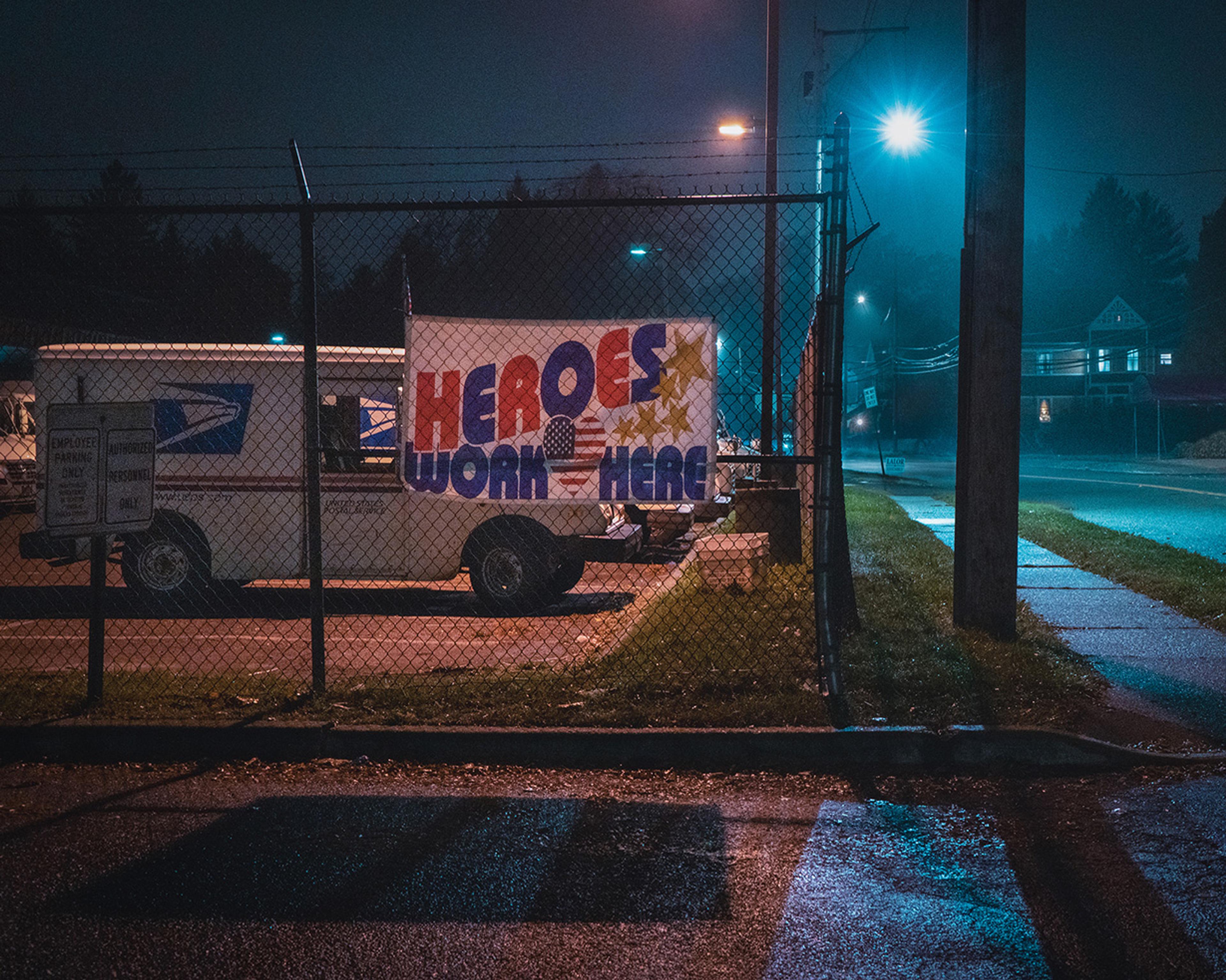
At first, cheers for nurses and doctors filled the empty streets. Hospitals hung ‘Heroes Work Here’ signs while administrators stayed far away. Whatever the signs said, we weren’t heroes in the hospitals’ eyes. Real heroes would have been given proper personal protective equipment. I had one N95 mask, pulled repeatedly from a crumpled brown paper bag, and single-use face shields I washed, hung and reused until they were scratched and foggy. The worn-out equipment and closed doors made it nearly impossible to hear alarms or see monitors. Once again, I wasn’t meeting my patients’ needs, and compassion quickly morphed into despair.
As the coronavirus swept across the US, a family tragedy brought me to northwest Florida. There, the bars and restaurants were in full swing, masks were scoffed at, and the pandemic seemed real only for families of the dead. Everywhere, people talked about the COVID hoax and loved to exclaim: ‘If you think you’re at risk, YOU wear a mask and stay home!’ Eventually, the first pandemic wave seemed to die down, and I cautiously took a job in a nearby ER.
As in other emergency departments where I’d worked, the staff were stretched thin. But here, each nurse carried a heavier patient load, and staff members, often traumatised themselves, had little time to laugh together or bond.
Then the Delta variant swept through. These patients were younger, many of them previously healthy, and it was disturbing to see so many of them in such a serious condition.
I was rushing through discharge instructions one day when I saw a new patient wheeled into one of my rooms, his lips blue, his skin sweaty and pale. I immediately excused myself and headed toward him. He didn’t have time to waste. He was in his 40s, and too short of breath to speak more than a few words at a time. He denied any history of asthma or other health issues.
My regulars were the intoxicated, psychotic, lost, and forgotten, the ones who had broken down doors inside me I’d never known were there
He refused to keep his mask on, which I had come to expect by then. Double-checking my own mask, I put him on oxygen, listened to his lungs and hooked him to the monitor while scanning the nurses’ station for a respiratory therapist and the attending physician. He was agitated, which commonly happens as oxygen levels drop. I asked him the standard questions, including whether he had been exposed to COVID-19 recently. At that question, he began to sputter about the hoax we were all perpetrating. Fatigue squashed his outrage, and he grudgingly allowed me to collect a sample for a COVID-19 test while I guarded against a possible attack.
His colour and oxygen levels improved on high-flow oxygen therapy, but his anger didn’t abate. I wasn’t looking forward to breaking the news that his COVID-19 test was positive.
 How to talk to someone who has dementia
Save Is it morally wrong to not take care of yourself?
 The full-service grandad
When I did, he glared at me and used what little energy he had to call me a liar. As I backed out of his reach, he tore off his monitor leads and oxygen, yanked out his IV, and made for the exit, blood dripping down his arm. He made it several steps toward the exit before nearly collapsing, and we helped him back to bed, panting. Back in the room, I called for a tight-fitting breathing mask that would push air into his lungs as I pressed gauze over his dripping IV site and reattached his monitor. Then he took a feeble swing at me and spat. I don’t remember his name. He wasn’t a regular.
The people spitting and swearing at me in this ER believed that safeguarding oneself from illness was a matter of personal responsibility, but that responsibility ended with themselves. They were sealed inside an echo chamber that confirmed everything they believed. I recognised what I used to be, and what I might have become had it not been for the ER, Chicago, Frank, June, Charlene. The thought sickened me.
Nah, these weren’t my ER regulars. My regulars were the intoxicated, psychotic, lost, and forgotten, the ones who had broken down doors inside me I’d never known were there. Working with them in the chaos of that Chicago ER, I learned that personal responsibility didn’t mean just taking care of yourself. They helped me see that a world of people responsible only for themselves will never improve.
I put in my notice that day, and scoffed at the ‘Heroes Work Here’ sign on my way out.
Phot by Charles Steven/Flickr