
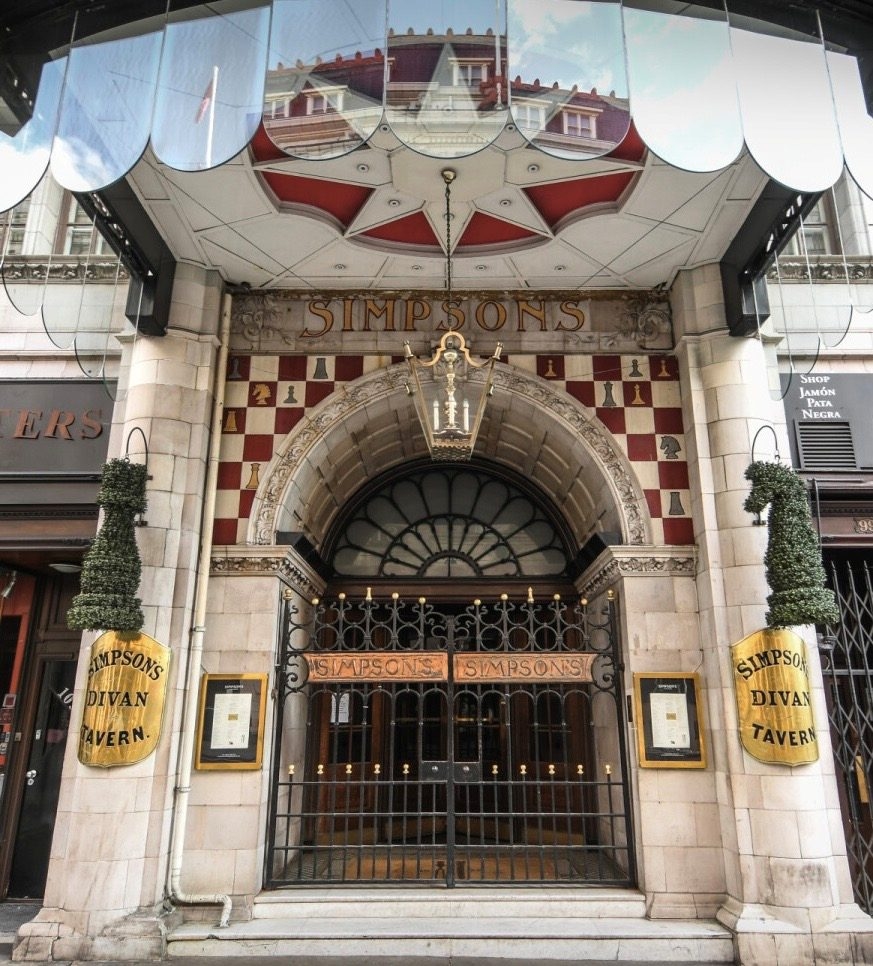
Simpson’s-in-the-Strand in London is one of Europe’s most famous chess cafés and was also a very exclusive restaurant where London high society regularly gathered for meals, conversation and, for many years, chess as well.
The establishment opened in 1828 under the name “Grand Cigar Divan”. In the middle of the 19th century, it was the meeting place of the English chess scene for more than 20 years. Anyone who wanted to see the world’s best players at close quarters – Henry Bird, Wilhelm Steinitz or his rival for the claim of being the world’s best player, Johannes Hermann Zukertort – or perhaps even play against them for money, had come to the right place.
 Learn about one of the greatest geniuses in the history of chess! Paul Morphy’s career (1837-1884) lasted only a few years and yet he managed to defeat the best chess players of his time.
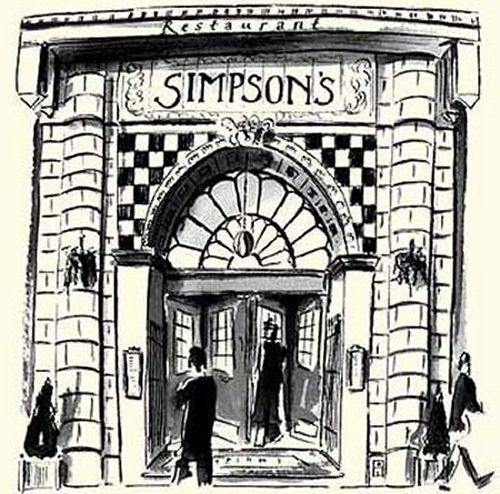
It was here, at Simpson’s, on the fringes of the first major international chess tournament of 1851, which marked the beginning of modern tournament chess, that the famous “Immortal Game” between Adolf Anderssen and Lionel Kieseritzky was played as a casual game.
In later years, chess players gradually receded into the background, and players found other meeting places or founded chess clubs. Even so, the chess tradition at Simpson’s was maintained for a long time.
One of Simpson’s regular visitors towards the end of the 19th century was Arthur Conan Doyle (1859–1930), who would think about his detective stories while dining there. The restaurant is occasionally mentioned in his Sherlock Holmes novels.
Conan Doyle also had a connection with chess. His remark about the investigative method of his detective Sherlock Holmes can also be applied to calculation in chess.
“How often have I said to you that when you have eliminated the impossible, whatever remains, however improbable, must be the truth?”
Arthur Conan Doyle
At the beginning of the 20th century, Simpson’s was remodelled and for a time was regarded as the best restaurant in England. Chess, however, had long since ceased to be played there. After the 1980s, English chess enthusiasts tried to revive the tradition and organised a number of chess tournaments there. The establishment changed ownership several times at the beginning of the 21st century and then stood empty for a while.
Eventually, Simpson’s-in-the-Strand was bought by the Savoy Hotel Group and reopened as a restaurant under the direction of restaurateur Jeremy King. But the chess tradition was also to be revived after the reopening.
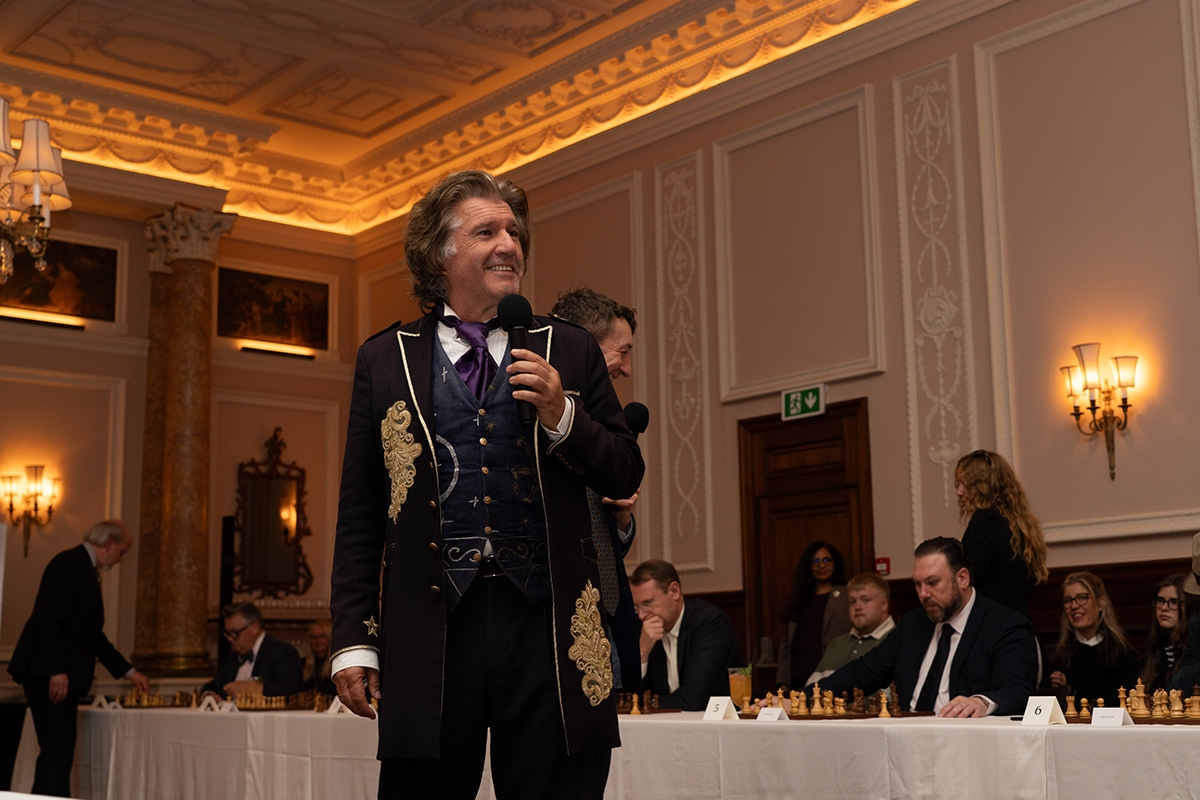
Jeremy King appointed his friend, the musician and composer Jason Kouchak, as impresario for music and chess.
Last March, Simpson’s hosted its first blindfold simultaneous exhibition in 100 years. Since the days of Philidor, blindfold play had been one of the special feats of the old masters, who played and won against one or even several opponents without looking at the board. English grandmaster Luke McShane revived that old blindfold tradition.
 How grandmasters win without fireworks: GM Jan Markos shows you 11 very practical tips from “How to play in a lost position” to “Be patient like Carlsen” that will improve your tournament chess.
Most chess books teach you what to think about. This series teaches you what to actually do when the clock is running and the result is on the line. Compiled from GM Jan Markos’s acclaimed “Practical Tips for the Tournament Player” column in ChessBase Magazine, Volume 1 covers the decisions every tournament player faces before the position ever gets complicated: how you use your time, how you handle pressure, and how you think when the stakes are real.
Free Video Sample: How to use your time effectively
Recently, Jason Kouchak, together with Luke McShane and Stuart Conquest, organised another chess event at the legendary Simpson’s. On 18 October, Luke McShane gave a blindfold simultaneous exhibition against three opponents. His opponents were fairly strong club players with ratings between 1850 and 2100.
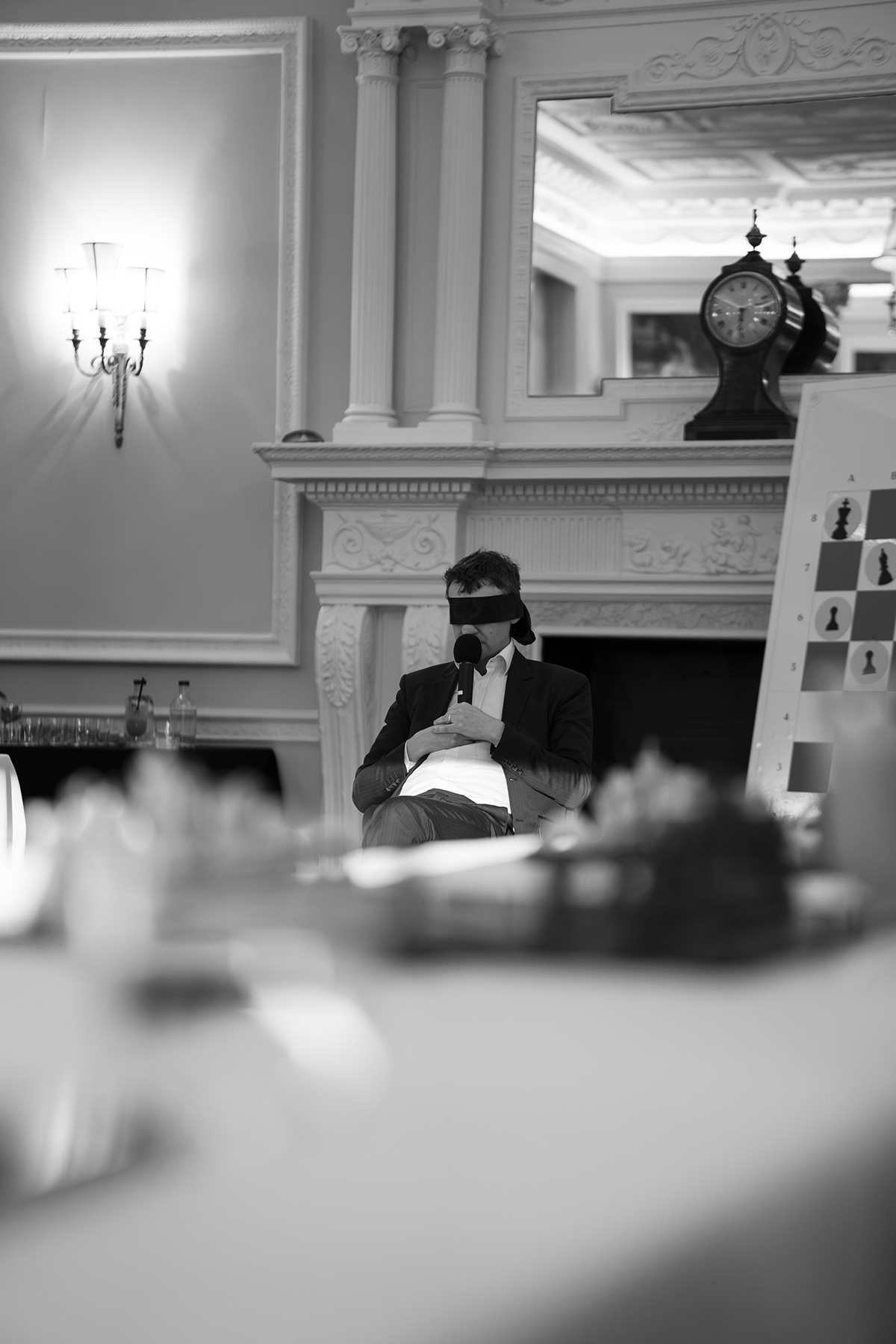
Luke McShane
At the same time, Stuart Conquest played 12 opponents with sight of the boards in a “normal” simultaneous exhibition.
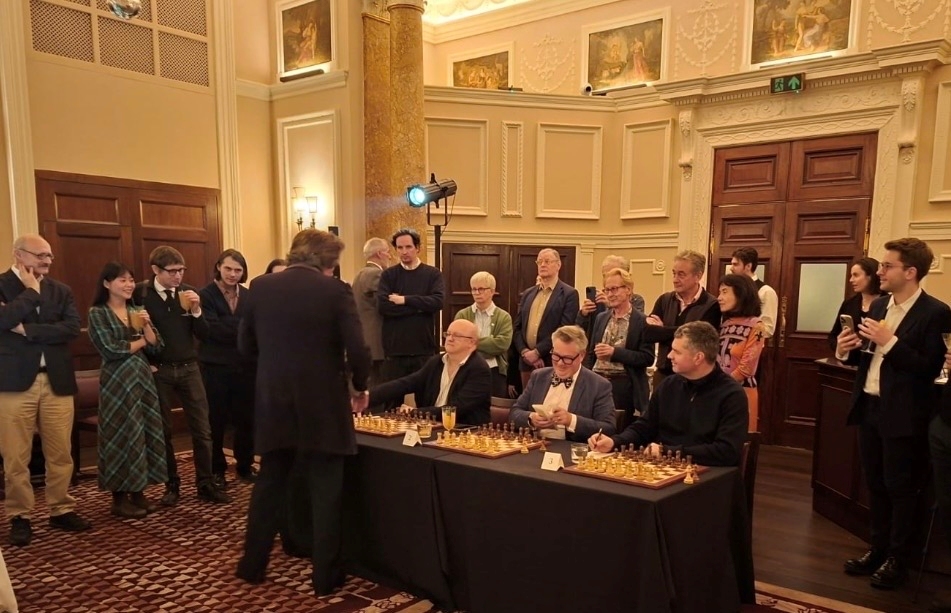
Jason Kouchak carries out Luke McShane’s moves
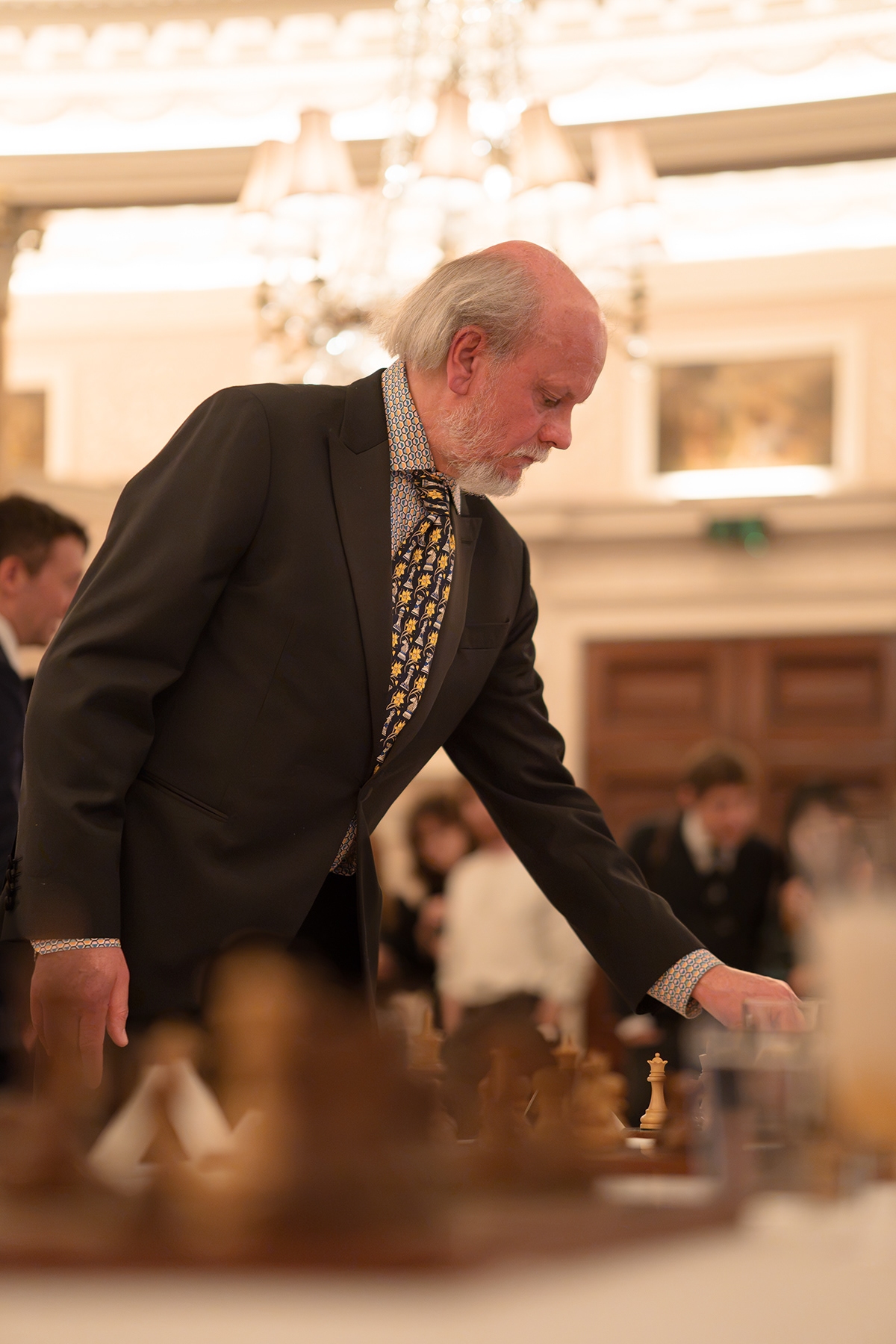
Stuart Conquest begins his simultaneous exhibition
As a “Renaissance man”, Jason Kouchak hosted the evening with flair and energy, complementing the historic setting with a suitably styled frock coat reminiscent of fashion from Philidor’s era.
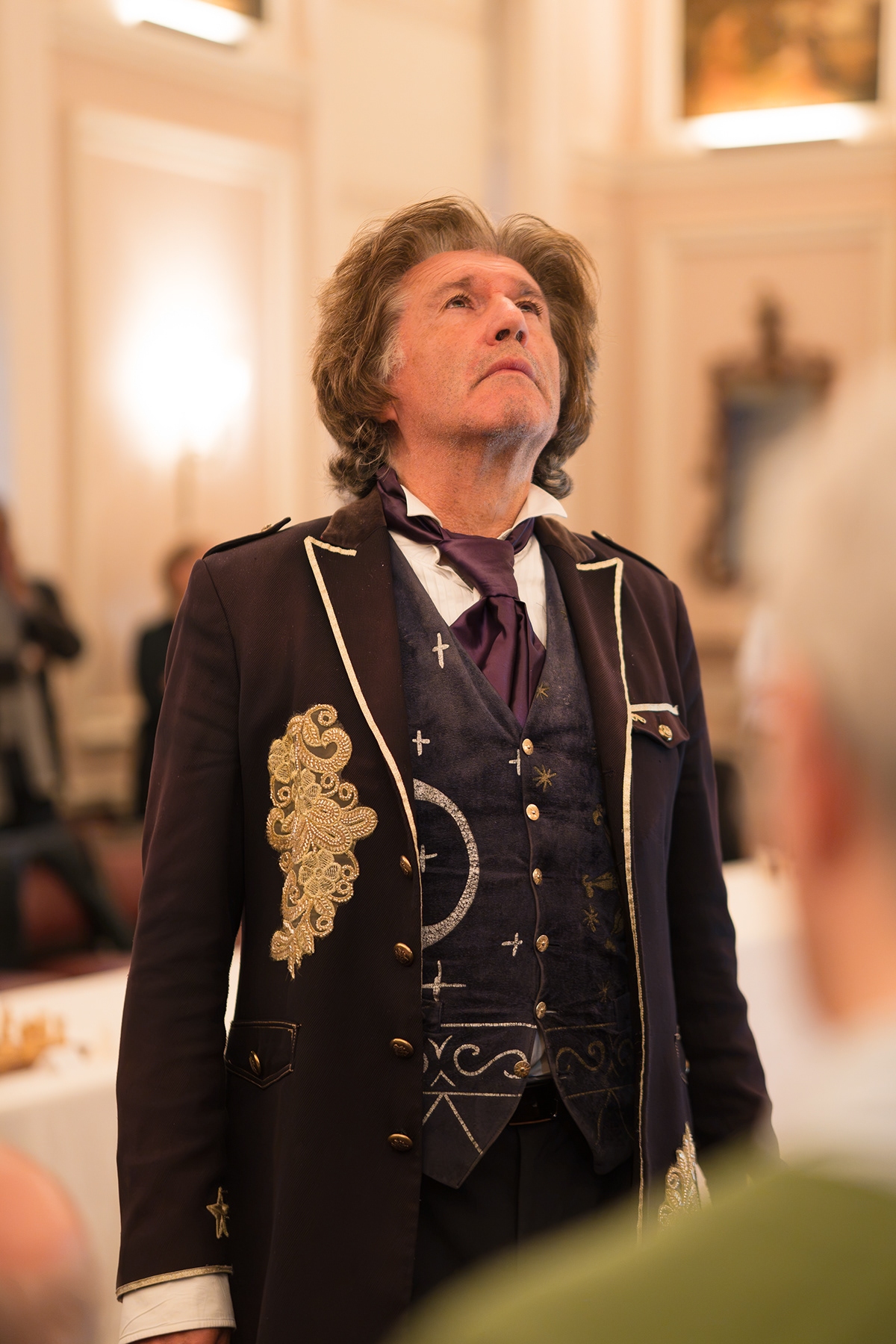
Jason Kouchak: Looking for inspiration
 Smyslov cultivated a clear positional style and even in sharp tactical positions often relied more on his intuition than on concrete calculation of variations. Let our authors introduce you into the world of Vasily Smyslov.
After the chess exhibition, his music was played during the jazz part of the evening.
After 40 minutes, Luke McShane had defeated all his opponents. The grandmaster gave an understandable reason for his superiority: “When I play blindfold, I have an advantage over my opponents. I am not distracted by the beautiful surroundings here.”
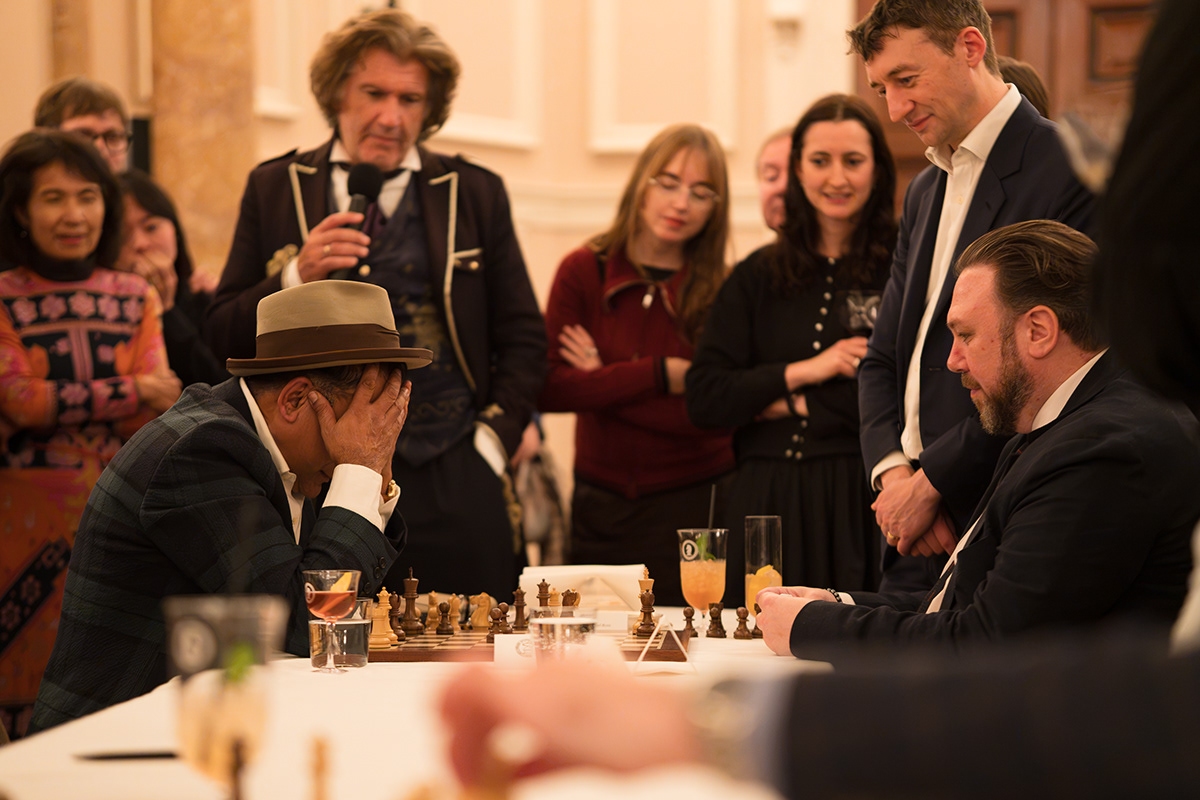
The Final Movement: Jazz Chess!
One of Stuart Conquest’s simultaneous opponents was Henry McWatters, chairman of the chess circle at the Royal Automobile Club. With a little luck, he managed to win his game. He has kindly made the wild and complicated encounter available here.
“Jeremy King is the white knight who saved the ‘Home of Chess’ – Simpson’s in the Strand – and restored it to its former glory”, Jason Kouchak said, delighted with the successful evening.
The well-known nature photographer Chiao Lee captured the “wild” moves on the chessboard and the “survival instincts of the knights in their struggle against the intuition and acuity of the grandmasters” (Jason Kouchak).
On 6 December, further surprise guests from the grandmaster community will be there to entertain, inspire and perhaps even surprise an enthusiastic chess audience.
With many thanks to Jason Kouchak for the inspiration and information.