
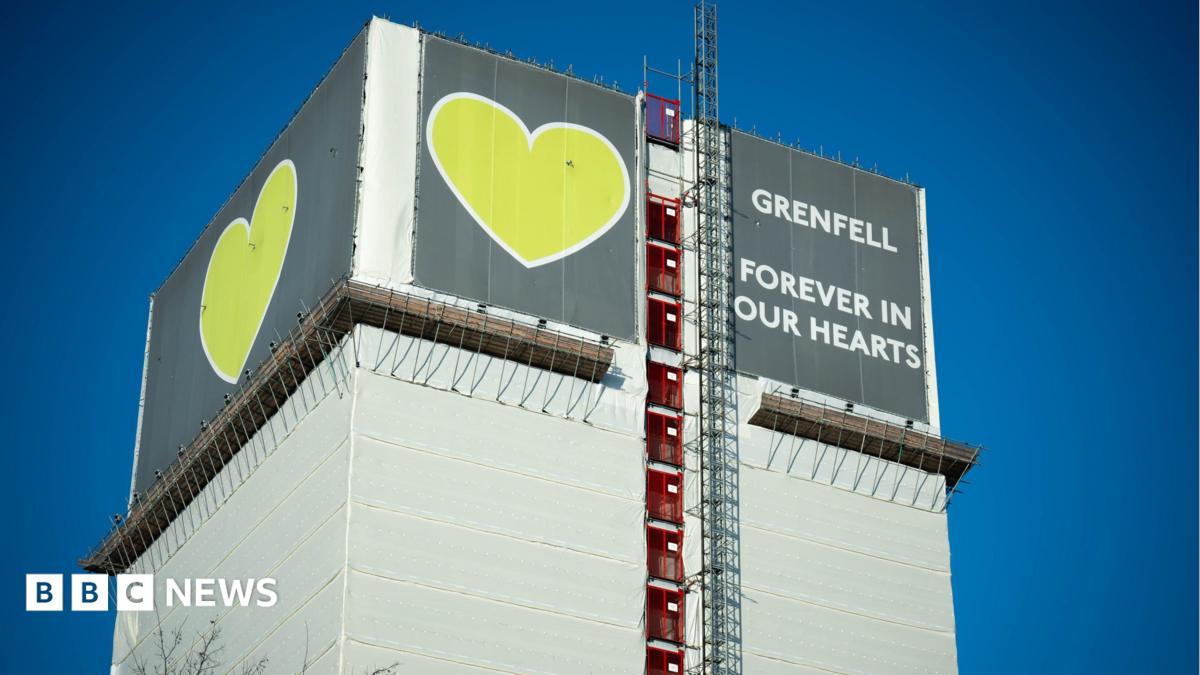
A university and construction firm will analyse the “chimney effect” that contributed to the rapid spread of smoke and flames during the 2017 Grenfell Tower fire.
The chimney effect is when hot gases, fire and smoke rise rapidly through vertical shafts in a building, spreading upwards, downwards and horizontally.
The University of Hertfordshire said its scientists would work with Welwyn Garden City-based Ambar Kelly on “one of the construction industry’s most overlooked safety problems”.
Alex Bardett, the managing director of the company, said the tragedy “led to the removal of combustible cladding, but riser shafts remain overlooked, despite their role in vertical fire spread”.
A public inquiry found the fire in June 2017 that killed 72 people was avoidable.
In high-rise buildings, lift shafts, stairwells, service risers, cladding cavities and ductwork can act like chimneys if they are not properly sealed, maintained, compartmentalised and fire stopped, the university said.