
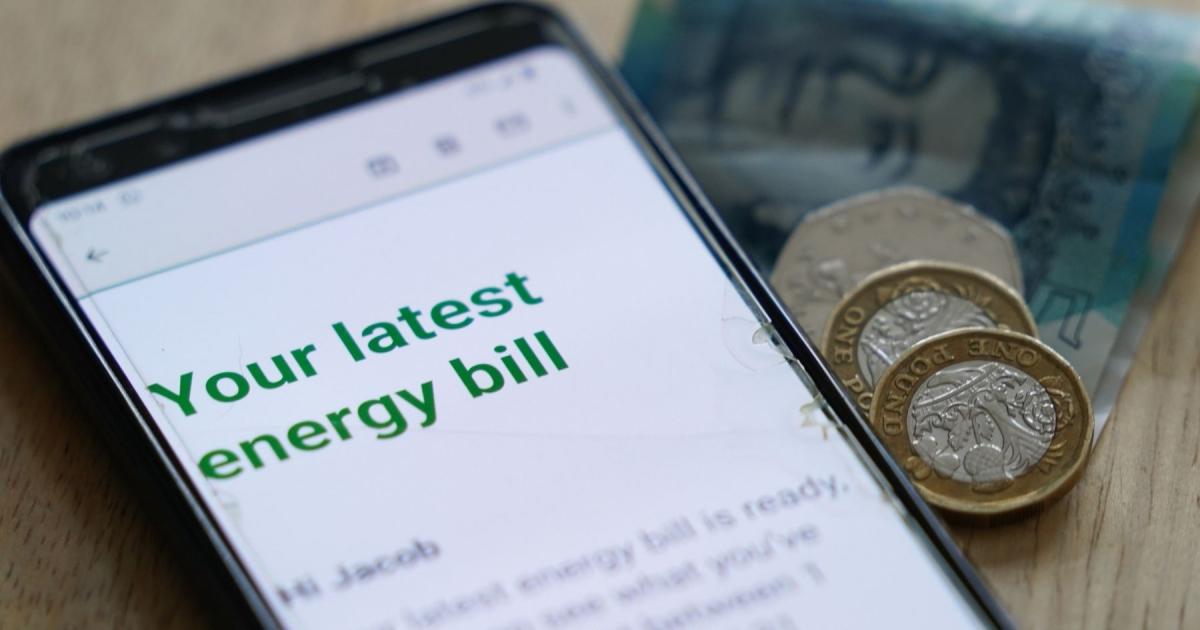
The findings have prompted fresh criticism that the scheme is poorly targeted, with some of the households most vulnerable to rising energy costs not eligible for the support.
Around 20 million households in council tax bands A to D will receive £100 directly into their bank accounts in January as part of a £2.6 billion package funded by a raid on banks’ profits, as announced by Chancellor John Healey last week.
However, eligibility is based on council tax bands rather than household income.
READ MORE: John Swinney makes ‘no apology’ as he hits back at foreign trip critics
Official estimates show 12% of households in the bottom 30% of incomes will not qualify, while 17% of “fuel-stressed” households, which spend at least 10% of their family budgets on energy bills, will also miss out.
Analysis by social policy think tank Policy in Practice found that a low-income family of five or more is 1.6 times more likely to live in a property in bands E to H than the average low-income household.
As a result, more than 130,000 larger, low-income households are expected to miss out on the £100 payment this winter.
Deven Ghelani, director of Policy in Practice, said: “Over 800,000 low-income families are going to be missing out on this vital relief from high energy bills.
“Millions of people are [also] missing out on over £24bn of [wider] support that is going unclaimed each year because of low awareness, administrative complexity and stigma.”
READ MORE: Commonwealth Games generated £223 million for Scotland, report finds
He further added that this was “shocking at the best of times, but unforgivable in a cost of living crisis” and urged ministers to do more to help people access support.
Ghelani also said: “Council Tax band targeting applies solely in England, with Scotland, Wales, and Northern Ireland receiving equivalent funding allocations. We encourage devolved leaders to adopt a more targeted approach so that relief reaches the households most in need.”
The think tank also found that 84% of households which will not qualify for the £100 payment either live with a disabled person, have children or are below the poverty line.
Campaigners have criticised the use of council tax bands to determine eligibility because they are based on 1991 property values, and have called for support to instead be linked to income or access to certain benefits.
The concerns come as households face another sharp increase in energy costs in the new year.
EDF predicts bills will rise by £469 on January 1, taking average annual bills to £2192, while E.On Next forecasts an increase of £460.
Lower-income households are also less likely to pay their bills by direct debit, meaning they will not receive the £100 automatically.
Ghelani said many low-income households were also overdrawn, raising the possibility that money intended to help with heating costs would instead go towards existing debt.
The analysis was conducted using the Low-Income Family Tracker (Lift) analytics platform, which is used by more than 130 local authorities across the UK to support low-income residents.
Healey defended the support package, saying it was designed “to take the pressure off in the coldest months and see people through to the spring”.
(Image: PA)
He told the BBC: “People see the breathing space that we have been able to offer in this budget first, but there’s also big changes for the longer term.
“So on energy, yes there’s help for households now, there’s help for the energy intensive business, but there’s big changes that mean an end to gas standing charges for households next year, an end to the government policy costs simply loaded on to consumer bills through levies.”
Healey announced in the Budget that he would also ask Ofgem to remove the fixed daily standing charge for gas in 2027, or as soon as possible afterwards.
A UK Government spokesman said: “Tackling the affordability crisis is our priority, which is why we’re giving families immediate breathing space.
“From January, millions of households will receive £100 towards their energy costs from January, alongside action to make bills fairer, including removing standing charges from gas bills and supporting those in energy debt.”