
Credit: Far Out / Apple Corps / Columbia Records
November 10th, 2026 · 8:45pm GMT
Anything that Billy Joel ever worked on usually needed to be a bit more sophisticated than the average rock and roll song.
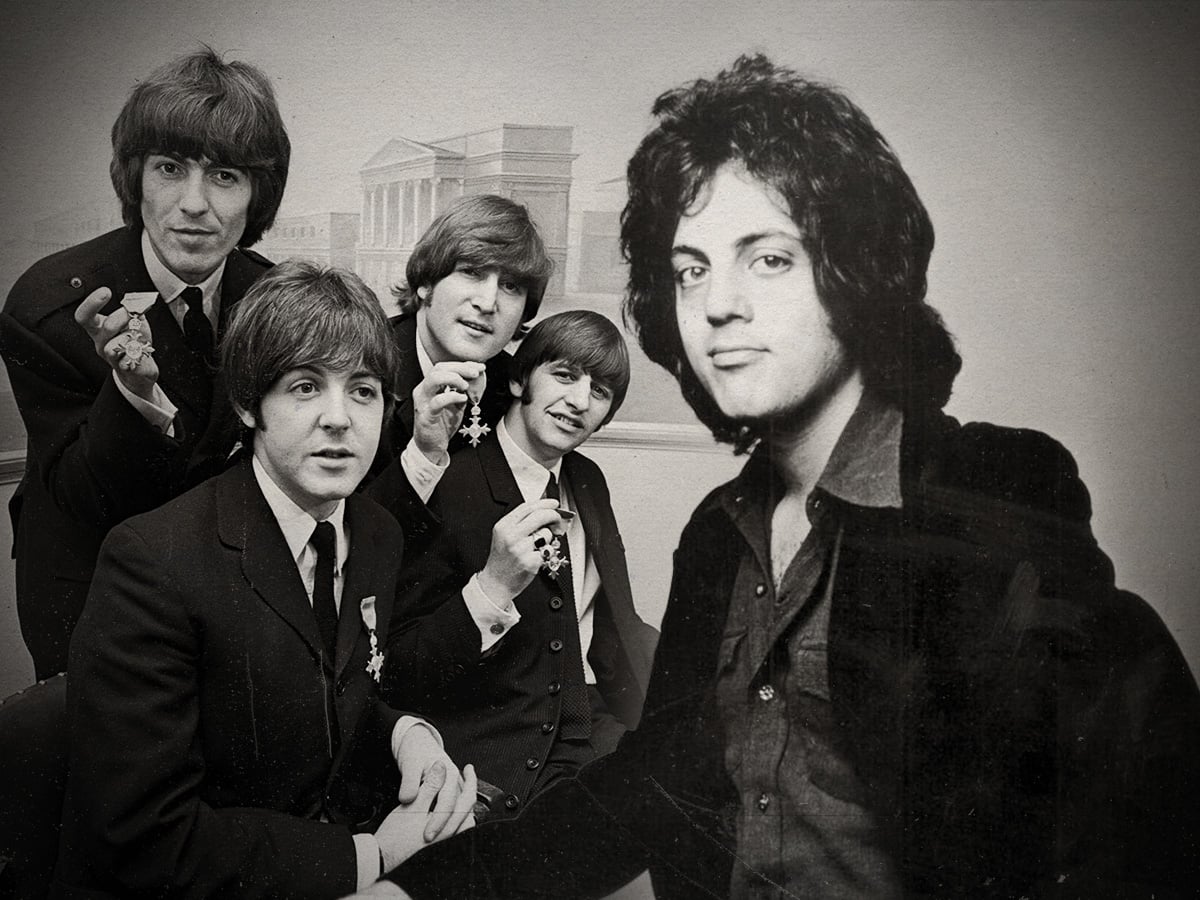
He had an infatuation with the genre ever since he was a kid, but that history of musical theory that he learned when he was a kid never fully went away, which probably explains why some of his songs could double as classical pieces every once in a while. But for all of the bands that opened his eyes to what rock and roll could be, ‘The Piano Man’ never forgot about the impression that The Beatles had on him from the first moment he saw them.
Then again, saying that The Beatles changed a musician’s life isn’t exactly news in the modern age, either. Some of the biggest songs that Joel ever made were indebted to what the Fab Four had started, and given the band’s history of subverting expectations, every one of their albums seemed like a new adventure both musically and structurally. None of their records sounded the same, and all of their musical output seemed to be a new challenge for them whenever they made a record.
None of their songs needed to be the same poppy schlock everyone else was doing, and from the time that Joel heard them on The Ed Sullivan Show, he knew that they were offering everyone a different kind of ride. Because, for one thing, the band actually had a lot more musical theory to draw from than what everyone else was doing whenever they made their rock masterpieces.
George Martin was the one guiding them through many of their greatest moments, but there were also more than a few times when John Lennon and Paul McCartney would throw the odd chord into play here and there. Not many kids picking up guitars were thinking of adding diminished chords or augmented chords into their songs, but while Joel could appreciate that, they were still teenybopper music for a lot of people.
The band were still garnering an audience that was mainly teenage girls, and while their screaming resonated across two continents at the time, Joel remembered listening to ‘Yesterday’ and being stunned by what he heard. The beginnings of the Fab Four already had a few gorgeous ballads like ‘If I Fell’ and ‘And I Love Her’, but hearing strings being used this way on a rock and roll song wasn’t something that was all that common in those days.
This was the first time classical instruments were being used in this way, and it was enough for Joel to start seeing the band in a different light, saying, “[Paul McCartney] can’t do anything wrong with a melody. But if I had to pick one song, [it would be] ‘Yesterday.’ I remember when that song first came out. It was different from anything that I’d heard before. The Beatles had written happy songs, but this was about heartache. And Paul sang it so well, and it was written so well. It was deeply affecting. And that’s when I realised how profound The Beatles’ music was.”
Further reading: From The Vault
And to everyone that still claims that McCartney was nothing but the soft balladeer behind some of the band’s greatest hits, ‘Yesterday’ is actually proof that there’s a lot more sombre moments throughout his career. He might have the reputation of being the most jovial person in every room, but hearing him sing about losing the love of his life is one of the most gripping tunes that he would ever write.
It did seem a little bit soft compared to when he would break out his Little Richard chops, but if a song is so good that even John Lennon couldn’t make fun of it, that’s as good a sign as any that you were working with something incredible. And even though Joel had his own fair share of masterful melodies, this was the song that almost gave him permission to start thinking about rock in another way.
ADD AS A PREFERRED SOURCE ON GOOGLE  The Far Out Beatles Newsletter
All the latest stories about The Beatles from the independent voice of culture.
Straight to your inbox.