

The comment did not go down well during recent questioning
14:20, 11 Nov 2026Updated 14:21, 11 Nov 2026
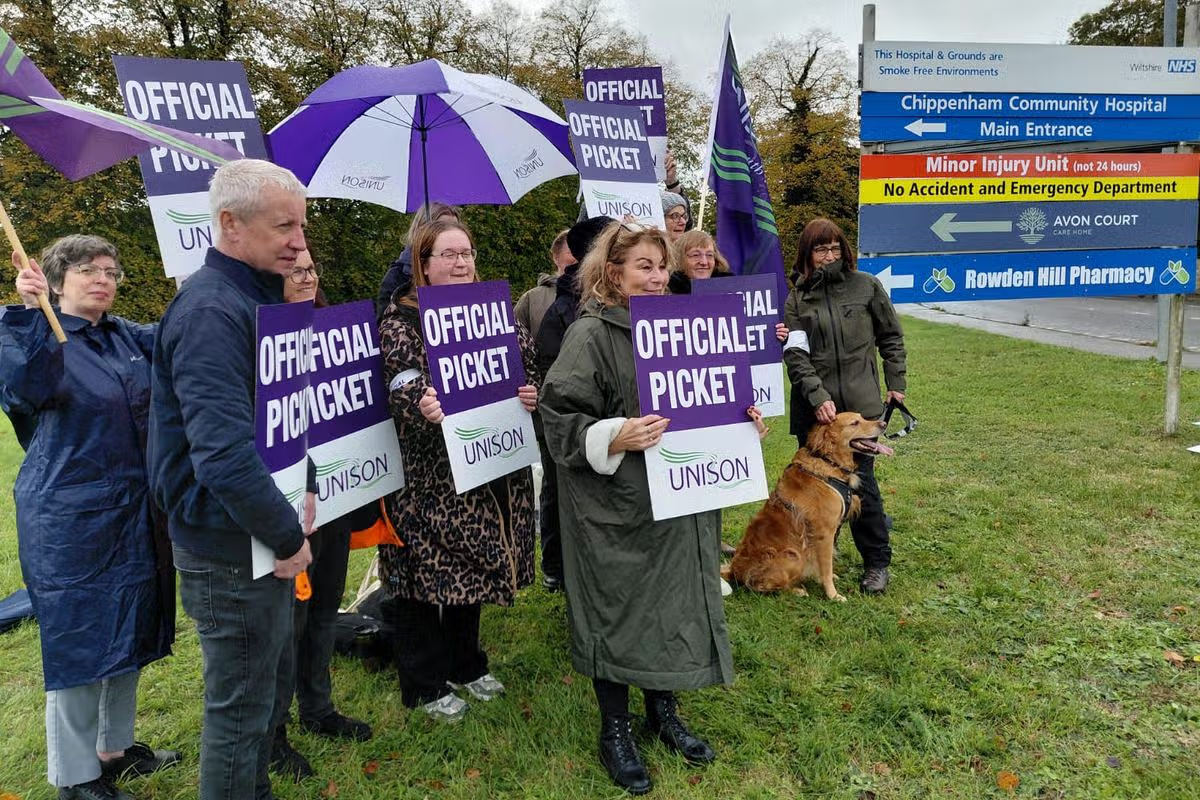
HCRG staff on strike on Wednesday 21 October outside the Chippenham Community Hospital(Image: Supplied)
A private company delivering NHS services in Bath and the wider region says it does not recognise trade unions — despite a new law requiring it to.
Private care provider HCRG’s deputy director of operations Joanne Meacham told Bath and North East Somerset Council’s health scrutiny committee on November 9 that the company did not recognise trade unions. Asked how this was legal, Ms Meacham shrugged and said: “I don’t know to be honest.”
HCRG runs St Martin’s Hospital in Bath and Paulton Memorial Hospital. It took over a major NHS contract to run community health services across Bath and North East Somerset, Swindon, and Wiltshire in April 2025.
Since the HCRG takeover many patients have complained of long delays for the services it provides, particularly once HCRG introduced its “single point of access” in April 2026. HCRG staff called a 24 hour strike over staffing levels, workloads, and concern for patient care on October 21.
Questioned about the strike by councillors, Ms Meacham told the scrutiny panel: “We mitigated that really well so that there was not any adverse events or effects on the public using the services. HCRG do not recognise trade unions but are working with the trade unions and very closely with UNISON, which is this particular union, to come to an agreement of a partnership arrangement.”
Scrutiny committee member Michael Auton (Midsomer Norton North, Liberal Democrat) said he was concerned to hear they did not recognise trade unions. He said: “They play a vital role in providing some kind of input into the way staff are being treated. We have dealt with a number of disputes since I have been in this role and all of them have been really key and the unions have been a big part of that.”
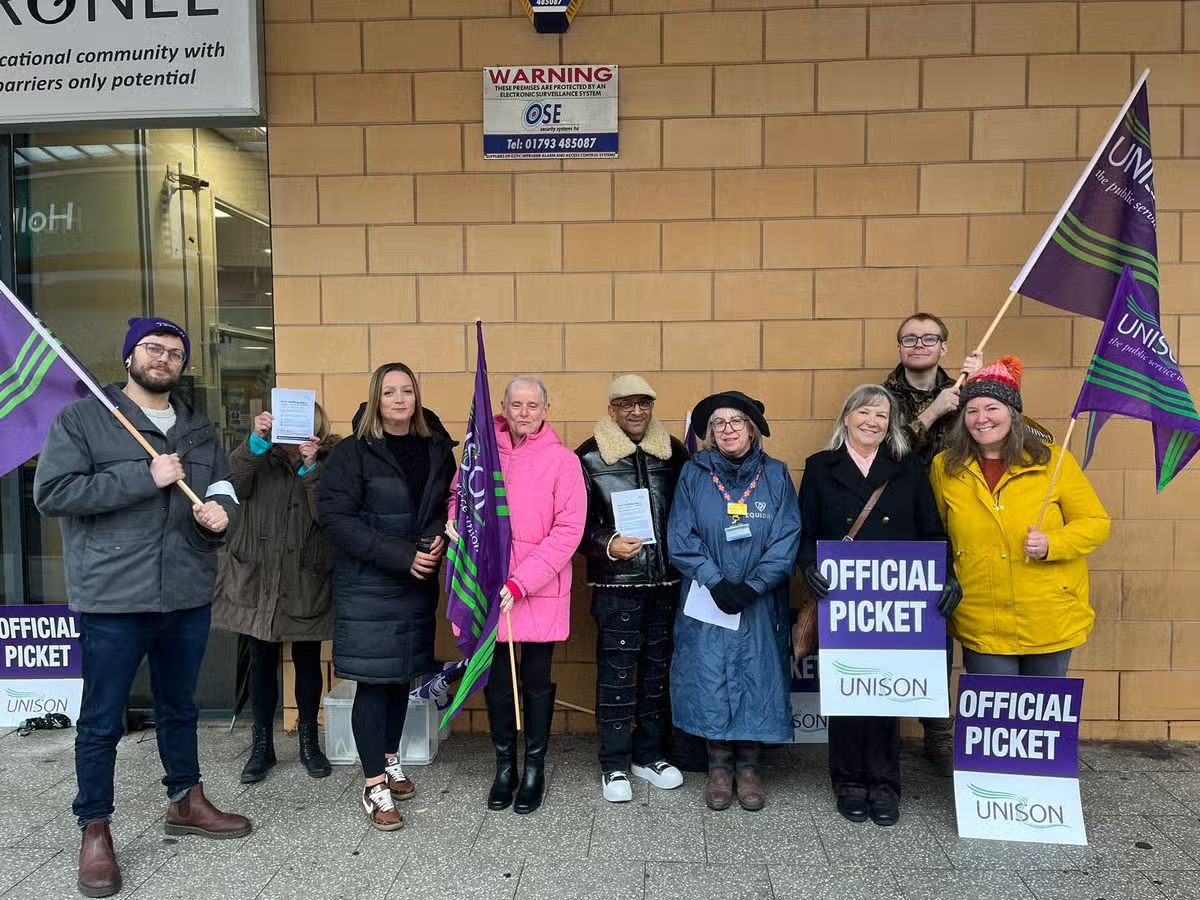
HCRG staff on strike on Wednesday 21 October outside the Orbital in Swindon(Image: Supplied)
Suzanne Westhead, Bath and North East Somerset Council’s director of adult services, said: “Just to be clear the law has changed around that and under the new Employment Act it is very clear all organisations have to recognise unions — and I know HCRG do because of the work they are doing with UNISON at the moment.”
Following the industrial action in October, Chippenham MP Sarah Gibson called a Westminster Hall debate about HCRG’s performance across the contract. Speaking in the parliamentary debate on October 27, she said: “Constituents repeatedly tell me about the long waits on phones, missed callbacks, referrals that are difficult to track, and urgent cases not reaching the right team quickly enough.”
In one case, a man reportedly wrapped plastic bags around leg wounds that had leaked through his dressings because nurses took so long to arrive, while there were also delays to dealing with patients with “urgent catheter issues,” and one person approaching the end of life was allegedly left in “severe pain” for hours with no pain relief. She said: “Nobody approaching the end of their life should spend hours in avoidable pain because the system is inadequate.”
The contract which HCRG was awarded for “BSW community health” runs for seven years and brings together 130 different health services which were previously contracted to nine different organisations, including eight community hospitals and three minor injury units. The “single point of access” was launched in April to provide a single “front door” to all community care services.
A report on HCRG’s performance which went before the committee stated: “Despite significant planning, the launch was not as smooth as it should have been, and we are sorry that some people waited too long to speak to us or to hear back.” HCRG’s own target is for 95% of calls to be answered within 10 minutes. In April, when the service launched, just 51% of calls were but by September 82% were.
Vice chair of the scrutiny committee Liz Hardman (Paulton, Labour), who previously had waited 20 minutes to get through to the single point of access, said she had personally found it had improved. She said: “In the last three weeks I have received positive feedback from my residents and in my own personal experience as well it has been within two to three minutes.”
At a previous meeting of the scrutiny committee in October, HCRG’s regional director Val Scrase responded to recent BBC reports of people suffering delays to their care by telling councillors: “I really want to be very clear that just because things get into the media, that does not mean to say that those incidents actually happened.”
She added: “I am not here to comment on individual incidents. There is an approach that we take with our commissioners around investigating clinical harm. We report into the ICB [integrated care board] through quality reports. The media is the media. I don’t want to comment any further.”