
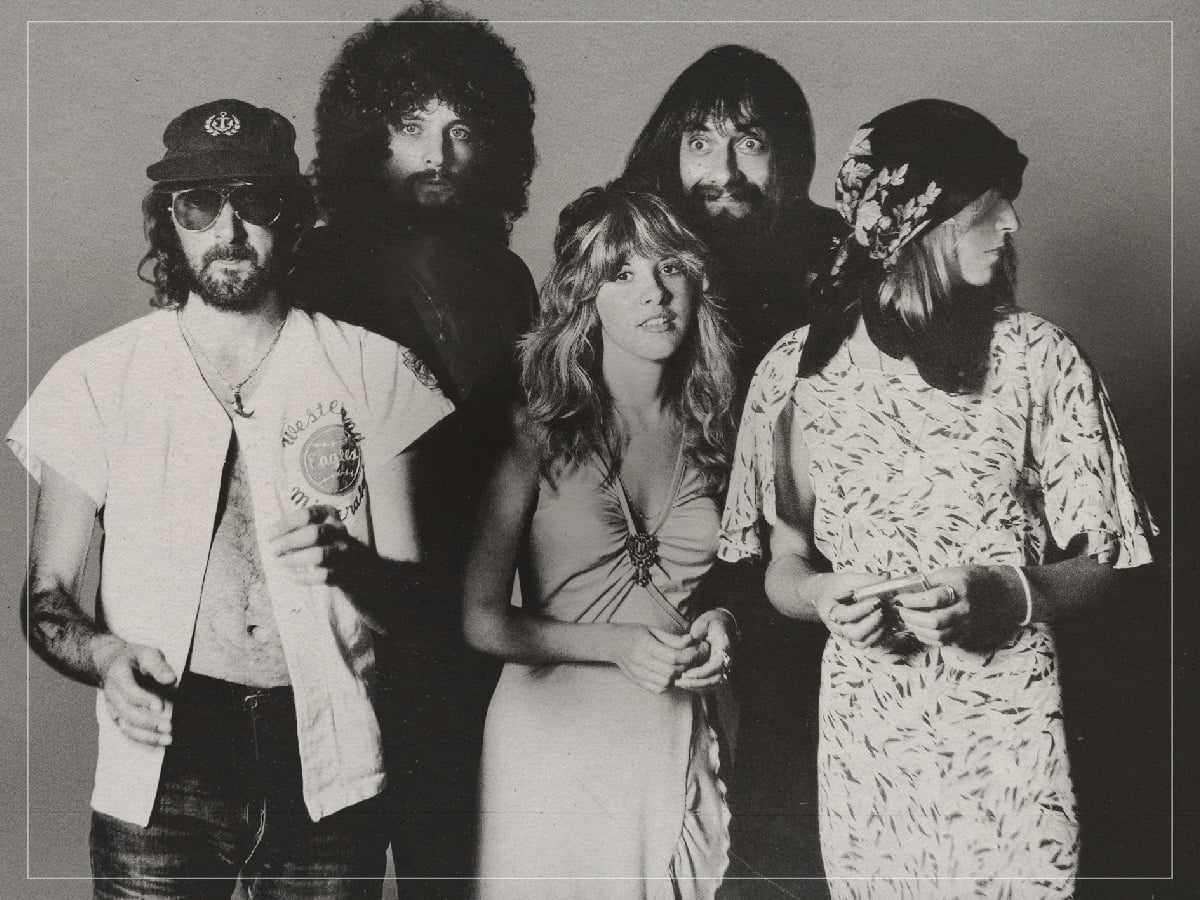
Credit: Far Out / Fleetwood Mac
November 14th, 2026 · 1:00pm GMT
Relationship breakdowns, vicious arguments and mountainous cocaine use aren’t typically recommended songwriting aids, but it certainly worked for Fleetwood Mac.
By early 1976, Fleetwood Mac were on the way up commercially while goodwill among the band was at an all-time nadir. Chart fortunes had turned with the introduction of singer-songwriter couple Stevie Nicks and Lindsey Buckingham to the group, and the eponymous tenth LP finally won the band chart prominence unseen since the early days of co-founders Mick Fleetwood and John McVie’s blues outfit.
Yet the classic line-up would become embroiled in a maelstrom of romantic and chemical turmoil. Nicks and Buckingham were caught up in an on-off yo-yoing between lovers and bitter exes, Fleetwood was going through a messy divorce after his wife was cheating on him with his best friend, and Christine and John McVie were also separating. Amid such chaos, a near-constant flow of booze and coke triggered a volatility that spilt into verbal attacks and even physical altercations throughout the fraught Rumours sessions.
Such tumult was worth it. As we all know, Rumours would land in February 1977 and claim as many as 40million reported sales, catapulting Fleetwood Mac to soft rock stardom. ‘Dreams’ played a significant role in the record’s ungodly unit shifts. Nabbing the band their first American number one, Nicks’s breezy ballad marked a Zen-like counter to Buckingham’s fired-up ‘Go Your Own Way’ attack, instead weaving the tribulations of love and loss as a natural balance of all things impermanent in its earthy lyrical wander.
Such a poetic outpouring was coaxed by the intimate setting of its writing, Nicks sketching ‘Dreams’ with a simple rhythm machine and an electric piano in the isolation of Sly Stone’s secret studio and bedroom at Record Plant’s Sausalito site.
Reportedly, the band took some convincing by Nicks’ ‘Dreams’ before Buckingham fleshed out the piece with expanded arrangements, leading to the eventual introduction of its subtle but effective vibraphone part.
So, who’s playing the vibraphone?
For the uninitiated, a vibraphone is a metallophone percussion instrument similar to a xylophone and made of aluminium bars instead of the xylophone’s wooden ones. When striking the bars with mallets, each sound emits a warm tremolo effect further controlled by a sustain pedal.
Further reading: From The Vault
It was reportedly co-producer Richard Dashut’s idea. According to fellow co-producer and sound engineer Ken Caillat and Steve Stiefel’s 2012 memoir, Christine had been playing whole notes on the piano to little success. Upon Dashut’s suggestion, Christine swapped the piano for a vibraphone and added some delay to the parts for pleasing repetition.
So, along with the Fender Rhodes electric piano, organ, and backing vocals, Christine counted the vibraphone on her extensive credits for ‘Dreams’. For such an inconspicuous part, the vibraphone makes its warm presence felt in the subconscious over clamouring for attention at the front of the mix, imbuing ‘Dreams’ with that unmistakably summery air so essential to Nicks’s ode to romantic farewell.
