
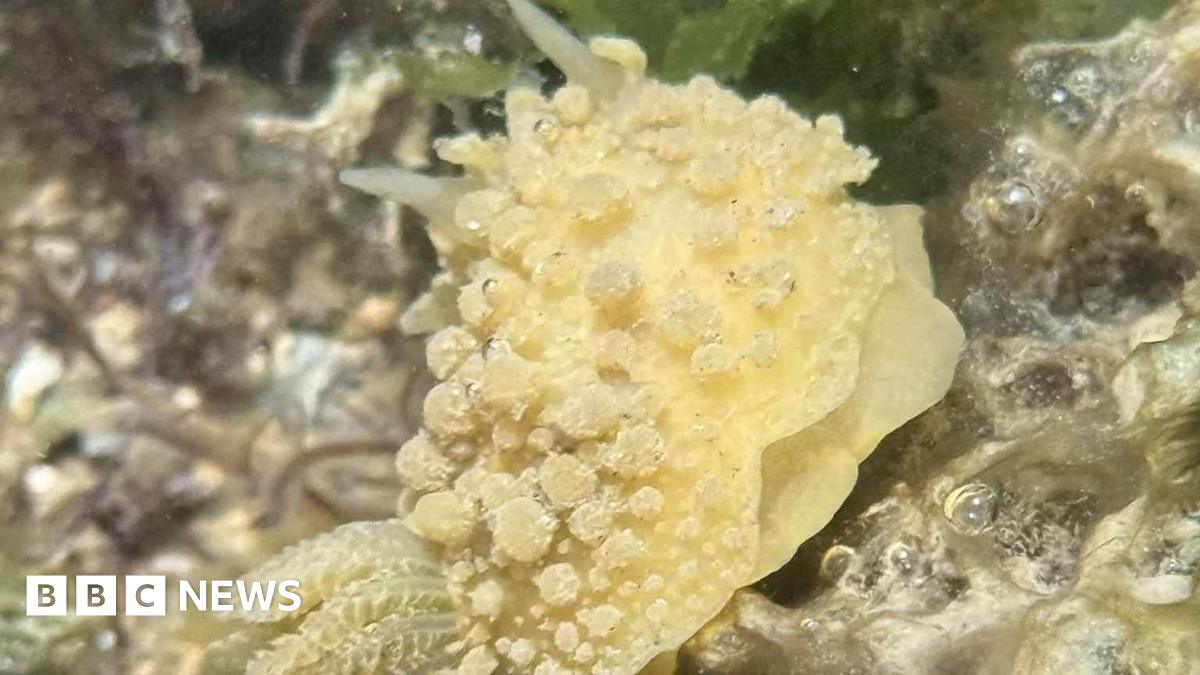
Seasearch and Dorset Wildlife Trust confirmed that Ms Munn’s discovery was the species of nudibranch, which gets it name from the warts all over its body.
“It’s normally associated with warmer waters so it’s possibly an indicator of climate change,” Ms Munn said.
She said there were quite a few of the bright yellow and orange creatures, which can range in length from 30mm to 70mm.
“It actually breathes through it’s bottom so it’s quite a cute species,” she said.
The environmentalist was also able to capture an image of the brightly coloured Warty Doris eggcase, which the slug’s use to protect their eggs.