
Nvidia is under pressure to respond to uncertainty about its Chinese business when it reports quarterly earnings this week amid friction between Washington and Beijing over access to its industry-leading artificial intelligence chips.
The US chip producer wrote off $4.5 billion in the first quarter related to inventory of H20 chips, its less powerful chip developed for the Chinese market, after President Trump banned sales of the product in April claiming national security concerns.
In July the White House reversed the ban. It later emerged that Nvidia had agreed to give 15 per cent of its chip sales in China to the US government in exchange for export licences.
However, the chip producer has asked some of its suppliers to stop work related to the H20 chip because of concerns in Beijing over the chip’s security risks.
Nvidia’s lead in developing powerful AI chips has helped it to become the world’s largest public company, with a market valuation of $4.3 trillion. Sales to China accounted for $17 billion, or 13 per cent of company revenues, last year.
Daniel Morgan, senior portfolio manager at Synovus Trust, a financial services company, said: “It’s very important for them to maintain a presence in China.”
He said that if Nvidia did not participate in China then the industry feared that in future years companies would be using chips produced by Chinese companies.
“I think Wall Street is going to be really focused on any guidance they give on the [post-earnings] call in regards to the upcoming third quarter,” Morgan said. Morgan predicts that Chinese demand could amount to $6 billion in sales for the forthcoming quarter, with further growth at the end of the year.
China’s cyberspace regulator and state media have alleged that the US company’s chips could pose security risks. The Chinese authorities are also understood to have summoned domestic companies including Tencent and ByteDance over their purchases of Nvidia’s H20 chips, asking them to explain their reasons and expressing concerns over information risks.
The Cyberspace Administration of China and other agencies also held meetings with Baidu, the Chinese multinational technology company, and smaller Chinese tech companies in recent weeks, according to a media report. Nvidia said its chips had no “backdoor” risks.
Jensen Huang, the chief executive of Nvidia, said on Friday that the company was in talks with the US over offering China a chip that was more powerful than the H20 model. “It’s up to, of course, the US government and we are in dialogue with them, but it is too soon to know,” he said.
Huang told reporters in Taipei on Friday that Nvidia had a significant number of H20 chips prepared and that it was now waiting for purchase orders from customers in China. “When we receive the orders, we will be able to purchase more,” he said.

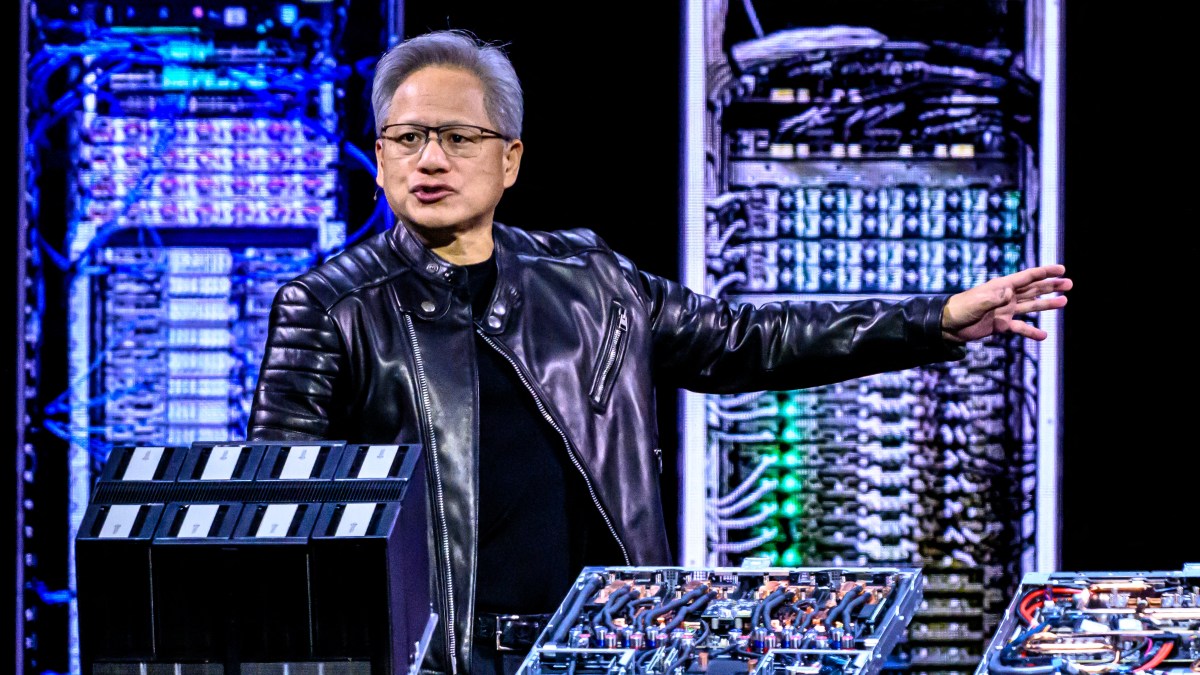
Nvidia’s lead in developing powerful AI chips has helped it to become the world’s largest public company
GETTY IMAGES
A spokesman for Nvidia said: “We constantly manage our supply chain to address market conditions. As both governments recognise, the H20 is not a military product or for government infrastructure.” Huang said that shipping the H20 to China was not a national security concern and that the ability to ship the H20 chips to China was “very much appreciated”.
Regardless of the performance of the Chinese business, Nvidia is expected to report significant sales growth on Wednesday, driven in part by the huge AI infrastructure investment plans of cloud service providers such as Alphabet, Microsoft and Amazon. Analysts forecast a 53 per cent year-on-year increase in sales to $45.9 billion, while net income is expected to increase by 48 per cent to $24.6 billion.
Strong demand from nations including Saudi Arabia and the United Arab Emirates is expected to help to offset any impact on the Chinese business.