
 Press enter or click to view image in full size
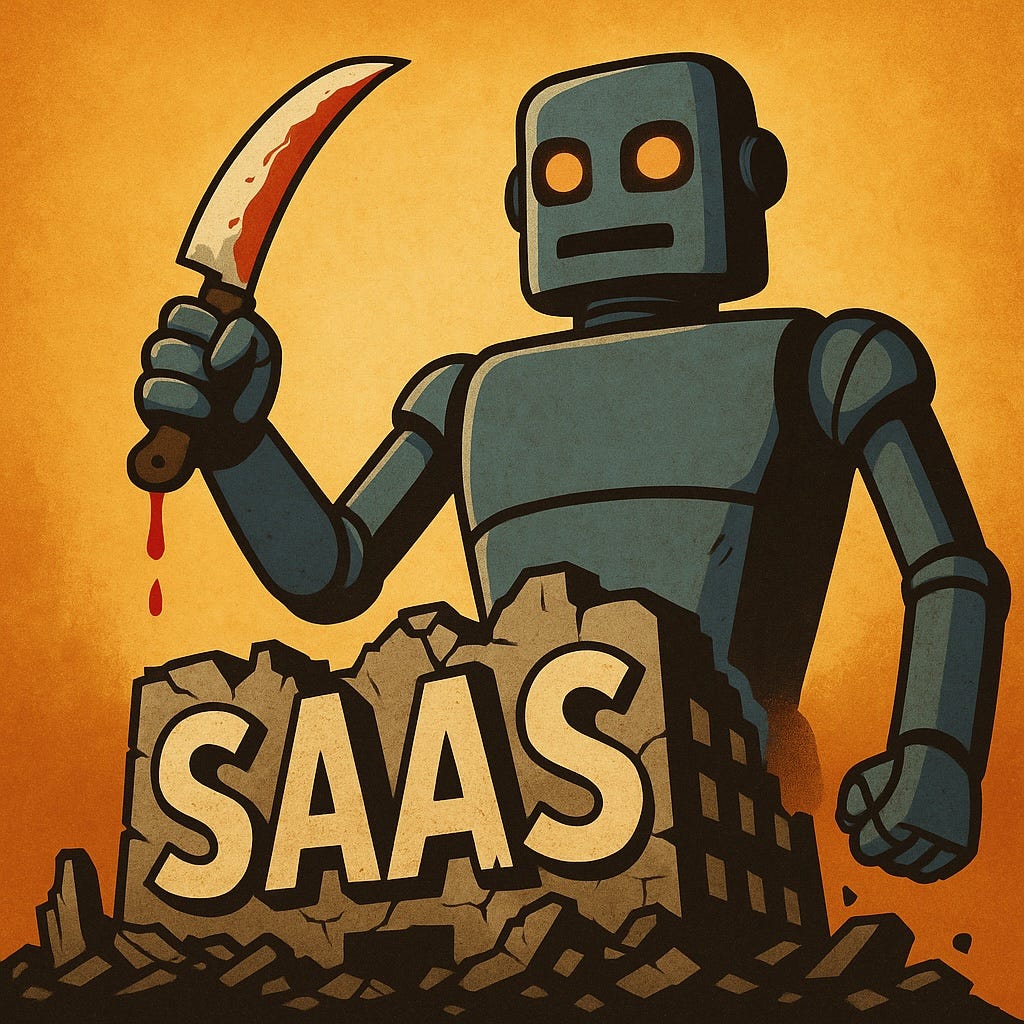
There are times when a hypothesis is more than just another statement, and becomes a mirror reflecting the age we live in. Jeremy Blaze, after years designing SaaS applications and establishing himself as an authority in the field, now argues that these systems will disappear with the rise of AI agents.
It might sound dramatic, but his assessment resonates with recent Microsoft statements, which likewise predict the decline of SaaS due to the emergence of agentic systems. In this article, I aim to explore that premise through a reasonably rigorous lens, while also offering a hands-on perspective rather than a purely theoretical one: how feasible is it that agentic systems will replace SaaS as we know it?
After more than a year working with agent-based systems, I would say the answer is yes. These agents move us closer to the theoretical ideal of a Gödel machine, a system capable of self-reprogramming efficiently after proving its next version is superior. This is no longer science fiction, but rather a natural outcome of building agents that can adapt, learn, and improve autonomously toward a defined goal.
Blaze’s argument isn’t conjured from thin air; it stems from deliberate and challenging practice. He’s evolved traditional SaaS interfaces — from form-based and dashboards to CRUD flows (Create, Read, Update, Delete) — into…