
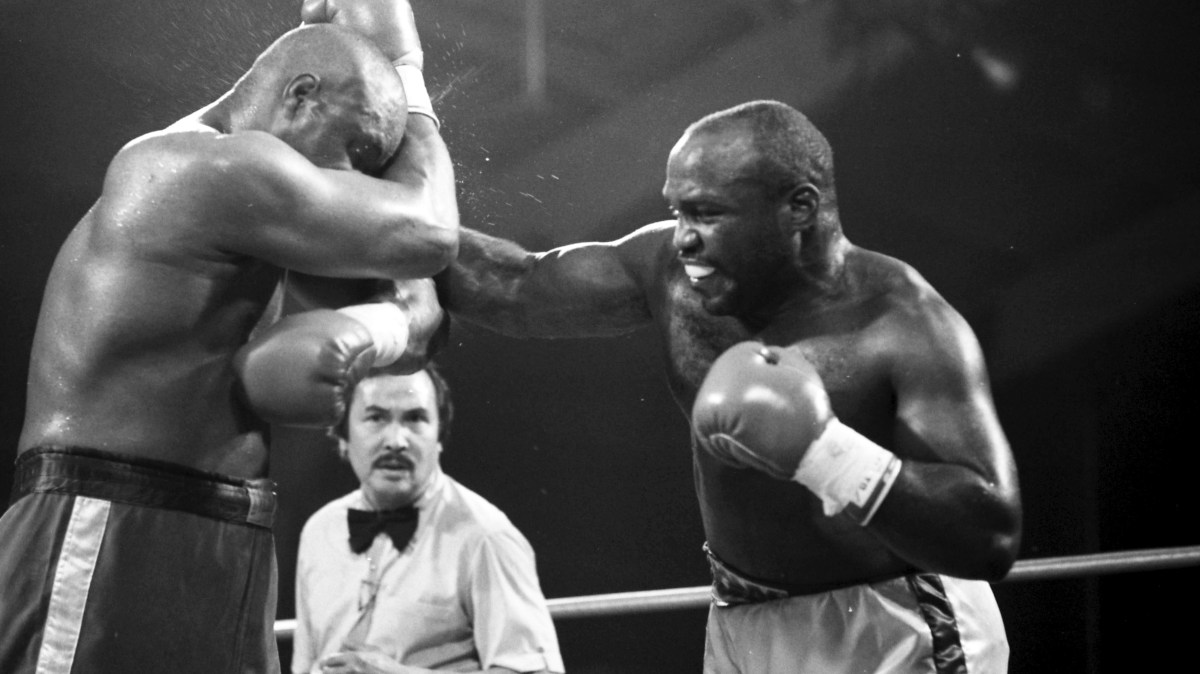
Dwight Braxton was on the point of going to prison for 15 years when a judge took pity on him.
Having served five years in Rahway state prison, New Jersey, for armed robbery and been released in 1978, Qawi was three fights into his professional boxing career when an illegal form of brawling caught up with him. Arrested for assault and battery, Qawi was facing a much longer period behind bars.
“I had him in for sentencing,” Judge Peter Coruzzi recalled. “As a second offence, it meant at least 15 years. I remember him standing in front of me, tears streaming down his cheeks, and you know how tough he is. I saw something in him. Fighters, judges, robbers, we’re all human. Perhaps we should all take a deeper look at our fellow man.”
Braxton received five years’ probation but to get his shot at a world title, he had to go back to Rahway prison. There he fought the highly fancied James Scott, a former fellow inmate and sparring partner, in September 1981. Qawi won in ten rounds and left the prison without even taking a shower. “I just thought, man I’m getting the hell out of here.”
His prize for beating Scott was a light heavyweight world title fight against the formidable Matthew Saad Muhammad. A squat, 5ft 6in brawler, Braxton wouldn’t die wondering, relentlessly moving forward to box his taller and rangier opponent on the inside with brutal uppercuts. He knocked Saad Muhammad down and stopped him in the tenth round in Atlantic City. Braxton called his $50,000 purse an insult; it was a tenth of his opponent’s.
Soon afterwards he converted to Islam and changed his name to Dwight Muhammad Qawi. He defended his WBC title three times — including a rematch against Saad Muhammad in August 1982, which he considered his best fight — before losing the belt to Michael Spinks in 1983. He moved up to the 190lb cruiserweight division because he struggled to stay below 175lb, and became world champion again by beating Piet Crous for the WBA title in 1985. He defended his title by stopping Leon Spinks in the sixth round.
Qawi’s next defence was against the up-and-coming Evander Holyfield, who, when asked who his toughest opponent was, might have been expected to say Mike Tyson, whom he sensationally stopped in the 11th round of their heavyweight world title fight in November 1996. Instead, he picked Qawi, who was six inches shorter and ten years older. Holyfield prevailed in a “slugfest” of a cruiserweight world title fight in July 1986 that went the full 15 rounds, was given to Holyfield on a split decision (many educated observers thought wrongly) and was described as one of the fights of the decade.
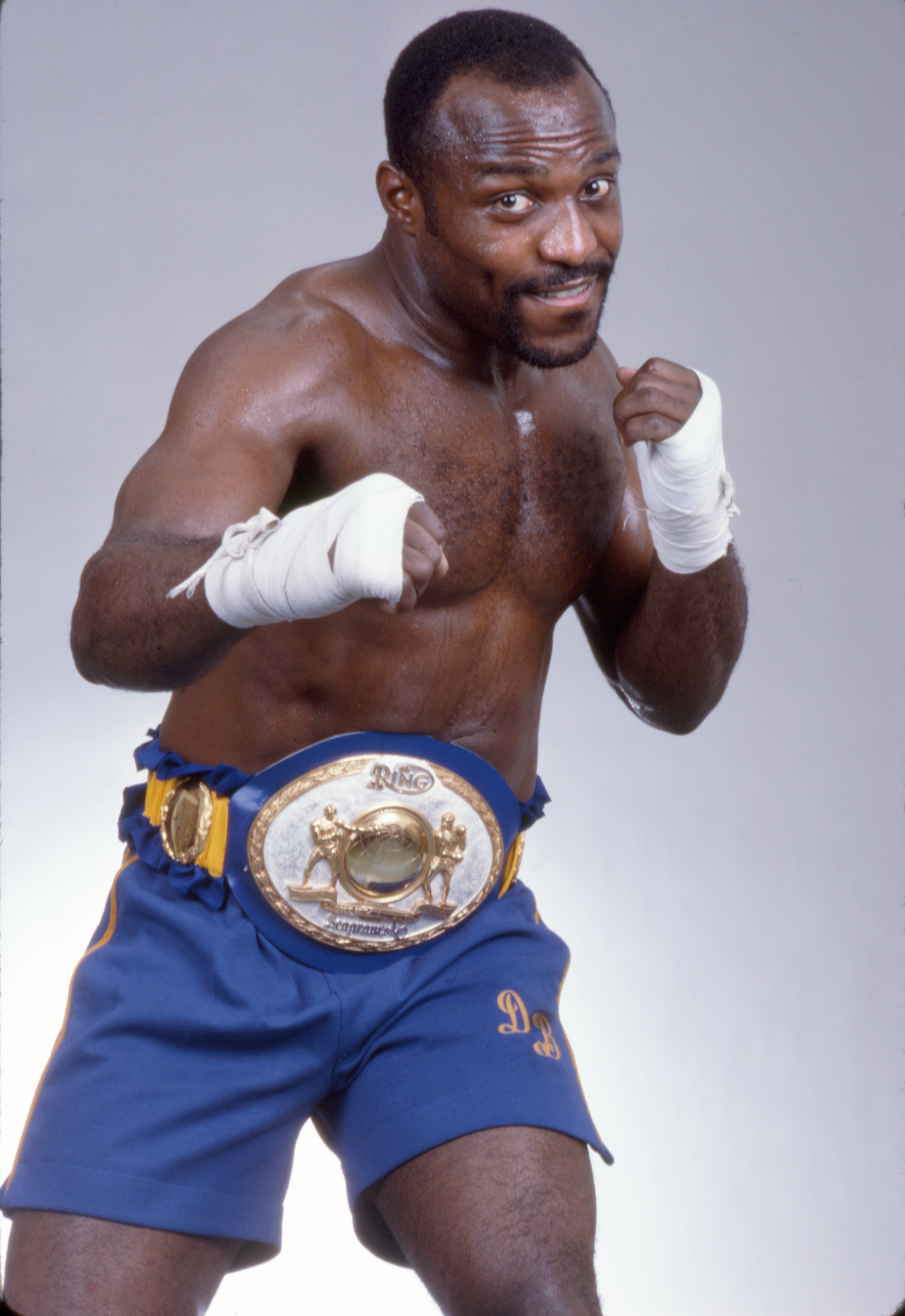
Qawi with his cruiserweight world champion belt
ANTHONY BARBOZA/GETTY IMAGES
Dwight Braxton was born one of 13 children in 1953 in Baltimore, Maryland, to Charles Braxton, a lumberjack and forklift operator, and Alice (née Holmes). He was raised in Camden, New Jersey, where he fell into juvenile delinquency. “I learnt how to fight on the streets,” he said.
Aged 19 he was arrested for armed robbery and sentenced to five years. Feeling vulnerable as a 19-year-old inmate, he joined the boxing programme. Most fighters are meticulously prepared for a professional career through amateur fights. Qawi learnt his ring craft in prison, where fellow inmate Malcolm Lewis taught him how to move his feet and maintain his balance while unloading the heavy shots that came naturally.
On his release in 1978, Qawi was mentored by a trainer called Ike Hammonds. “I was walking down the street and this guy who’d seen my work on the street drove by,” Qawi said. “He jumped out of his car and told me I’d be a champion.” Hammonds took him to the Philadelphia gym of the heavyweight “Smokin” Joe Frazier, with whom Qawi shared a foot-forward brawling style. A month later he made his professional debut.
Personal demons were never far away. He was falling into alcoholism when he lost a rematch with Holyfield for the cruiserweight world title in 1987, knocked down in the fourth round. He was one of the shortest heavyweights in history when he moved up to the division to fight George Foreman in 1988, but lost in the seventh round.
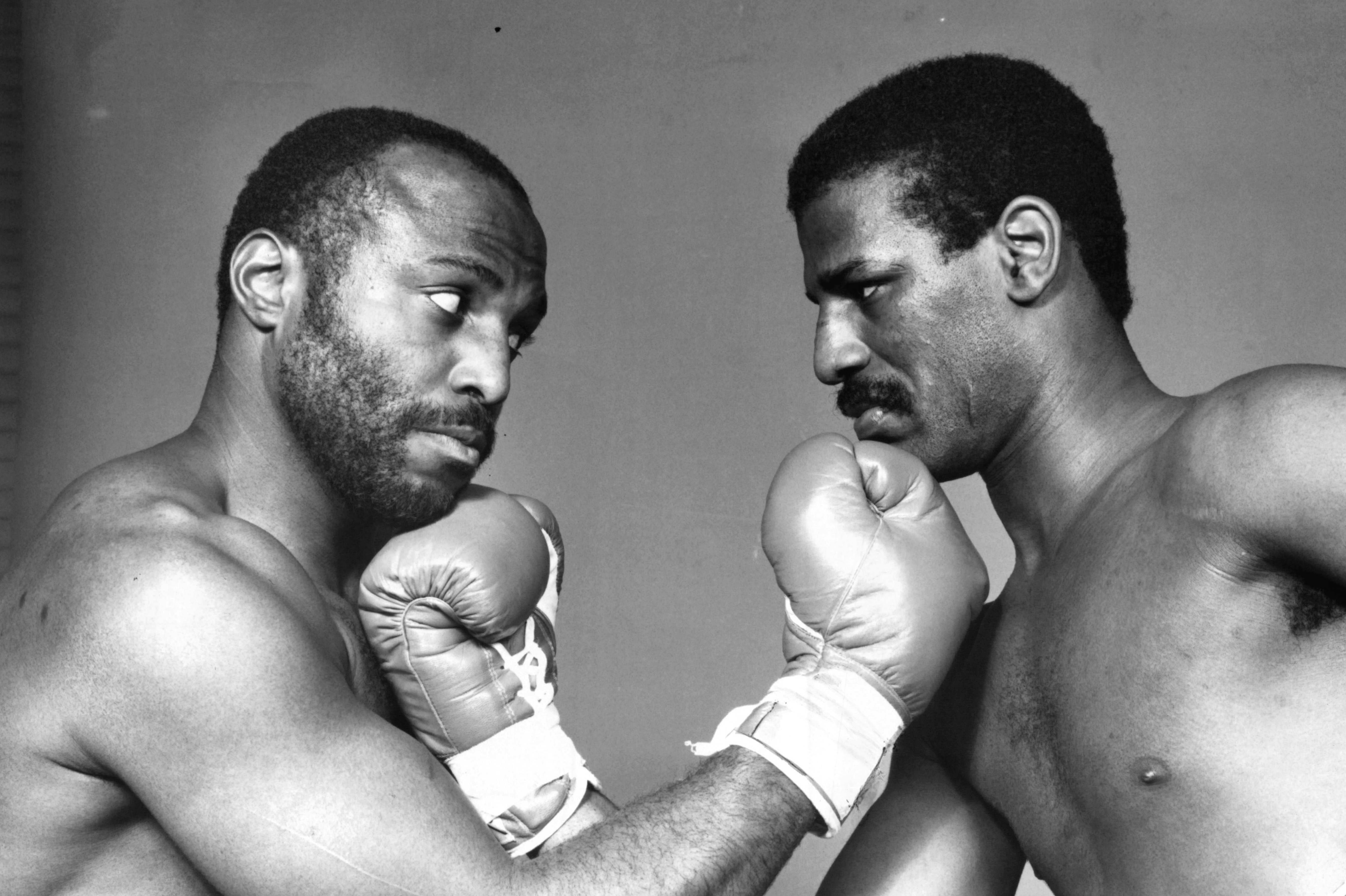
Qawi, left, with Michael Spinks before their fight in 1983
THE RING MAGAZINE/GETTY IMAGES
Despite the disadvantage of Qawi’s lifestyle, opponents remained wary of his heavy shots. He only lost to Robert Daniels on a split decision for Holyfield’s vacated WBA cruiserweight title in November 1989.
Shortly afterwards, he entered rehab and never drank again, but he could not quit boxing. He ill-advisedly returned to the ring for several bouts in his forties. “It was difficult to let boxing go,” he said. “It was like another addiction. I guess you can say I stayed past my dream.” He announced his retirement in 1999, aged 46, after 41 wins (including 25 KOs), 11 losses and one draw.
Qawi’s marriage ended in divorce. He is survived by his sons, Dwight Ibn Qawi and Thomas Walls.
In later years he achieved his greatest victory by becoming a “nice guy”, working as a drug and alcohol counsellor at the Lighthouse recovery centre in May’s Landing, New Jersey. “Rehabilitation is like training for a fight. You are training for the first day of the rest of your life. I have to be a mirror to them,” Qawi said. “This is not about money or a championship belt. Teaching always benefits the teacher and I’m stronger and better because of it.”
Dwight Muhammad Qawi, world champion boxer, was born on January 5, 1953. He died of dementia on July 25, 2025, aged 72