EEnvironment Read More Who is ‘stealing’ Bali’s water? How tourism siphoned off a prized resource | WaterJuly 14, 2026 I Putu Partayasa pushes his fingers into the soil as he squats at the edge of a rice…
SSpace Read More Tuesday’s New Moon Sets Up A Total Solar Eclipse In 29 DaysJuly 14, 2026 Topline The month’s new moon occurs at 5:43 a.m. EDT on Tuesday, July 14, but it is no…
PPhysics Read More Researchers Prove Black Theory in a Laboratory SettingJuly 14, 2026 Researchers at the Advanced Science Research Center at the City University of New York Graduate Center (CUNY-ASRC) have…
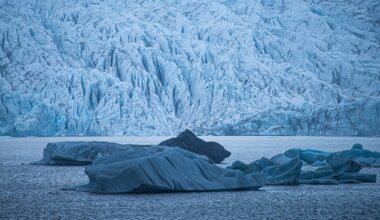
SScience Read More Antarctica is classified as a desert because it receives less precipitation than the Sahara, yet it holds about 70 per cent of the planet’s fresh water, locked in an ice sheet averaging over two kilometres thick across the continentJuly 14, 2026 The South Pole gets less snow in a year than Phoenix gets rain. At the Amundsen-Scott South Pole…
EEnvironment Read More The Late Ordovician extinction 443 million years ago struck in two pulses driven by opposite climate extremes: the first came as the planet cooled, glaciers spread and sea levels collapsed; then the ice retreated, the seas warmed and lost their oxygen, killing many of the species that had survived the coldJuly 14, 2026 The Late Ordovician extinction, close to the Ordovician-Silurian boundary about 443 million years ago, is usually read as…
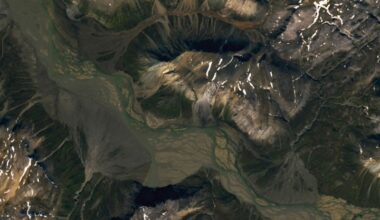
SSpace Read More Fans of the Arctic – NASA ScienceJuly 14, 2026 Editor’s Note: Today’s story is the answer to the July Puzzler. Call it an alluvial face-off. On the southern…
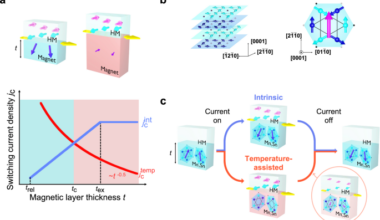
PPhysics Read More Crossover between intrinsic and temperature-assisted regimes in spin-orbit torque switching of antiferromagnetic orderJuly 14, 2026 Wolf, S. A., Lu, J., Stan, M. R., Chen, E. & Treger, D. M. The promise of nanomagnetics…
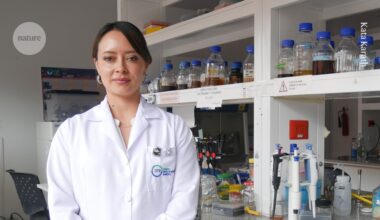
SScience Read More This microbiologist endured a four-year court battle over COVID-19 testsJuly 14, 2026 When the COVID-19 pandemic began sweeping across the world in February 2020, Linda Guamán, a microbiologist at the…
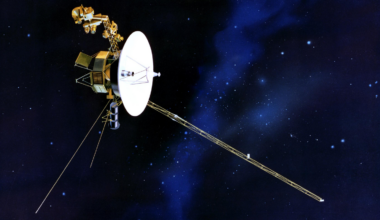
SSpace Read More When Voyager 1 launched in 1977, each of its main computer systems had less than 70 kilobytes of memory — smaller than a typical phone photo — and that 1970s hardware is still carrying out commands from Earth nearly five decades laterJuly 14, 2026 The most distant object humans have ever built runs on computers with less memory than a typical phone…
PPhysics Read More New dark matter theory could solve multiple cosmic mysteries at onceJuly 14, 2026 Dark matter has long been one of astronomy’s greatest mysteries. It cannot be seen or touched, yet its…
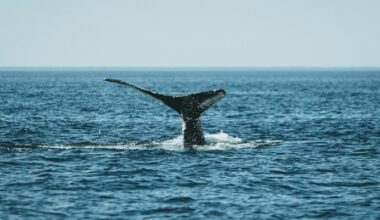
WWildlife Read More Sperm whales dive to depths of nearly 2,250 metres on a single breath, their heads packed with a waxy oil called spermaceti that solidifies under cold pressure and helps them sink like a stone toward prey they hunt in total darknessJuly 14, 2026 A sperm whale can hold its breath for over an hour and drop nearly 2,250 metres below the…
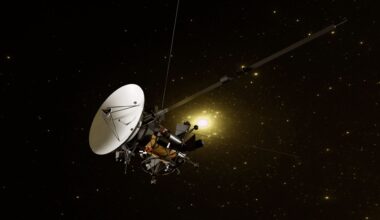
SScience Read More Voyager’s signal now reaches Earth as a whisper measured in fractions of a billionth of a watt, fainter than almost anything our antennas were built to hearJuly 14, 2026 Voyager is not loud anymore. It never really was. The spacecraft carries a transmitter with roughly the power…