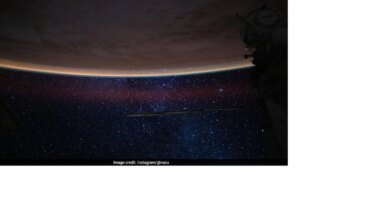
SSpace Read More NASA Explains Why Earth Appears Glowing Orange In Stunning Space PhotoMay 24, 2026 NASA has shared a beautiful image taken from the International Space Station (ISS), which shows Earth wrapped in…
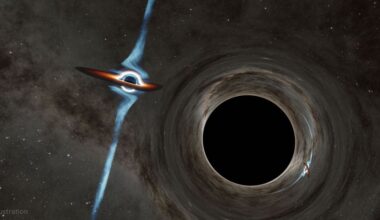
SSpace Read More The Universe Is Full of ‘Impossible’ Black Holes. Now Scientists Know WhyMay 24, 2026 An international team of astrophysicists has found evidence that the universe recycles black holes, merging them to form…
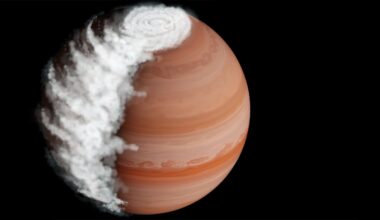
SSpace Read More This Alien Planet Has Rock Clouds That Vaporize Before SunsetMay 24, 2026 Artistic representation of WASP-94A b, a gas giant in the Microscopium constellation. Clouds build as air flows over…
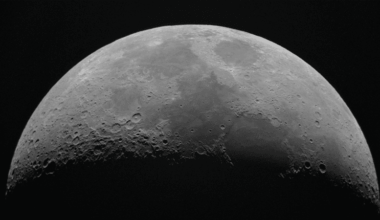
SSpace Read More Scientists discover a shortcut to the moon that NASA missedMay 24, 2026 Getting to the moon is partly a fuel problem. Plotting the most efficient path between two points in…
SSpace Read More A NASA satellite launched in 1976 carries a Carl Sagan–designed plaque sealed inside its core, mapping Earth’s continents 268 million years ago, at launch, and 8.4 million years from now — and that last date is no accident, because it’s roughly when the satellite is expected to fall back to Earth and finally be opened.May 24, 2026 On 4 May 1976, NASA launched a satellite called LAGEOS-1 from Vandenberg Air Force Base in California. It…
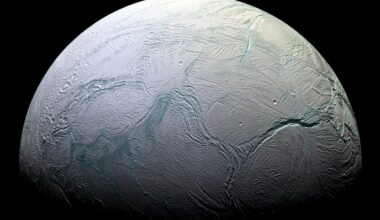
SSpace Read More It’s cracked and frozen, but it’s one of the best places to search for alien life. Meet Saturn’s icy moon EnceladusMay 24, 2026 Saturn’s icy moon Enceladus is one of the best places to search for signs of alien life in…
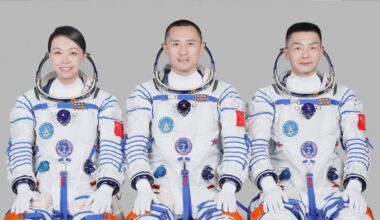
SSpace Read More China reveals 3-person Shenzhou 23 crew, including Hong Kong’s 1st astronautMay 24, 2026 China has named the three astronauts due to fly on the Shenzhou 23 mission on Sunday (May 24),…
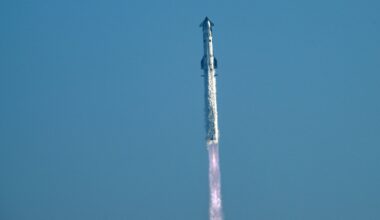
SSpace Read More SpaceX just launched Starship V3 — its most powerful megarocket yet — into space for the 1st time in spectacular Flight 12 test (video)May 24, 2026 The most powerful rocket in history just roared off its launch pad in a spectacular show of power…
SSpace Read More Webb just clocked nearly 9,000 young star clusters and found the biggest ones break from their birth clouds in 5 million years, a timing clue that could reshape how astronomers model galaxies growing upMay 24, 2026 The James Webb Space Telescope has given astronomers a sharper look at how young star clusters escape their…
SSpace Read More The Vela satellites were built to catch secret nuclear tests, but they accidentally recorded flashes from deep space that opened a new branch of astrophysicsMay 24, 2026 The Vela satellites were not built to study stars. They were built to watch for nuclear weapons. In…
SSpace Read More Call for Creatives: NASA Seeks Help Illuminating Mission StorytellingMay 24, 2026 As NASA pushes the boundaries of exploration and innovation for the benefit of humanity, the agency is looking…
SSpace Read More The Hubble Deep Field began as a gamble on a tiny patch of sky that had been chosen because it looked almost empty, and it ended by revealing nearly 3,000 galaxies hiding in what seemed like nothing.May 24, 2026 In December 1995, the Hubble Space Telescope spent ten days staring at a small, deliberately unremarkable patch of…