
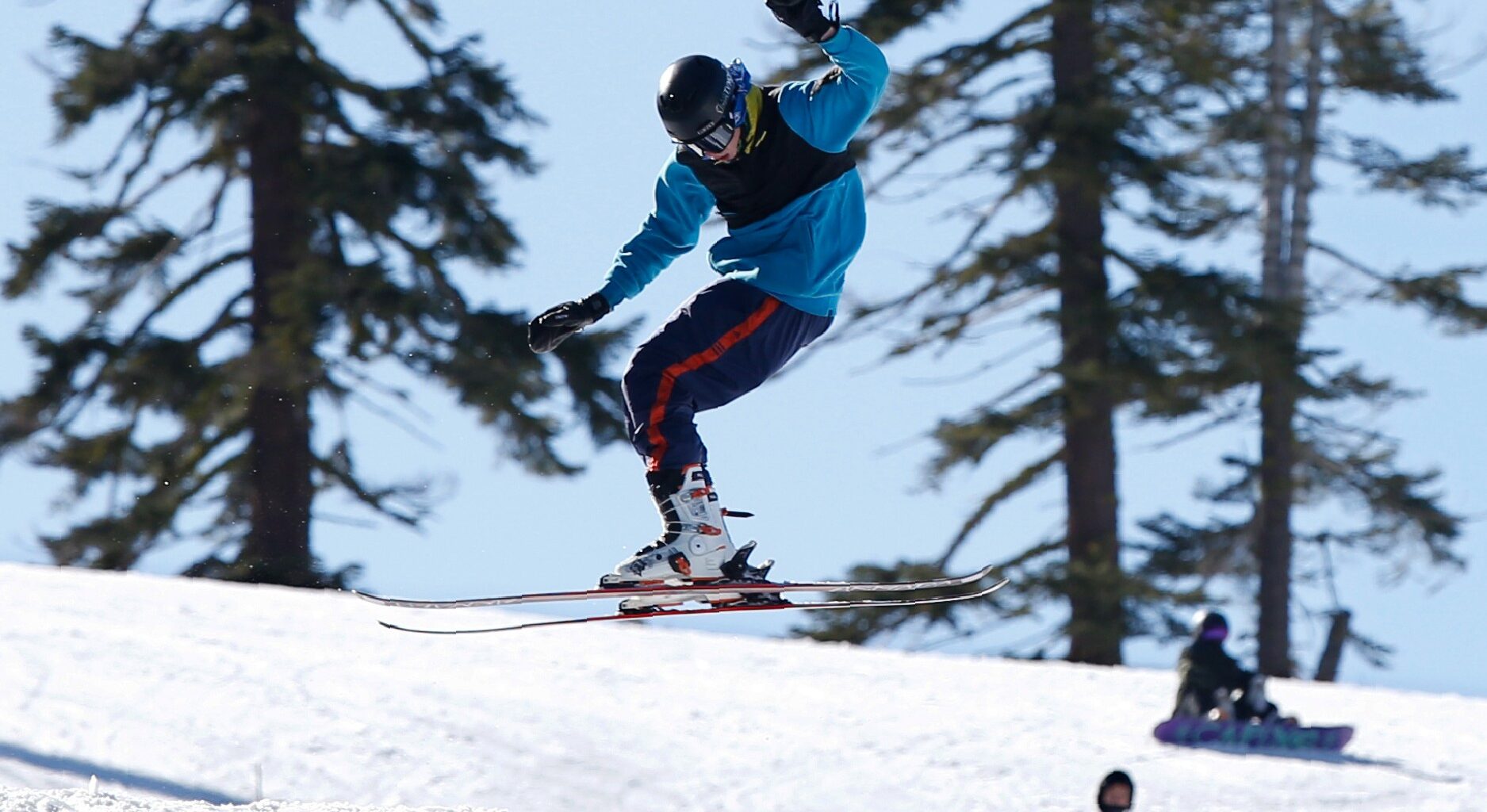
Winter is prime time to grab skis and hit the slopes, but much of California is missing one critical ingredient — snow.
Federal officials say much of the West is experiencing a snow drought, with warmer-than-normal temperatures causing precipitation to fall as rain instead of snow despite wetter-than-normal conditions.
The Sierra is among the regions particularly hard-hit by the lack of snow, and the impacts are trickling down to local ski resorts.
Some, like Heavenly Lake Tahoe or Kirkwood Ski Resort, have managed to open a limited number of lifts or trails. But other facilities have delayed their opening days, waiting for Mother Nature to bring colder temperatures and improved snowfall.
Sarah Sherman is with Sierra-at-Tahoe, an independently-run resort along Highway 50 near Echo Summit. She spoke with Insight Host Vicki Gonzalez about the natural boost staff are hoping for to get their skiing season underway.
This interview has been edited for length and clarity.
Interview highlights
What do conditions currently look like at the resort?
We’ve seen a little bit of rain… which is never any ski resort person’s favorite thing to say. We have some snow patches from the snowmaking we’ve done earlier this month, just waiting for Mother Nature to turn the temps a little bit colder, and help us out on the mountain.
The weather has been tricky, and there’s even an inversion going on in Tahoe, right?
Yeah, it’s been really funky to see. I live down in South Lake Tahoe and it’ll be [in the] high 20s, definitely below 30 at my house and then I drive up Echo Summit… which you think would mean it would get colder, and it’s been about 10° warmer up here. That inversion really limited our ability to make snow consistently the past few weeks, but we’ve been doing everything we can when times cooperate to supplement and make snow when we can.
How unusual is it to have an opening day delayed like this due to a lack of snowfall?
At Sierra-at-Tahoe, we’ve always really relied on Mother Nature and natural snow to open. When I first started here, we wouldn’t even announce an opening date. We would just say, “when the weather turns on, we will open.”
I think resorts feel pressure from their guests who want to plan their trips of, “when are you going to open?” And so we’ve tried guessing when it might be, to give people a reference point. We had hoped to open right after Thanksgiving but that’s always with all the asterisks of “if we can,” and we haven’t been able to yet.
I was looking through some of the data and in the last 20 years, there’s been five other seasons where we’ve hit this point of the season… but it’s not completely abnormal to be mid-December and not open yet.
Sierra-at-Tahoe was severely damaged in the 2021 Caldor Fire, which burned almost 80% of the grounds. You reopened for the 2022-23 season. What has recovery been like?
Recovery has been really incredible. I actually worked at Sierra before the fire… and came back this past season, so for me I came back to a completely transformed resort. You know, 255,000 acres burned during the Caldor Fire, and we have created just such a strong partnership with the El Dorado County Resource Center, the U.S. Forest Service and partners of this reclamation work. The entire mountain is open and skiable again, once we get open for the season, but it is a different experience.
We’ve replanted 15,000 tree seedlings so far and this next upcoming summer… They plan to plant an additional 40,000 tree seedlings. So a lot of work [is] going on here, still in the off-season, to rebuild the natural environment.
How is the resort’s staffing, have there been impacts on seasonal workers?
We have done all of our recruiting, so everyone’s kind of just on standby. We have some staff that works year-round, and we’ve been keeping people engaged how we can.
Working in the ski industry, you come with an understanding [that] it’s very conditions-dependent when we open and when we close, and that’s part of the gig.
What is the good snow that you would like to have, that is ideal for skiing and snowboarding?
I hunted down our mountain operations director the other day and I was like, “let’s talk snow. What do we need to open?” And his answer was about 18 inches of snow to fall if it’s good, dense, base-building snow. You hear about Utah dry powder snow? We don’t want that right now, we want that denser snow; it doesn’t compact into only two inches. We want it to really hold its shape and set up a strong base for the rest of the season, so that’s what we’re hoping for in this upcoming storm. But as a skier, once we have that nice strong base, then you want it to be the light, fluffy powder snow to ski through.
The holidays are great for ski resorts, but is that typically your peak time? Or do you have a good amount of the season left into the new year?
No surprise, people love to ski during the holidays if they can, and we hope to be able to offer them some version of that in the next couple of weeks. We’ll see what the weather does but [what] we see all throughout the winter, and especially the other wintertime holidays, is a lot of excitement to ski and snowboard.
My personal favorite time to ski is spring. February and March are traditionally our snowiest months of the year. Looking through some of our data there was a season, it was 2017-18. We had seven inches of snow all December. We had over 200 inches of snow that March. So spring is prime time for me. You can get a ton of snow, do powder skiing, and then three days later get to ski in a t-shirt, that is the California ski dream.