
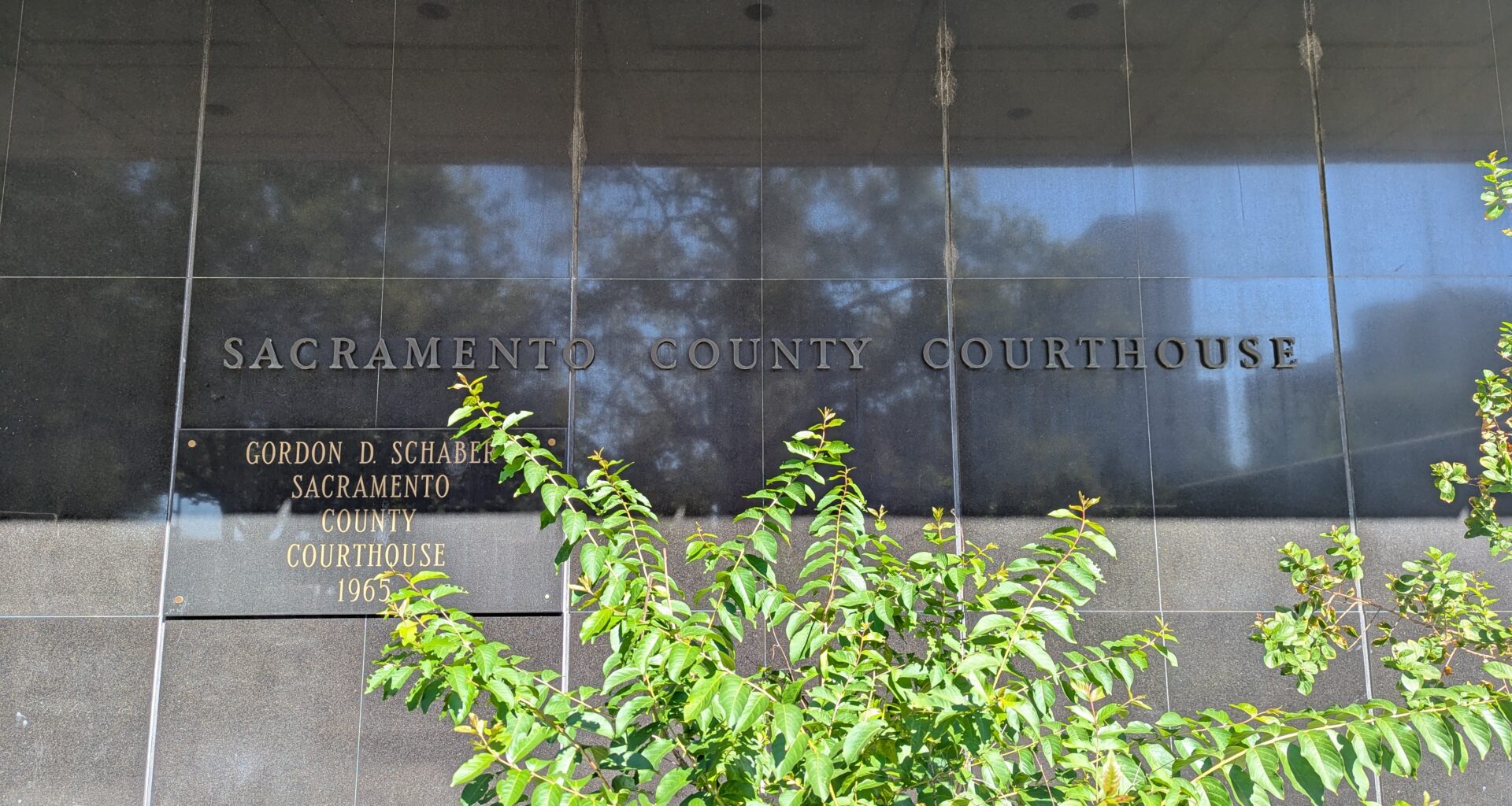
Sacramento County is calling on residents to volunteer for a unique public service role, serving on its independent watchdog.
The Sacramento County Grand Jury provides oversight of the county along with its cities, public schools, and special district agencies and operations. It is also tasked with hearing complaints from the public, investigating criminal indictments, and issuing reports, among other responsibilities.
The grand jury is currently seeking applicants for its upcoming one-year term from July 1, 2026, until June 30, 2027. Applications will be accepted until Jan. 2 and the 2026-27 grand jury will be empaneled in June, with jurors receiving a small stipend.
Laurie Sopwith is the current foreperson for the Sacramento County Grand Jury, and is in her second year serving on the body.
She spoke with Insight Host Vicki Gonzalez about the role of the grand jury, and the work to make it more representative of the county it serves.
This interview has been edited for length and clarity.
Interview highlights
What led you to volunteer?
It was on my bucket list, and I knew that being on had the potential for even more impact with our results. I’ve seen that to be true in my experience on the grand jury and the investigations that we’ve conducted. The potential for beneficial impact on the residents of Sacramento County… it’s not calculable if you do your job right.
This is my second year on the Sacramento County Grand Jury, and the experience I’ve had…. I would describe it as challenging, it’s rewarding. It serves a particular purpose, and it’s kind of the last bastion of defense in the county. Who else can you go to if you’re a resident, and you know there’s a problem and you want it to be resolved? You may see a problem from your perspective that other people in the county aren’t seeing, maybe your voice isn’t heard, and you can file a complaint with the grand jury and we do look at every single one.
What are some of the major cases that the grand jury looked at over the past year or so?
The batterer’s treatment program investigation. That program, generally speaking, is a diversion program for domestic violent offenders, and what the grand jury looked into was how efficiently it was operating. The diversion program basically sent the offenders, instead of to jail, to a one-year commitment on their part. How efficiently was that being run? Were the providers of the counseling qualified? Were they tracking attendance? Were the attendees actually completing their commitment?
With that one investigation if it makes a change on the county level to improve efficiency, that can protect partners, children, family members for untold years. So, that’s an example of how huge the impact can be of a grand jury investigation.
The grand jury looks at every complaint that it comes across, which can be very wide-ranging. What goes into selecting a complaint?
The grand jury is divided into committees… broad categories that look at education issues, health and human services issues, criminal and juvenile justice, administrative and municipal affairs, environmental public works and special districts.
When [the complaint] comes in is going to be evaluated; where does it fall within our subject matter areas, and is it within our jurisdiction? If it’s a valid complaint, it goes to a committee and then the members of the grand jury who are on that committee will vote and decide whether they can take it up. It will be evaluated and then it will be looked into by that committee.
What happens after you release your findings and recommendations?
All of the persons or entities to whom our reports are addressed are required to respond. The grand jury report has both findings and recommendations. The recommendations are suggestions for improvement based on the findings that we have in our reports. The government entities do need to respond and from there that’s when they will indicate whether they will be making any changes to address the problems that the grand jury has identified.
How many people are part of the grand jury?
There are 19 people on the grand jury and 11 alternates selected at the beginning of the term. It is an online submission. There is a vetting process which would include a Department of Justice inquiry. There are qualifications that you need to be a citizen of the United States, at least 18 years old, a Sacramento County resident for at least a year [and] also a resident of the State of California for a year.
We do operate using English, so sufficient understanding of [the] English language to communicate verbally and in writing. You cannot be an elected public official or a convicted felon. So there’s basic qualifications and there will be a vetting process once the application is submitted. Then there will be an orientation in January of each year. And then if you still think you want to be part of it, there are interviews and then from there your name would go into a rolling drum [at random.]
The process is as fair as it can be in that regard, but what we want to do is get people from diverse communities. We need racial diversity on our grand jury. And the reason for that is because it will make our product rich. It will make it stronger because my perspective is not the same as someone who has had a different background than I’ve had, or lived in another part of the county.
Is the current grand jury reflective of the diversity of Sacramento County?
I would say no.
And why is that? What more work needs to be done to make it reflective?
I think it’s kind of a conundrum because people don’t know what the grand jury is. We do operate on a very confidential basis. Our investigations, the way that we conduct them, is confidential. We will never reveal the names of the people that we interview. So not a lot is said about the grand jury and because it’s a watchdog of public agencies, it’s a good thing… because this is how we would get complaints, and people would feel comfortable talking to the grand jurors.
So first of all is education. We do have a grand jury, each county has a grand jury. We are not part of the court system, we’re overseen and facilitated by the court system. Our matters are mostly civil. Sacramento County is unique. We can be called to look into matters that pertain to a criminal indictment if the California Attorney General or the Sacramento County District Attorney needs that. We can fill that dual role.
We are reaching out to all segments of the community. Our outreach is extensive… but we want to inform the public [about] what we do and to apply, because we need those applications. The more we can reach into our communities, the more applications will get.
What has been the most challenging part of being a juror?
We do learn a lot and that makes it unique too. You learn who the bosses are in the county, and there’s a lot that goes into our government and there’s a lot done right too. The most challenging part is how to get to the truth, always.
In addition to the time commitment, what other skills should a potential juror possess?
Willingness to work collegially, willingness to listen, set aside bias. We all come in with these different perspectives, but it’s a good test of being able to set those biases and perspectives aside. Leadership skills are good, strong personal initiative, everybody works very hard. Curiosity is a good trait to have, and just sound judgment.
A lot of our jurors are retired and they bring that life experience with them whatever that may be, whether it’s education, a career or tragedy, family. There’s all kinds of things that people have lived, but they bring that unique perspective and it makes our group of 19 very strong.