
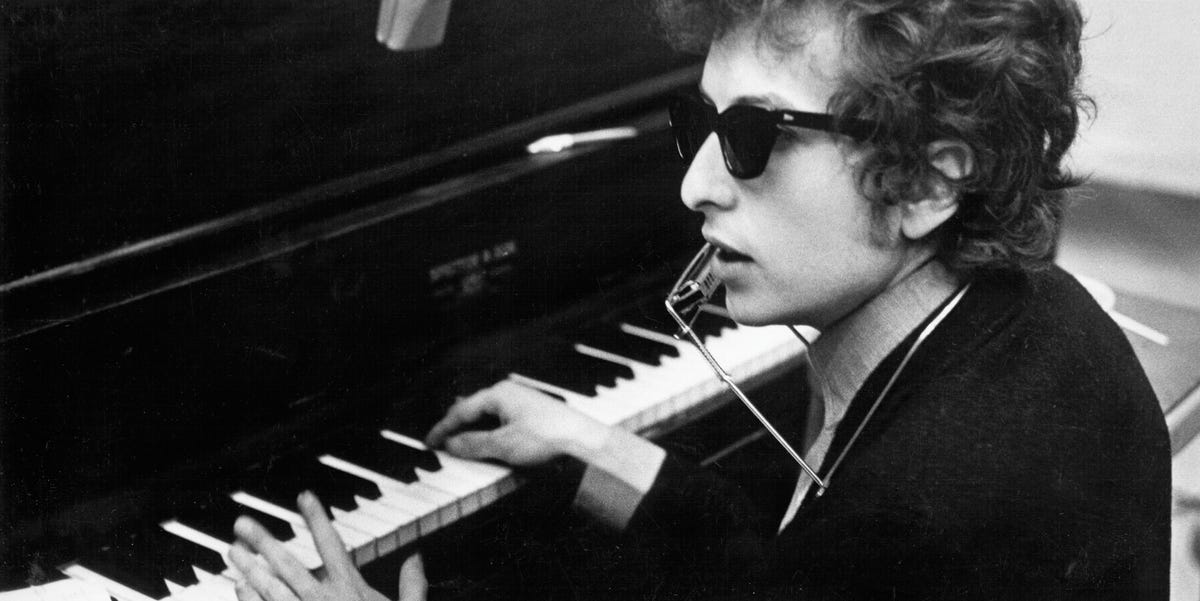
He not busy being born is busy dying.
—Bob Dylan
If you came of age in the ’60s, as I did, you were surrounded by music and music culture. Dylan, the Beatles, Hendrix, the Beach Boys, the Temptations. I once believed that Janis Joplin and I would make a great couple.
In high school, I tried to learn to play the trumpet. Which, if played badly, is just as annoying as someone practicing on an out-of-tune violin. At least that was my mother’s conclusion.
When I arrived at college, all the cool people were musicians, and many of them were in bands. So my best bet to join their vibrant scene was not to audition but to offer to “manage” bands. No previous experience was required. If I remember correctly, my added value was amateur business advice about bookings, amateur psychological assessments of artists, and—since I had a car on campus—my designation as the wheelman for a variety of escapades.
This Publisher’s Note appears in Issue 34 of Alta Journal.
SUBSCRIBE
I ended up rooming off campus with musicians in a house with mattresses on the floor, girls welcome, and music playing, or being played, all day and all night long. One roommate had a crush on Bonnie Raitt, who was our classmate. His subscription to Rolling Stone was our source of relevant news.
Roommate Ernie Brooks became the bassist for Jonathan Richman and his Modern Lovers. We hung around with Andy Paley and his band the Sidewinders. Roommate Jerry Harrison, who also played with the Modern Lovers, went on to join David Byrne as one of the Talking Heads. In 2002, Jerry and his bandmates were inducted into the Rock and Roll Hall of Fame.
Meanwhile, I majored in math and was never compared to Brian Epstein or Colonel Tom Parker. Some years later, I worked for Jann Wenner, who had cofounded Rolling Stone. Jann was a brilliant editor, and for many decades, his connection to music, musicians, and the culture of creativity made him the voice for a generation.
Which brings us to the current issue of Alta Journal, whose theme is music. Our editors, who are more attuned to the music of this generation than I am, have put together a thrilling cover package called “California Sounds.” It’s a great set of stories, written by experts in their fields, that celebrate the birth of music that is unique to the Golden State.
We focus not just on the elements of those sounds, but on the bands who invented them and the hallowed venues where they were—and are—performed. We spotlight eight genres—of course, there are more—in which songs first performed here greatly influenced what came next.
Consider how Cannibal & the Headhunters upstaged the Beatles as an opening act at the Hollywood Bowl in 1965. By doing so, they helped shape Chicano rock. You can trace a line from Cannibal & the Headhunters’ historic performance to Los Lobos to Los Tigres del Norte to Fuerza Regida. Or consider the global popularity of the band Green Day. The trio got their start performing at 924 Gilman, an unassuming punk rock club in Berkeley. On that now-famous stage, they and other like-minded artists blended the speed and aggression of punk with bright melodies, vocal harmonies, and catchy hooks to produce a new category: pop punk.
Similar breakthroughs occurred with the Beach Boys and sunshine pop as well as with John Fahey and mystic folk. The pattern is also repeated with gangsta rap (Kendrick Lamar), country’s Bakersfield sound (Merle Haggard and Buck Owens), West Coast jazz (the Pan Afrikan Peoples Arkestra), and, of course, psychedelic jams (the Grateful Dead).
While we may not have the publishing frequency to be the voice of a generation for music coverage, the sonic innovations we identify suggest what’s to come from younger generations. If history is any indicator, we’ll think it’s too loud.
And speaking of loud noises: OK, I never learned to play the trumpet. But I learned to appreciate people who could create music and move audiences. It’s a language in which the words are made out of raw emotion. More like poetry. The best performers are artists who do it because they must. As Miles Davis said, “we don’t play to be seen. I’m addicted to music, not audiences.”•
Related Stories

Will Hearst is the editor and publisher of Alta Journal, which he founded in 2017. He is the board chair of Hearst, one of the nation’s largest diversified media and information companies. Hearst is a grandson of company founder William Randolph Hearst.