
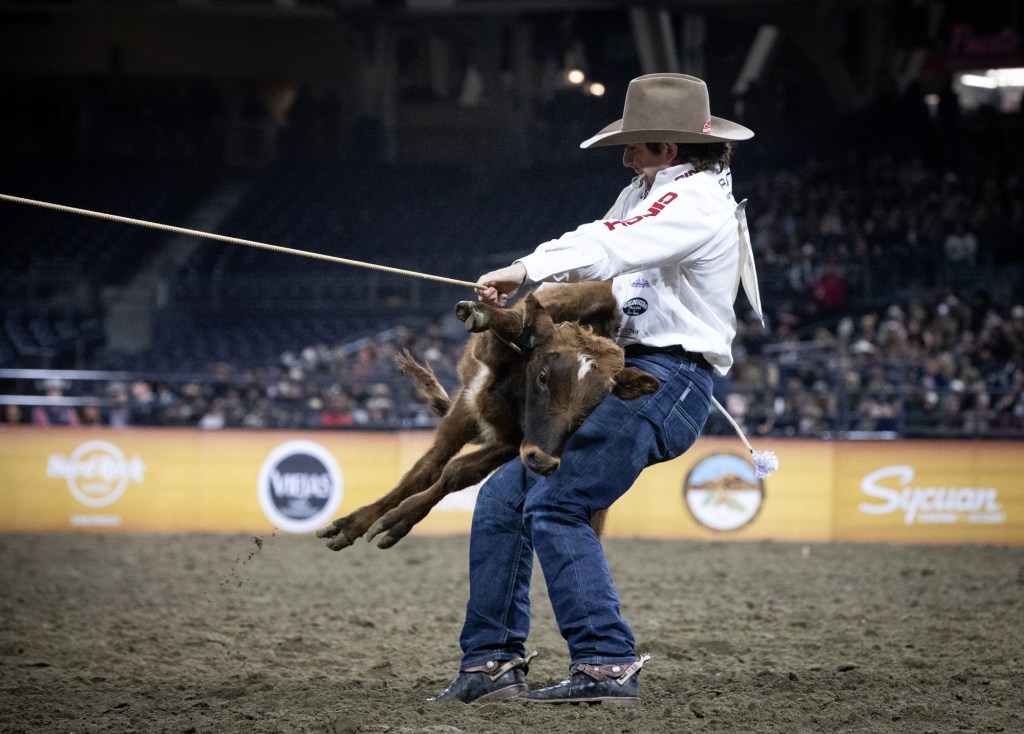
One of the government’s core responsibilities is to protect the public from powerful corporate interests. Few are more vulnerable than animals. Yet in San Diego, city leaders have failed to uphold that duty, allowing the Padres to continue staging a rodeo that has already resulted in horrific animal cruelty.
In January, the Padres will host the third annual San Diego Rodeo. From the very beginning, the pattern was clear. On the opening night of the inaugural rodeo, a horse named Waco Kid panicked, bolted and slammed full-speed into a metal fence. He has not been heard from since.
Despite efforts to prohibit the most violent rodeo activities, the second San Diego Rodeo went ahead. This time, a mare who was nearly 11 months pregnant collapsed minutes after her forced “performance.” She died, along with her unborn foal.
An investigation by the San Diego Humane Society followed, and — as so often happens with animal victims — no charges were filed. But one finding was especially damning: The agency stated that it is “common for pregnant horses to participate in saddle bronc competitions” — shattering the Padres’ claims that animal safety is a paramount concern.
All of this controversy is now having a financial effect on the Padres rodeo. For the first time in three years, the San Diego Tourism Marketing District — after previously allocating $150,000 annually — declined to fund the event. A major 2025 sponsor, Monster Energy, has also withdrawn from sponsoring the 2026 rodeo. And it’s very possible that other major sponsors — Diageo (Crown Royal, Casamigos, Ketel One), Hard Rock Hotel San Diego, Ford and several casinos (Sycuan, Viejas, Pechanga) — may conclude that the reputational risk simply outweighs any perceived benefit of being associated with this event.
And yet, despite this mounting evidence of harm and growing financial fallout, San Diego’s elected leaders — aside from Councilmember Kent Lee — have done little more than gesture at concern. The mayor’s office has full authority to impose conditions on the event permit to restrict dangerous practices or make the rodeo safer. Public records show that Lee’s staff even met with the city to propose language that would “satisfy the Humane Society or at least most of their concerns.” None of those concerns were incorporated into the final permit last year.
After the death of the nearly 11 months pregnant mare, a City Hall that genuinely cared about animal welfare would have implemented at least the most basic safeguard — such as prohibiting pregnant horses from being used in rodeo events. However, the upcoming rodeo will go on with pregnant horses.
Councilmember Stephen Whitburn, whose District 3 includes Petco Park, has remained silent. Public records reveal that Whitburn declined to participate in Lee’s ordinance efforts as early as January 2024. Instead of taking a clear position, Whitburn’s office drafted canned responses to constituents that avoided committing to action. And when the matter reached the subcommittee, Whitburn remained entirely silent.
Legislatively, nothing will change in 2026 — the proposed ordinance died in committee due to Whitburn’s and Vivian Moreno’s silence. But there is reason for cautious optimism in 2027. Moreno — a champion of Rancho La Laguna, the Mexican rodeo operator in her district now under investigation for animal cruelty — will be terming out next year, as will Jennifer Campbell. Marni von Wilpert may also leave the council if she gets elected to Congress.
Several candidates running to replace them have already signaled a very different direction. Mandy Havlik and Nicole Crosby, both seeking the District 2 seat, responded to Strategic Action for Animals’ candidate questionnaire with strong commitments to animal protection, including opposition to rodeo cruelty. In District 8, candidate Robert Williams was the only respondent, and he too voiced firm opposition to the rodeo.
There is hope, but San Diegans will have to demand change and vote for leaders who prioritize the well-being of animals over corporate interests. Cities are judged by how they protect the most vulnerable among them, and right now, San Diego is failing that test. And if city leaders will not speak for the most vulnerable, it raises a serious question: Will they speak up for you when it matters? The next generation of city leaders will have an opportunity — and an obligation — to correct this course.
Dhuleshia is an animal rights activist and co-founder of Strategic Action For Animals and lives in Bankers Hill.