
The city’s parking division is making enforcement changes that will affect Oakland residents throughout the city.
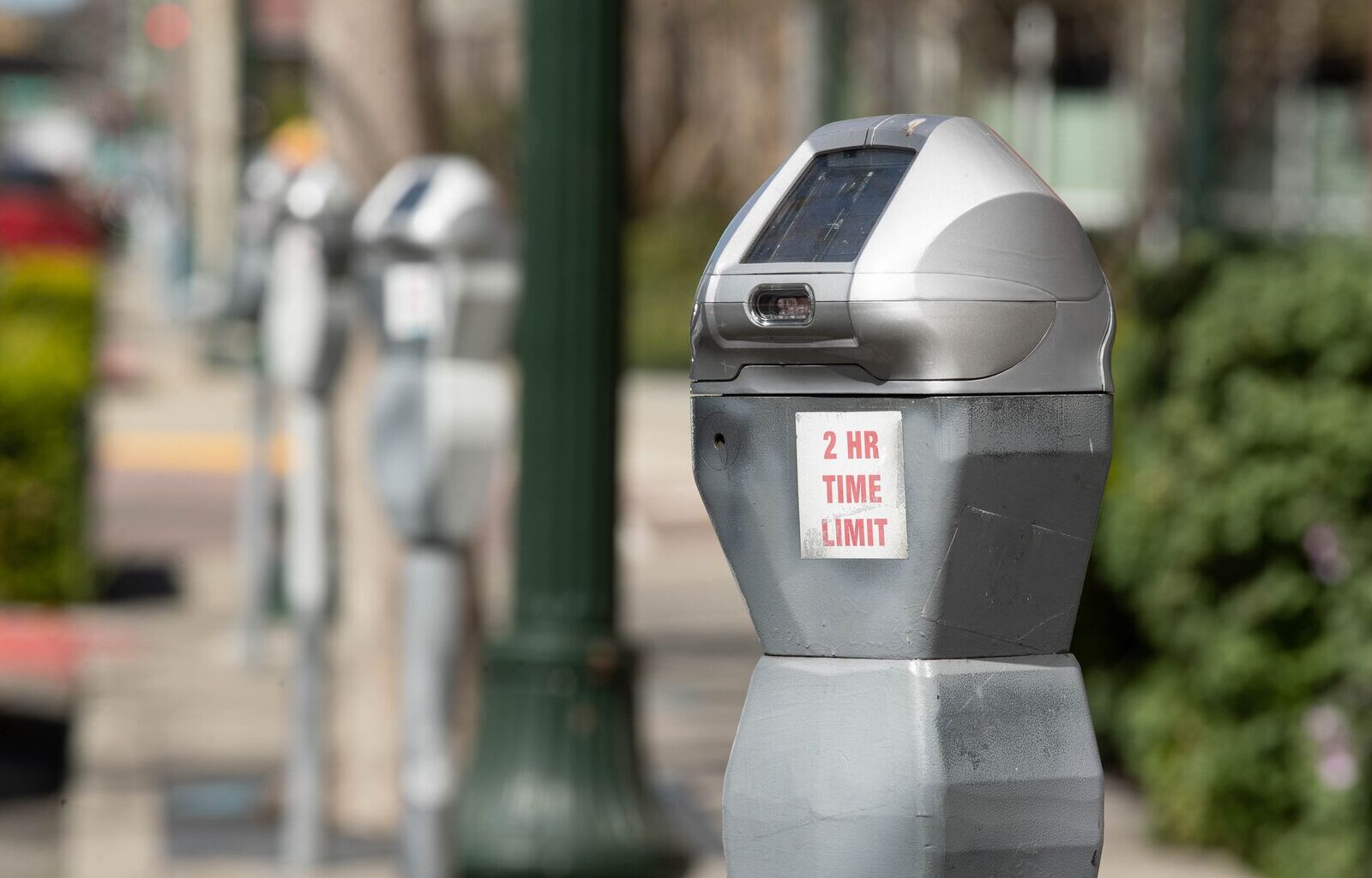
The city announced this week that it will start charging people to park in metered spaces on Sundays, from noon to 6 p.m. This significant expansion has been in the works for years, after undergoing a test run in some high-traffic areas of Oakland, such as around Lake Merritt, which some Oakland residents viewed as an attempt to gentrify the lake.
The changes will take effect on Sunday, Jan. 4, 2026, and will begin with a 30-day warning period where no fines will be issued.
In a press release, Josh Rowan, director of the Department of Transportation, said that the Sunday charging decision “will improve parking availability” by encouraging people to park for shorter periods. He said it could also help businesses by keeping customers churning.
Other cities around the country have begun charging for parking on Sundays, eschewing the traditional free parking that arose in the 20th century as a reflection of Christian rest days.
“Today, Sundays are among the busiest days for businesses such as restaurants, shops, and entertainment venues,” the press statement reads. “Updating meter hours helps ensure parking is available when demand is the highest, including weekends.”
Some social media posts decried the change, with people saying it would make them less likely to park in business districts.
Journalist Carla Marinucci said in a post on X that the parking change would “only ensure I and other Oaklanders will shop elsewhere on Sundays – WTF.”
Oakland staff said that revenue from the new Sunday charges will help fund the city’s general fund, which faced austerity cuts earlier this year. Kent Bravo, an OakDOT spokesperson, told The Oaklandside that Sunday metering is expected to bring in an additional $1.6 million per year.
Oakland has not said whether the Sunday meter charges will use flex pricing, in which prices increase during periods of higher demand.
The parking division is also undergoing a reorganization, according to emails that The Oaklandside has reviewed. Under the plan, the city’s finance department will take over some segments of parking management, including most enforcement, meter collection, and abandoned auto tagging and processing. For the last few years, parking has fallen under OakDOT, the transportation department. OakDOT, the letter said, will continue to track bus shelters, manage EV charging and scooters, and enforce city-owned garages.
But the reorganization has sparked internal dissent.
Finance department takeover lacked ‘proper review’
In the last few weeks, Oakland staff have held meetings detailing the expected restructuring. According to publicly released emails, staff from the human resources, transportation, and legal divisions were alerted.
In the aftermath of those meetings, some transportation department staff have expressed frustration with the move. One of them is Michael Ford, the head of the Parking and Mobility Division.
In a letter sent on Wednesday, addressed to Mayor Barbara Lee and City Administrator Jestin Johnson and copied to city councilmembers and others, Ford requested “an immediate pause and reconsideration” of the reorganization that would “effectively dismantle” the division he has led for seven years.
Ford said that the reorg did not go through “proper review” and was not presented to the City Council, and therefore to the general public, which was important “given the service delivery, fiscal, personnel, and governance implications.”
A letter sent by Crystal Ramie-Adams, an analyst in the city’s employee relations department, on October 16 said the change was happening because finance “handles revenue generation and enforcement, and the City believes the above-mentioned areas of Parking are better suited to be managed by the revenue focused Finance Department.”
Ford appealed to Lee by citing her stated goals of “accountability, good government, public safety, economic development, and restoring public trust.” Ford said that not going through the formal legislative process, where the city could justify the move and offer a risk assessment, threatened “employee trust, operational continuity, and the City’s stated commitments to fairness and dignity.”
Ford also noted that the city had not provided an analysis of transition costs, a racial equity analysis, or an analysis of the potential impacts of a reorg on such things as grants and vendor relationships.
The Oaklandside received this letter from a member of the Bicycle and Pedestrian Advisory Commission, who reviewed it last night at their monthly meeting. Several commissioners expressed dismay about the change, saying that they would express their misgivings in a letter to the City Council.
When Kerby Olsen, an OakDOT staffer who works on parking policy and would likely be affected by the change, revealed that the city was also thinking of moving the abandoned auto detail back to the Oakland Police Department, one of the commissioners, Nick Whipps, remarked sarcastically that “it’s all returned to how great that was.” The Oaklandside has previously reported on the challenges of the abandoned auto unit under OPD and how that enforcement tool was redesigned under OakDOT to have a better success rate.
George Spies, a member of the advocacy group Traffic Violence Rapid Response said that the reord could have negative consequences.
“If you’re gonna design a parking system to generate consistent revenue, you design one system,” he said, “and if you’re gonna design a parking system for safety and for maximum utilization, you design a different system.”
Jesse Kadjo, a representative for Local 21, the union that represents staff within OakDOT, asked the city, in a letter dated December 9, for a full explanation of the problems the city believes it is solving with the change and how the finance department will maximize revenue.
In the proposed new organizational chart, Ford’s name does not appear. It’s not clear whether that means he would lose his job.
Ford sent attachments to the city arguing for the value of his division as it’s currently structured. He noted that parking’s move to OakDOT had allowed staff to handle more customer service transactions with fewer staffing hours and to improve collection services, leading to an increase in parking revenue in 2024 and 2025.
“The data illustrate that citation volume is tightly correlated with staffing stability,” he wrote.
In a draft analysis that Ford and the parking mobility team have developed, they find that there is currently no major city in California with a population of 250,000 or more where the finance department runs parking enforcement.
According to a slide deck presented at the BPAC meeting on Thursday night by Kevin Dalley, a leader of the commission’s infrastructure subcommittee, Oakland’s financial department ran parts of parking enforcement until 2012, when OPD took over.
Jason Patton, an OakDOT planner, said at the meeting last night that Ford and Olsen have made good arguments for why managing parking is a key part of designing safe roads in a city.
“Competition for the curve, daylighting at intersections, double parking,“ Patton said, are all part of that process. “With parking as part of the roadway cross section, Oakland designs and redesigns streets. We may need to move parking spaces around or remove parking spaces from one location to another. And that’s all part of trying to make the transportation system work.”
The Oaklandside has asked the city and each councilmember for comment about the proposed reorganization. So far, only Zac Unger, the District 1 councilmember, has responded, saying that he was looking into the issue.
“*” indicates required fields