
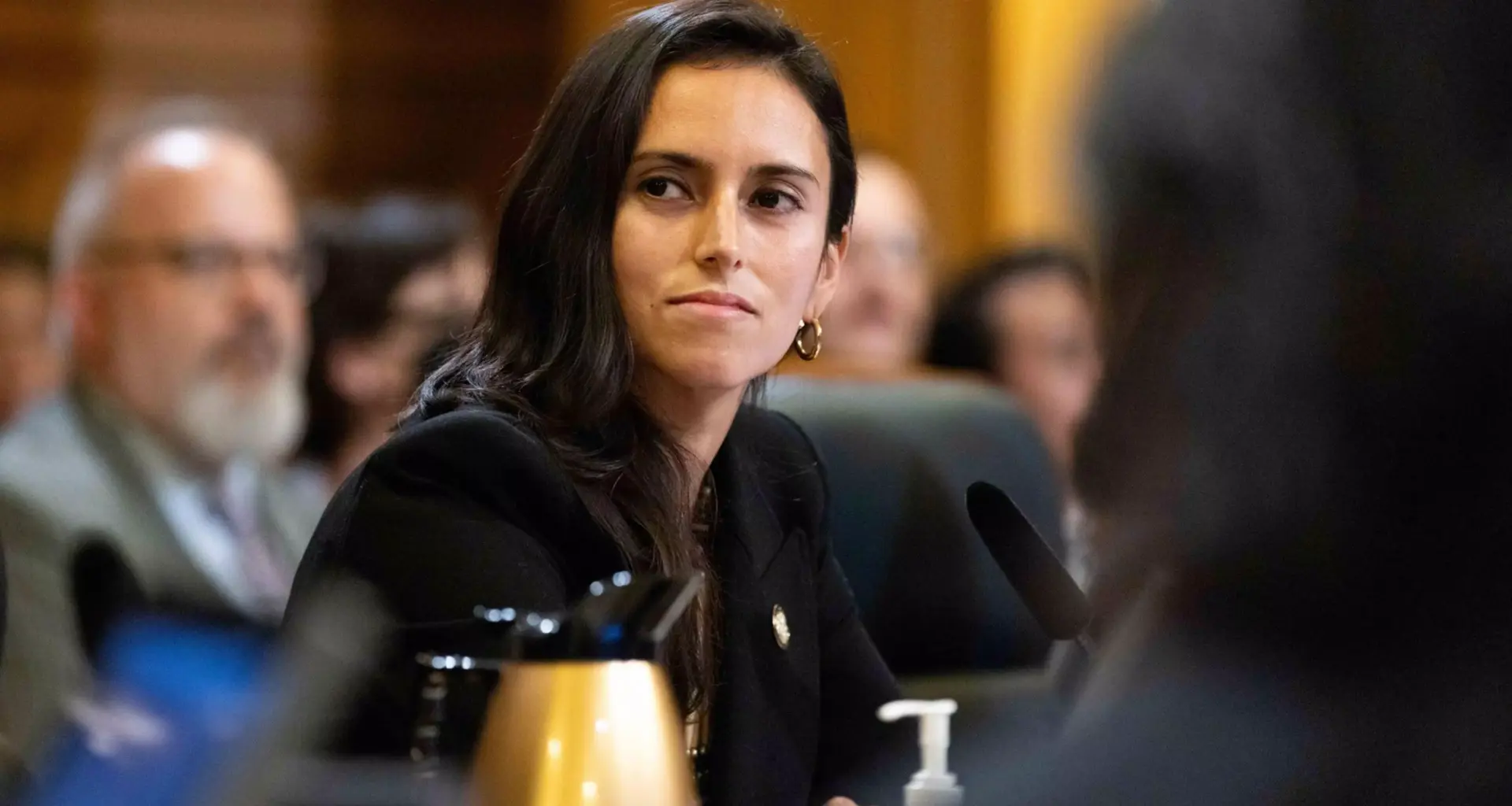
On Tuesday, District 9 Supervisor Jackie Fielder achieved a major milestone: After failing to pass over 80% of the resolutions and ordinances she introduced in her first year in office, she finally passed a real binding resolution.
The Mission district lawmaker had previously passed mainly nonbinding resolutions and one forgettable ordinance related to cannabis. Perhaps this explains why she pushed so hard and celebrated so loudly (opens in new tab) for something that does so little. On Instagram, Fielder posed with supporters who came to City Hall to help defend her legislation from district residents who work in the technology sector and opposed it. She labeled this segment of her constituency — me included — “tech bros,” “technofascists,” and “lap dogs.”
Her resolution requires new engineering R&D lab spaces in several districts to apply for a Conditional Use Authorization, a form of regulatory hurdle, over the next 18 months — but only if the lab is physically located outdoors. This qualifier seems strange at first, but it becomes clearer when you understand that Fielder’s resolution actually began its life in a far different shape — as a response to DoorDash’s long-term plans to bring drone delivery to dense urban environments. Fielder and the labor unions that support her were concerned that this would eliminate delivery jobs — the very same jobs created by the San Francisco-based company.
So Fielder created a resolution to restrict new laboratories in the PDR-1 zone located across the Eastern Neighborhoods Plan, a zone filled with exactly the kinds of companies San Francisco should be proud of — those developing cures for brain disease and cancer; advancements in food, agriculture, and climate tech; and therapeutics for inflammatory disease.
Fielder’s initial version required all new “laboratories” and expansions of laboratories to apply for CUs, with no guarantee that they could get it. Even a successful application could take six months — an eternity in startup land. Fielder offered a hand-wavy defense of this requirement, saying on social media that “these tech companies” could afford it, because they have “millions of dollars.”
This ignores a few simple facts: that six months can make all the difference in innovative fields; that it often represents a third, half, or more of the runway a startup company has raised money for; and that not every company looking for lab space has well-heeled investors.
Between mistakenly targeting the wrong businesses, and misrepresenting how they operate, it was clear that Fielder was unaware of what her own legislation would do. Either that, or she had some other motive for specifically crafting the legislation in this way.
In an X post (opens in new tab), she bragged about her true intentions: “AI companies have displaced blue-collar job spaces in the Mission,” she wrote in response to my post describing the dangers of her proposed law. “These tech bros just want to price out immigrant and working-class Latinos out of the Mission forever.”
Fielder then took to Instagram to rail against the “technofascists” and “lap dogs” who oppose her land-use resolution, ranting in a style best described by Gen Z as a “crash out.” It may be a time-honored tradition for the online left to call anyone who disagrees with them a fascist, but it was startling to hear the words coming from an elected official talking about her own constitutents.
Abusing this word, as the victims of real fascism will tell you, devalues the concept at a time when authoritarianism is on the rise globally. In fact, people who want fewer opaque, arbitrary controls on what local businesses can do without permission are the opposite of fascists; a better slur might be “libertarian.”
Thankfully, D5 Supervisor Bilal Mahmood and Mayor Daniel Lurie quickly recognized the absurdity of Fielder’s resolution, and before Tuesday’s Board of Supervisors session forced through amendments that essentially gutted it. In an act of mercy, they allowed her to pass something — although truthfully it is barely anything at all.
The neutered resolution now requires a CU during the 18-month period only for businesses operating R&D engineering operations, and only outdoors. In reality, no company will be subject to the red-tape purgatory, including DoorDash, since its R&D takes place in a warehouse.
DoorDash didn’t bother to comment on the Fielder resolution, so unconcerned were its executives. It’s unclear if they even planned to do research outdoors and in the next 18 months.
But a piece of paper did pass, technically, and Fielder wants you to think she won, rather than lost, for two reasons: so she can pretend she didn’t waste the time of the dozen citizens who lent their weekday afternoons to give public comment on a mostly empty resolution; and so she could say she had something to show for her first year in office.
I have different takeaways.
Fielder overreached in her first version of the resolution, threatening red tape for exactly the kinds of tech businesses San Franciscans want to see more of, at a time when the mayor has pledged to remove bureaucracy at every opportunity.
Prior to taking office, Fielder was a virulent opponent of the technology sector and the many San Franciscans who work in it. Many of us hoped that after taking office, she would trade in her internet troll behavior for a more professional focus, becoming, as Lurie said on the campaign trail, an official “for all San Franciscans.” She did neither. We now know that the D9 supervisor wants to go to war with tech. She wants the industry out of the Mission, because she perceives it as core to her district’s problems, and maybe if it goes away, so will the problems. The supervisor also thinks that people who oppose her efforts to do so are fascists and lap dogs (opens in new tab). Message received!
My other takeaway is that if Fielder can’t figure out how to deliver anything of substance for her constituents and financial supporters, she will lose even those who support her anti-tech crusade. Because, unlike her, they will eventually expect real results instead of empty resolutions.
Lee Edwards is a General Partner at Root Ventures, an early-stage venture capital firm in San Francisco. He can be found on X at @terronk (opens in new tab)