
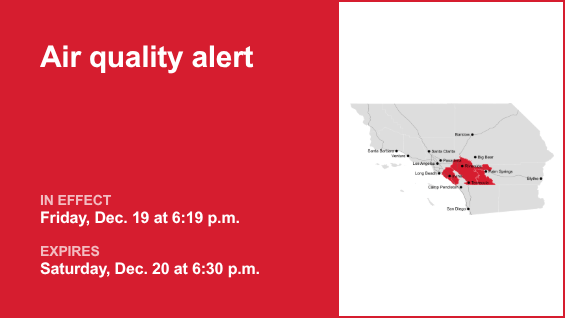
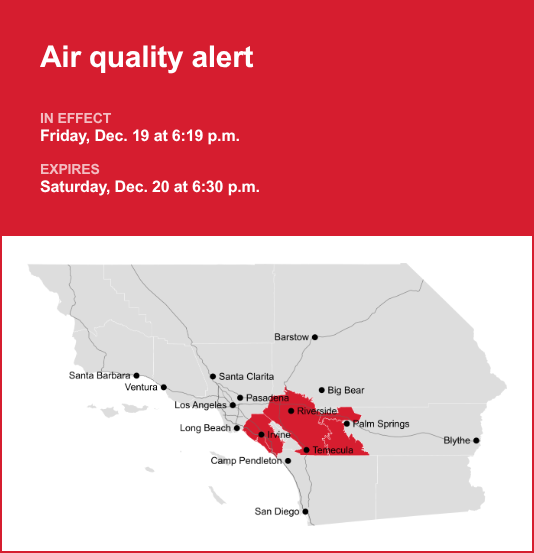
Orange County Coast, Orange County, San Bernardino and Riverside County Valleys, Riverside County Mountains and San Gorgonio Pass Near Banning are under an air quality alert which was reported by the National Weather Service on Friday at 6:19 p.m. The alert is in effect until Saturday Dec. 20, at 6:30 p.m.
The NWS San Diego CA adds to be ready for, “The South Coast AQMD has extended a mandatory wood-burning ban for residents in the South Coast Air Basin. The No-Burn rule bans burning wood, pellets, and manufactured fire logs in any indoor or outdoor wood-burning device.”
“Particles in smoke can get deep into the lungs and cause health problems (including asthma attacks), increases in emergency room visits, and hospitalizations. No-Burn Days are needed to protect public health when fine particle pollution levels are expected to be high anywhere in the South Coast Air Basin. No-Burn Days are based on fine particle pollution levels that are forecasted for an entire 24-hour period, which may not be reflected in real-time air quality maps,” according to the NWS. “Run your air conditioner and/or an air purifier and avoid using devices that bring in outside air like a swamp cooler or whole house fan if you have other ways to stay cool.”
Guidance for air quality alerts: Insights from the NWS
When an air quality alert pops up on the radar, deciphering its implications is crucial. These alerts, issued by the NWS, come with straightforward yet essential guidance to ensure your safety:
Prioritize indoor stay:
Whenever possible, seek refuge indoors, especially if you grapple with respiratory concerns, health issues, or belong to the senior or child demographic
Curb outdoor exposure:
When venturing outside becomes unavoidable, limit your outdoor exposure strictly to essential tasks. Reducing your time outdoors is the name of the game.
Reduce pollution contributors:
Be conscious of activities that contribute to pollution, such as driving cars, using gas-powered lawnmowers, or relying on motorized vehicles. Curtail their use during air quality alerts.
Banish open burning:
Refrain from igniting fires with debris or any other materials during air quality alerts. Such practices only contribute to the problem of poor air quality.
Stay informed:
Keep yourself informed by tuning in to NOAA Weather Radio or your preferred weather news station. Staying in the know ensures that you can make informed decisions about outdoor activities during air quality alerts.
Prioritize respiratory health:
If you have respiratory issues or health problems, exercise extra caution. These conditions can make you more vulnerable to the adverse effects of poor air quality.
Following the recommendations from the NWS helps bolster your safety during air quality alerts, minimizing your exposure to potentially harmful pollutants. Stay vigilant, stay protected, and make your health the top priority.
For more local weather alerts, visit our Weather Advisory page