
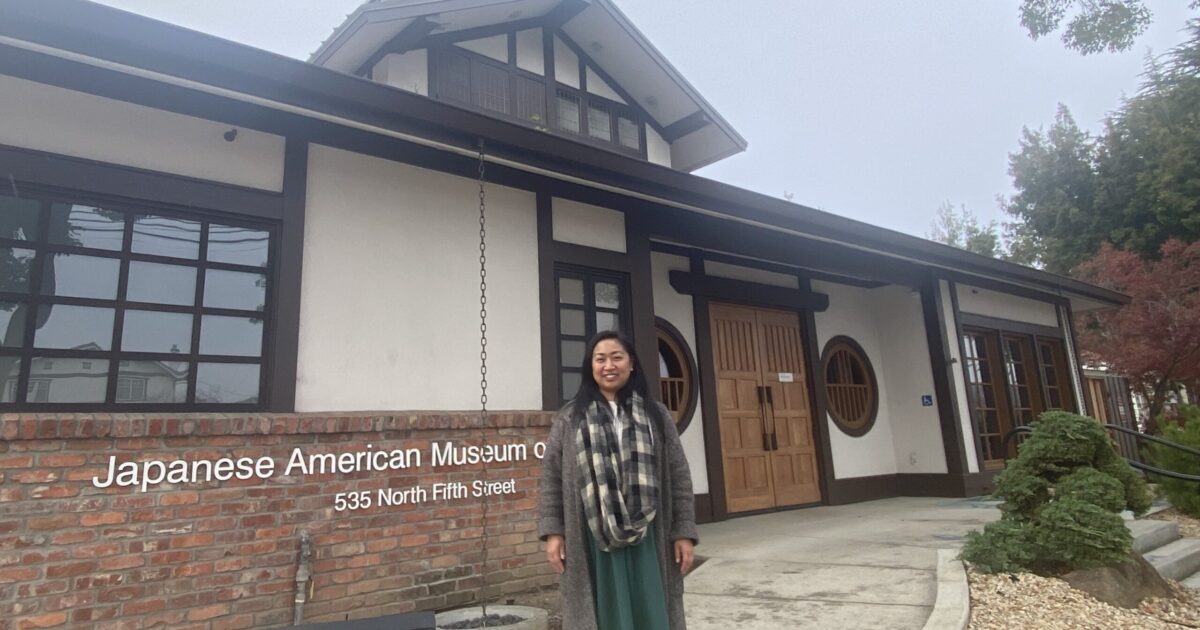
For community leaders in San Jose’s Japantown, receiving statewide recognition as a cultural district affirms what they already know about the historic neighborhood.
After a competitive process of more than 70 applicants, Japantown is one of 10 neighborhoods chosen last week to be a state-designated cultural district. This recognition provides the district with a $10,000 grant, as well as branding resources to attract more visitors. The five-year designation runs from Jan. 1, 2026 to Dec. 31, 2030.
“Regardless of the designation, we already know that we’re a cultural district,” Vanessa Hatakeyama, executive director of the Japanese American Museum of San Jose, told San José Spotlight. “It was inspiring to hear that so many neighborhoods and organizations went through this process because they just have that love and that connection and that pride in their communities and their neighborhoods.”
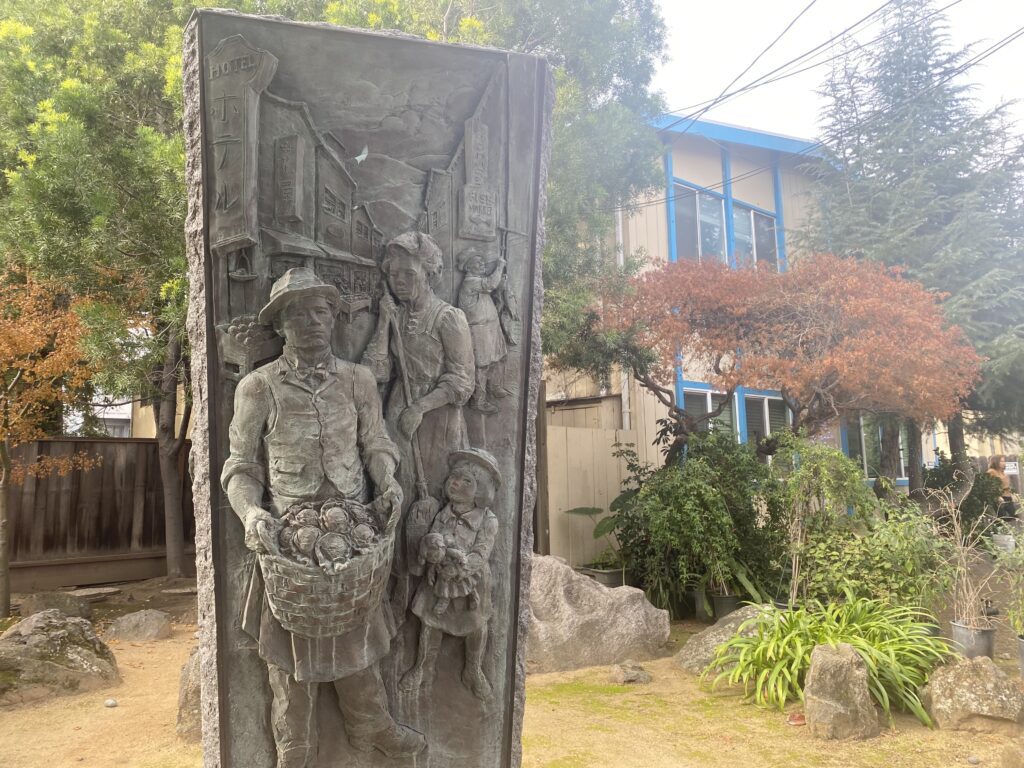 A memorial commemorating Japanese immigrants in Japantown. Photo by Joyce Chu.
Other Bay Area neighborhoods being recognized include the American Indian Cultural District in San Francisco, the Black Arts Movement Business District in Oakland and the Watsonville Cultural District in Santa Cruz County.
State lawmakers established the California Cultural Districts program in 2015 through Assembly Bill 189. Applicants go through a rigorous process, which includes a peer panel review and site visits. The Japanese American Museum submitted a map identifying roughly 180 cultural assets in Japantown, from historic buildings to murals and memorials. San Jose Taiko, a Japanese drumming group, will manage how the grant is spent.
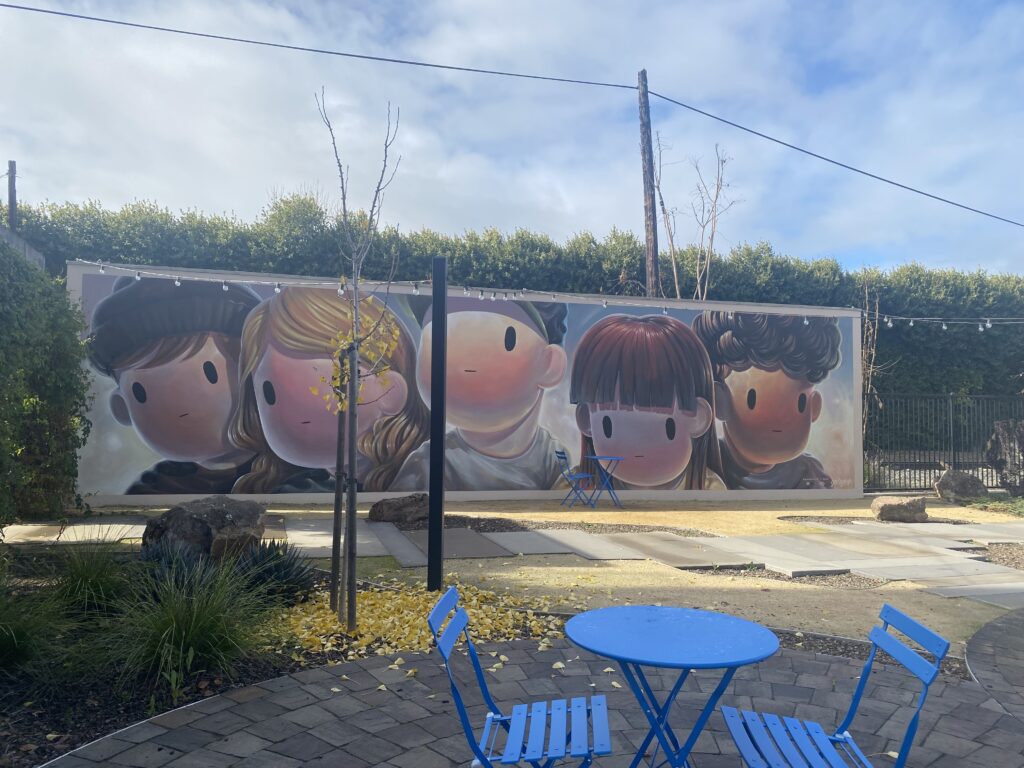 The Japanese American Museum submitted a map identifying 180 cultural assets in Japantown, from historic buildings and murals to memorials. Photo by Joyce Chu.
Hatakeyama said one of the most important assets in the community is the Issei Memorial Building on Fifth Street. It provides a meeting space for cultural and civil rights groups such as San Jose Taiko, Contemporary Asian Theater Scene, J-Town Community TV, Teatro Vision, Japantown Community Congress and Japantown Lions Foundation. The Japanese American Museum also started out in the building before moving into a facility of its own.
“It’s been an incubator for so many other organizations that we enjoy currently in our neighborhood,” she said.
Kelli Saito Martines, board president of the Nikkei Matsuri Foundation, said this designation will bolster the work the foundation does in promoting cultural events. The foundation organizes an annual spring festival where dozens of artists showcase their crafts and perform on stage.
The recognition is even more important given the neighborhood is only one of three remaining Japantowns in the country, which are all located in California — San Jose, San Francisco and Los Angeles.
Saito Martines believes San Jose’s Japantown has survived due to the strength of the community and its ability to stay relevant.
“You walk down the street and there’s such a mix of real cultural traditions and paying homage to the roots of our culture, but then also welcoming new businesses, new faces, new people to our community,” she told San José Spotlight.
Japantown was founded in approximately 1890, when Japanese immigrants who came for farm work settled in the area because there was already an established Chinatown. The Japanese built their own businesses and community alongside the Chinese. Alexandra Urbanowski, CEO of SV Creates and arts columnist for San José Spotlight, said Japantown’s cultural district designation strengthens local artists, including providing them with unique access to affordable housing. But she also thinks California should have recognized more than just a handful of cultural districts, while states such as Texas have designated more than 50 districts.
“I wonder (why) the state of California has only designated 24 formal cultural districts statewide,” Urbanowski told San José Spotlight. “I am not alone among arts leaders across the state in hoping that the state will expand the cultural district program so that more cultural hubs in Santa Clara County, and across the state, can receive the formal designation.”
Contact Joyce Chu at [email protected] or @joyce_speaks on X.