
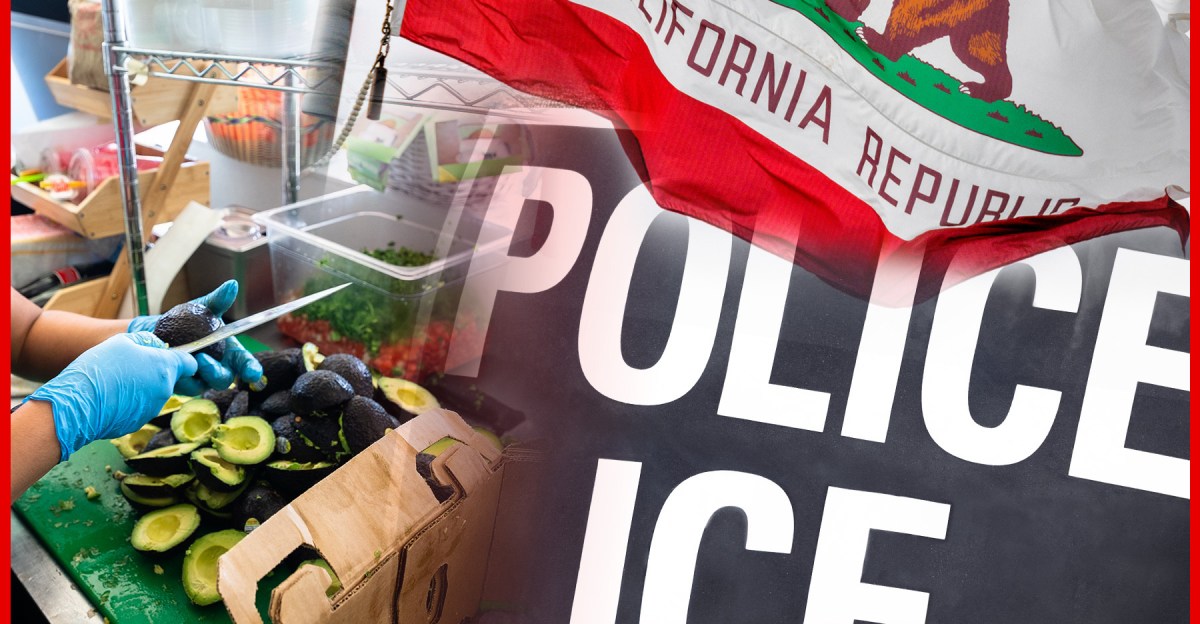
It’s been more than three months since the United States Supreme Court voted 6-3 in Noem v. Vasquez Perdomo to approve an emergency request from the Trump Administration to temporarily suspend an order from two federal courts that barred the U.S. Immigration and Customs Enforcement (ICE) from detaining people based on their ethnicity, speaking a language other than English, or the type of job held. In August, the Ninth Circuit Court of Appeals, plus a Los Angeles federal court, previously ruled that ICE raids and arrests were tantamount to racial profiling.
Since June 6, 2025, ICE’s immigration sweep operations have swept through Southern California. These have focused on swap meets, taco trucks, food stands, car washes, and Home Depot parking lots; the enforcement appears to target Latino-majority communities. Though two lower courts ruled that ICE’s actions are likely illegal, Justice Brett Kavanaugh wrote the majority opinion, which included the following: “The Immigration and Nationality Act authorizes immigration officers to ‘interrogate any alien or person believed to be an alien as to his right to be or remain in the United States.’” Justice Sonia Sotomayor wrote the dissent, joined by Justice Elena Kagan and Justice Ketanji Brown Jackson.
ICE’s impact on Southern California restaurants and agricultural communities has been felt since the widespread raids began in late May 2025. On June 15, Tacos de Cabrito y Machito El Lagunero, a San Bernardino County street food operation serving traditional spit-roasted kid from Mexico’s Comarca Lagunera region, was forced to close despite plans to celebrate its third anniversary. On August 6, LA Cha Cha Chá co-owner Alejandro Marin confirmed he would close his prominent Arts District restaurant, blaming federal ICE raids, subsequent protests, and deployment of the National Guard and U.S. Marines. Taquería Frontera owner Juan Carlos Guerra delayed opening a second location for six months due to the rise in immigration raids across Los Angeles.

A man passes street vendors in Westlake on September 8, 2025. Sarah Reingewirtz/MediaNews Group/Los Angeles Daily News
Human Rights Watch, the international nongovernmental organization that investigates and chronicles human rights abuses, reports that certain Los Angeles residents have lived in fear since the raids began, with many withdrawing from public life.
Between wildfires, a significant decrease in international tourism, and rising costs, 2025 is one of the most challenging times for Los Angeles restaurants. Several advocacy groups, including Consejo de Federaciones Mexicanas (COFEM), have taken an on-the-ground approach, in addition to carrying out social media trainings, to keep the region’s undocumented workers (and those assumed to be undocumented because of their race) safe from ICE. Eater spoke with advocates, a restaurant owner, and an undocumented individual about their efforts and how they are navigating this tenuous time.
As executive director of COFEM, Francisco J. Moreno-Castillo has one goal in 2025: to improve the educational, health, social, and political conditions for California’s Latino immigrant communities. Now that Noem v. Vasquez Perdomo is the law (at least for the time being), a decision he finds devastating, his organization has even more concerns about Angelenos being targeted simply for stepping out of their homes. COFEM has hosted free webinars to prepare Coachella Valley families to potentially encounter ICE. “Living with that constant fear of being separated from our loved ones is something no family should have to endure,” Moreno-Castillo wrote in a statement to Eater. “Our region’s restaurants, service industries, and small businesses are powered by our labor. We keep our neighborhoods running. When raids target us, it hurts entire communities and destabilizes the economy we all depend on.”
“Living with that constant fear of being separated from our loved ones is something no family should have to endure.”
— Francisco J. Moreno-Castillo
That destabilization has been felt by a popular Los Angeles restaurant owner, who requested to remain anonymous for fear that the immigration agency might target their employees. Their business is in a part of Los Angeles where weekly swap meets, locally known as outdoor weekend markets, have disappeared since the ICE raids began in June. “At the peak of the ICE raids, one of our workers was so afraid to travel home that they stayed in the restaurant. For three or four days, we made sure they had a pillow, sheets, an air mattress, clean underwear, food, all that stuff,” the owner tells Eater. “One day, he wasn’t picking up his phone, so we went out looking. We started to think the worst because people were disappearing, and you couldn’t locate people. So we feared the worst, only to find out he was in the hospital, undergoing some health issues.”
Since June, local media outlet L.A. Taco has published a daily update on ICE activity and people abducted throughout the region. A tight team, including journalist Memo Torres, developed coverage that reached national and international news outlets. On December 8, 2025, Torres reported: “Since [Noem v. Vasquez Perdomo], today we have reached 1,000 confirmed kidnappings, at least 96 confirmed ‘Kavanaugh stops,’ which include 15 U.S. citizens being detained, and at least one of them being shot.” L.A. Taco’s coverage requires relationships with community leaders who are closely connected to activist groups and residents who report ICE activity.
One of those activists is Juan C. (not his real name), who left Oaxaca and immigrated to the United States in 1995. He is one of the many undocumented workers in Southern California who are also servers, bartenders, cooks, expediters, and dishwashers in Los Angeles restaurants. He makes a good living due to his decades of experience. Juan’s experience is quite common in Los Angeles, as one of the many skilled restaurant workers who can earn enough to support his family. In 2025, he coordinates with a local immigration nonprofit to keep an eye out for ICE activity in the Southland. Juan’s life has changed drastically since the raids began: He says he doesn’t go out as much as he used to and is always cautious.
“They’re going for the most vulnerable people,” says Juan. “They’re no longer grabbing people at car washes; they’re going after street vendors. Their tactics have been changing. As an organizer, we started focusing on [protecting] street vendors, people who don’t have a car, or who take the bus.”
Juan prefers to keep the name of his organization under wraps. The coalition also provides know-your-rights training for its team of volunteers, showing them how to safeguard others in a designated community, how to spot ICE agents, and what to do if they witness someone being detained. Juan shared a video with Eater that showed a female street food vendor being taken away by four masked men wearing tactical gear. Before being placed in a vehicle, the woman was surrounded by individuals who work with Juan’s organization; they asked for her name and confronted the ICE agents, asking for identification. “Our best line of defense is community patrolling and people knowing their rights,” says Juan. Juan, his organization, and its volunteers allegedly observed ICE agents utilizing a hidden staging location, then patrolling with two cars in three groups to detail people throughout the Southland.
Since 1986, the Coalition for Humane Immigrant Rights (CHIRLA) has focused its efforts on human and civil rights by protecting immigrants and refugees from exploitation. Its team operates from Westlake near MacArthur Park, and has ramped up its workshops by creating educational videos and working directly with Los Angeles businesses to educate them on protecting their employees’ rights during immigration raids.
As CHIRLA’s director of workers’ rights and labor legal services, Yunuen Trujillo has observed an effect on Los Angeles restaurant workers. “We’ve definitely seen an impact in many industries, including restaurants, since Noem v. Vasquez Perdomo,” says Trujillo.

A street food vendor in the summer pushes a cart along a sandy path near a park lake in 2019. Farley Elliott
CHIRLA’s on-the-ground approach has expanded in recent months by conducting workshops in factories, inside hallways, outside workplaces, and in classrooms so that as many workers as possible know their rights. The primary goal is to share that information with others. It had to adjust its strategy, according to CHIRLA’s director of communications, Jorge-Mario Cabrera. Since the September ruling, his organization saw an increase in specific labor violations, which include illegal wage garnishment and the nonpayment of final paychecks, particularly for workers who were detained or deported.
“The harassment of workers, the assumption or the threats of calling ICE, those are calls that we have gotten a lot more often these days, more than ever before,” says Cabrera. “Our colleagues hear that the families of those who have been arrested have to go through a number of hoops to get money that was owed to their loved ones.”
The Trump administration’s emergency request to lift the lower court’s temporary restraining order is just that: temporary. Justice Kavanaugh states at the end of his opinion that essentially pauses the stay as the case winds its way through the lower courts. Justice Kavanaugh writes, “In sum, the Government has demonstrated a fair prospect of success on the merits and has met the other factors for an interim stay pending appeal of the District Court’s injunction.”
When asked about remaining in the U.S., Juan calls California home. “My ancestors are from America. I have Indigenous blood. I speak my native language. My ancestors were born here. All of those who arrived after 1492, everyone who arrived after that, are just visitors. We were here before you. And now you want to kick us out?”