
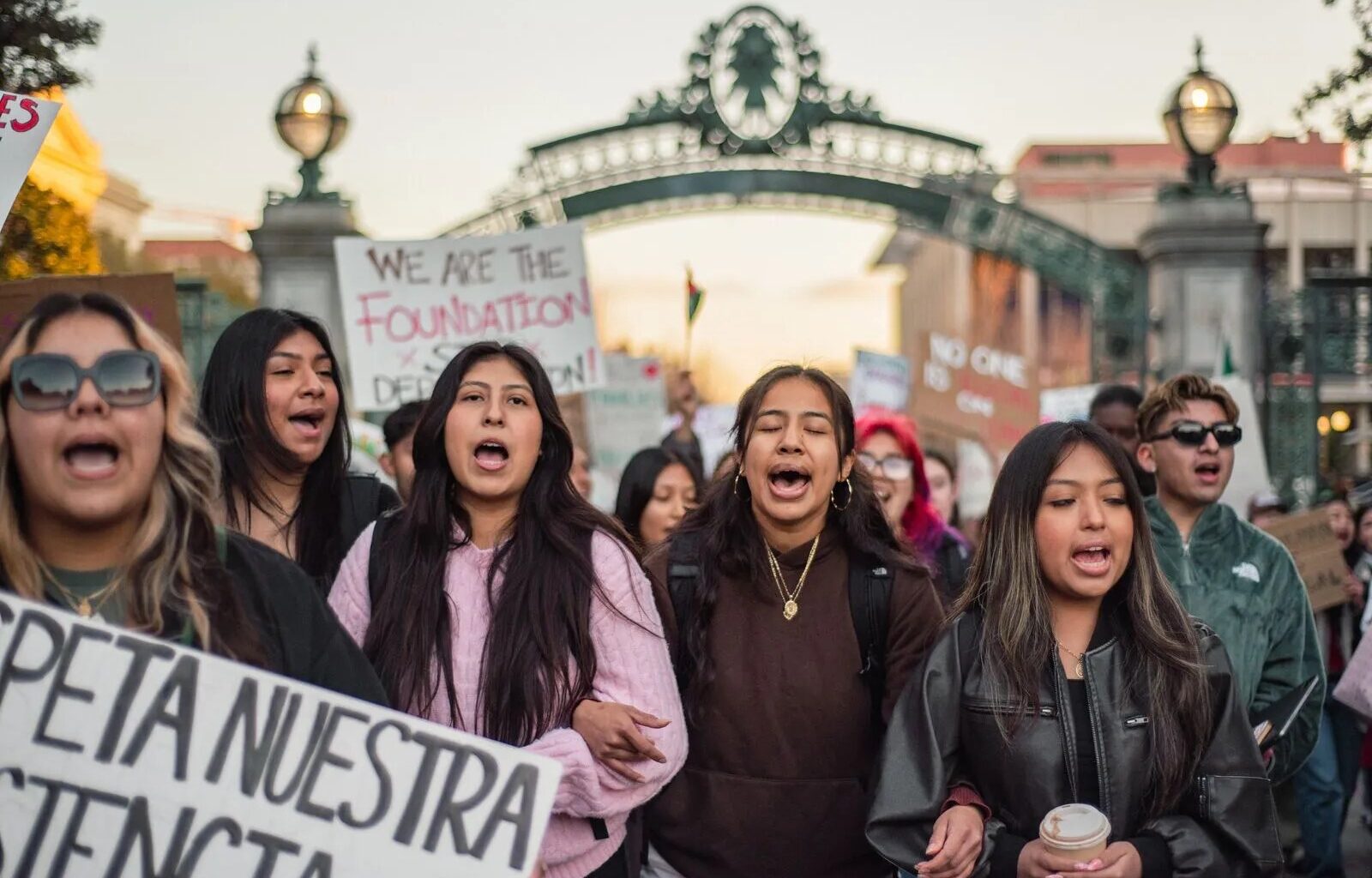
 Cal students march through Sather Gate at the end of a two-hour rally in January in support of immigrant community members. Protests opposing the Trump administration have been a major story in Berkeley this year. Credit: Ximena Natera, Berkeleyside/ CatchLight Local
President Donald Trump’s return to power has driven many of Berkeley’s biggest stories this year — with his administration’s attacks on immigrants, academic independence and diversity in opposition to many of the liberal city’s core values. Other major stories include the approval of a zoning plan allowing apartments on most lots in the flats, new fire safety rules cracking down on vegetation around many Berkeley Hills homes and stalled housing construction that’s left blighted lots in downtown.
Here’s our list of the top stories defining the year in Berkeley:
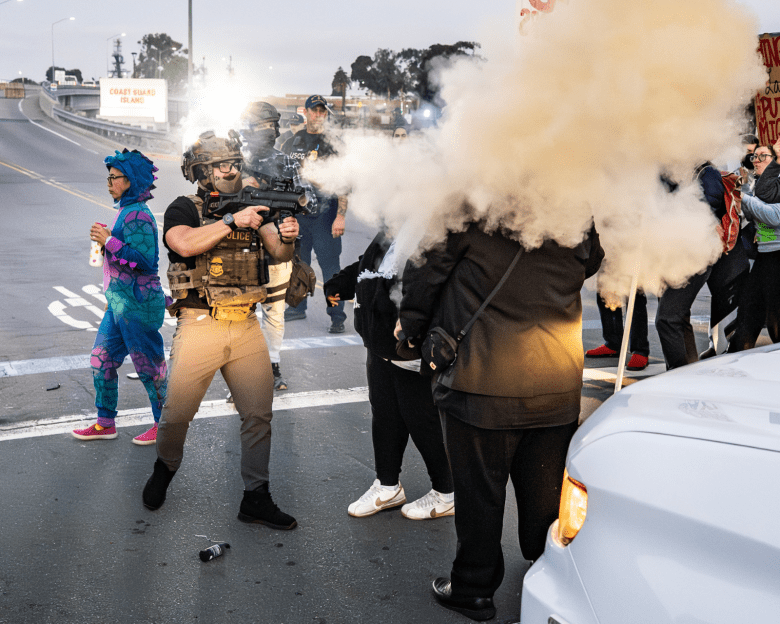 An unidentified federal agent fires a chemical weapon into Rev. Jorge Bautista’s face during a protest outside of Coast Guard Island in Oakland on Oct. 23. Credit: David Bacon
International students with visas revoked then reinstated. Day laborers working through fear to pay their bills. A 73-year-old former seamstress denied toilet paper while being deported. Kids missing school as rumors swirl. Berkeley strengthening its sanctuary policies amid threats by the U.S. Department of Justice. A caravan of masked federal agents arriving at Coast Guard Island for a planned-then-abandoned operation.
While ICE and other federal agencies have carried out a number of actions locally, Berkeley and the Bay Area have been on eggshells waiting for the type of widespread raids seen in other blue regions.
2) Federal funding cuts felt broadly but Cal, Berkeley Lab fear worse is yet to come
The clawback of science grants has led to layoffs of about 3% of the 3,000 employees at Berkeley Lab, while UC Berkeley has lost over $50 million in grant funding, including $6 million at the Lawrence Hall of Science. More drastic cuts are feared, should the Trump administration demand hundreds of millions from Cal, as it has from UCLA, Columbia and other Ivy League schools, or should a budget deal further decimate research teams focused on areas like climate change and wind and solar energy out of favor with the administration.
Funding cuts have also been felt off-campus. Major federal grants fell through at nonprofits including the Berkeley Rep. The city lost $1 million for planting trees. And groups like the Center for Independent Living and the Alameda County Community Food Bank say this summer’s $1.2 trillion of cuts to Medicaid and food stamps will bring more hunger, sickness and homelessness to Berkeley.
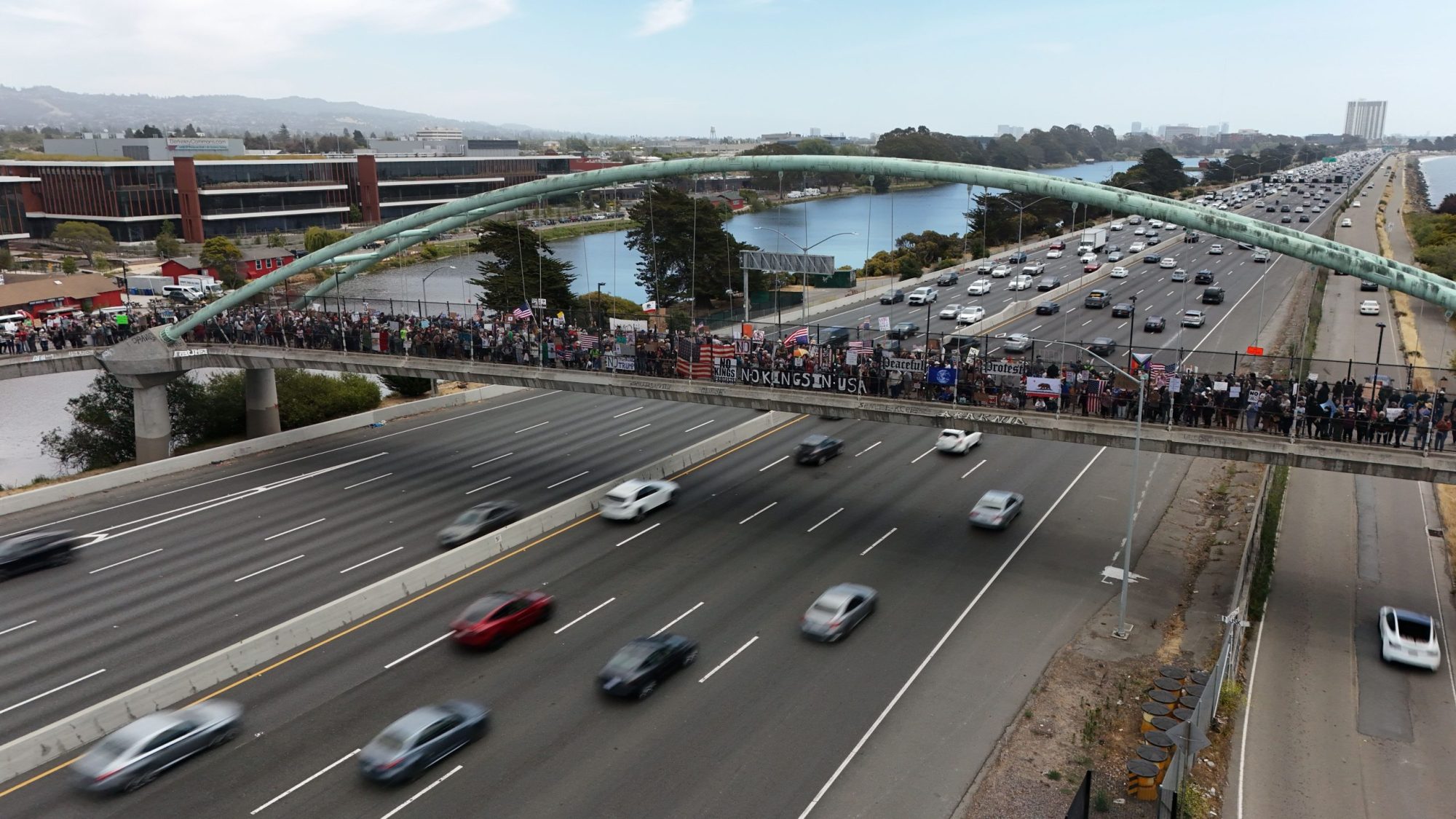 Anti-Trump protesters in Berkeley fill the I-80 overpass near Aquatic Park on June 14, the first of two “No Kings” protests to draw tens of thousands across the East Bay. Credit: Jonathan Hidalgo for Berkeleyside
Berkeley’s Tesla showroom on Fourth Street became an early locus of local resistance, with protesters showing up weekly, aiming to hit Elon Musk in the pocketbook. A professor who pulled the hair of a Trump supporter wielding a stun gun became a folk hero.
Later in the year, crowds opposing creeping authoritarianism filled East Bay streets in the tens of thousands during “No Kings” rallies in June and October. Older residents have often been on the front lines of the resistance movement, which has taken many forms, including interfaith vigils and court watch volunteer work.
4) Trump administration launches investigations into UC Berkeley and Berkeley High
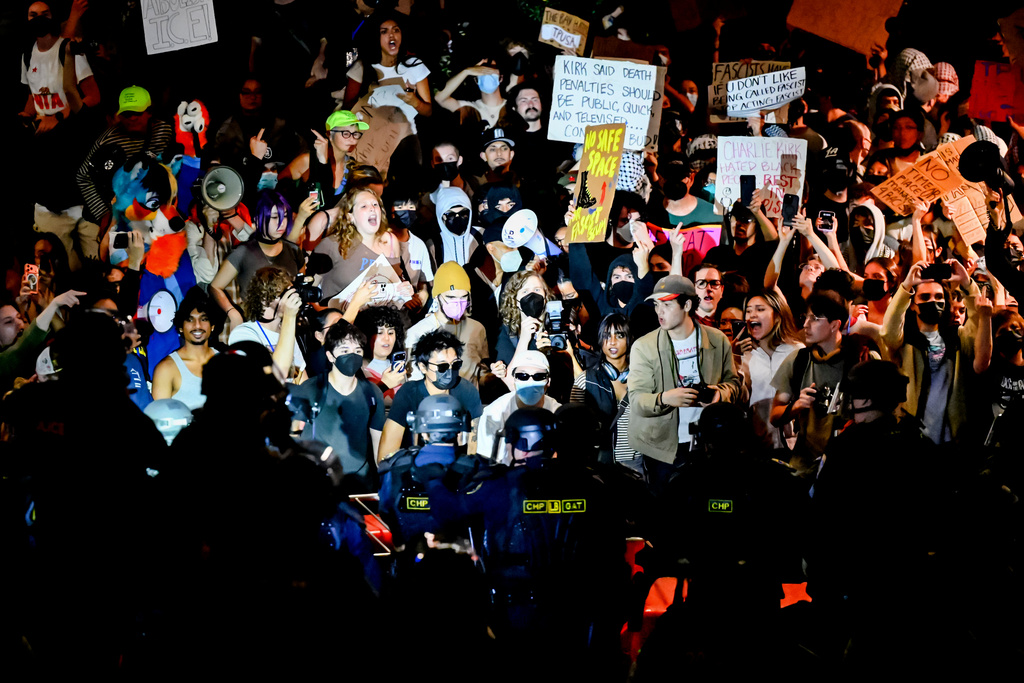 Anti-fascist protesters turned up outside a Turning Point event held on the two-month anniversary of Charlie Kirk’s assassination. Credit: Credit: AP/Noah Berger
As Trump seeks to bend elite universities to his will, UC Berkeley faces at least seven separate federal investigations into its policies and practices. The Education and Justice departments have launched probes into whether the university tolerates antisemitism on campus, whether its admissions offices engage in “DEI discrimination,” whether it has adequately reported funding it gets from foreign countries, and how it handled campus protests against the right-wing youth group Turning Point USA.
Hailed by conservatives, the investigations have drawn criticism from faculty who see them as smokescreens for a dangerous crackdown on academic freedom. And Republicans in Congress have launched their own inquiries into reports of anti-Jewish bias within both UC Berkeley and the Berkeley Unified School District.
5) City Council passes wide-reaching zoning change to allow apartments throughout flatlands
Fresh off the election of a new mayor backed by Yes In My Backyard groups in 2024, the Berkeley City Council enacted wide-reaching zoning changes in June that would allow property owners to build apartments in neighborhoods throughout the flatlands. The unanimous vote to approve the “Middle Housing” zoning changes was another testament to how Berkeley leaders have embraced calls to build more housing after the city resisted development for decades. And the rezoning push isn’t done. The City Council has also signaled support for proposals in the works for next year to raise height and density limits along several major streets, including College, Solano, Shattuck and San Pablo avenues, though the efforts have faced resistance from some merchants and residents.
6) Homeless encampments in city parks prompt complaints, then sweeps
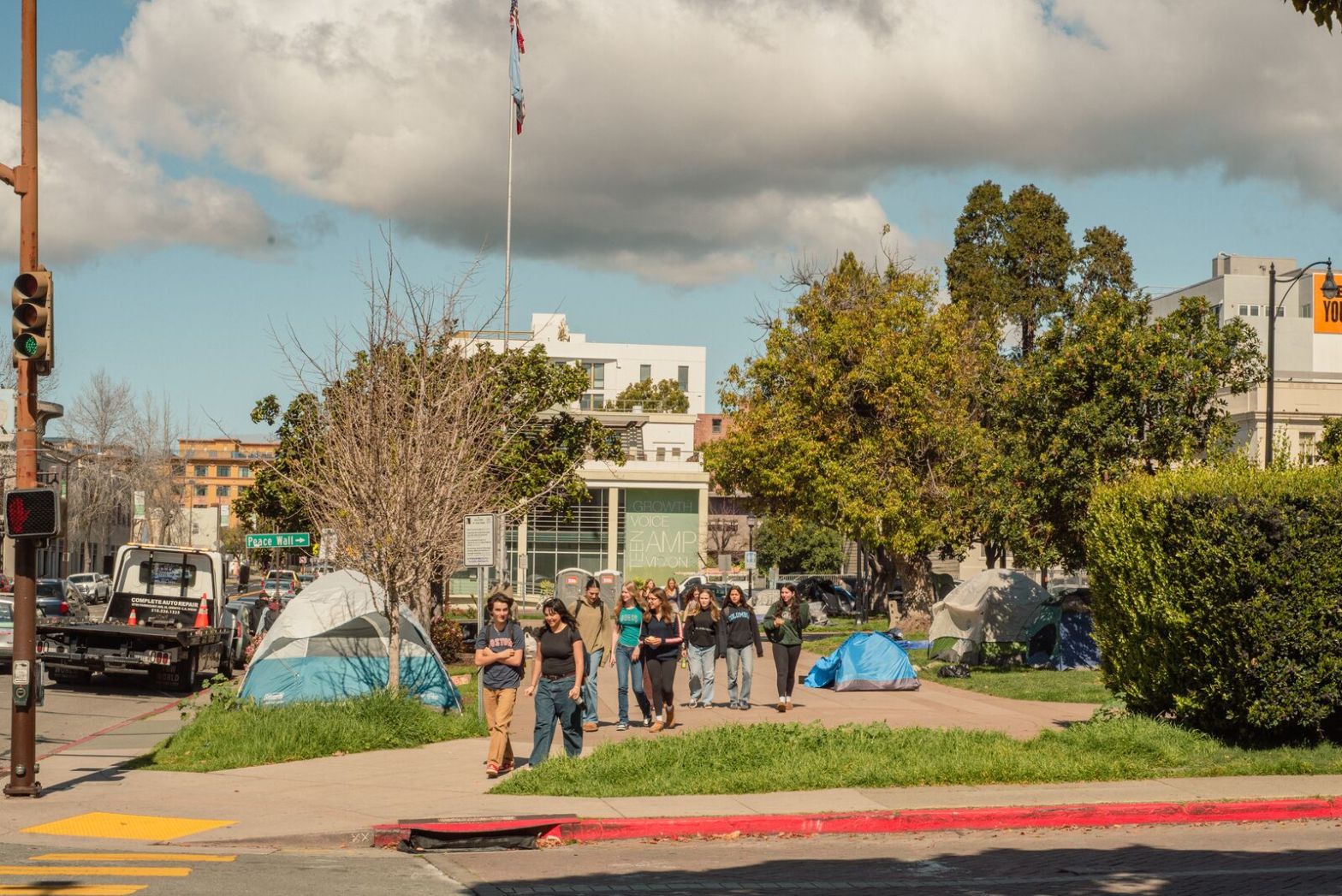 Berkeley High students walk through an encampment in Civic Center Park. Credit: Ximena Natera, Berkeleyside/CatchLight Local
Civic Center Park became the focal point of a debate that has been playing out for years in open spaces, industrial blocks and courtrooms over how Berkeley should respond to homeless encampments amid shelter shortages and a regional housing crisis. A camp of unhoused residents in the downtown park grew in early 2025, and tensions over the open space across from Berkeley High escalated when a man groped a student there in January. Although the man wasn’t a resident of the camp, the incident led to calls from some BHS parents and students for the city to remove the collection of tents; other students organized a protest against encampment sweeps. The city eventually fenced off the park and moved many of the camp’s residents into housing. But soon after that, the same cycle of complaints and concerns — and, eventually, a sweep — played out a few blocks north at Ohlone Park.
7) Berkeley enacts ‘Zone Zero’ requirements to clear space around homes in hills
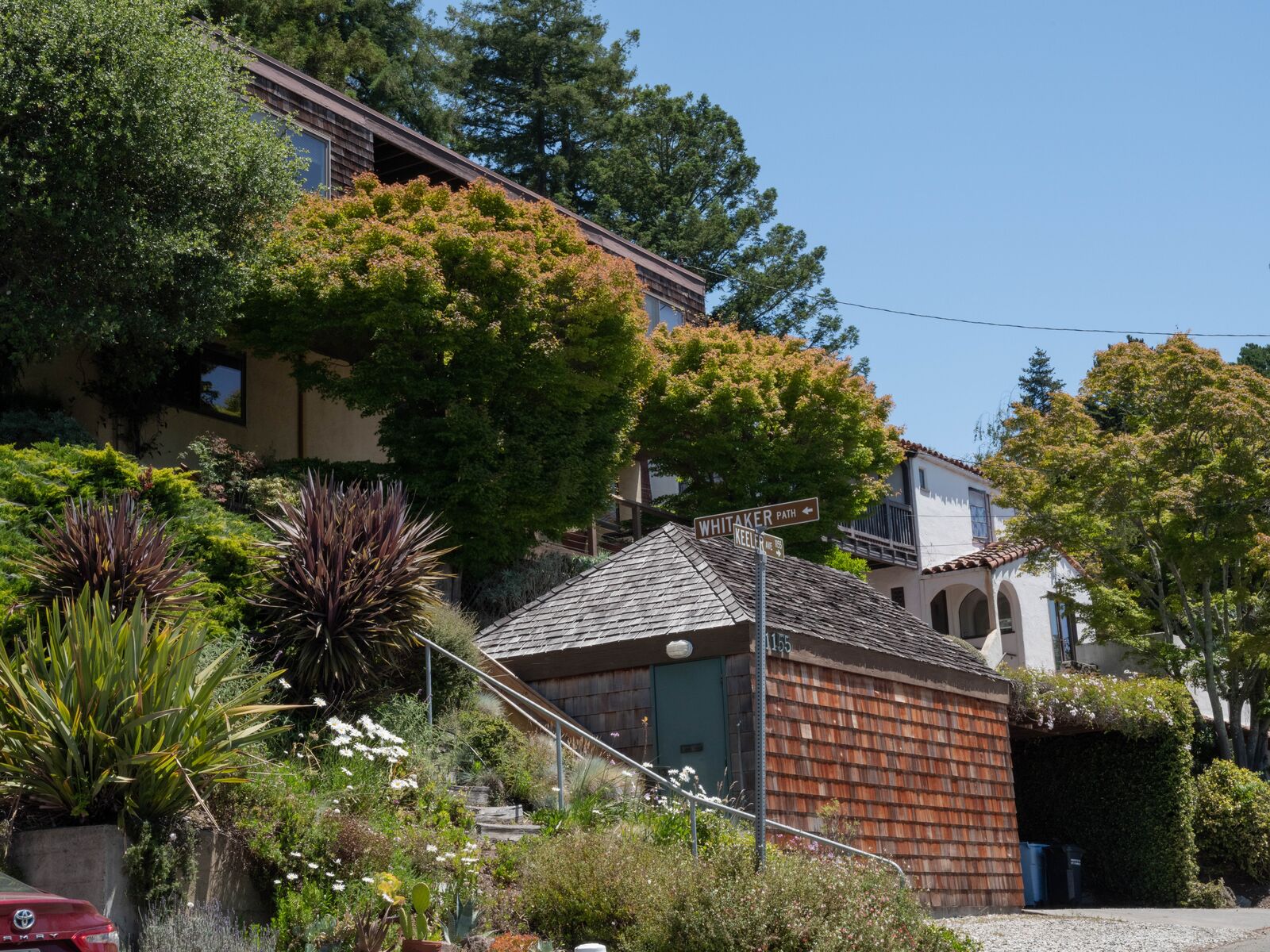 Many homes in the Berkeley Hills, which are vulnerable to wildfire, don’t comply with recommendations to keep flammable vegetation clear of structures. Credit: Ximena Natera, Berkeleyside/CatchLight Local
After the devastation of January’s wildfires in and around Los Angeles, and following years of warnings that Berkeley needs to do more to prepare for the next big blaze, city leaders enacted some of California’s strictest vegetation management requirements for hundreds of homes in the hills. The regulations mandate that residents in two neighborhoods where fire risk is greatest remove almost anything that could be flammable — including plants, mulch and wood fences — from within 5 feet of their homes. The requirements faced fierce opposition from many residents who worried they would fundamentally change the look of homes in the hills, but the City Council and Fire Department leaders said the steps are critical to protect Berkeley from a catastrophic wildfire.
The beloved downtown Berkeley theater is one in a string of performing arts organizations to meet their demise after failing to bounce back from the pandemic. Bay Area Children’s Theater, TheatreFirst and California Jazz Conservatory’s degree program have all closed since 2023, while Freight & Salvage, La Peña Cultural Center, the Berkeley Art Center and Black Repertory Group are facing significant financial headwinds. In an effort to shore up the city’s struggling arts sector, a coalition of groups including Berkeley Rep and the Berkeley Symphony Orchestra are campaigning to add a $5.5 million parcel tax to the 2026 ballot.
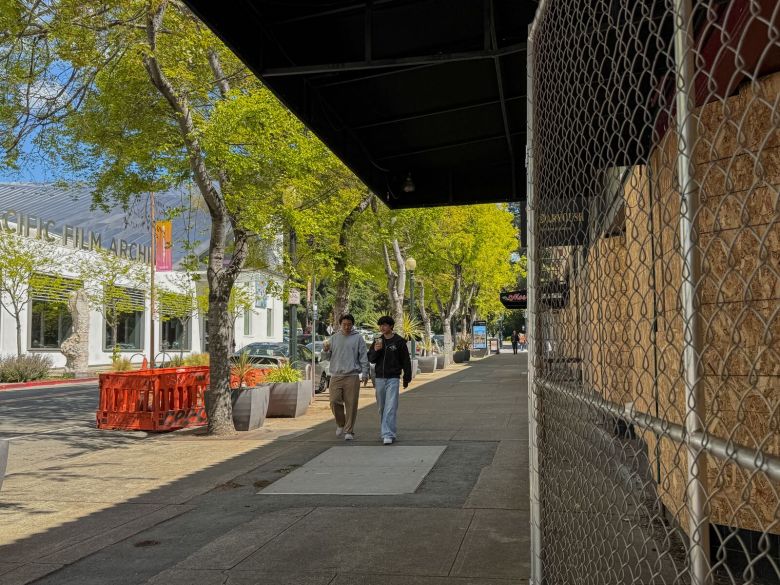 People walk past boarded up businesses along the top of Center Street, one of the busiest blocks in the city. Credit: Ximena Natera, Berkeleyside/CatchLight Local
A construction boom that once saw downtown Berkeley adding hundreds of apartments each year has ground to a halt. As a result, several prominent sites in the city’s core that were hollowed out in anticipation of new development are now sitting empty and blighted. It remains to be seen whether the boarded-up former restaurant row at the top of Center Street or the excavated pit along Harold Way will prove to be temporary growing pains or a long-term nuisance. But for now, they’re a source of frustration for city and business leaders.
The vendor, Flock Safety, is under scrutiny nationwide over reports its data may have gone to federal agencies, including ICE. Isolated searches for the terms “ICE” and “CBP” in Berkeley’s license plate data have added fuel to the backlash, and the city has been threatened with a lawsuit if it doesn’t cut ties with Flock. The city has tightened its contracting rules and postponed a final vote on what to do until next year.
“*” indicates required fields