
President Donald Trump’s administration announced Tuesday that it is expanding its original travel ban from earlier this year by adding 22 more countries, as well as the Palestinian Authority, to its list. Seven of those countries are facing full bans on entry into the U.S., while restrictions are being imposed on another 15.
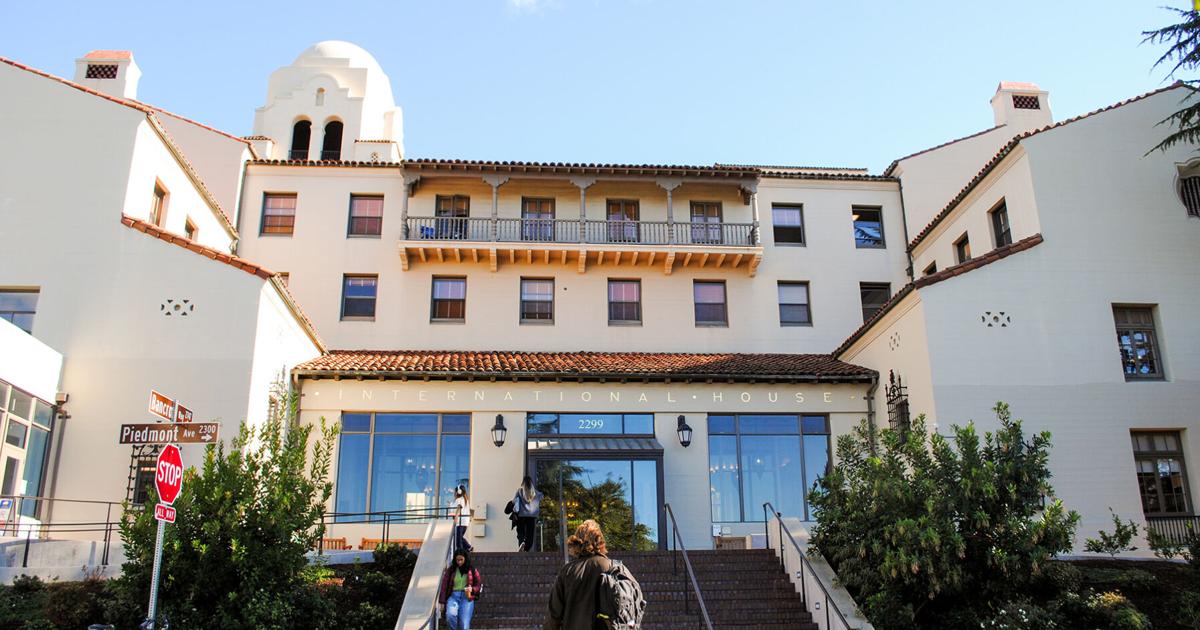
In an email sent out to all international students Wednesday, the Berkeley International Office, or BIO, detailed the new travel ban, titled “Restricting and Limiting the Entry of Foreign Nationals to Protect the Security Of The United States.”
According to the email, entry into the U.S. is suspended only for foreign nationals of the designated countries who “do not have a valid visa” and “who are outside of the U.S. on or after 12:01 EST” on Jan. 1, 2026, the effective start date of the ban.
The email also listed the countries that are fully suspended from entry into the U.S., which were originally only Afghanistan, Burma, Chad, Republic of the Congo, Equatorial Guinea, Eritrea, Haiti, Iran, Libya, Somalia, Sudan and Yemen.
New additions to this list include Burkina Faso, Laos, Mali, Niger, Sierra Leone, South Sudan and Syria, as well as individuals with Palestinian Authority documents.
Additionally, the email listed countries whose “immigrants, nonimmigrant B-1/B-2, F, M and J visa nationals” are suspended from entry into the U.S. The original list of countries — which initially included Burundi, Cuba, Togo, Turkmenistan and Venezuela — now includes Angola, Antigua and Barbuda, Benin, Côte d’Ivoire, Dominica, Gabon, Gambia, Malawi, Mauritania, Nigeria, Senegal, Tanzania, Tonga, Zambia and Zimbabwe.
About 94 campus international students are impacted out of the 10,864 total international students enrolled at UC Berkeley. However, the travel ban has still had effects on some students.
One of these students — who was granted anonymity out of concern for his safety — was a graduate student in engineering who graduated this semester. Hailing from one of the impacted Eastern African countries,he is an undocumented international student who has been living in the U.S. for the last two years.
“I have a lot of classmates who are (included) in that travel ban, so it’s really hard for them to see their parents,” the anonymous student said. “Specifically for me, I am not allowed to go to any other country, as (long) as I’m undocumented.”
The email sent by the BIO advised impacted individuals on campus to avoid “travel outside the U.S.,”and “urge” those with valid visas to “enter the U.S. prior to the travel ban effective date.”
“We included this language as an added measure of precaution so that individuals not directly impacted do not get caught up mistakenly by CBP officers who may not be clear about the complete details of the travel ban,” said Director of BIO Ivor Emmanuel in an email.
The email added that individuals from all other countries on immigrant and non-immigrant visas should pay attention to “increased screenings,” “travel delays” and “future changes in visa issuance” due to the “changing nature of the new administration’s policies on visas and U.S. entry.”
The anonymous student originally applied to UC Berkeley during former President Joe Biden’s term, as he was attracted by campus’s engineering program, student body diversity and support of undocumented students. Unable to practice in his field of study back home, he said UC Berkeley was his “only opportunity” to do so by utilizing its abundant resources and working with professors.
However, he added that the current administration has made his undocumented status more of a challenge by limiting his ability to travel domestically and internationally, find a job and obtain a visa.
“The government aligns immigrants like me that are undocumented as exclusively illegal and criminal,” the anonymous student said. “Nobody hires you or gives you an opportunity to work in this environment or in a company, because you have a tag, which is ‘criminal.’”
He described how difficult it was to find the internship required to complete his degree, as he was forced to travel to the out-of-state location on public transportation for three full days, due to his safety concerns with flying.
Although the anonymous student cannot currently find work in the U.S., he said he also cannot return to his home country due to government instability, which is the reason he left in the first place.
The anonymous student said he is working with a lawyer to try and find a legalized pathway to citizenship, but he noted that this has become increasingly difficult due to the current government.
Despite this, he said he hopes for the current environment to change so that he can find a way to settle in the U.S.
“I feel there isn’t any future, there isn’t any hope,” the anonymous student said. “Specifically as a (graduating) student, you want to join any kind of company or institution to work with them and to make an impact — but you are, at the end of the day, unable to do that … I’m waiting for a miracle to happen.”
According to an email from campus spokesperson Adam Ratliff, international students with safety concerns in their home countries will be among those prioritized in receiving on campus housing.
This initiative is a part of the Winter Break Housing program, which offers housing to “residence hall students who will not have housing over the Winter Break period” of Dec. 20 through Jan. 15, 2026.
“We recognize that these changes are both stressful and disruptive, and wish to offer our support and services,” Emmanuel said in the email to campus. “Berkeley International Office assures you that we are closely monitoring continuing issues impacting our international student, scholar and employee populations.”