
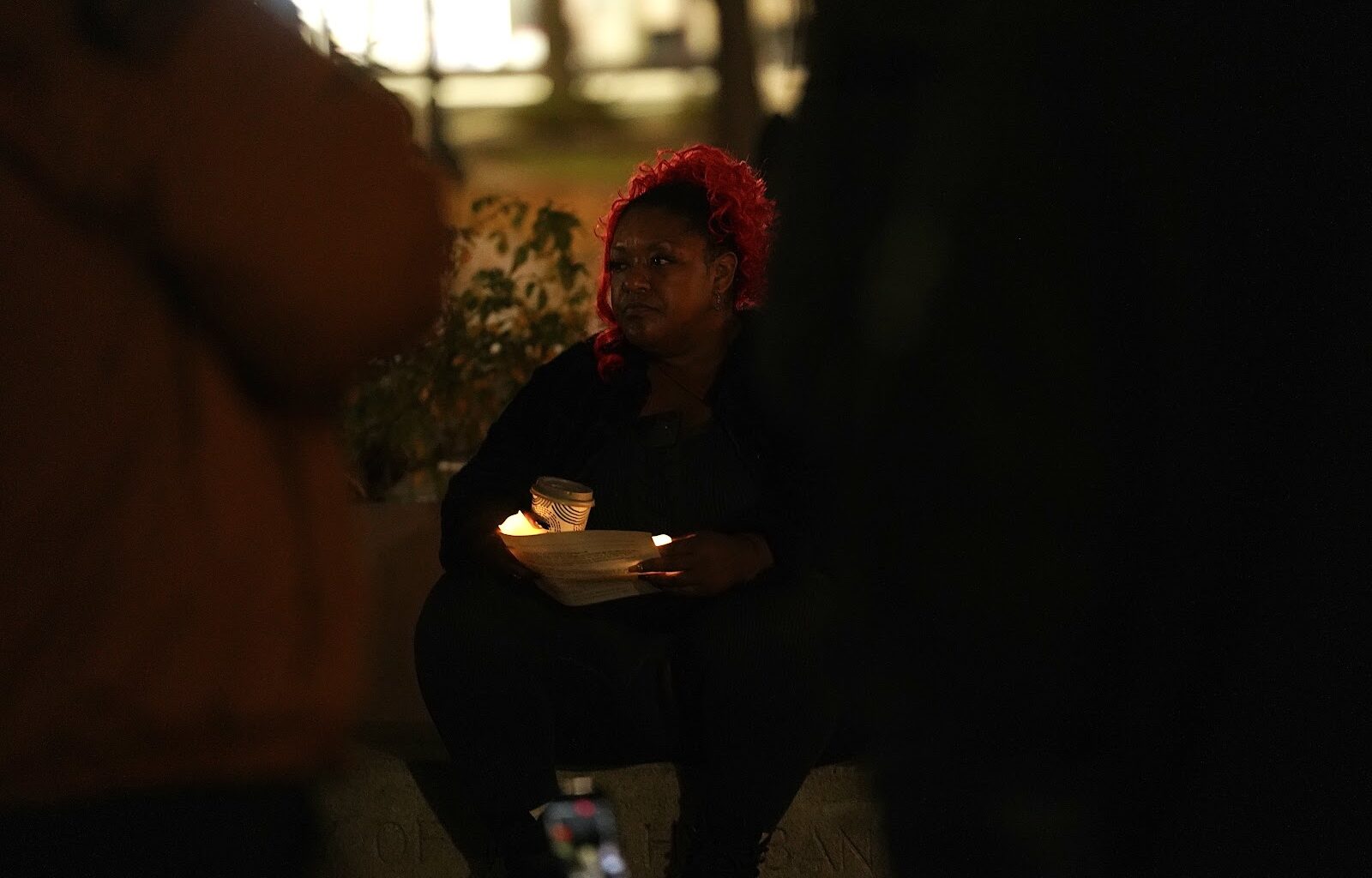
As the city celebrates Christmas, a downtown Sacramento park is lit by candlelight while Satearah Murphy remembers her husband, who died from congestive heart failure in 2024 when they were unhoused. She works at Sacramento International Airport during the day and sleeps in a tent at night.
“I didn’t know there was something wrong with living outside,” Murphy said. “This is generational for me. My mom was out here. My grandma was out here.”
Murphy’s story challenges the common myth that people without housing are unemployed or unwilling to work. For her, the real barrier is affordability, not effort.
“I choose to be in a tent because I need to be able to rest,” said Murphy, 36, who has been unhoused for more than seven years. “A lot of unhoused people are living in their vehicles. Just because you don’t see them doesn’t mean they’re not unhoused.”
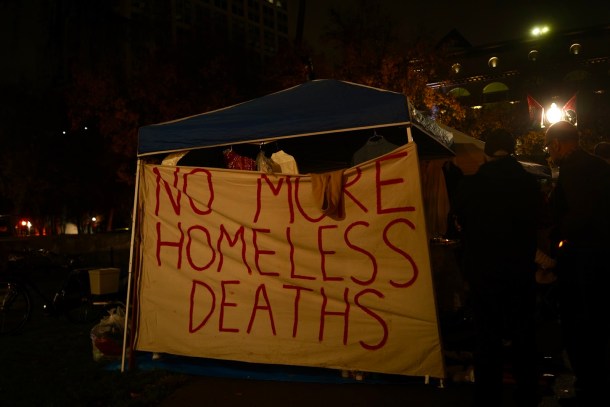 A banner adorns a pop-up shade structure. Neenma Ebeledike, OBSERVER
Murphy was among many who gathered Dec. 21 at Cesar Chavez Park for Sacramento’s 13th annual memorial and candlelight vigil for the county’s unhoused. The event took place on the winter solstice, the longest night of the year.
The vigil, co-hosted by the Sacramento Regional Coalition to End Homelessness, the Sacramento Poor People’s Campaign and the Black Hair and Black Hygiene Project, honors people who died while homeless in Sacramento County.
So far in 2025, the county coroner has identified 175 people who died without housing.
“They froze to death, suffered heat stroke, or died from health conditions that were made worse because they were unhoused,” said Faye Wilson Kennedy, one of the event’s organizers. “This is about acknowledging that they existed.”
For more than a decade the vigil has taken place at churches, City Hall, and public parks. Kennedy said choosing Cesar Chavez Park, where unhoused people already are prominent, as the location was intentional.
“This space allows them to be part of the remembrance,” she said.
Cities across the country observe Homeless Persons’ Memorial Day each year. Kennedy said the purpose transcends ritual.
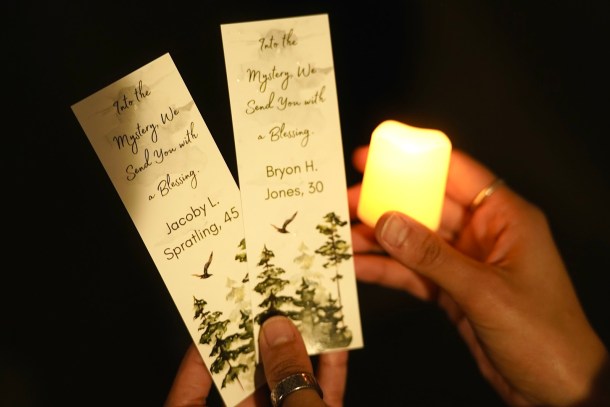 A mourner holds two memorial cards featuring names of deceased unhoused people. The cards were distributed at the 13th annual Memorial and Candlelight Vigil for the Unhoused. Neenma Ebeledike, OBSERVER
“It’s standing in solidarity,” she said. “It’s remembering that these individuals lived full lives and joined their ancestors. Their lives mattered.”
In California, African Americans are overrepresented among people experiencing homelessness. They make up about 7% of the state’s population but account for more than a quarter of those without housing.
According to Sacramento Steps Forward, Black people in Sacramento are 3.7 times more likely to experience homelessness than the average resident.
Research shows that the high number of Black people experiencing homelessness comes from long-standing racial inequities in U.S. policies and systems.
These inequities include discriminatory housing systems, unequal access to jobs and credit, and the effects of segregation and exclusionary zoning. All of these have made it harder for Black families to build wealth and obtain stable housing.
Charles Ware, founder of the Oak Park Homeless Project, said such disparities also stem from neglect and from policymakers failing to listen to people with lived experience.
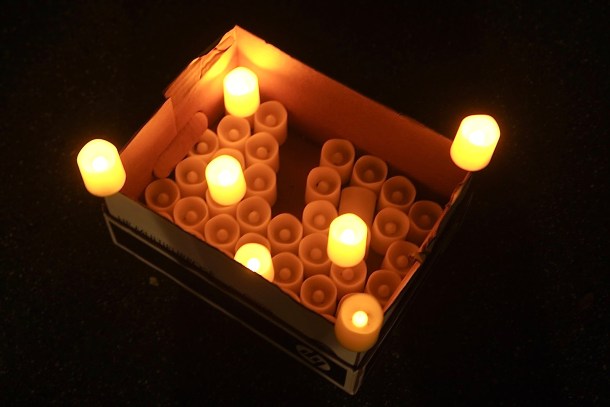 Candles distributed at the 13th annual Memorial and Candlelight Vigil for the Unhoused. Neenma Ebeledike, OBSERVER
“One is one too many,” Ware said, referring to the number of names read aloud during the vigil. “If all these names are being mentioned, that means the city has no sense of urgency.”
Ware, who was homeless nearly 20 years ago, now does what he calls “boots on the ground” work by handing out socks, food, and supplies directly to people living on the street.
“I don’t do this for money,” he said. “I do it because I know the daily struggles.”
Ware believes people who have experienced homelessness should help shape the solutions. “They need to bring people like us to the table. If you don’t work down here on the ground level, you don’t know what actually works,” he said.
Kevin Carter, an advocate with the Sacramento Poor People’s Campaign, agreed that advocacy and direct action should go hand in hand.
“We go to the Capitol. We protest. We legislate,” Carter said. “But the people the community trusts, the people out here every day, are rarely the ones in decision-making positions.”
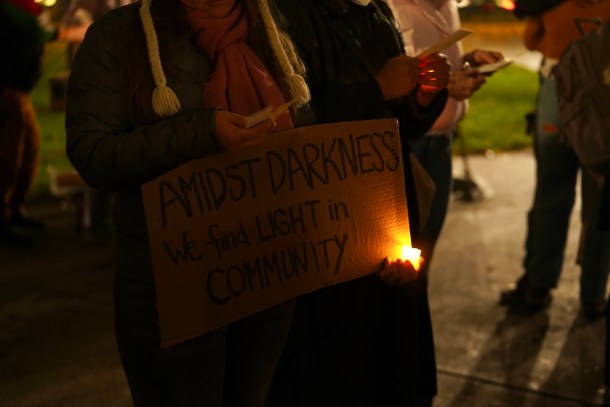 A memorial attendee carries a sign expressing communal resolve. Neenma Ebeledike, OBSERVER
As candles glimmered and names were read, the Sacramento Peace and Justice Choir ended the vigil with a moving performance. The park was filled with music and reflection.
For Kennedy, the vigil is not only about grief. It is also about hope.
“When unhoused folks show up and get warm coffee, they always ask, ‘How can we help?’” she said. “They help pass out food. They help fold clothes. That’s where I find hope — people helping themselves and each other.”
Murphy stood in the crowd, mourning losses that felt very personal.
“They were mothers. Fathers. Best friends,” she said. “People like me.”
On the longest night of the year, Sacramento gathered to remember, to bear witness, and to ask what it would take to make sure no one has to die without a home.
Related