

In California’s 175 years of statehood, there’s been one place dedicated to preserving the history of our state.“The state library was first created in 1849 as a bookshelf on the Senate floor at the state capitol,” said Alex Vassar, the communications manager at the California State Library. “Since then, we have grown. We have 4 million books, so we are constantly sending out materials, bringing materials back.”The state library primarily exists to serve the state government for research purposes, but anyone can come in and access thousands of books, documents and photographs.“A lot of times if you have state government reports, they may print 2,000 copies of a report. The copy that comes to the state library is often the one that’s going to last a century,” Vassar said. “By bringing it here, it really expands who it’s available to in the future. It’s a really rewarding feeling knowing that you are, you are playing a part in preserving California history.”Alex Vassar and the California State Library team laid out some of the library’s rarest materials. Vassar brought out a tax statement from 1860 for the California State Capitol Tax. “It was expensive; they needed to buy the land, so they actually charged taxes from Sacramento County residents to fund the construction of the state capitol and the purchase of that land,” Vassar said.The Californian was the first newspaper printed in the state, Vassar said. It was printed in Monterey, which at the time was the soon-to-be state capital. The first newspaper printed in Sacramento County was the Placer Times, printed in Sacramento on April 28, 1849. The California State Library has a large collection of paintings of plants and animals from the state.“For some species, this artwork is the only thing we have left. As California has changed, the climate has changed, land use has changed, you end up with some species going away. So having it preserved, with a picture from the artist, helps us understand what California would have looked like in the earlier ages,” Vassar said.While anyone can visit the library, there are some areas that are heavily guarded. “There is a room at the library called ‘The Vault’. It is where we keep the rarest and most interesting materials,” Vassar said. “It is climate-controlled; it is heavily guarded. The items that are in there, a lot of times, there is only one copy of, maybe two copies of.”One of the oldest items at the library dates back to 5,000 BC. “It’s a clay tablet that’s about the size of a piece of ravioli. They tell us it’s (the) equivalent of an Amazon receipt. It notes delivery was made and identifies what was in that delivery,” Vassar said.”One of the more interesting things in terms of California political history that has come into our collection in the last few years was a section of pipe named Charlotte,” Vassar said. “It was made by the Charlotte Pipe Company. It’s a simple PVC pipe, but it is exactly 6 feet long, and it is what the California State Assembly used to measure out how close people could sit in committee rooms for the COVID pandemic, when they set the 6-foot limit. We have this 6-foot pipe. It played a significant part in how the public interacted with their state government during the COVID pandemic.”Vassar also shared the history behind one of John Steinbeck’s most well-known books, “The Grapes of Wrath.” “It started out as a magazine article. Steinbeck and a photographer were sent down to interview migrant families in the central valley,” Vassar said. “They met the Joad Family. After they had spent about a week with them, the photographer taking photos and Steinbeck writing, he says, ‘This is not a magazine article, this is a book.’”Steinbeck returned his advance, and the photographer never got paid, Vassar said. The photographer later developed the photos he took of the Joad family. “We have pictures of the Joad family’s vehicle and tent and members of the family.””The Grapes of Wrath” was published in 1939. Steinbeck, who was born in Salinas, won the Nobel Prize in Literature in 1962. He also won a Pulitzer Prize for his work in “The Grapes of Wrath.”One of Vassar’s favorite items from California history is a collection of loose-leaf papers detailing information about the members of the state’s first legislature.”During the first session of the legislature, there was an assemblyman named Bradford. He went around and he, I guess you could say, interviewed the other members of the legislature. ‘Hey, what’s your name? Where are you from? What’s your history? How did you come to California?'” Vassar said. The assembly member collected handwritten notes by each legislator, detailing their journey to California. “It’s why we know so much about the legislators of the first session compared to some of the other early sessions. It’s because one person went out of his way to capture history when it was easiest to do it, while the members were all there,” Vassar said. The first state Legislature was comprised of 16 state senators and 36 assemblymen.+ Learn the history behind California’s first state Legislature”It’s just amazing to just see the pages. This was just a person taking time to document California history,” Vassar said.As soon as people walk into the California State Library, the words of the state’s first poet laureate greet them. People can walk in the center of the rotunda and lightly tap their feet to be amazed by the wonders inside the California State Library.This story was produced for California Politics 360, which reports in-depth coverage of top California politics and policy issues. Get informed each Sunday at 8:30 a.m. on KCRA 3.See more coverage of top California stories here | Download our app | Subscribe to our morning newsletter | Find us on YouTube here and subscribe to our channel
In California’s 175 years of statehood, there’s been one place dedicated to preserving the history of our state.
“The state library was first created in 1849 as a bookshelf on the Senate floor at the state capitol,” said Alex Vassar, the communications manager at the California State Library. “Since then, we have grown. We have 4 million books, so we are constantly sending out materials, bringing materials back.”
The state library primarily exists to serve the state government for research purposes, but anyone can come in and access thousands of books, documents and photographs.
“A lot of times if you have state government reports, they may print 2,000 copies of a report. The copy that comes to the state library is often the one that’s going to last a century,” Vassar said. “By bringing it here, it really expands who it’s available to in the future. It’s a really rewarding feeling knowing that you are, you are playing a part in preserving California history.”
Alex Vassar and the California State Library team laid out some of the library’s rarest materials. Vassar brought out a tax statement from 1860 for the California State Capitol Tax. “It was expensive; they needed to buy the land, so they actually charged taxes from Sacramento County residents to fund the construction of the state capitol and the purchase of that land,” Vassar said.
The Californian was the first newspaper printed in the state, Vassar said. It was printed in Monterey, which at the time was the soon-to-be state capital. The first newspaper printed in Sacramento County was the Placer Times, printed in Sacramento on April 28, 1849.
The California State Library has a large collection of paintings of plants and animals from the state.
“For some species, this artwork is the only thing we have left. As California has changed, the climate has changed, land use has changed, you end up with some species going away. So having it preserved, with a picture from the artist, helps us understand what California would have looked like in the earlier ages,” Vassar said.
While anyone can visit the library, there are some areas that are heavily guarded.
“There is a room at the library called ‘The Vault’. It is where we keep the rarest and most interesting materials,” Vassar said. “It is climate-controlled; it is heavily guarded. The items that are in there, a lot of times, there is only one copy of, maybe two copies of.”
One of the oldest items at the library dates back to 5,000 BC.
“It’s a clay tablet that’s about the size of a piece of ravioli. They tell us it’s (the) equivalent of an Amazon receipt. It notes delivery was made and identifies what was in that delivery,” Vassar said.
“One of the more interesting things in terms of California political history that has come into our collection in the last few years was a section of pipe named Charlotte,” Vassar said. “It was made by the Charlotte Pipe Company. It’s a simple PVC pipe, but it is exactly 6 feet long, and it is what the California State Assembly used to measure out how close people could sit in committee rooms for the COVID pandemic, when they set the 6-foot limit. We have this 6-foot pipe. It played a significant part in how the public interacted with their state government during the COVID pandemic.”
Vassar also shared the history behind one of John Steinbeck’s most well-known books, “The Grapes of Wrath.”
“It started out as a magazine article. Steinbeck and a photographer were sent down to interview migrant families in the central valley,” Vassar said. “They met the Joad Family. After they had spent about a week with them, the photographer taking photos and Steinbeck writing, he says, ‘This is not a magazine article, this is a book.’”
Steinbeck returned his advance, and the photographer never got paid, Vassar said. The photographer later developed the photos he took of the Joad family. “We have pictures of the Joad family’s vehicle and tent and members of the family.”
“The Grapes of Wrath” was published in 1939. Steinbeck, who was born in Salinas, won the Nobel Prize in Literature in 1962. He also won a Pulitzer Prize for his work in “The Grapes of Wrath.”
One of Vassar’s favorite items from California history is a collection of loose-leaf papers detailing information about the members of the state’s first legislature.
“During the first session of the legislature, there was an assemblyman named Bradford. He went around and he, I guess you could say, interviewed the other members of the legislature. ‘Hey, what’s your name? Where are you from? What’s your history? How did you come to California?'” Vassar said.
The assembly member collected handwritten notes by each legislator, detailing their journey to California.
“It’s why we know so much about the legislators of the first session compared to some of the other early sessions. It’s because one person went out of his way to capture history when it was easiest to do it, while the members were all there,” Vassar said.
The first state Legislature was comprised of 16 state senators and 36 assemblymen.
+ Learn the history behind California’s first state Legislature
“It’s just amazing to just see the pages. This was just a person taking time to document California history,” Vassar said.
As soon as people walk into the California State Library, the words of the state’s first poet laureate greet them.
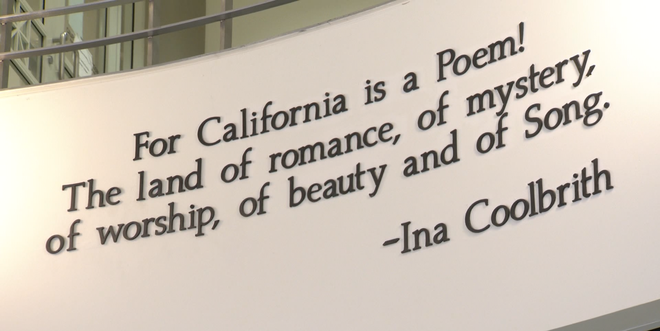
People can walk in the center of the rotunda and lightly tap their feet to be amazed by the wonders inside the California State Library.
This story was produced for California Politics 360, which reports in-depth coverage of top California politics and policy issues. Get informed each Sunday at 8:30 a.m. on KCRA 3.
See more coverage of top California stories here | Download our app | Subscribe to our morning newsletter | Find us on YouTube here and subscribe to our channel