
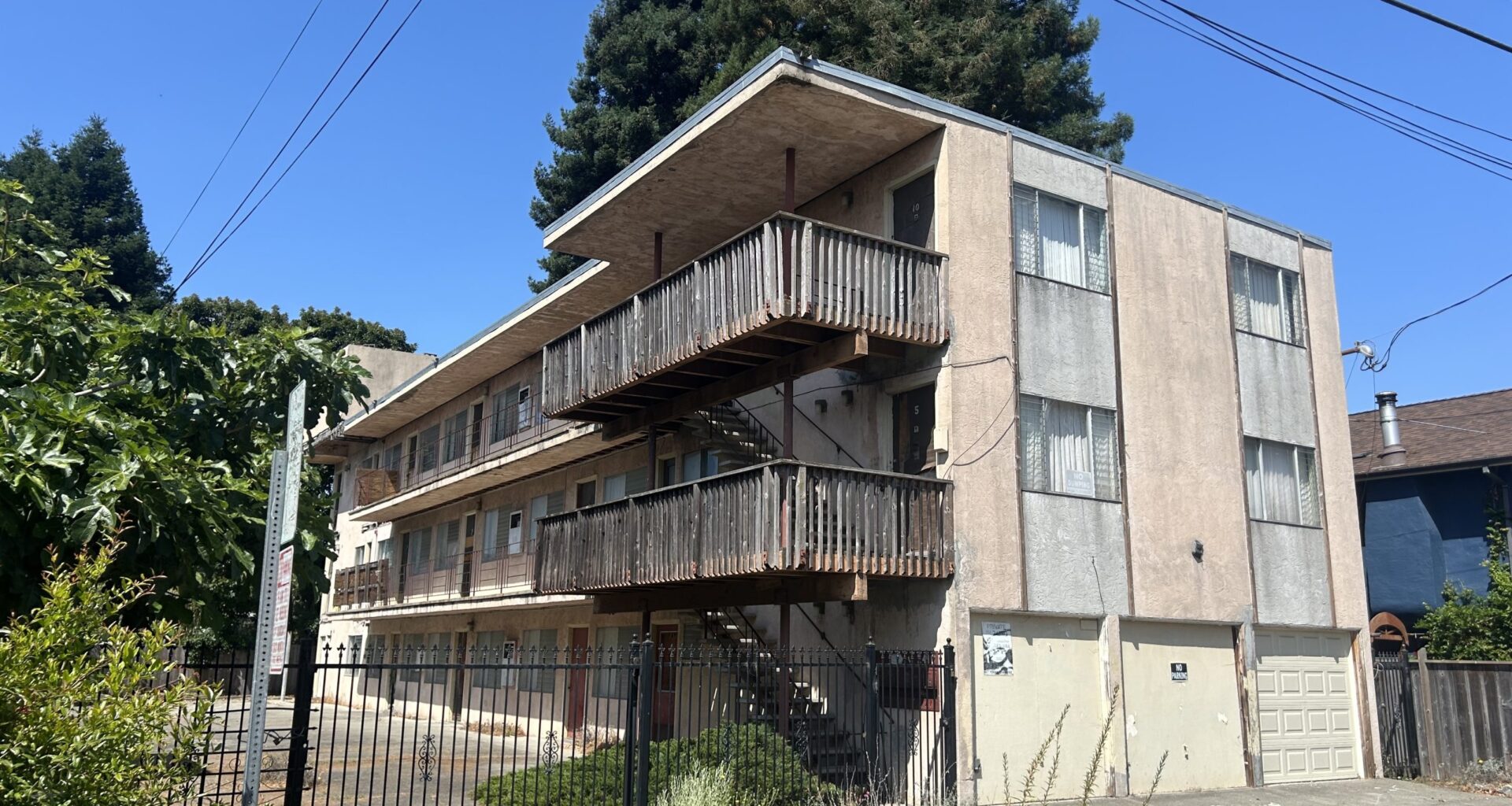
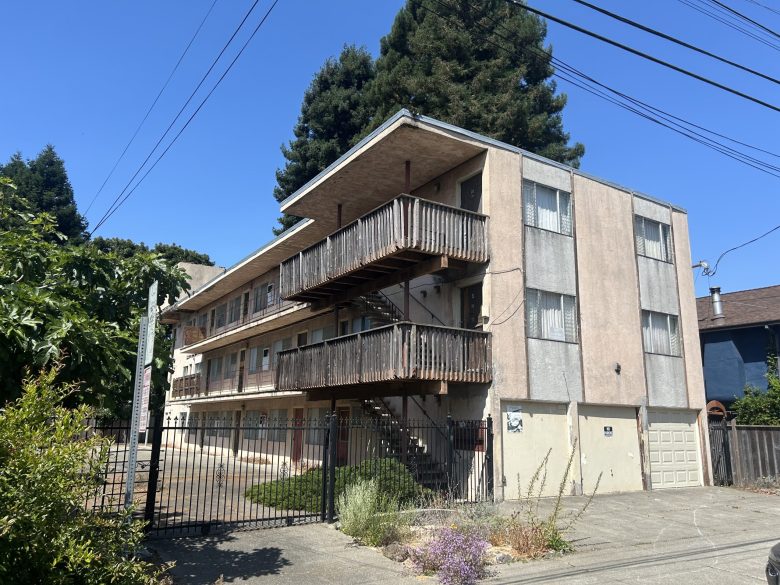
 This 14-unit apartment complex has sat vacant for years at 2416 Roosevelt Ave. It’s one of four apartment buildings owned by members of a single family that racked up $168,000 in charges under Berkeley’s new tax on vacant housing. Credit: Nico Savidge/Berkeleyside
Editors’ note: This week we’re republishing some of our favorite stories of 2025. This story was first published on Sept. 5.
The five Berkeley buildings owned by members of the Louie family all have a similar look. Their exteriors are weathered, with faded paint and peeling trim. The curtains are drawn in their windows. Some are surrounded by padlocked metal gates.
This is the second in a three-part series exploring new data on vacant housing in Berkeley.
They look, in other words, like places where nobody lives, and nobody has lived for a while.
The family owns four apartment buildings where the city says a total of 29 units were empty for at least half of 2024, meaning they will be hit with a $168,000 bill under Berkeley’s new “Empty Homes Tax.” County records identify the buildings’ owners as Henry, Phillip and Edith Louie, as well as the heirs of Wai H. Louie.
Another Berkeley landlord, Ashok Sabhlok, also owns four properties the city identified as having long-term vacant units. Sabhlok’s properties are smaller, totaling eight empty units, and earning him a $33,000 bill. The tax charges landlords $3,000 or $6,000 per unit depending on the size of the building.
The Louies and Sabhlok owned more properties with vacant units last year than any other landlord, according to the city’s database, which provides the most detailed look yet at the inventory of empty housing in Berkeley; no other property owner had more than two properties the city identified as being subject to the tax.
Hanumandla Raj Reddy, the owner of a vacant 51-unit apartment building on University Avenue and a member of one of Berkeley’s biggest property-owning families, has the most vacant units of any landlord, according to the database.
Brian Turner said he was thinking of one of the Louie family’s buildings when he voted “yes” on Berkeley’s vacancy tax in the 2022 election. Turner lives near a 14-unit building at 2416 Roosevelt Ave. that the city said was entirely empty. Images captured by Google Street View indicate the forlorn-looking three-story building has been in that state since at least 2009.
Even though the vacant building hasn’t been a source of problems during the years he’s lived in the neighborhood, Turner said it was frustrating to watch those apartments sit empty in the midst of a housing crisis.
“It’s not just the blight,” Turner said, “it’s the lost opportunity for the city.”
According to Berkeley’s database and county records, the Louies also own an eight-unit building at 1809 Tenth St. where every unit was vacant, an empty duplex at 1821 Addison St. and a six-unit building at 2332 Martin Luther King Jr. Way (which city and county records list as the family’s mailing address) where all but one apartment was vacant.
In addition, the family owns a house at 1641 Martin Luther King Jr. Way that was not included in the list of properties set to be taxed, even though it also appears to be vacant: The house has no front steps or garage door, and a front door is boarded up. Berkeley’s Rent Registry, which city officials say they relied on to identify vacant properties, lists the house as being occupied by its owner. But county records appear to contradict that, since it lists the Louies, with their mailing address a little less than a mile down the street, as the owner.
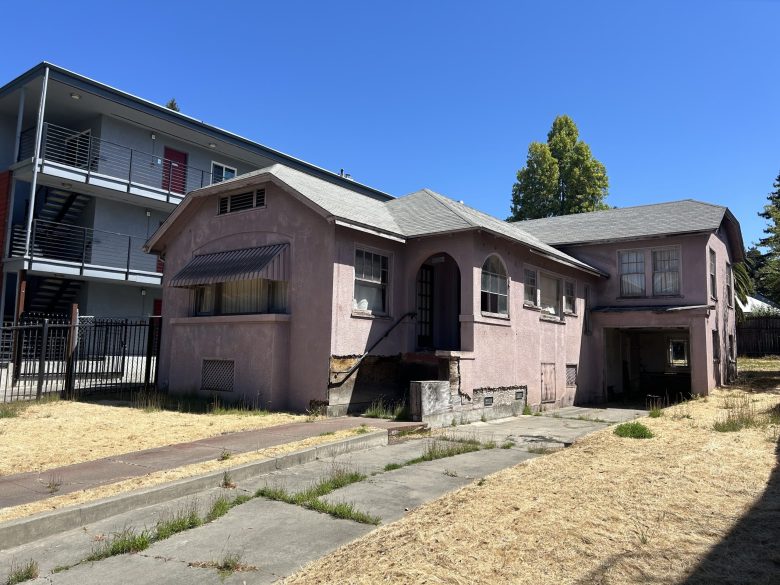 This house at 1641 Martin Luther King Jr. Way also appears to be vacant, but it isn’t included in Berkeley’s database of empty homes. City officials acknowledged the count may have missed some vacant housing. Credit: Nico Savidge/Berkeleyside
Lief Bursell, a senior planner with the Rent Stabilization Board, acknowledged the city’s count of vacant units may be incomplete and said staff would have to investigate the house further to determine if it should be taxed.
County records show the family’s holdings include an empty lot at 2135 Blake St. as well, though vacant properties aren’t subject to the tax. Outside of Berkeley, the family owns two apartment buildings and another vacant lot in Oakland, as well as a building in Albany.
Low property taxes on family’s empty buildings
The Louie family wasn’t interested in talking with Berkeleyside about why its units are vacant.
Phillip and Edith Louie did not respond to multiple requests for comment. Henry Louie declined a reporter’s request for an interview during a brief phone conversation, saying, “No thanks, bye.” He then hung up, and did not respond to further phone calls and messages, including one laying out the findings of this article.
Kate Harrison, who put forward the vacancy tax when she was a member of the Berkeley City Council, suggested some long-time property owners may feel little incentive to rent out their units if their annual property taxes are low thanks to California’s Proposition 13. The 1978 law locks in the assessed value of properties, and until recently parents could pass those low valuations — and low property tax bills — on to their children, even if the homes’ market value has skyrocketed. (Proposition 19, which went into effect in 2021 after it was approved by California voters, broadly limits owners’ ability to pass on a property’s assessed value to their heirs.)
“The property tax rates are so low, there’s no incentive; if they don’t want to deal with a property, they just let it go,” Harrison said. “That incentive structure with Prop 13 is a really big problem.”
The Louie family is benefitting substantially from the law: County records show tax bills for each of the family’s six Berkeley properties are based on valuations far lower than what any of them would be worth on the market today.
The vacant duplex the family owns on Addison Street, for instance, has an assessed value of just $104,940 — less than one-tenth of the median sale price for a home in Berkeley — and had a tax bill this year of $5,217. The family paid less in property taxes for the 14-unit Roosevelt Avenue apartment building, which had an assessed value of just under $400,000, than one of their neighbors paid on their recently purchased single-family home just down the block.
The family’s $168,000 bill under the vacancy tax, the third-highest for any property owner in the city, is set to be more than triple the amount it paid in property taxes on those four buildings this year.
Landlord says he’s holding empty homes ‘for inventory’
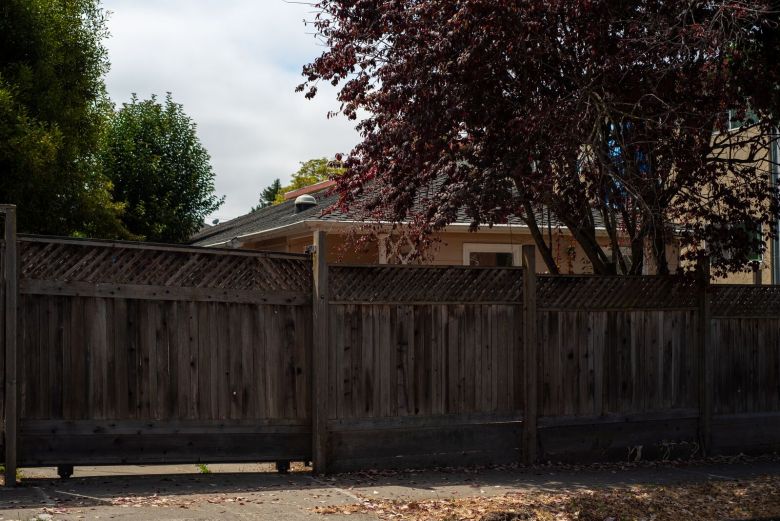 Ashok Sabhlok owns two neighboring duplexes, at 1816 and 1820 Francisco St. in North Berkeley, that the city identified as being vacant last year. Credit: Ximena Natera for Berkeleyside
Sabhlok thinks the vacancy tax is a “preposterous” violation of his property rights. His vacant holdings were made up of a triplex at 2124 Bonar St., two duplexes at 1816 and 1820 Francisco St. and an apartment above a coffee shop at 1620 Shattuck Ave., according to the city’s database. County property records show 10 other buildings around Berkeley are either owned by Sabhlok or registered to his mailing address. In an interview, he said he should have the discretion to decide whether to rent out his properties.
“You have a right to go out of business if you so wish,” he said.
Each of the units is “uninhabitable,” Sabhlok said, and it would be too expensive to fix them up. So, he said, “I’m holding [them] for inventory.”
Sabhlok later objected to a reporter’s questions and ended the interview.
Harrison and other supporters hope the vacancy tax’s financial penalty makes it more uncomfortable for landlords to let their housing sit empty.
“Great,” Turner said when he was told about the tax bill the Louies can expect for their vacant properties. “I hope that changes their incentives.”
There are signs that may be happening with some properties owned by Sabhlok and the Louies. Sabhlok’s Bonar Street triplex appears to be undergoing a renovation, though he did not respond to a text message asking about his plans.
Meanwhile, a contractor was working at the Louie family’s Addison Street duplex when a reporter visited on a recent day, and “for rent” signs are posted in its windows. No one responded to a message left at the phone number on one of the signs.
“*” indicates required fields