
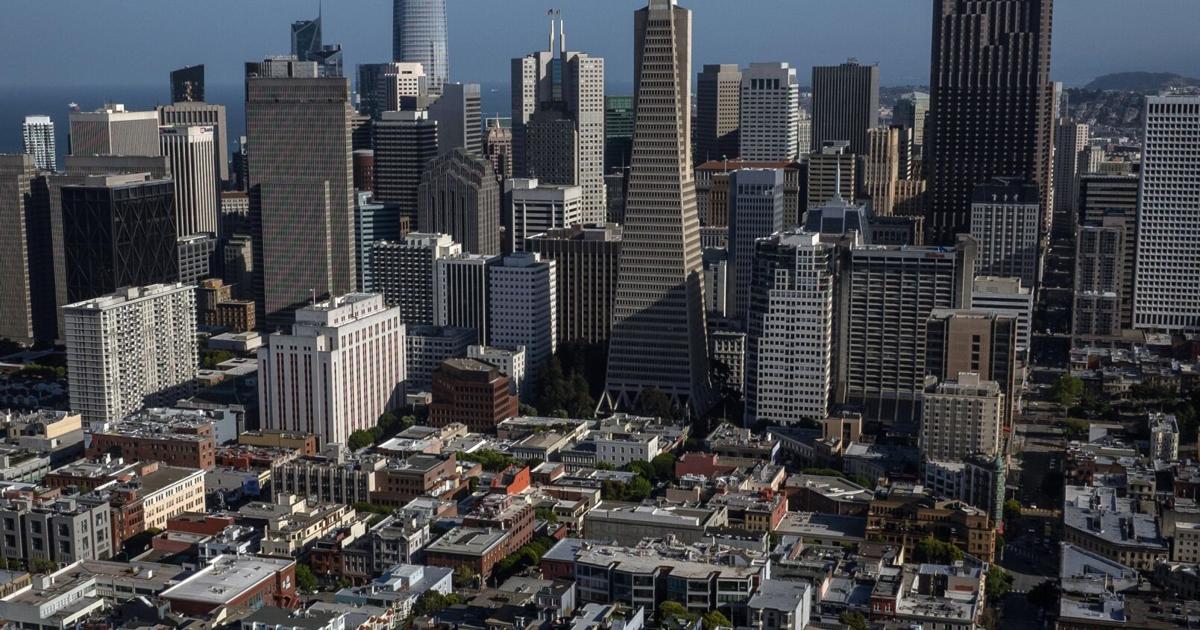
The fortunes of downtown San Francisco in 2025 were a study in contrasts, with growing signs of vibrancy and investment readily apparent — along with plentiful evidence of continuing economic malaise.
Five years after the COVID-19 pandemic devastated The City’s business core, largely by stimulating the rise of remote work, there were department-store closings, stubbornly high office and retail vacancy rates, and a tourism market that has yet to fully recover — although the crime and street conditions that once garnered widespread headlines appeared to have improved.
At the same time, real-estate prognosticators touted signs that a resurgence of the office market was underway, fueled by venture-capital-rich artificial-intelligence companies grabbing space. Meanwhile, new businesses opened, investors snapped up high-rises and hotels, and developers advanced high-profile projects.
Union Square’s ups and downs
The challenges facing downtown and city efforts to make improvements were on dramatic display from the outset in January, when boosters hailed the successful staging of the J.P. Morgan Healthcare Conference at the Westin St. Francis Hotel in Union Square — along with the news that it would return in 2027.
The property at Fifth and Market streets lost most of its remaining stores over the course of the year and was finally taken over by lenders in a foreclosure auction in November before being listed for sale. Valued at one point at $1.2 billion, the once-thriving mall racked up $691 million in defaulted debt and costs before being sold for $130.2 million.
Downtown continued to experience setbacks alongside steps forward all year. Shortly after celebrity chef Tyler Florence walked away from a pair of properties in February, city officials got the highly regarded b. patisserie of Pacific Heights to open a pastry shop in one of the kiosks in time for the Chinese New Year parade and the three-day NBA All-Star weekend at Chase Center.


Mayor Daniel Lurie films a selfie video with co-owners Belinda Leong and Michel Suas at the opening party for b. patisserie at Union Square in San Francisco on Monday, March 17, 2025.
That high-profile sports event was a chance for The City to shine globally, bringing numerous popup stores from major sporting goods brands and other promotional events to Union Square. Bolstering spirits, a flashy new permanent Shoe Palace store opened in time for the NBA exhibition as well at the corner of Geary and Powell streets.
Zara shut down its two-story San Francisco Centre store in June, but in April it disclosed plans for a more than 40,000-square-foot store at 400 Post St. Nintendo of America’s two-level store has attracted lines out the door since it opened in May, the same month Saks Fifth Avenue’s five-story store closed following New York City-based Saks’s purchase of the Neiman Marcus Group.
More store openings followed, nevertheless, including a new Pop Mart collectible toy store that moved into an empty Art Deco building at 200 Powell St. in July.
Mayor Lurie tried to keep the momentum positive in September, issuing what he called his Heart of the City directive containing measures aimed at revitalizing downtown, including by getting five new pop-up retailers downtown with help from the Vacant to Vibrant program, which has received both public and private financial support.
Then in October, Union Square got a big shot in the arm when celebrity chef Michael Mina and Golden State Warriors legend Stephen Curry celebrated the opening of their new restaurant and bar collaboration, Bourbon Steak and The Eighth Rule, in the Westin St. Francis hotel.
With all the activity, the overall vacancy rate for the Union Square-Post Street area in the third quarter dropped to 22.7% from 23.0% in the previous quarter, according to the real-estate company Cushman & Wakefield. The firm said that marked was the first quarterly decrease in that metric since 2022. The numbers have remained high despite a relatively thriving luxury sector across the Union Square area.
Citywide, San Francisco’s retail vacancy rose slightly to 7.1% in the third quarter, up from 6.9% in the previous quarter, though still lower than the record of 7.5% set a year earlier, Cushman & Wakefield’s report states.
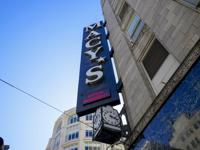
The fate of the flagship Macy’s store in Union Square is no less certain at the end of 2025 than it was at the beginning of the year.
Jim Wilson © 2024 The New York Times Company
Unanswered questions
But it’s still unclear what will be done with the giant Macy’s department store overlooking the square. The New York-based retailer, which in 2024 announced plans to close 150 stores over three years, told city officials in February 2024 that it intended to sell its flagship property in The City.
TMG is also currently in contract to buy the Metreon shopping center at 4th and Mission streets, not far from Union Square, where there are two anchor tenants — the AMC Metreon 16 movie theater and Target — that are said to be performing well.
In addition to focusing on businesses, Lurie’s downtown directive also emphasized the potential for promoting housing development there. City and state officials have been trying to make it easier to convert underutilized office buildings in the area to residential use since before Lurie’s election, but no recent projects have been built.
TMG was an advocate of the legislation.
Lurie also called for city cooperation with the San Francisco Downtown Development Corporation, a nonprofit announced in April that was the realization of a goal Lurie set on the campaign trail last year. The organization is a coalition of business, labor and philanthropic leaders formed to make investments that advance downtown revitalization.
By the end of the year, the nonprofit said it had secured $60 million in philanthropic commitments.
The nonprofit also announced a business fund to help new and existing businesses open and grow in currently vacant storefronts on corridors such as Powell Street and Stockton Street, and support for arts and cultural activities downtown.
The Downtown Development Corporation said it is also backing the effort to build a new 5-acre park joining Embarcadero Plaza with neighboring Sue Bierman Park. Supervisors approved a March plan for BXP to spend about $2.5 million on a park design, with The City working toward up to $20 million in public funding and the Downtown SF Partnership aiming to raise $15 million to help build and operate the park.
Supporters say the project will rejuvenate downtown, but a move in November that could clear the way for the new park drew the ire of some. The San Francisco Arts Commission voted then to allow the Recreation and Park Department to remove and store the plaza’s huge and ever-controversial Vaillancourt Fountain.
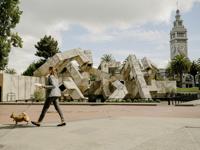
Vaillancourt Fountain, completed in 1971 by artist Armand Vaillancourt, is seen at Embarcadero Plaza in San Francisco, Sept. 29, 2025.
Aaron Wojack © 2025 The New York Times Company
City officials say the nonfunctional concrete sculpture is hazardous to public health and safety, but fans of the 710-ton artwork have appealed the decision to the Board of Supervisors, where a hearing is pending. The sculpture’s supporters say park officials, who estimated the fountain’s rehabilitation would cost $29 million, have declared an emergency as a “pretextual device” to avoid required environmental review.
Another artwork meant to enliven the plaza also proved to be controversial in 2025. In April, with city blessing, an artist who said he wanted to empower women erected a nearly 50-foot-tall metal-mesh statue of a nude woman between the Ferry Building and Market Street. The Arts Commission authorized the display for up to a year.
But regardless of the attention the statue drew, the venerable One Market Restaurant across the street closed in June after 32 years in The Landmark building at the corner of Market and Steuart streets. Retiring co-founder and principal Michael Dellar said he couldn’t find a buyer and that his business was off 50% since the pandemic due to a lack of people coming downtown for work, especially on Fridays.
Nevertheless, there were numerous new restaurants that opened downtown, contributing to a sense of positive momentum. Chef Steven Pham launched a new Turtle Tower in March at 220 California St. in the heart of the Financial District, and lunchtime lines of people seeking Pham’s North Vietnamese-style pho quickly became common.
The husband-and-wife team of Kenneth Lew and Monique An in July also opened an expansive new home for their enduring Vietnamese fine-dining restaurant Crustacean at 195 Pine St. Their location is across Battery Street from the luxe new home of Chef Tyler Florence’s Wayfare Tavern, which opened in April.
The City’s congregations have a deep history of turning their houses of worship into safe houses for those in need
Fremont’s Mission Peak Regional Preserve offers some of the best vistas in the region
Champagne toasts, balloon drops and skating sessions are among the ways you can bid adieu to 2025
Developers embracing downtown
Such businesses must still contend with fewer visitors to The City, where tourism dropped drastically in the pandemic and has yet to fully recover.
The San Francisco Travel Association forecast in August that city tourism would rise only modestly through the end of 2025 and into 2026. The all-important number of conventions at Moscone Center, however, rose from 25 in 2024 to 34 in 2025 and was set to be 38 for 2026 as of December, an SF Travel official said.
The numbers must be encouraging, because developers continued to push new hotel proposals and there was a rush of hotel buying late in the year.
Related California eagerly sought and in October received city approval for a 41-story, luxury office and hotel high-rise project that it plans to build soon in the northern Financial District. As part of the deal, The City will get a new, privately financed firehouse, and Related will convert all of Merchant Street between Battery and Sansome streets into a privately owned and maintained public open space with landscaping, string lighting and widened sidewalks.
High-rise construction in San Francisco has been largely nonexistent in recent years amid pricey construction costs, lowered overall office demand and residential rents that developers said were too low to support building, though rents rose sharply after May before dipping again in December, according to Zillow.
Officials at Related, which could receive nearly $69 million or more in tax incentives over 25 years, have expressed confidence that small-footprint office spaces with expansive views and state-of-the-art amenities will be in demand along with an exclusive hotel.
In November, the Board of Supervisors also approved plans for a 29-story, roughly 300-foot-tall “boutique” hotel tower at 570 Market St., in the heart of the Financial District. That same month, the giant real-estate investment firm Blackstone bought the Four Seasons Hotel San Francisco on Market Street between 3rd and 4th Streets.
“My enthusiasm here is about as high as you can get,” Blackstone president and COO Jon Gray said in a video he posted on LinkedIn of himself jogging near Fisherman’s Wharf while sharing optimism about San Francisco’s prospects. He cited the AI boom and the efforts of Mayor Lurie, who he said was working to improve the quality of life in The City, reduce crime and be “pro-business.”
“Very simply, buy some real estate here,” Gray said.
Investors also bought The City’s two largest hotels for $408 million, two years after the previous owner walked away from a $725 million loan. The new owner of the Hilton San Francisco Union Square and the Parc 55 San Francisco — which have about 3,000 rooms in total — is a partnership between Newbond Holdings and Conversant Capital.
San Francisco investment firm Sixth Street also got in on the action in November, announcing it had acquired The Clancy, a 410-room hotel in the 200 block of Second Street south of Market Street. David Stiepleman, co-founder and co-president of Sixth Street, is chair of the Downtown Development Corporation’s board of directors.
Investors also took advantage of the down market to buy numerous downtown office buildings.
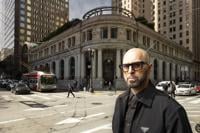
Music producer Ghazi Shami said he would not have been able to buy the famed One Montgomery building were it not for low real-estate prices downtown.
In Janurary, Empire — an international music company founded by Ghazi Shami — bought One Montgomery, a highly recognizable early 20th-century Italian renaissance revival-style temple at Post and Montgomery streets. Ghazi, who has said he plans to turn the building into a cutting-edge headquarters complex, said he would not have been able to buy the building if real-estate prices had not cratered.
Media, information and services conglomerate Hearst Corp. said in the same month that it would buy a 16-story office building nearby at 450 Sansome St. The company, which once owned The Examiner, said the property would provide it flexibility to develop a residential tower at its historic hub of operations in SoMa.
In February, the Community Arts Stabilization Trust — a nonprofit dedicated to securing real estate for arts and culture groups — announced that it had purchased the historic Warfield Building at 988 Market St. with partner KALW Public Media to create an arts, culture and media hub. A developer had previously invested significant resources in the building in an effort to convert offices to residences.
One particularly colorful example is a German group’s acquisition in March of a vacant, 16-story building at the corner of 6th and Market streets, which the new owners dubbed Frontier Tower, in line with plans ofdeer creating a self-governing community of innovators from different professional disciplines. The new owners turned the site into a buzzing “vertical village,” where “citizens” — including many startup founders — pay membership fees and individual floors offer themes such as robotics, arts or biotech.
Another notable transaction for its size was the May 30 transfer of the twin-high-rise office complex in the 500 block of Market Street known as Market Center after the prior owner had defaulted on a loan. The property, which less than half occupied, was once the home of Chevron.
The deal was led by restaurant, hotel, resort and real-estate magnate Greg Flynn, who planned extensive upgrades, including a sports center and a restaurant-bar featuring a seating deck overlooking Market Street. Flynn expressed strong confidence in a San Francisco rebound.
In July, the Houston-based real-estate firm Hines unveiled a proposal to build the tallest building on the West Coast as part of a development on the downtown block between Market and Mission streets and Beale and Main streets. The plan was welcomed as a statement of faith in The City’s prospects — particularly concerning demand for top-tier office space that has proven relatively strong after the pandemic.
Hines had an earlier proposal for the site that included a residential tower, and it also had two other high-rise projects nearby that stalled.
But despite all the activity, downtown’s recovery has far to go.

Reported crimes fell sharply downtown in 2025, and the San Francisco Police Department opened a high-tech surveillance hub on Montgomery Street late in the year.
Craig Lee/The Examiner
Sources of pessimism, optimism
A December report from The City’s Office of Economic Analysis said downtown economic indicators generally dipped in the fall, including hotel rates and occupancy, transit ridership, office attendance and foot traffic.
The report highlighted “weakening” labor-market conditions through September in the San Francisco region, in line with broader national trends. It said that jobs were down, led by tech losses, while city unemployment rose, although job postings were recently trending up in the area.
The number of employees coming to San Francisco’s downtown, meanwhile, decreased from September to November, sinking below 55% of what it was for the same months in 2019, according to the report, which cited data from Placer.ai’s tracking of foot traffic using cellphone data. The number of visitors to downtown also remained below 75% of the level recorded in 2019, the report said.
Weekly office-attendance numbers in the San Francisco metro area also remained depressed, with the four-week average as of Nov. 26 declining below 40% of a February 2020 benchmark, the report said, citing data from security company Kastle Systems, which counts badge swipes.
Real-estate watchers nevertheless said that leasing of office space was on an upward trend.
The overall office-vacancy rate dropped from 35.3% in the third quarter to 34.4% in the fourth quarter, according to the real-estate company JLL. CBRE similarly said preliminary numbers indicated a strong quarter, with overall vacancy rate down to 33.5% from 34.4% in the prior quarter and down three percentage points year over year, the largest decline since 2011.
Both companies credited the AI boom. CBRE’s report said AI firms’ leasing hit 2.5 million square feet in 2025, the highest level since the sector became a significant source of office space demand in 2018 and 25% of the 10.2 million square feet leased for the year.
Both JLL and CBRE predicted that vacancy would continue to decline in 2026.
In December, Lurie and other city officials celebrated the completion of The City’s new downtown “real-time investigations center” at 315 Montgomery St. in the heart of the Financial District. The hub for surveillance technologies received nearly $10 million donated by Chris Larsen, executive chairman of the blockchain-technology company Ripple Labs.
Towards the end of the year, crime reports in San Francisco were down 25.7% year over year citywide, and 37.4% in the police district that contains Union Square and the Financial District.