
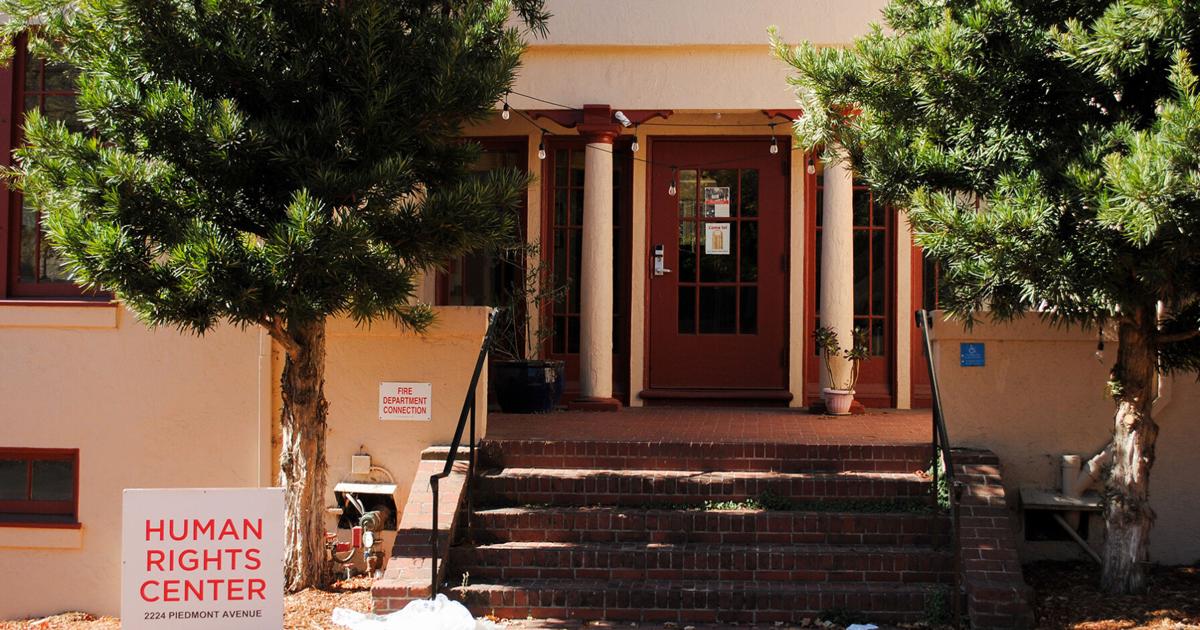
Hours before broadcast Dec. 21, a group of campus students and staff from the UC Berkeley Human Rights Center’s Investigations Lab were informed that CBS News was pulling a “60 Minutes” segment they were interviewed in that was slated to air that evening.
The nearly 14-minute segment detailed the group’s research as part of its investigation into the detention conditions and treatment of U.S. migrants sent to CECOT, or the Center for Terorrism Confinement. CECOT is the largest prison in the Americas and based in Tecoluca, El Salvador.
While the group was not given a reason for the decision by CBS News,it found out through news reports that the pulling of the segment stemmed from CBS News’ new editor in chief, Bari Weiss and her feeling that the segment “needed additional reporting.”
Weiss sent out a since-publicized internal memo to CBS News staff stating that the segment would air at a later date and requesting various changes, such as including more voices from President Donald Trump’s administration. A since-posted email sent from Sharyn Alfonsi, the “60 Minutes” correspondent who reported the segment, to her colleagues, said her team did reach out to the Trump administration and did not receive a response.
According to campus junior Talia Harter, a co-team lead of the HRC’s CECOT research project, the group was very “surprised” and “disappointed” by the decision to pull the segment.
“From what I heard from the CBS team that we were working with … it was ready,” said Harter. “The reporting has been that it was reviewed quite a few times, and the argument that it wasn’t ready doesn’t seem like that should have occurred two days before it was released.”
Harter said the group spent a couple hours talking to CBS News reporters, producers and crew members as they filmed the interview in early December. She detailed that they seemed “really engaged in this investigation” and had “done a lot of background research.”
According to Harter, the students discussed their research, which was conducted in order to help corroborate the findings of a Human Rights Watch, or HRW, report released Nov. 12 that found CECOT’s conditions and treatment of detainees as a violation of international human rights laws.
The students used satellite imagery, geolocation, YouTube videos of influencer-commissioned tours of CECOT and other forms of open-source research to identify facility locations, weaponry usage, torture tactics and prison conditions, such as the 24/7 lighting used to prevent detainees from sleeping and lack of privacy in using the bathroom.
However, Weiss questioned the students’ analysis in her memo, asking, “The analysis from the Berkeley students is strange … what does the analysis add?”
According to campus senior and co-team lead Maneh Davityan, the group was “really shocked” by that comment, noting that they spent “a lot of time” researching and verifying their findings while maintaining objectivity.
“Our research adds to a lot of what the HRW piece was talking about,” Davityan said. “It also verifies a lot of their information and adds to the story in a lot of different ways. It’s unfortunate that (Weiss) didn’t really see the value in that.”
Davityan also said the move signals a shrinking of press freedom — a concern that aligns with a broader public sentiment that Weiss is attempting to cater to the Trump administration in order to help its parent company, Paramount Skydance, with acquiring Warner Bros. Discovery.
CBS News and “60 Minutes” did not respond to a request for comment.
Although the segment has since been temporarily posted by a Canadian network and subsequently spread on social media platforms, the students still hope for it to be officially aired through CBS News.
Alexa Koenig, the director of the Human Rights Center’s Investigations Lab, noted that there is a “tension” between the Trump administration’s claims about CECOT’s detainees and the HRW’s findings, which the group’s research corroborated.
“This is a really important moment in American democracy, and I think that we need more access to information about what’s actually happening, as opposed to less,” Koenig said. “I’m really proud of the work that the Berkeley students did … it really brings together such a diversity of perspectives across (UC Berkeley). I really hope they have a chance to have their work seen by a larger audience.”