
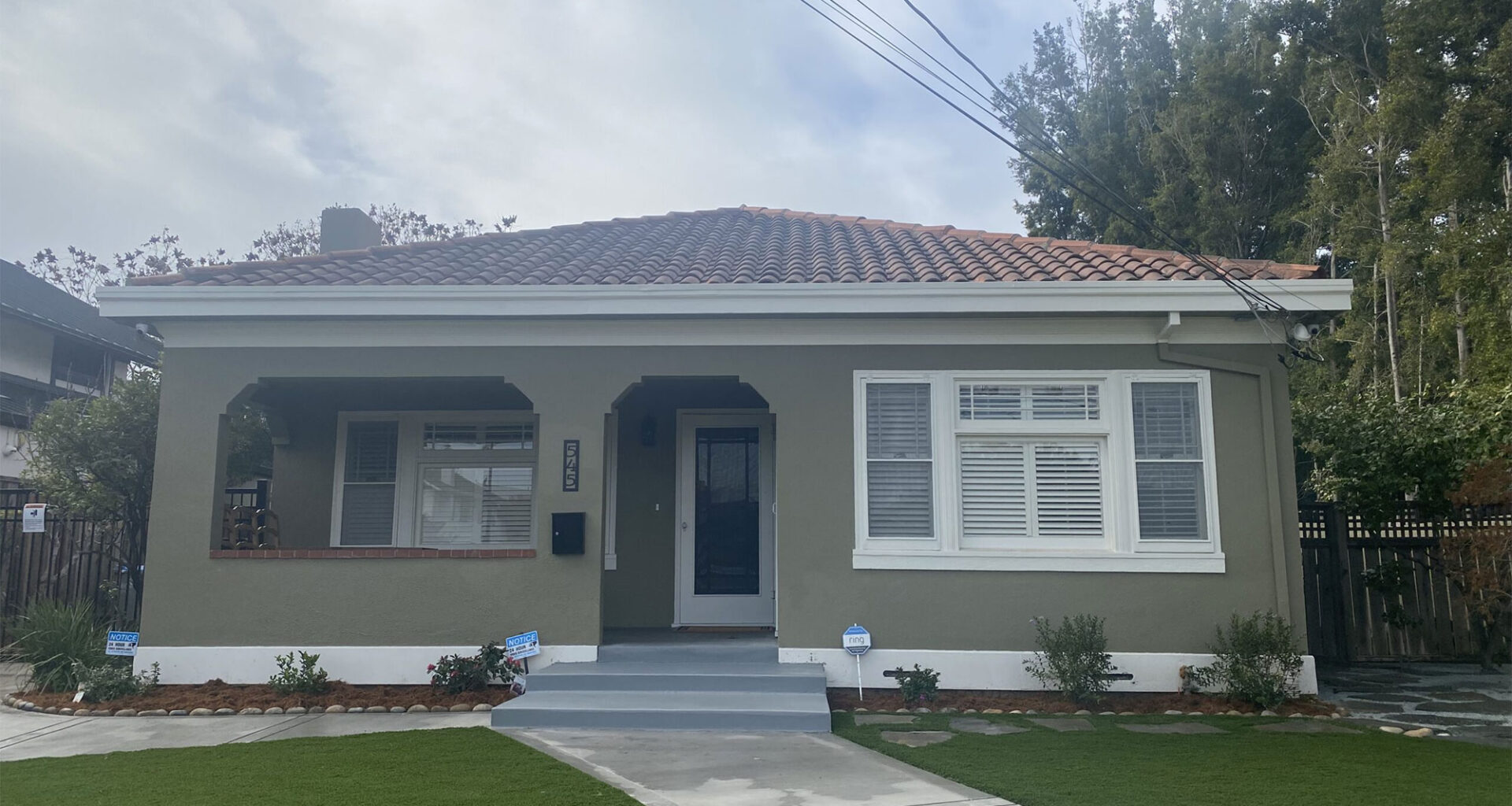
THE HISTORIC HOME of San Jose’s first Asian American mayor now belongs to a local church with deep roots in Japantown’s community.
Wesley United Methodist Church purchased the childhood home of Norman Yoshio Mineta last summer and spent the last year and half renovating the nearly 100-year-old house. The Mineta house, which sits across the street from the church, will be the new home of the church’s senior pastor, The Rev. John Oda. He will move in next month.
Don’t miss out on Bay Area news, delivered to your inbox twice a week.

The purchase ensures that the home’s legacy and history is preserved for generations to come. Mineta was San Jose’s first Asian American councilmember before being elected mayor. He later served as a congressman for 20 years until President Bill Clinton appointed Mineta in 2000 to become the Secretary of Commerce. In 2001, President George W. Bush appointed Mineta to become the Secretary of Transportation, a position he held until 2006. Mineta was deeply involved in the Wesley church and was baptized there, along with his children.
His son David Mineta describes the church’s ownership of the house as something that felt right for the family and the community.
“Japantown and that house and the church were such a core part of who he was,” David told San José Spotlight. “For almost 100 years, our family owned and loved that house, and our family thinks that it’s really perfect that Wesley is going to write the next chapter of that house.”
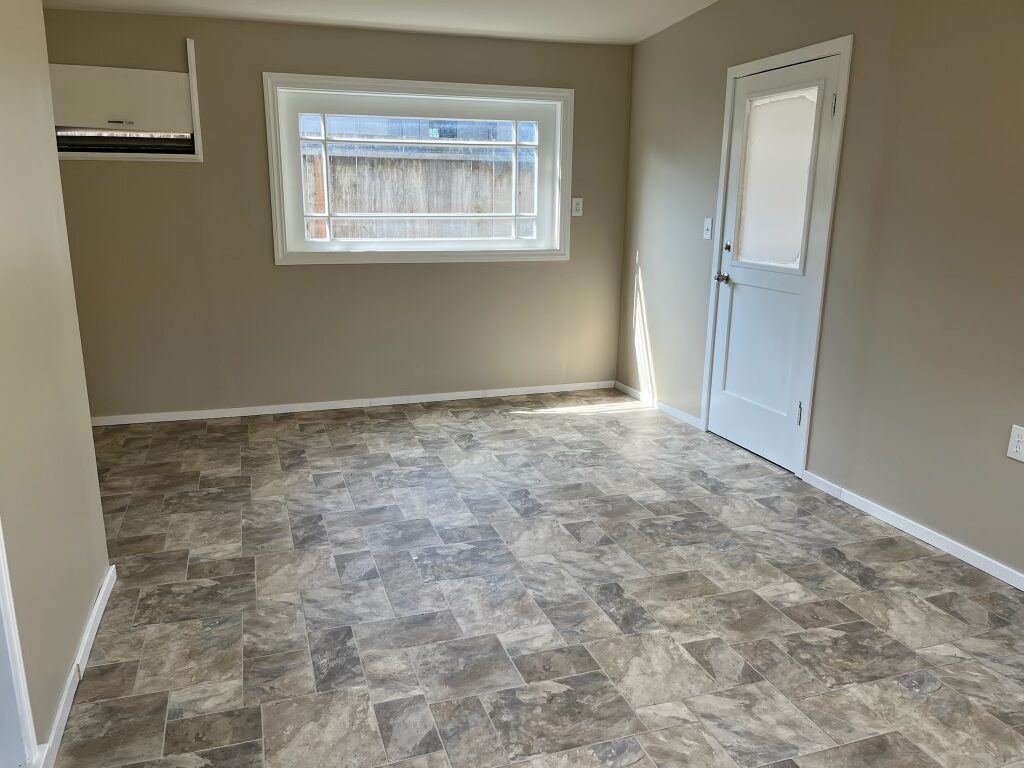 The church spent about $550,000 to renovate the home, including the workroom attached to the garage. (Kelli Saito Martines via San Jose Spotlight)
Contribute to Local News Matters
The church was founded in 1895 by Japanese immigrants. When church leaders learned the house was up for sale, they sold the parsonage their pastor was living in and used the money to purchase the Mineta home for $1.4 million. Church leaders spent around $550,000 to renovate the home. They replaced the main water and sewer line, repaired the roof, replaced the heating, cooling, plumbing and electrical systems, renovated the kitchen, expanded the bathrooms and more.
“It feels good to know that for generations to come, the Mineta house will remain a very special part of Japantown,” Kelli Saito Martines, the church’s director of administration, told San José Spotlight.
Fortifying the Japantown cultural district
Since the home is listed in the city’s Historic Resources Inventory, the church had to preserve it as carefully as possible. The church replaced the side and back windows, but made sure to match the windows with the original.
The church’s renovations fortifies Japantown’s state designation as a cultural district, which has roughly 180 cultural assets, from historic buildings to murals and memorials. The church invited the Mineta family to view the finished renovations earlier this month.
David said the church paid careful attention to fixing the house.
“As much as we love the house, it shows on the renovations, how much the church loves the house,” he said.
“It feels good to know that for generations to come, the Mineta house will remain a very special part of Japantown.”
Kelli Saito Martines, Wesley United Methodist Church
Though David didn’t grow up in the house, he has fond memories of family gatherings during the holidays when his aunt and grandfather lived there. The house was built by his grandparents in the 1920s after his grandfather immigrated to California to work in the fields. The house, like much of Japantown, was preserved during World War II thanks to the goodwill of a local lawyer.
When Japanese families were sent to internment camps, they were forced to abandon or sell their property at a huge loss. California’s Japanese Exclusion Law prohibited Japanese immigrants from owning land, and the government seized their property. Lawyer James Benjamin Peckham stewarded San Jose’s Japantown properties and gave it back to families when they returned, including the Mineta house.
“They were so fortunate to be able to come back to San Jose and the home still be there,” David said.
Norm Mineta’s experience as an internment camp survivor and immigrant in America led him to ensure others wouldn’t be excluded, David said.
Link with aviation history
As the Secretary of Transportation, Mineta issued a memo days after the 9/11 attack to all U.S. commercial airlines urging them not to racially profile Arab or Muslim passengers. He pressed President Bush to create the Transportation Security Administration (TSA), which became the chief security service for the nation’s airports. For that, the San Jose Mineta International Airport was renamed in his honor in 2001. A statue of Mineta sits at the airport’s Terminal B baggage claim area.
“Dad was just super kind, and he didn’t want anyone to feel like the other,” David said. “Folks felt included in the community. They felt included in the country, and he knew how much being a citizen mattered. And he would help anyone, any group, feel included.”
When Mineta died in 2022, a motorcade brought his ashes from the airport to Japantown. People paused in front of the Wesley church to sing his favorite hymns in honor of the impact he made in the community and beyond.
“The Mineta family has a long history of involvement with the Japantown community as well as Wesley United Methodist, so the church’s purchase of the Mineta house enables that history to be preserved and honored,” Rob Hikido, Wesley United Methodist Church Board of Trustees, told San José Spotlight. “The opportunity to purchase the house has been most gratifying for the church.”
Contact Joyce Chu at joyce@sanjosespotlight.com or @joyce_speaks on X.