
Love what you read? Love that it was free?

Mission Local will never have a paywall. All our articles are free for everyone, always. Help us keep it that way — donate to our end-of-year fundraiser to make Mission Local free for your neighbors.
I spent my early childhood in Zigong, a hilly city — much like San Francisco, but less scenic — in Sichuan Province in the southwest of China.
Winter days there were cold and humid, which made it feel like I was freezing in my bones. Clouds covered the sky for days on end. There was no central heating, and the grownups were reluctant to turn on the heat.
“It’s gonna dry you out,” my grandma would say. But I knew she was just worried about the electricity bill.

Want the latest on the Mission and San Francisco? Sign up for our free daily newsletter below.
Maybe that’s why we looked forward to hot pot days. With a cauldron of broth boiling for hours, the dining room filled with warmth and a delicious aroma. My clothes were permanently marinated in the scent.
My family of four would eat for hours, with breaks in between, and the food was always piping hot.
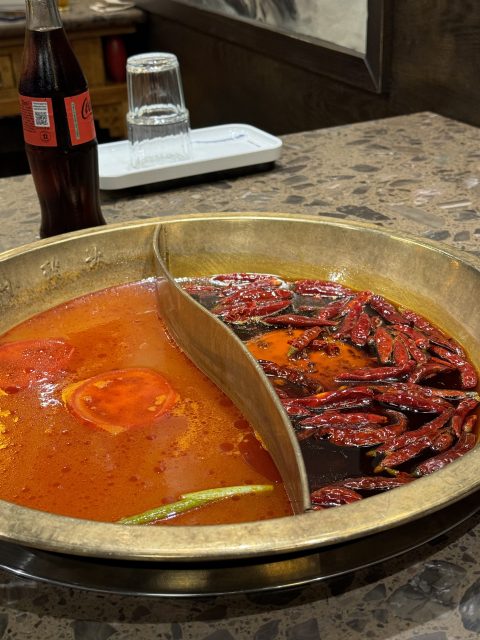 At hot pot restaurants, the pot usually has a divider that allows for two flavors of broth. Photo by Junyao Yang on Sept. 20, 2024.
At my high school graduation, instead of a prom, my 30-person class had a hot pot dinner. Over the spicy broth’s steam, my classmates and I sat around a table, its middle carved out to hold a wide stainless-steel pot.
We talked about graduation trips, summer plans and college, using extra-long chopsticks to grab at the beef rolls, fish balls and potato slices.
When I moved to the Bay Area in 2021, homesick for authentic Sichuan food, I realized hot pot was the easiest meal to replicate from home.
Chinese hot-pot brands that make soup base like Haidilao — meaning “scooping from the bottom of the ocean” — have long been in the U.S. market. And in San Francisco, I was lucky to have access to Chinese grocery stores where I could get just about everything I needed.
On the Tuesday before Christmas Eve, despite the rain, Irving Street in the Sunset was bustling with Chinese elders buying ingredients for a big Christmas meal — and, just by glancing at their shopping carts, I could tell many were having hot pot.
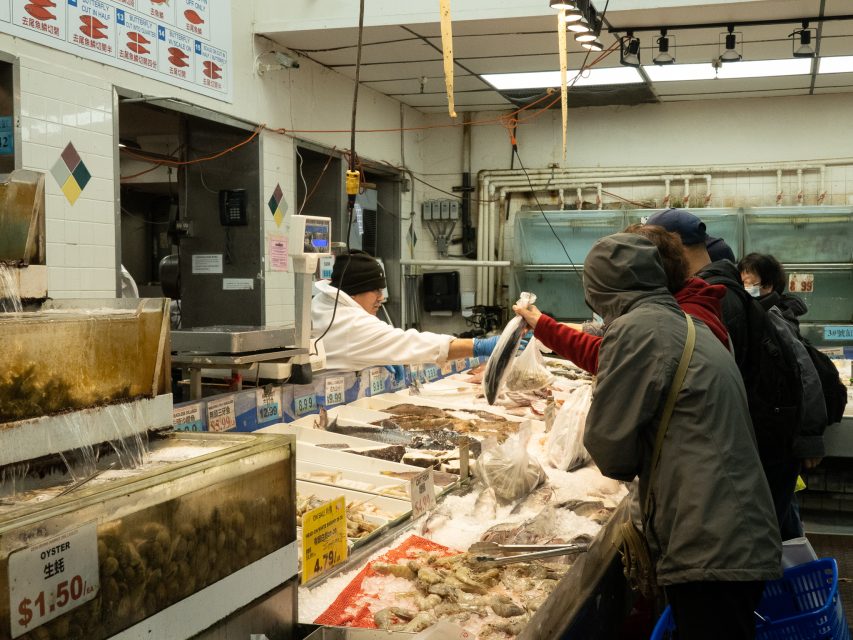 Customers at Sunset Super on Irving Street shops for seafood on the day before Christmas Eve. Photo by Junyao Yang on Dec. 23, 2025.
For those not in the know, hosting a hot pot dinner is a low lift.
There is little pressure to time everything so that each dish is brought to the table warm, and no need to chill anything overnight in the fridge.
And it’s great for a group: It’s both a meal and an activity. Everyone has something to do while eating: Scraping daikon slices or enoki mushrooms into the boiling water, scooping beef out before it overcooks, and chatting while you wait for the food to cook.
It’s a festive dinner, a family-style meal you can share with those you love. It was the first meal my husband had with my family. It’s good for birthdays, anniversaries, class reunions, Chinese New Year, or just a Friday night.
Here’s a guide on what you need to host a hot pot dinner party at home and where in San Francisco to get it. It is based on my experience eating Sichuan-style hot pot growing up — but different areas of China have their own versions that are vastly different from one another.
Where to go?
Several streets on the Westside are a one-stop-shop for all you need, as are markets on Stockton Street in Chinatown.
In the Sunset:
Sunset Super at Irving Street and 25th Avenue is a big Chinese supermarket with Safeway-like aisles where you can buy meat, fish, produce and all kinds of sauce. But for fresher produce, consider walking down Irving Street between 20th and 25th avenues, and stopping at smaller markets along the way.
On Noriega Street, there are similar markets between 30th and 33rd avenues, albeit smaller in scale.
Sunset Supermarket at Vicente Street and 39th Avenue is also a good choice for those who want a large grocery store.
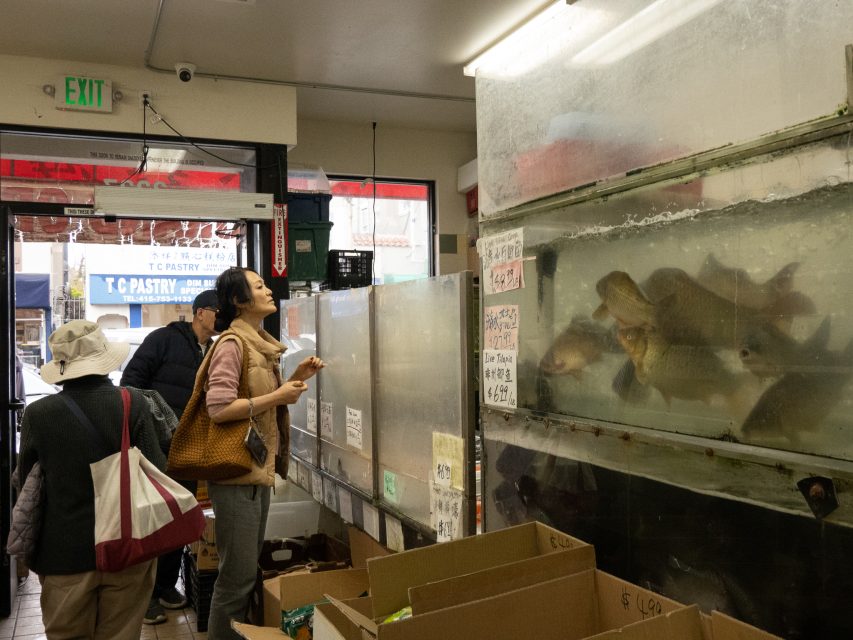 Sunset residents shop at a seafood market on Irving Street on the day before Christmas Eve. Photo by Junyao Yang on Dec. 23, 2025.
In the Richmond:
Clement Street offers plenty of options between Sixth and 10th avenues. New May Wah Supermarket near Eighth Avenue is the largest, and smaller produce and seafood markets are scattered up and down the commercial corridor.
You can also find cheap cookware at homeware stores on Clement Street, such as Kamei Restaurant Supply near 7th Avenue: tongs, long chopsticks, ladles and strainers. The store also sells electric hot pot cookers, if you’re in a pinch.
What you need
The pot in hot pot, and other tools:
You can buy a specific electric hot pot cooker. Many have a divider that allows two broth flavors in one pot.
An electric hot plate or induction cooktop also works. I’ve also tried using an Instant Pot on the sauté function. It’s a deep pot, so I need extra long tongs or chopsticks; I also had to reset it every 30 minutes or so.
The purpose of an electric pot is that you can put it at the center of the dinner table, and everyone can eat around it. But if you don’t have a big party, even cooking on the stove top works.
Also: Get a slotted ladle to scoop things up.
Broth:
In China, home chefs make their hot pot broth from scratch, using bean paste, animal fat, red pepper and Sichuan peppercorns. But to save the trouble, I usually buy hot pot soup base from the store.
Sichuan cuisine is known for its spice. At home, my grandma’s kitchen was always stocked with red peppers in all its forms: Fresh, pickled, dried, powdered and made into jars of chili oil. But the hot pot broth doesn’t have to be spicy.
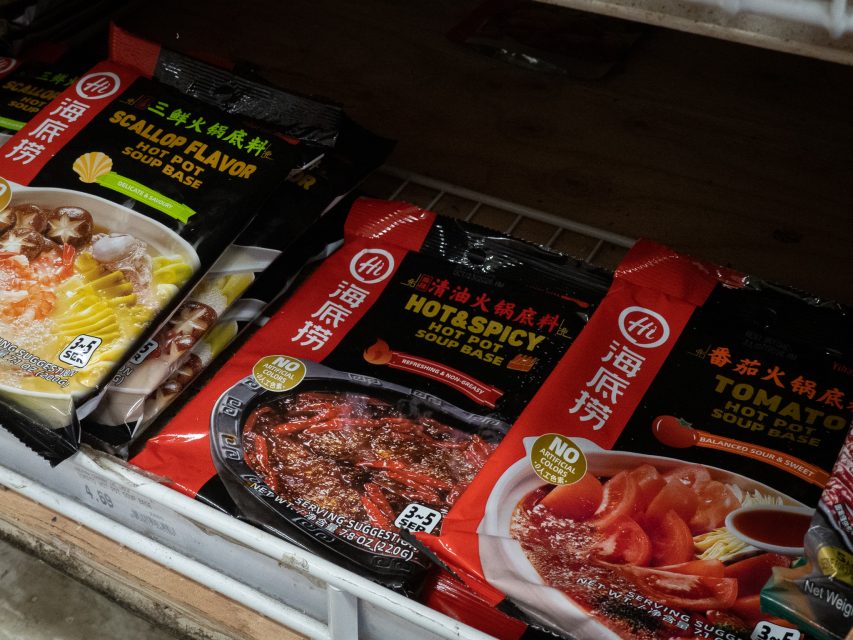 Haidilao and Little Sheep are the most common brands for hot pot soup base. Photo by Junyao Yang on Dec. 23, 2025.
At almost any Asian supermarket, you can find a hot pot soup base. Haidilao and Little Sheep are the most common brands. The flavors: Sichuan spicy, and an array of non-spicy broth, like tomato soup or mushroom.
I recommend adding some fresh garlic cloves, ginger slices and green onions to the broth.
Sauce:
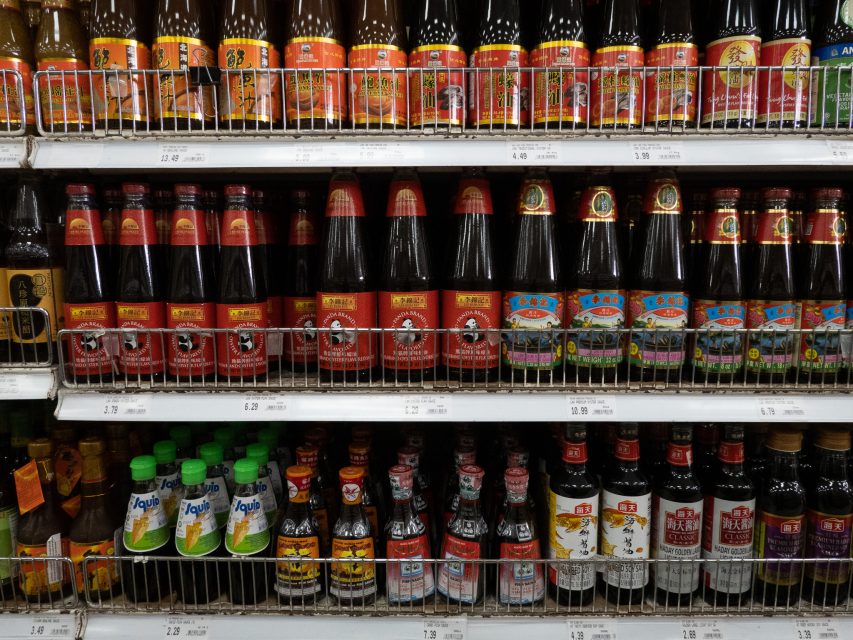 Sunset Super on Irving Street and 25th Avenue is stocked with all sorts of sauce. Photo by Junyao Yang on Dec. 23, 2025.
Before guests come over, chop up some garlic, green onions and cilantro for the dipping sauce.
The classic Sichuan style dipping sauce is sesame-oil based. Oyster sauce, minced garlic, lots of sesame oil. It blunts the spices, and gives it a richness from the sesame seeds.
You can also make a dipping sauce with just soy sauce and chili oil of your liking. Add a little bit of dark vinegar and sugar to taste. Top it off with green onions and cilantro.
Protein of your choosing:
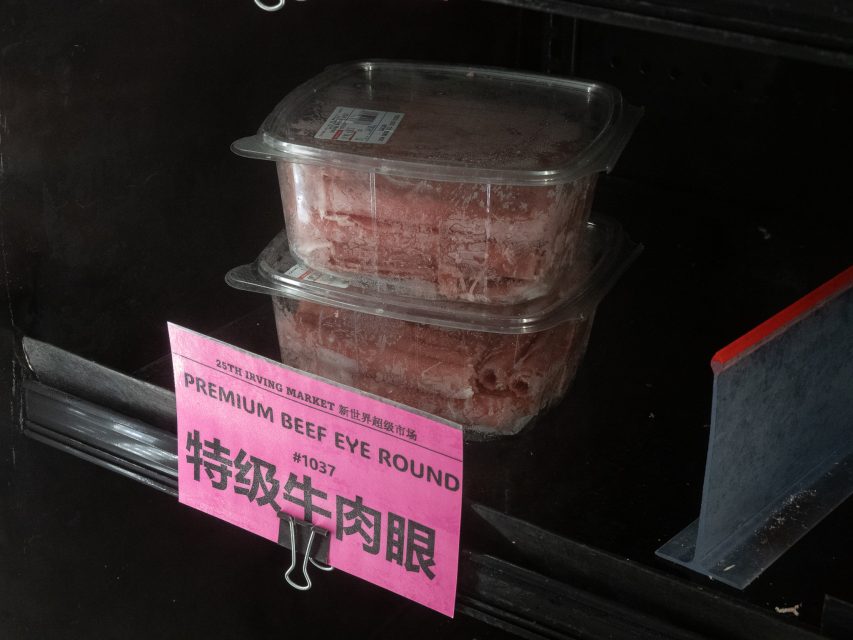 At Sunset Super on Irving Street, most of the beef rolls for hot pot have already sold out for the day. Photo by Junyao Yang on Dec. 23, 2025.
 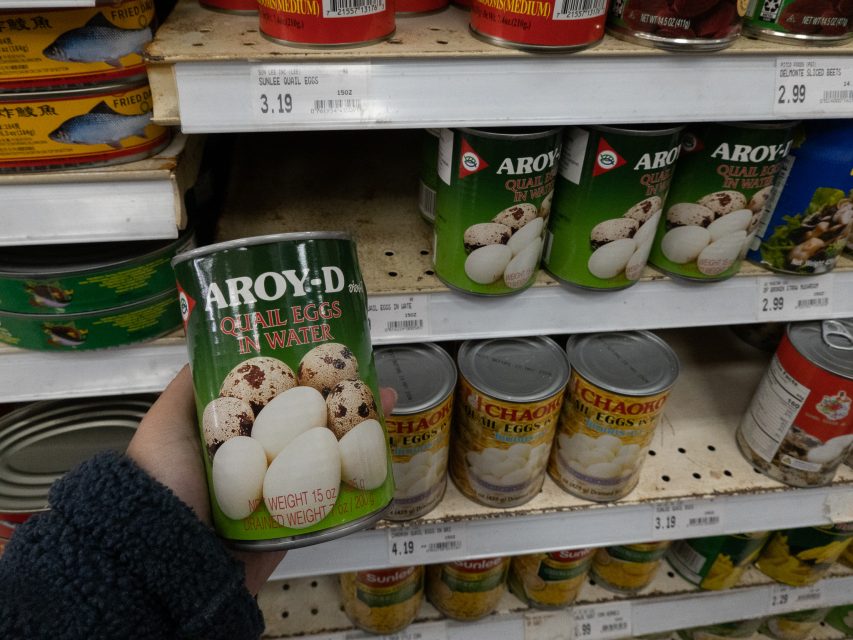 Quail eggs usually come in a can at Asian supermarkets and taste like regular eggs, just a smaller, bite-size version. Photo by Junyao Yang on Dec. 23, 2025.
 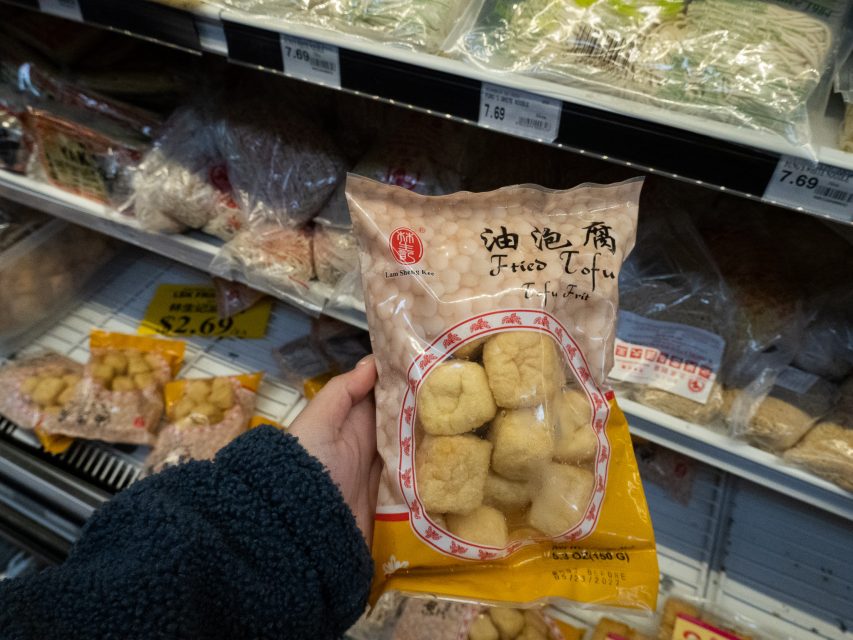 Fried tofu puffs are great for hot pot, as they soak up the flavor from the broth. Photo by Junyao Yang on Dec. 23, 2025.
 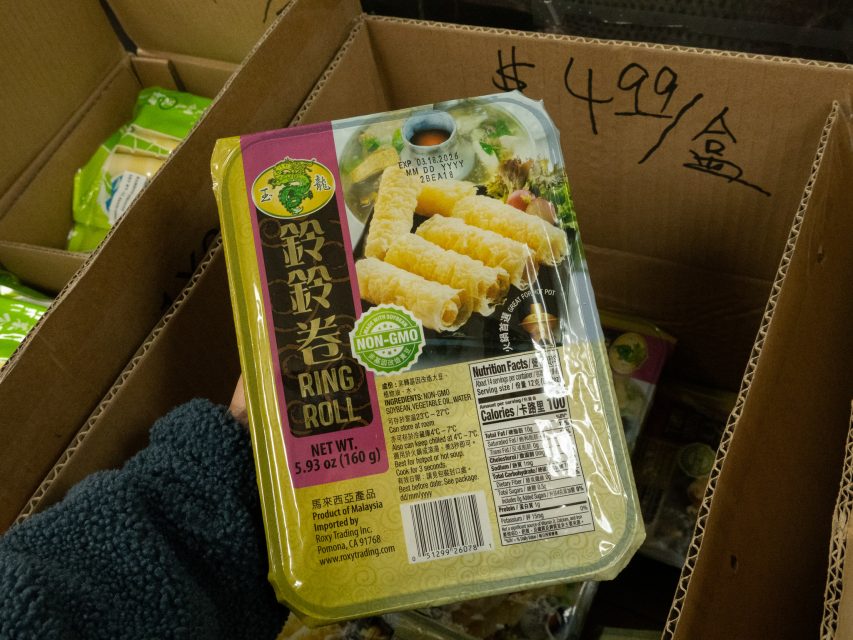 Fried tofu skin rolls soak up the flavor from the broth. Photo by Junyao Yang on Dec. 23, 2025.
Beef, pork or lamb rolls. Many Asian markets have a dedicated hot pot section near the butcher counter. Try different cuts so that there’s variety in the texture.
Shrimp, and an assortment of fish balls and fish cakes.
Quail eggs. They often come in a can and taste like regular eggs, just a smaller, bite-sized version.
Sliced Spam is surprisingly good in hot pot.
Tofu, when frozen, becomes more porous and soaks up the flavor from the broth.
If you can find tofu skin (which comes in fried or regular form) or little tofu puffs, they are great too.
Veggies:
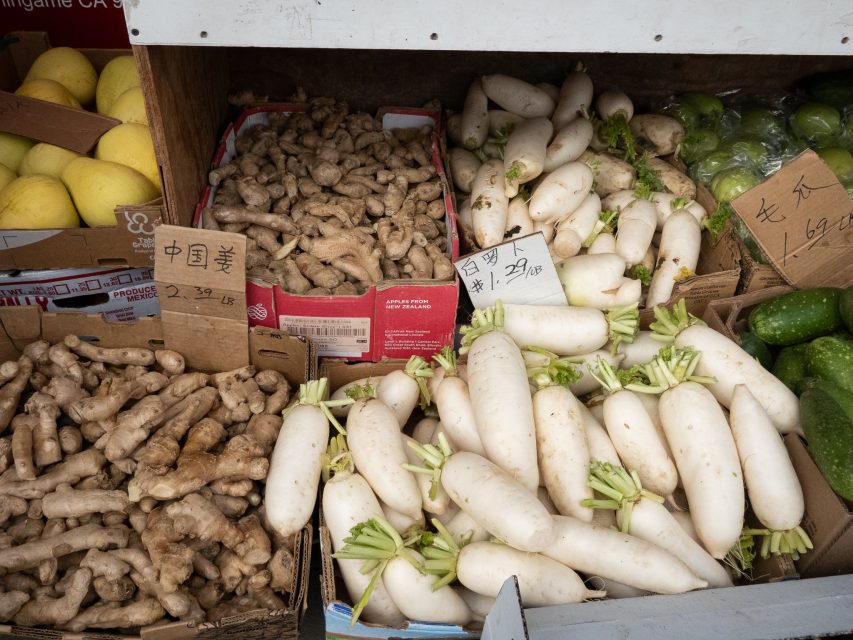 Smaller food markets on Irving Street may have fresher produce. Photo by Junyao Yang on Dec. 23, 2025.
Pick veggies of your choosing: Napa cabbage, bok choy and seaweed are my favorites. Mushrooms, such as enoki and wood ear, are great and make the broth more flavorful.
But be careful with leafy greens; they are better in non-spicy broths. As the spicy broth has a thick layer of oil on top, leafy greens tend to become soaked in oil and become way too spicy.
Starch:
What’s better than ending the meal with some good ol’ carbs? The hot pot police would recommend that you add starch last, so as not to thicken the broth (in an unpleasant way). But you do you.
These are some of my favorites:
Udon noodles
Wide sweet potato noodles
Potatoes
Sliced lotus root: It is a strange-looking part of the lotus plant with lots of holes. When it’s cooked for a short time, it’s crunchy; with longer cooking time, it becomes tender and soft, like potatoes.
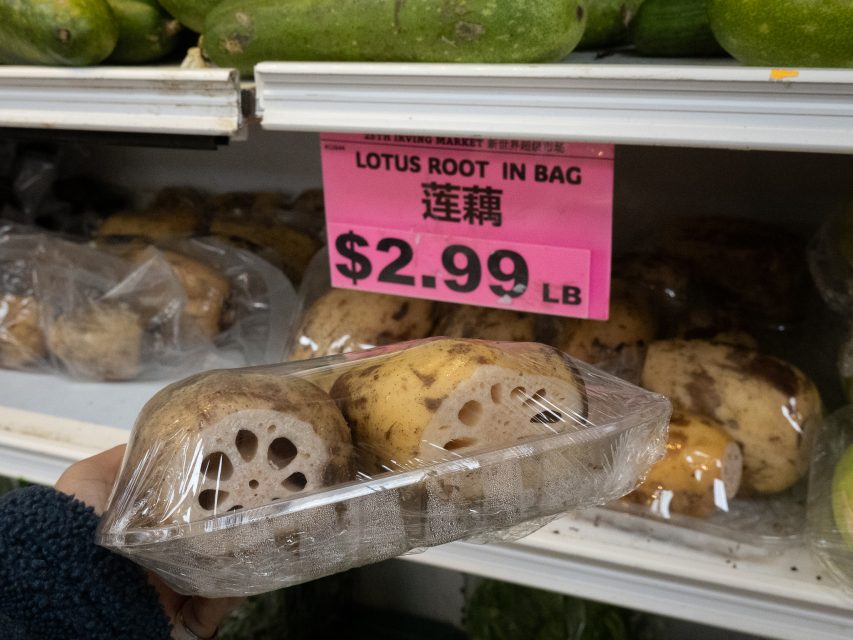 Lotus root, when cooked for a short time, is crunchy, and when cooked longer, tastes soft like potatoes. Photo by Junyao Yang on Dec. 23, 2025.
Hosting a hot pot dinner, especially for the first time, might sound intimidating. It was an adulting moment for me. But at the end of the day, it’s just cooking ingredients you like in a flavored, boiling pot of water.
If it’s just too much, though, there are also great hot pot restaurants in San Francisco — many on the Westside suffered losses from the power outage before the holidays.
Consider going out and supporting a local business. Any day is good for a hot pot dinner, but especially the cold and stormy ones.
Keep Mission Local free by making a tax-deductible donation today!
We have a big year-end goal: $300,000 by Dec. 31.
It’s more important than ever that everyone has access to news that reports, explains and keeps them informed. Paywalls don’t serve anyone.
Your support makes it possible for Mission Local’s content to be forever free — for everyone.