
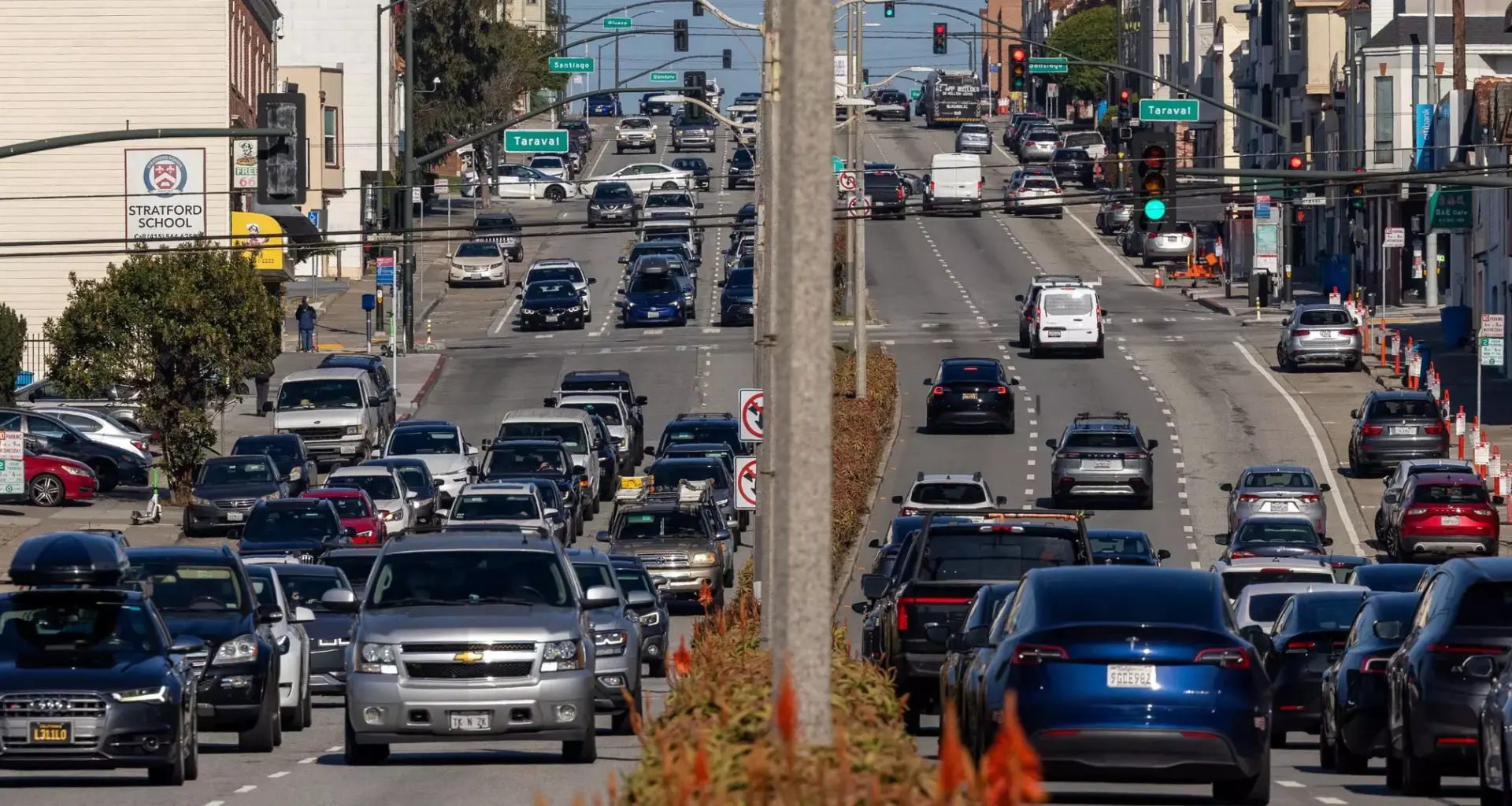
For years, San Francisco officials took a firm stance against cars. The city converted streets into pedestrian-only promenades and installed protected bike lanes on Valencia. In the early days of the pandemic, officials partially closed JFK Drive and the Great Highway to private vehicles — changes voters cemented at the ballot box in 2020 and 2024.
But in 2025, the balance shifted.
Even as the city continued to advance street and cycling safety goals — rolling out 56 speed cameras and adopting the Biking and Rolling Plan, which calls for bike lanes on 10% of streets by 2030 — officials increasingly favored motorists.
The new mayor expanded Market Street vehicle access, robotaxis gained wider public acceptance, and the permanent closure of the Great Highway triggered a recall election that cost its chief political supporter his seat. These, among other episodes, reflected the growing influence of San Franciscans who prioritize travel by car.
Christopher White, executive director of the Bicycle Coalition, acknowledged that the pendulum is shifting to favor drivers — which he guessed is a move to curry the public’s favor as officials at City Hall prepare to ask voters in November to approve new taxes to fund public transit.
“Unfortunately, I think that we’ve seen that the people in the administration, for whatever reason, have had a sympathetic ear to these people,” White said.
We took a look at the biggest battlegrounds in the city’s transit wars in 2025 — and where the drama will continue in the new year.
The Great Highway
If 2024’s Great Highway closure was the crowning triumph of cyclists and pedestrians, 2025 was the year in which the city saw the fragility of that victory.
Backlash was swift and severe. Traffic immediately worsened in the neighboring residential roads, and disgruntled residents took their revenge on Supervisor Joel Engardio, who’d bucked the desires of his constituents and backed Proposition K. Just six months after the creation of Sunset Dunes on the erstwhile road, Engardio was recalled. His replacement, Supervisor Alan Wong, is openly backing the return of cars to the Great Highway.
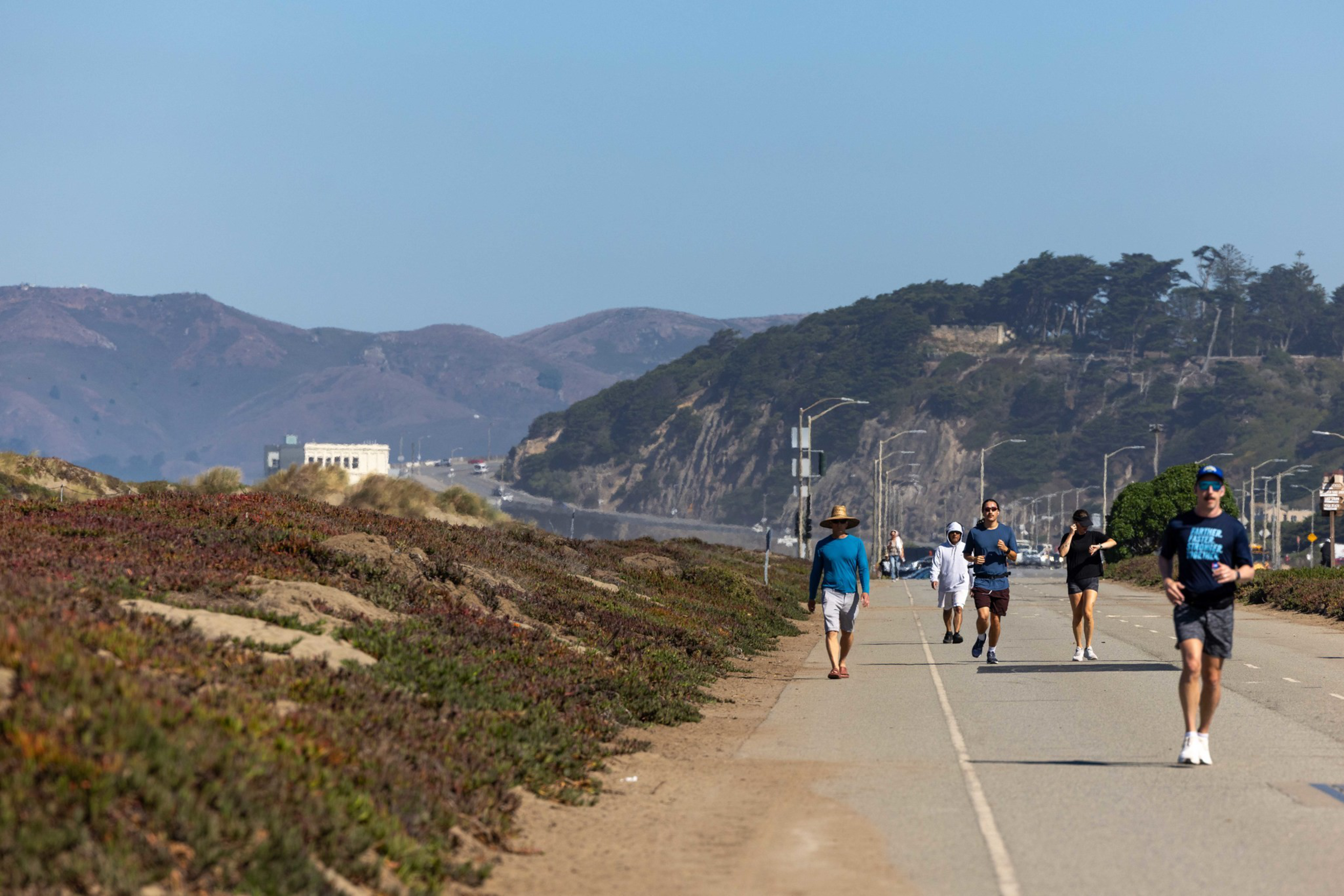 People run and walk at Sunset Dunes in San Francisco on Monday, September 15, 2025. | Source: Amanda Andrade-Rhoades/The Standard
It would be hard to say Sunset Dunes is a failure, however, as it was one of the city’s most visited parks this year — mostly by residents of the Sunset, even those who strongly opposed its creation.
Transit and cycling advocates point to Engardio’s recall as evidence of their political clout. They say a coalition of concerned drivers became more organized in 2025, but the backlash did little to address congestion, and the most effective way to ease traffic is to encourage more people to bike or use public transit.
Market Street Market Street. | Source: Carlos Avila Gonzalez/The San Francisco Chronicle via Getty Images)
Cyclists and pedestrian safety advocates said the change would make Market Street more dangerous. However, a Dec. 2 SFMTA report found that adding Waymos and rideshares to Market Street didn’t slow buses or result in collisions that caused injury.
Robotaxi takeover
Long gone are the days when driverless cars were curiosities in San Francisco, known more as places to shag on the go than as viable competitors to Uber, Lyft, or public transit (opens in new tab).
As of November, Waymo is on Bay Area freeways and journeying as far south as San Jose, as well as within Sacramento and Santa Rosa. Zoox was approved to offer rides in parts of SoMa and the Mission later that month.
 A Waymo robotaxi drives through the intersection of Van Ness Avenue and Market Street in August 2023. | Source: Jeremy Chen/The Standard
Which isn’t to say the robotaxi takeover has been all smooth cruising. In October, a Waymo ran over and killed a beloved cat in the Mission. In response, Supervisor Jackie Fielder on Nov. 4 introduced a resolution requesting a state law that would allow local voters to regulate robotaxis. More recently, during a Dec. 20 blackout that saw roughly one-third of San Franciscans lose power, Waymos went haywire, stopping in the middle of streets after traffic lights went dark.
The neckdown
Street safety advocates have long pushed for moving quickly to install infrastructure designed to slow traffic, separate bikes from cars, and protect pedestrians, even to the point of doing so without collecting public input first.
But this year San Franciscans saw what can happen when the city makes drastic changes without collecting residents’ feedback beforehand.
 Cars pass through the “neckdown” at Kirkham Street between Ninth and Tenth avenues in January 2025. | Source: Jesse Rogala/The Standard
The “neckdown” installed on Kirkham Street in the Sunset was controversial from the start. It created a bottleneck in the road where westbound and eastbound traffic converged into a single lane, forcing each driver to negotiate with another coming at them head-on. The neckdown would slow traffic on a busy arterial road connecting Seventh and 19th avenues. Or at least, so went the theory.
But after 13 months, the SFMTA found that traffic on the block had slowed an average of just 1 mph, while adjacent blocks on Kirkham actually saw speeds increase by 3 mph, according to a December report (opens in new tab).
What’s ahead?
After Vision Zero failed to meet its core goal of eliminating traffic deaths by 2024, the city appears poised to chart a new safety strategy in 2026.
Lurie this month announced his Street Safety Initiative (opens in new tab) to create a working group of city departments and a public data dashboard that would track fatal and injurious crashes, as well as allow for faster review of traffic calming and other street safety projects.
It will also be the year voters decide whether Bay Area public transit is worth saving.
Facing a multimillion-dollar budget deficit, transit agencies are turning to voters for money. Two measures are slated to appear on the ballot in November: a half-cent sales tax across the Bay Area and a new San Francisco parcel tax. The parcel tax is expected to generate $187 million for Muni, while the regional sales tax would generate $980 million (opens in new tab) for transit agencies throughout the Bay Area.
 People wait for a Muni bus in July 2023. | Source: Jeremy Chen/The Standard
The SFMTA has also proposed hiking transit fares by 25 cents — except for cable cars, which would increase from $9 to $15. Parking meter rates would also increase by 25 cents, though the city would slash the costs of four kinds of parking tickets.
Without additional funding, Muni and BART have forecast severe service cuts that would make the systems almost unrecognizable. For Muni, it could mean killing lines (opens in new tab), halving bus routes, and ending fare discounts for youths, seniors, and people with disabilities. For BART, it could mean cutting between 65% and 85% of service (opens in new tab), eliminating two lines, and closing stations at 9 p.m. BART in particular seems likely to face an uphill battle, as it’s asking voters to bail the system out after a year pockmarked with frequent delays and systemwide, rush-hour meltdowns.
But not everything about 2026 is vague or aspirational. We know what’s happening with the Kirkham Street neckdown, at least. The city plans to replace it with speed bumps — at a cost of $15,000.