
Editors’ note: This week we’re republishing some of our favorite stories of 2025. This story was first published on June 20.
With its canopies of eucalyptus, Monterey pines and sculptural oaks whose limbs arch over houses and roads alike, vines of wisteria and jasmine and foundation plantings like camellias, rhododendron and roses snuggled right up against houses, the Berkeley Hills has become synonymous with a multi-layered and often overgrown landscape that spills from one property to another, blurring boundaries.
The new wildfire safety rules, banning nearly everything combustible within 5 feet of buildings, or “Zone Zero,” go into effect for 1,400 homes in the hills.
For many residents, that look is what defines the Berkeley Hills, where along with the views, the lush vegetation is among the amenities that make homes sell for well over $1.5 million. But that aesthetic is about to get upended.
After years of record-breaking California wildfires, Berkeley will soon start requiring some hills residents to clear plants, shrubs and most other flammable materials from the 5 feet around their homes — called “Zone 0” by fire experts.
The new rules are meant to prevent embers from igniting, catching houses on fire and spreading structure-to-structure into downhill neighborhoods. The state is planning to finalize similar rules this year and begin enforcement in 2029.
Not waiting for a mandate, some Berkeley Hills residents, like David Hallsted, are already following defensible space guidance, which emphasizes using fire-resistant plants, reducing fuels and spacing out vegetation in the 100 feet around structures. Hallsted has a 50-item punch list of projects great and small, using a combination of non-combustible materials from the fire-prevention toolbox — stone, bricks and Hardie Board, a fiber cement board that looks like wood siding — that are becoming commonplace. Others are turning to contractors for help swapping out a tangled wilderness with tidier gardens set off by crushed granite and islands of drought-tolerant plants.
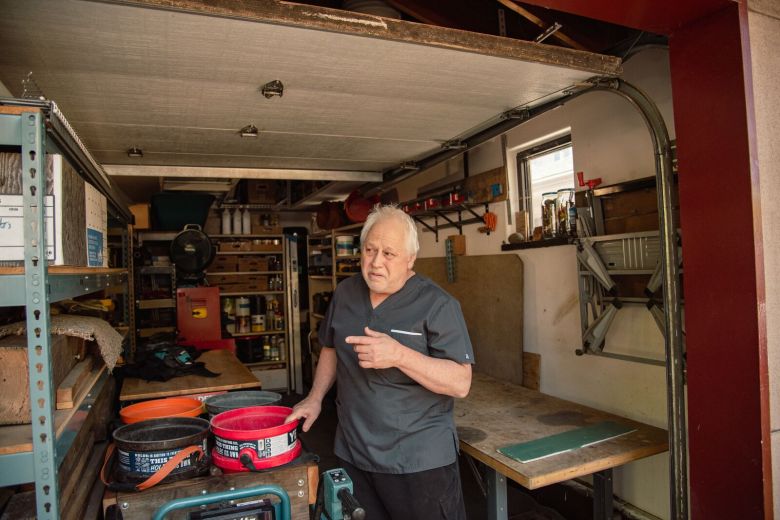 David Hallsted adapted his garage to store all the necessary equipment to complete the myriad projects on his fire safety list. Credit: Ximena Natera for Berkeleyside
As they scramble to clear and redo their properties, homeowners are helping reimagine basic principles of home landscaping for a new era — undoing deeply rooted design thinking that has existed in the U.S. for almost 200 years.
In effect, they have become de facto early adopters who are being asked to rethink what the Berkeley Hills — and potentially much of Berkeley and other fire-prone hot spots in California — will look like, creating a new landscaping paradigm to address the increased fire danger posed by climate change.
“We need to adopt new thinking,” said Ramsey Silberberg, a landscape architect who’s been redesigning her garden in the Berkeley Hills as a laboratory for defensible space principles. “What I’d like to see is helping people understand or get ideas about how to redesign these spaces so they’re defensible and meet the ordinances — that the change is positive for them and not a total loss.”
A design aesthetic born in the 19th century
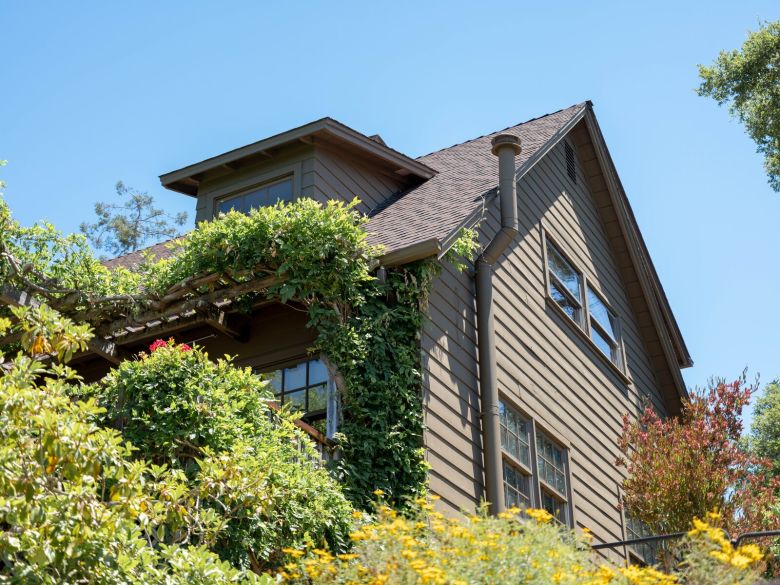 Shrubbery around a home’s foundation has been a design ideal since the early 19th century. Credit: Ximena Natera/Berkeleyside
Most of the homes in the Berkeley Hills — and much of the U.S. in general — have been landscaped in the same way for ages: with shrubbery around the foundation, a concept promoted in the U.S. in the 19th century by Andrew Jackson Downing (1815-1852), according to Kristina Hill, research director at UC Berkeley’s Institute of Urban and Regional Development.
Downing was an American landscape designer, horticulturist and writer who is considered the father of American landscape architecture, promoting more natural and picturesque styles. One of his most prominent projects was the design of the National Mall in Washington, D.C. His 1842 book, Cottage Residences: Or, A Series Of Designs For Rural Cottages And Cottage Villas, And Their Gardens And Grounds, advocates for shrubs adjacent to the house.
Hill said that the early 19th-century movement was in response to “a lot of anxiety about expanding cities.” Part of the aesthetic included expansive lawns, winding roads and a gracefully arching tree at the front of the house that acted like a “kind of totem or protector of the house,” Hill said. Such naturalistic designs encouraged the layering of plantings to blend into the landscape.
The movement took off nationally, and the ideal continues today.
“People are still shrubbing up their homes,” Hill said. “A lot of houses where shrubs were planted in front of the house are now trees. It’s a strategy that failed over time — people planting things that got too big.”
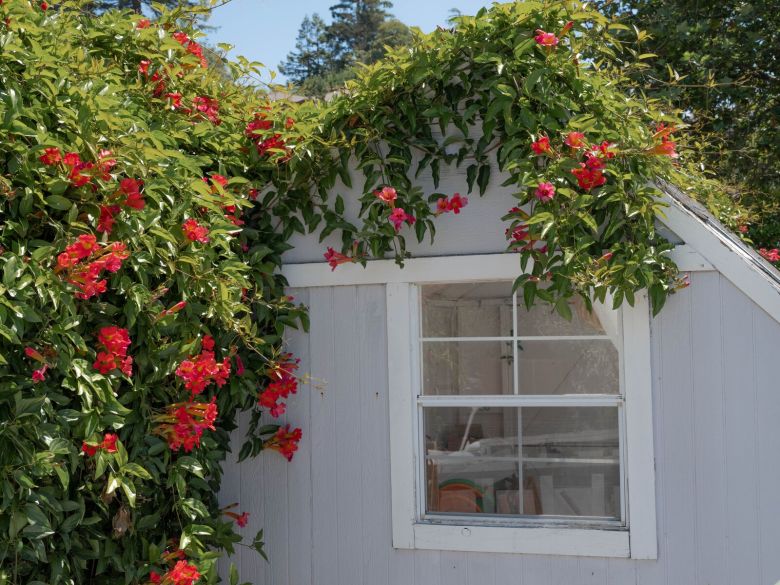 Most homes in the hills violate defensible space principles. Credit: Ximena Natera/Berkeleyside
Fire experts say such layering is also what makes a landscape vulnerable to fire, creating a “ladder” situation in which low-to-the-ground plantings, where most fires start after embers land, work their way up to trees and then a house. Under the new fire regulations, foundation plantings should be replaced by hardscapes such as concrete, gravel or a combination of gravel and larger rocks.
Hill noted that some of her friends who live in the Berkeley Hills hate the idea of taking out mature plants around their house and, like many residents who are now forced to redesign their properties, are worried about the expense.
“People have a sentimental attachment to the plants around the house,” Hill said.
Read our story about the home design contest
In order to demonstrate how beauty and fire safety can be compatible goals under Zone 0 regulations, Hill administered a design contest at UC Berkeley whose winners were announced last April. The contest, she said, highlighted landscape design techniques for avoiding the so-called “naked house” look.
Landscaping costs can vary greatly
Berkeleyside visited several homeowners in the Berkeley Hills to see the various ways residents are planning for the stricter standards and learn what challenges they have encountered along the way.
What we discovered is that most homeowners are working in stages, beginning with Zone 0 recommendations and then moving away from their house.
Most decisions, many say, are about money.
The Berkeley Fire Department estimates the cost of creating defensible space within a 100-foot radius of a home could average about $2,900 per parcel. But the estimate doesn’t account for replacing vegetation, and landscaping costs can vary dramatically based on homeowners’ budgets and whether they do the work themselves or call in contractors.
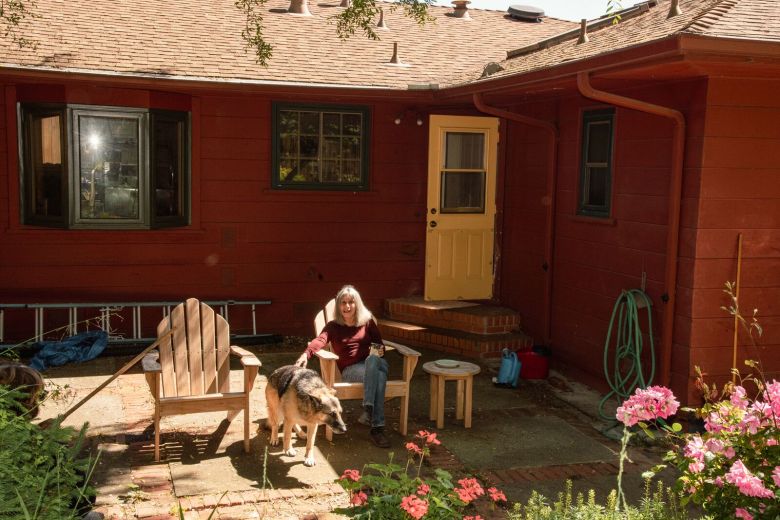 Miriam, who requested her family’s last name not be used, in her Berkeley Hills backyard. She was given estimates ranging from $15,000 to $28,000 for ripping up vegetation and limbing up a monstrous Chinese elm. Credit: Ximena Natera for Berkeleyside
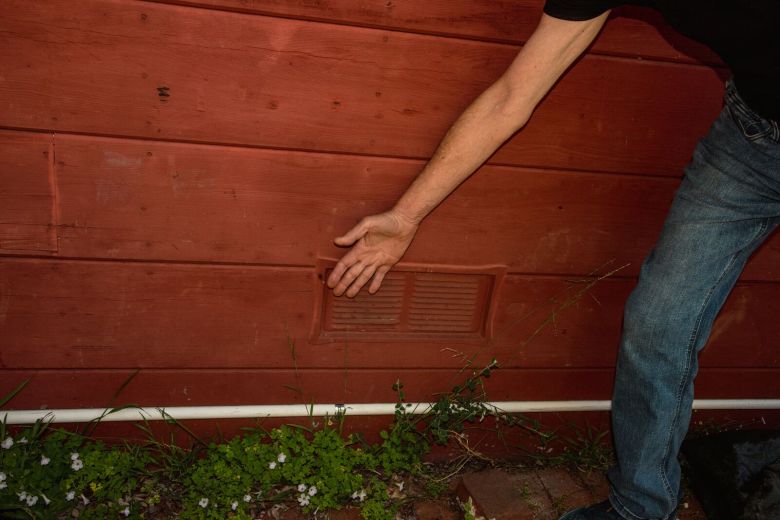 Pulling out vegetation growing alongside their home’s walls and fences is one of the pending fire safe tasks for Miriam and her partner, Jeff. Credit: Ximena Natera for Berkeleyside
Just removing plants and other materials and replacing bark mulch with gravel can cost nearly $10,000. Still, that may be the least costly of the defensible space recommendations. Removing trees and changing out wood fencing with aluminum fencing seem to be the priciest projects.
One Park Hills homeowner, Miriam, who asked her name not be used for privacy reasons, was given estimates ranging from $15,000 to $28,000 for ripping up vegetation and limbing up a monstrous Chinese elm. Duce Construction Deck and Fence in Walnut Creek estimated that two gates made of Knotwood, a noncombustible aluminum with finishes that resemble wood, would cost her between $5,000 and $10,000.
Still, she said she supports Berkeley’s Ember Resilience (EMBER) Initiative. “Even though it is expensive to do all the things I want to do to make my house safer in a fire, it is much, much cheaper than replacing everything in the house and the house in the event of a fire,” she said.
For those who can’t afford to hire a contractor to do a complete renovation of property, there are several ways to keep costs down.
Seek out the free. If you’re a DIYer, you can cover your vents with free screens and your gutters with metal gutter guards provided by applying to the BFD’s Home Hardening Mesh Program, available for residents who live in Firewise communities in the Berkeley Hills. Metal mesh and gutter guards can prevent embers from igniting homes. To apply, fill out this form.
Whether you’ve hired contractors, or done the branch cutting or clearing yourself, connect with your neighbors to have the city haul it all away for free through the Berkeley Chipper Program. For rules and registration, visit the Chipper Days website.
Fence it yourself. Home Depot sells powder-coated aluminum fences (and gates) with the look of wrought iron for around $88 for one 4-by-6-foot section. Concrete footings will add to the cost — and skills required.
Hire students from UC Berkeley’s landscape architecture department. Undergraduate or graduate students can help with a redesign, for free or for a reduced fee, depending on the project, Kristina Hill said. “It’s a great way to bring a lot of energy into your project and have someone run around and do your budget numbers for you,” she said. “We’d like to be relevant and help the local community.” She suggests contacting the department office at 510-642-2962.
Hire day laborers. The Multicultural Institute’s day laborer program connects workers to opportunities in an organized environment and sets a $20 minimum wage that employers must honor.
Apply for financial help. The Berkeley Fire Department has received a $1 million grant from Cal Fire to help low-income, elderly and physically or medically disabled residents make their homes more compliant under its Resident Assistance Program (RAP). Such funds should be available in a couple of months as the details are still being worked out. Funds do not cover tree removal, hardscaping or the replacement of gates and fences. Residents should check the city’s fire safety website for more information.
The mandate for a 5-foot ember-resistant buffer zone will apply to more than 850 homes in the Berkeley Hills near Tilden Regional Park and on Panoramic Hill starting next year. Eventually the city intends to expand it throughout the hills.
Decks won’t have to be removed under the current proposal. Nor will fences in the buffer zone that run parallel to homes — just the first 5 feet of fences and gates that attach directly to structures. And trees can stay, as long as their branches are properly pruned away from the roof.
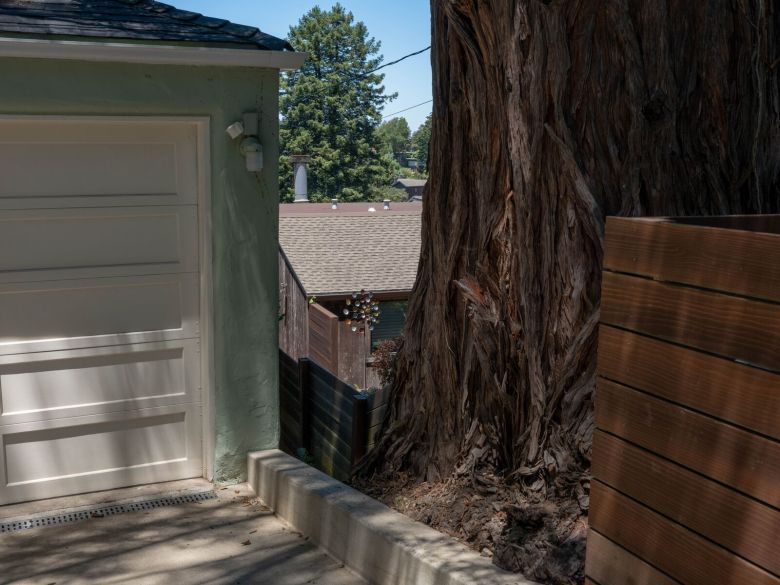 Trees can remain near structures under new rules, as long as limbs are pruned away from the roof. Credit: Ximena Natera/Berkeleyside
The rules are set to take effect Jan. 1, but after backlash from some homeowners — who believe the city’s proposal goes too far and worry about the high cost of landscaping, both financially and visually — the city will delay enforcement until at least May 2026 and exempt homeowners from citations who are working in good faith toward compliance.
He’s doing it by himself — on the cheap
Because of the cost of bringing houses into compliance, some homeowners are doing it themselves. David Hallsted is working with his son, four hours a day, four days a week, and sharing what he’s learning in a Google doc called “Shattuck Journey: to Zone 0 and Beyond.”
A retired “continuous fulfillment facilitator” at an electrical company, Hallsted was inspired to make improvements to his 1978 house after the Los Angeles wildfires in January. He searched the internet to find homes that have survived firestorms because they were Zone 0 homes. “I live in a house with an exterior of stucco wall and cement boards. We are halfway there,” he wrote in “Shattuck Journey.” “But here is the thing, to be Zone 0, we will be faced with difficult decisions.”
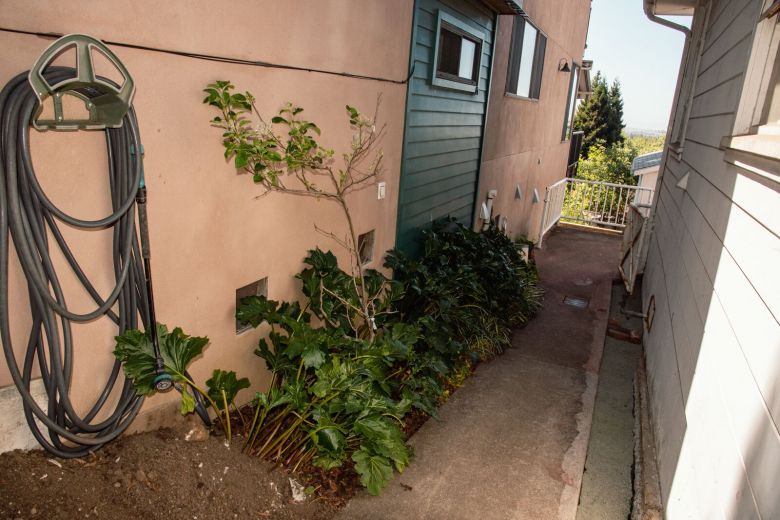 After a negotiation, Hallsted and his next-door neighbor agreed to clear plants from between both properties. Credit: Ximena Natera for Berkeleyside
Some of those decisions include taking down a beloved liquid amber tree ($3,000-$4,000), which is in Zone 0. Other projects have less sentimental value, like replacing a wooden barn door with one of Hardie Board, and adding a copper kick plate to the wooden front door. Smaller projects include replacing plastic outlets on the home’s exterior with metal ones and covering the soffits with Hardie Board.
To undertake these projects, Hallsted has devoted more than half his garage to construction-grade tools (like an electric wheelbarrow to carry heavy supplies) and a corner of the front yard to store gravel and flagstone that will replace walkways in the backyard. On a recent Thursday he was pulling out the bear’s breeches that bordered the narrow walkway between his house and a neighbor’s and turning it into hardscape. He didn’t know how to lay bricks, but since he had some on hand, he’s going to learn how.
“This is basic fire safety 101. You just gotta do it,” he said. “Because otherwise what cost do you put on having things burn down? I will do what it takes to keep the house safe.”
The improvements will end up costing thousands of dollars; he ends up saving through his elbow grease and thrift. He found the flagstone in a discontinued section of Acapulco Rock and Soil in Richmond and hauled away three truck loads of it for $700.
Hallsted is also talking to a neighbor about the possibility of removing three trees and brush that run along the property line within Zone 0. He’s also hoping to switch out a wooden fence he shares with the same neighbor with one of concrete. “We are talking,” he said.
As fire experts, city officials and experts have suggested, cooperation between homeowners is key in making many of the changes necessary to make a community more fire safe.
Firewise program helped couple in preparing for a major redesign
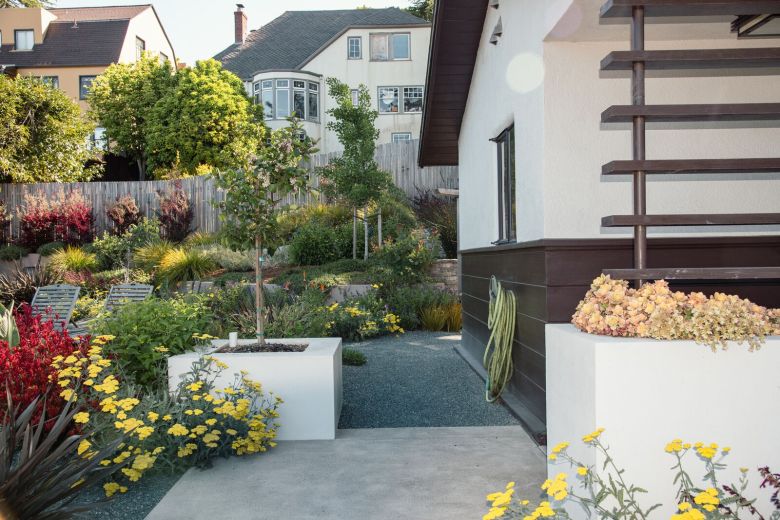 While the Beauchamps are spending hundreds of thousands of dollars on landscaping, they estimated $6,000 to $8,000 went toward making the house compliant with Zone 0 guidelines. Credit: Ximena Natera for Berkeleyside
When Robin Beauchamp and his wife, Susan, moved into their 1950 home in 2002, the side yard was a lawn and elderly roses and camellias were planted right up against the house. The front slope had “gone wild and weedy,” said Robin, and retaining walls were failing.
They went the contractor route and hired Goodman Landscape Design, a design-build firm headed by Lisa and Tim Goodman, who, themselves live in the Berkeley Hills. The Goodmans, who retired in February after 40 years in business, have done dozens of high-end projects in the hills, typically starting at $100,000.
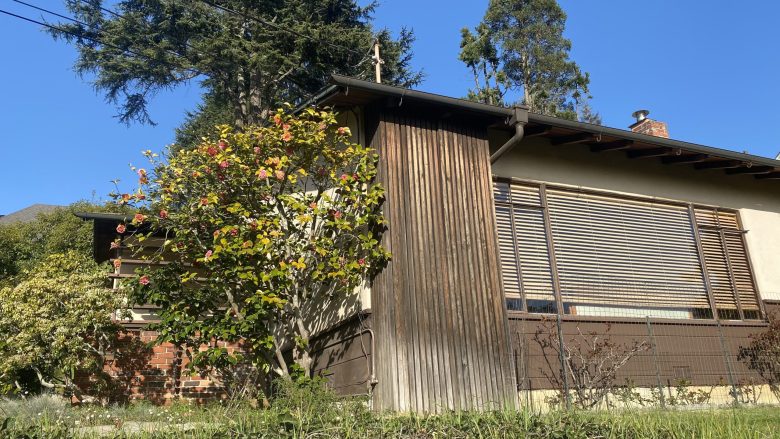 The Beauchamps’ home before the remodel. Credit: Robin Beauchamp
The Beauchamps decided on a radical, fire-safe redesign, completed a year-and-a-half ago, that aligns with National Fire Protection Association’s Firewise program, which provides guidance and resources to neighbors who band together on fire-proofing projects. Today 17 Berkeley Firewise communities in Berkeley represent some 1,273 dwellings, with six more in the process of being approved.
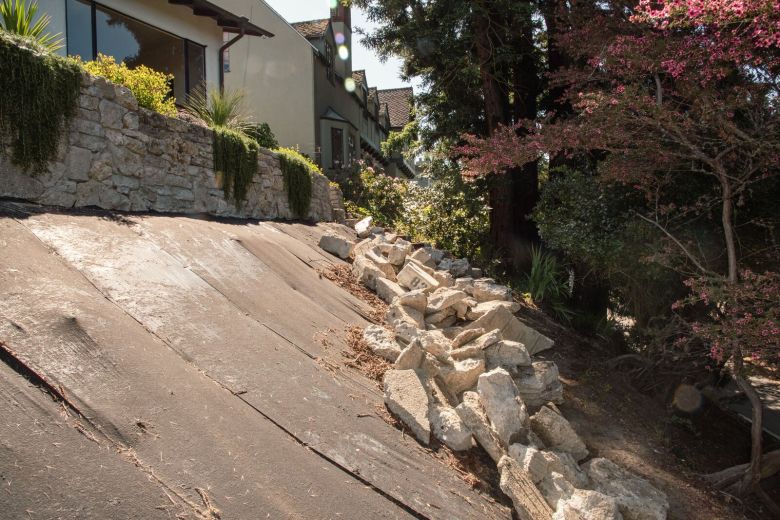 The Beauchamps’ old retaining walls were broken up and used to rebuild new ones. Credit: Ximena Natera for Berkeleyside
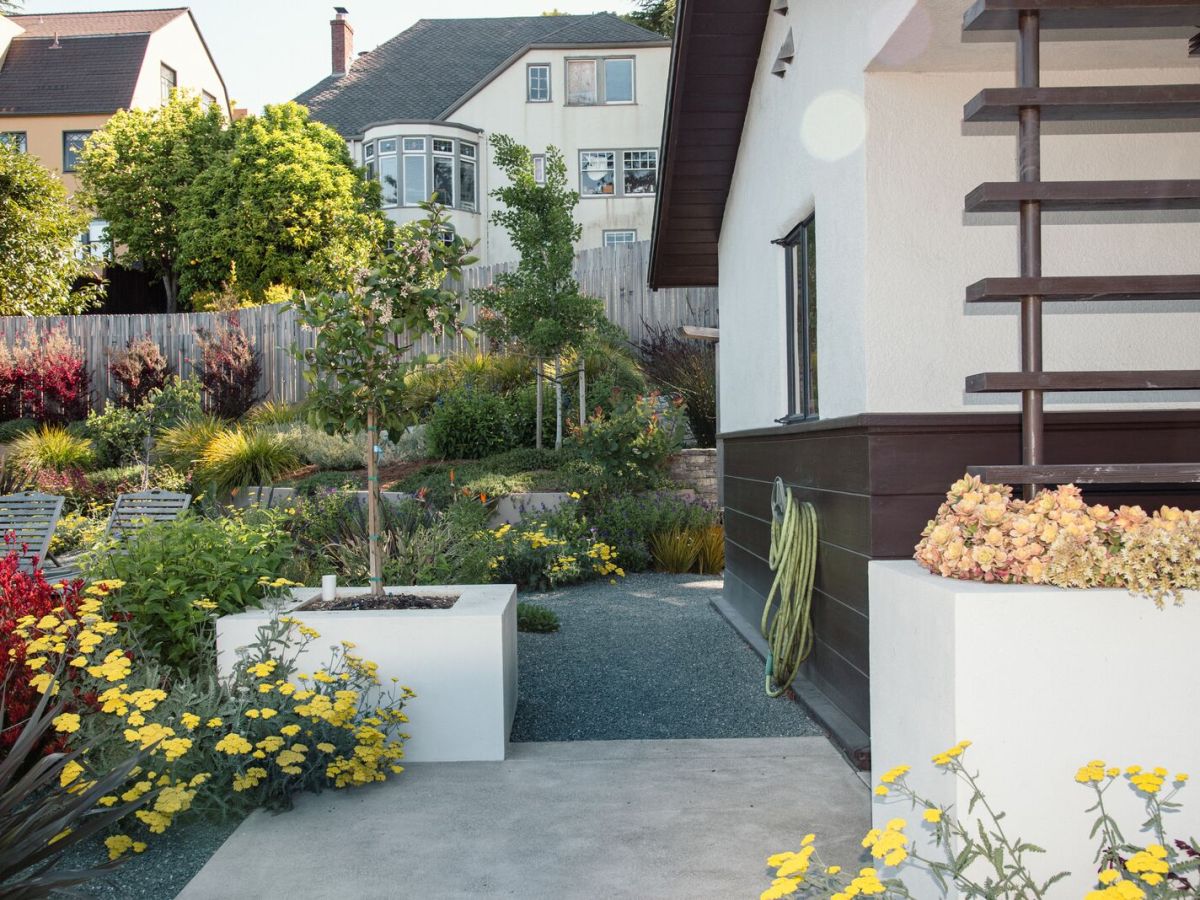
The Beauchamps were ahead of the curve, implementing Zone 0 changes before the BFD started inspecting his neighborhood a year ago. Out went the camellias, roses and overhanging trees. Instead of a lawn, the side yard is now covered in slate blue decomposed granite and borders of drought-resistant plants like phormium, kangaroo paws and salvia. The old retaining walls were broken up and used to rebuild new ones.
Beauchamp estimates that only about $6,000 to $8,000 of the landscape design pertained to making the house compliant with Zone 0 recommendations. The shrubs around the house were removed and replaced with decomposed granite, or “dee gee,” which involves excavation, the installation of fabric to prevent weeds, a base layer of engineered fill and two layers of granite that have to be compacted.
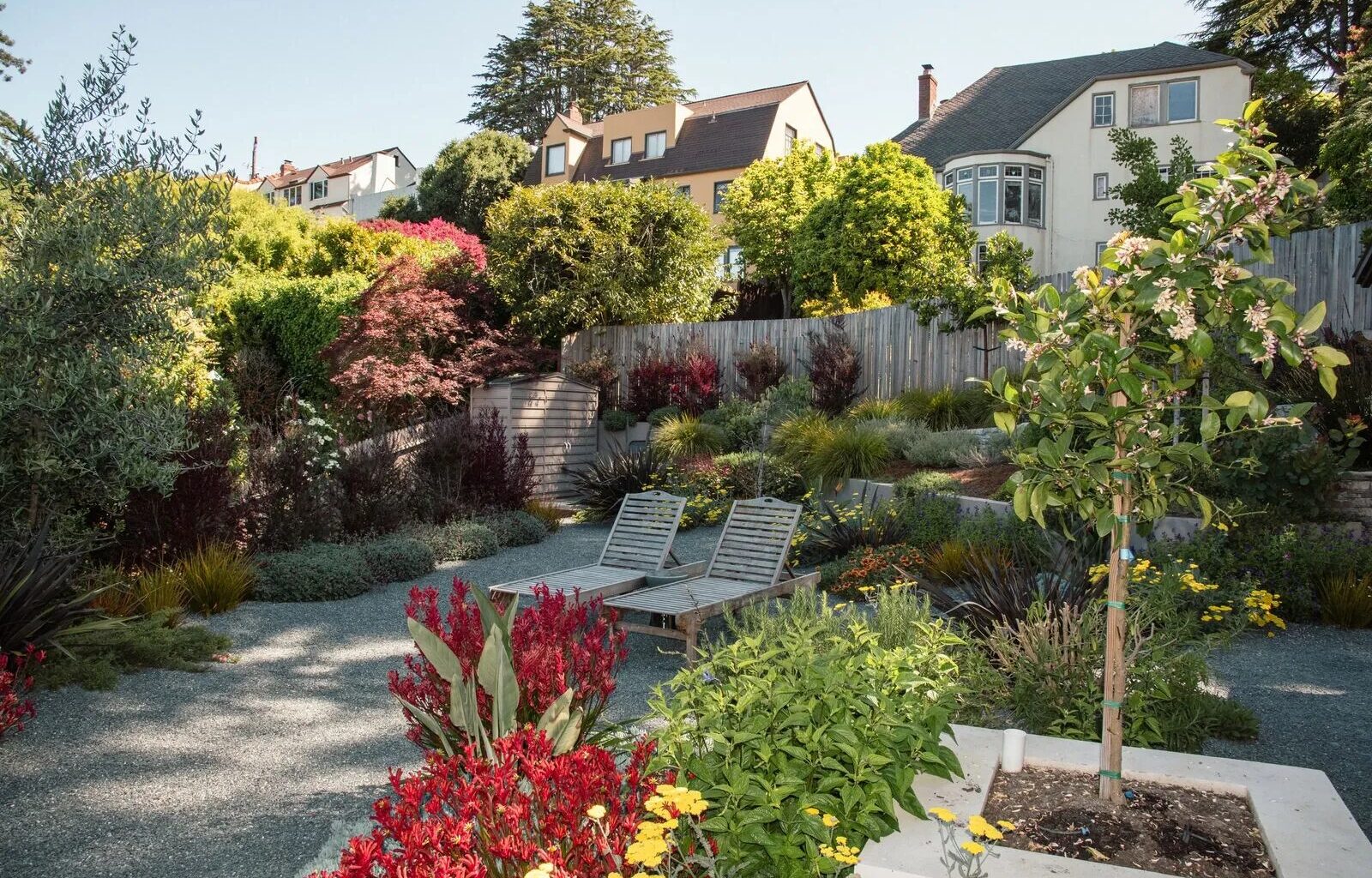
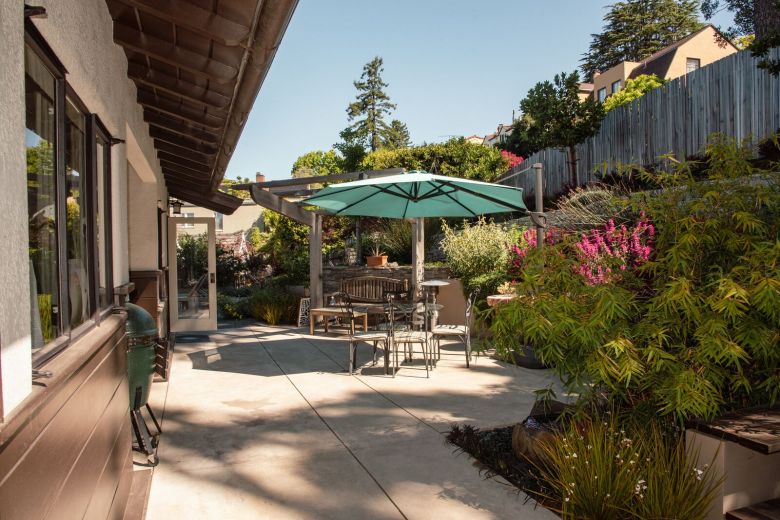 The Beauchamps removed camellias, roses and overhanging trees from their yard in the Berkeley Hills, replacing them with drought-resistant plants like phormium, kangaroo paws and salvia. Credit: Ximena Natera for Berkeleyside. Credit: Ximena Natera for Berkeleyside
The couple estimates that Phase II of their plan, encompassing the street-facing front slope, will cost about $200,000 and include new walkways and plantings. A majestic oak will remain.
“We all have so much to be done to improve our susceptibility,” Beauchamp said. “The more you can do the better. If you don’t get 90% of a neighborhood involved, you get very little benefit from it.”
Demand is high for contractors replacing fences and clearing brush
Susan Duce, a second-generation owner at Duce Construction, has done five fence replacements in the Berkeley Hills region within the past several months, changing out the wood for aluminum fencing. Although there are lots of metal fencing options, the cheapest form, chain link, used mostly in industrial settings, would not appeal to most homeowners.
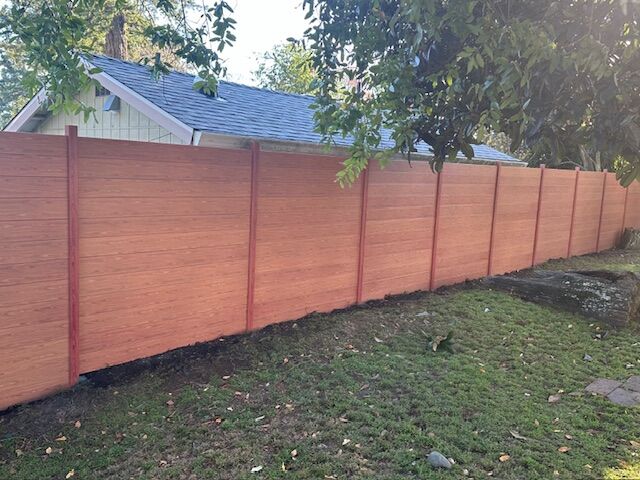 A Knotwood fence of aluminum that Duce Construction installed in the Berkeley Hills. Courtesy: Duce Constuction
Because of strict regulations in Australia that prohibit wood fencing in wildfire-prone regions, Duce said Australian companies are leading the way and her favorite, Knotwood, has a factory in Phoenix. Such fencing however, is much more expensive than wood, coming in at around $300-$500 a linear foot versus $55-$250 for wood. Both price ranges, Duce said, are based on styles and the specifics of the site.
At one property in the hills, a homeowner who lost their insurance because an ADU was 18 inches from the property line was able to get it reinstated once they changed out to aluminum fencing.
As to clearing out brush, Brush Pros, a 23-year-old Oakland-based brush clearing company that specializes in defensible space and is listed on the BFD’s list of Defensible Space and Home Hardening Contractors, has seen its demand for clearing explode since April, when the City Council first voted on the EMBER initiative. Eight out of ten calls he gets daily now have to do with creating Zone 0 around homes, said George Peters, Brush Pros’ deputy general manager. He estimates that 300 homes in the Berkeley Hills use the company every year for clean-ups, some up to three times a year.
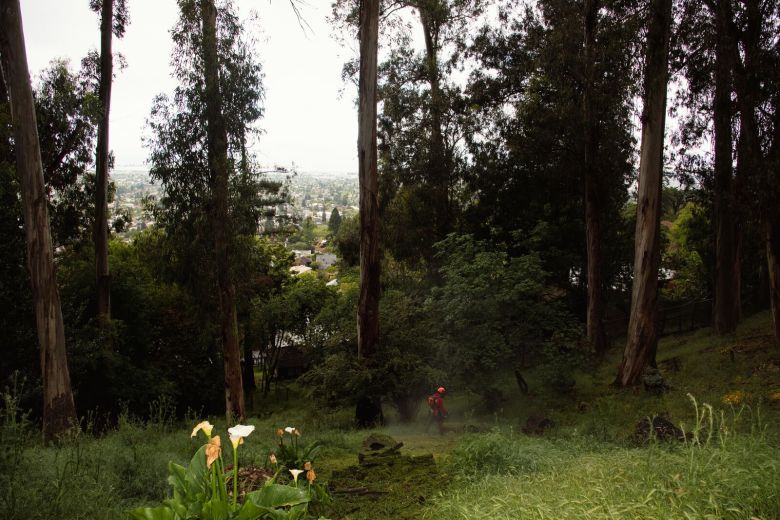 A worker for Brush Pros clears an overgrown backyard of a Berkeley Hills home on May 12. Credit: Ximena Natera for Berkeleyside
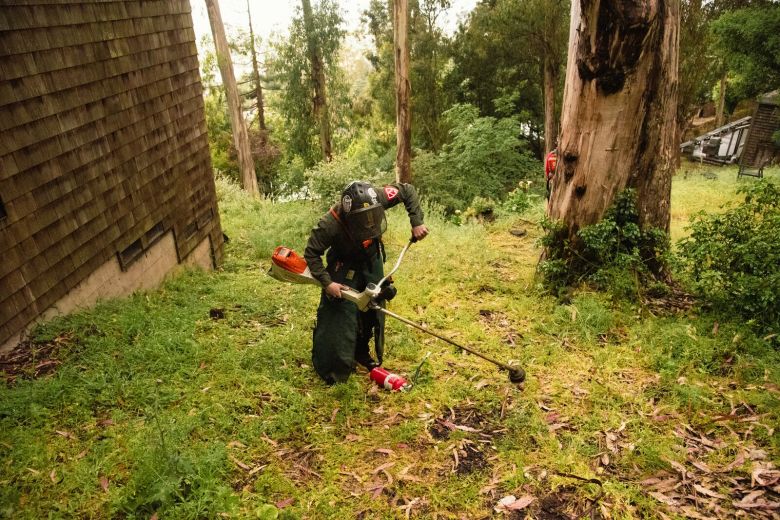 A Brush Pros employee on the job in the Berkeley Hills. Credit: Ximena Natera for Berkeleyside
The company follows Fire Department regulations and does not use gas-powered blowers or weed-wackers, which can initiate fires.
Most of the time crews are removing scotch broom, coyote bush, berry vines, thistle, stinging nettle in the grass, dry weeds, dried thistle and oak leaves and cutting back bay trees, oak trees, ornamental trees and eucalyptus litter, “which is very dangerous,” Peters said. Clearing starts at 18 cents a square foot but can go up to 32 cents, depending on vegetation, property slope and the equipment needed.
Peters estimated that the typical Brush Pros jobs, clearing weeds/grass/thistle and cutting eucalyptus saplings, for example, range from $900 to $1,981.
“A majority of people just want to get into compliance,” Peters said.
Berkeleyside Editor-in-Chief Zac Farber contributed reporting to this story.
“*” indicates required fields