
By Dr. Angelo Williams
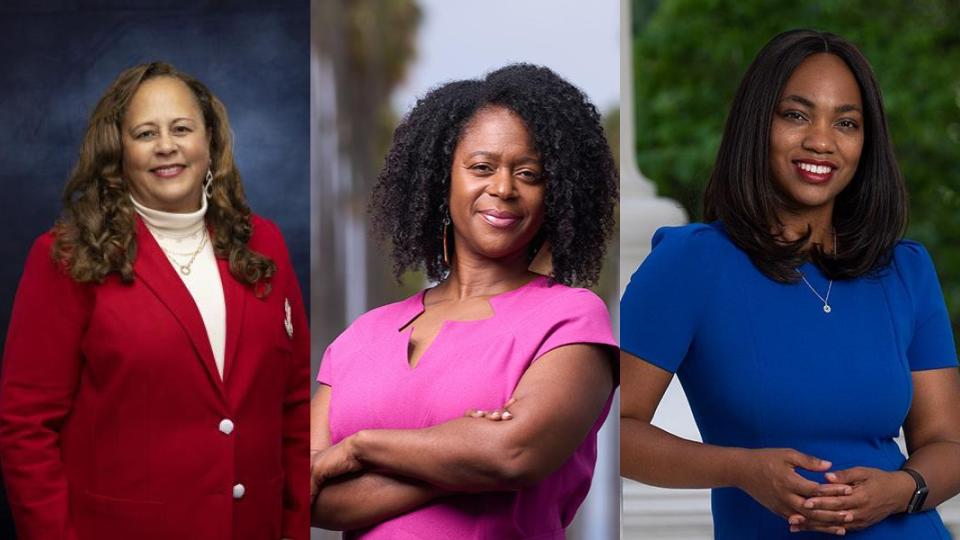
OPINION – When Senate President pro Tempore Monique Limón announced leadership and committee appointments for the remainder of the 2025-26 legislative session, three African American senators were elevated to roles that reflect years of legislative work, professional expertise, and earned respect at the Capitol. The appointments of Laura Richardson, Akilah Weber Pierson, and Lola Smallwood-Cuevas followed sustained records of service, subject-matter mastery, and coalition-building across caucuses.
Richardson was appointed Assistant Majority Leader and selected to serve as chair of Budget Subcommittee No. 5 on Corrections, Public Safety, Judiciary, Labor, and Transportation — a portfolio that signals both seniority and trust. Richardson’s legislative career spans Congress, the Assembly, and the state Senate, where she has developed a reputation for fluency in budget mechanics and policy execution. Her subcommittee leadership places her in direct oversight of systems that require steady governance: courts, corrections, workforce protections, and statewide transportation investments.
Weber Pierson was appointed chair of the Senate Health Committee, recognizing her dual authority as a practicing physician and legislator. Long before assuming this committee leadership role, Weber Pierson was widely regarded for her command of public health policy, behavioral health systems, and Medi-Cal financing. At a time when California continues to confront workforce shortages, maternal health disparities, and access-to-care challenges, her leadership reflects confidence in her ability to manage complex systems rather than merely advocate within them.
Smallwood-Cuevas was appointed to lead the Labor, Public Employment and Retirement Committee, bringing a deep background in labor organizing and economic policy. Her reputation in the Legislature has been shaped by careful attention to worker protections, public-sector employment, and retirement security — policy areas that demand technical understanding and durable stakeholder relationships. Her committee leadership signals recognition of her capacity to balance labor interests, fiscal realities, and long-term economic stability.
Collectively, these appointments also reflect the evolving role of Black leadership within the California Legislature. Since its founding in 1967, the California Legislative Black Caucus has provided a shared platform for advocacy and mutual support. Yet this moment underscores something more individual and professional: these senators were selected to lead because of the work they have done, the expertise they bring, and the reputations they have built over time.
At a deeper level, the prominence of Black women in these roles carries broader significance. Black women have long served as the backbone of political organizing, policy development, and community leadership in California, often doing the work without the titles. Their leadership in the Senate affirms a governing truth long understood in Black communities: that care, competence, and accountability are not opposing values but complementary ones. As California navigates complex challenges in health, labor, justice, and public investment, Black women’s leadership continues to offer a model rooted in rigor, resilience, and responsibility — one that shapes policy not through symbolism, but through sustained, consequential work.
EDITOR’S NOTE:Dr. Angelo Williams is a professor of African American and ethnic studies, sociology, public policy, workforce development and leadership at UC Davis, Sacramento State and American River College. His professional tenure includes several executive leadership positions in the Legislature and with state agencies.
Disclaimer: The views expressed in this commentary are those of the author and do not necessarily reflect the opinions of the Sacramento Observer, its owners, or management.
Related