
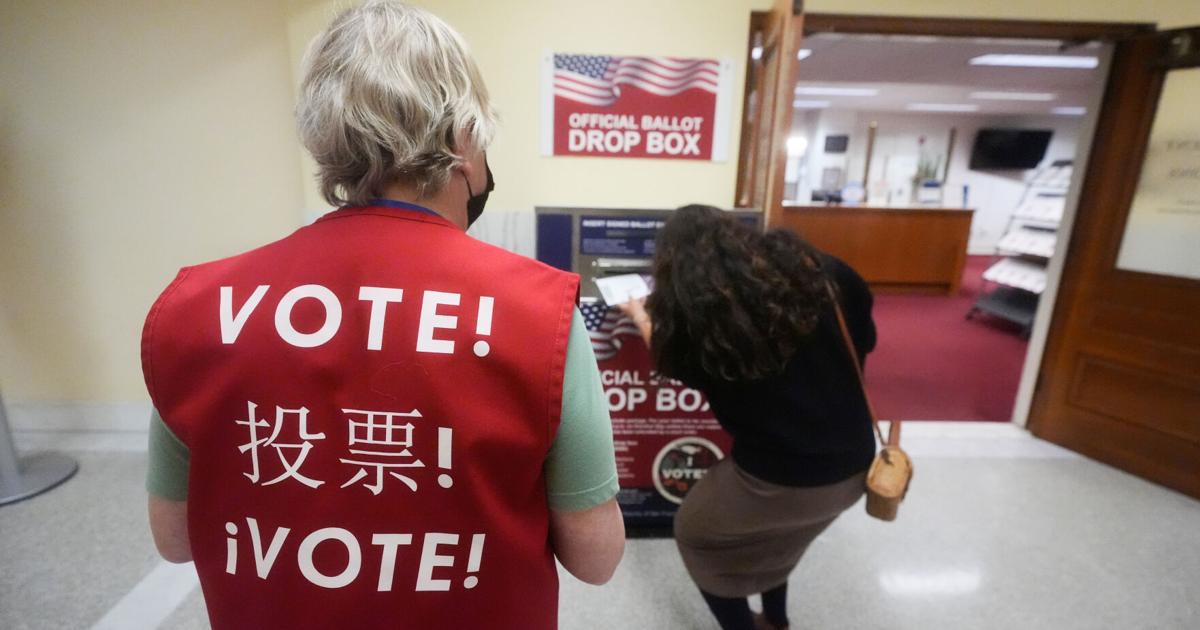
The coming year in San Francisco politics will be a full one — a June primary election followed by a November general election, multiple controversial potential ballot measures in the works, and seats on the Board of Supervisors, in the state Assembly and in Congress at stake, among others.
First up, there could be hot battles over potential ballot measures in June, including some with big implications for The City budget that would raise or lower business taxes. Another could reopen a portion of Great Highway, which voters in 2024 decided should be closed to make way for a park.
The union-backed Stand Up for SF coalition has been collecting signatures for a measure intended to raise about $200 million per year for government services by raising The City’s Overpaid Executive Tax. That levy is currently imposed on companies at which the highest-paid managerial employee, within or outside of The City, earns more than 100 times the median compensation of employees based in San Francisco. The measure would also require consideration of employee wages outside The City.
The coalition says the measure is needed to counteract federal budget cuts that threaten public services in The City. Its leaders say the tax increase would only apply to companies with more than $1 billion in revenue and more than 1,000 employees.
The San Francisco Chamber of Commerce and Advance SF, another business group, allege that the unions are reneging on a 2024 agreement that led to a voter-approved business-tax reform initiative that lowered the Overpaid Executive Tax, among other things. They have filed paperwork for two possible tax-cut measures, one of which could be chosen to counteract the union-backed measure.
By the end of the month, business interests had committed nearly $1 million for their effort.
The campaigns for any dueling tax measures might unfold as The City grapples with a nearly $1 billion, two-year budget deficit, for which Mayor Daniel Lurie has asked city departments to make $400 million in ongoing general fund spending cuts.
Voters could also face a ballot measure put forward by Supervisor Bilal Mahmood calling for a City Charter amendment to limit the mayor and city supervisors to a lifetime total of two four-year terms. Elected officials can currently serve two terms, then return to office after taking a four-year break.
Mahmood has said he wants to give younger people more opportunity to get elected. He had the needed support from five colleagues to advance his proposal.
Separately, newly appointed District 4 Supervisor Alan Wong has said he would support and sponsor a ballot measure asking voters whether to reopen Great Highway to vehicles.


A runner with his dog on Great Highway at Noriega Street in San Francisco on Tuesday, May 13, 2025.
Craig Lee/The Examiner
Voters citywide in November 2024 approved Proposition K to close a section of the roadway beside Ocean Beach to make way for a park. Overall, the measure got 54.7% of votes in favor, but 63.7% of votes in Wong’s district were cast in opposition.
Mayor Lurie on Dec. 1 named Wong to represent The City’s Sunset and Parkside neighborhoods west of 19th Avenue. Wong took the seat previously occupied by former Supervisor Joel Engardio, who was recalled in September largely due to his sponsorship of Prop. K.
Wong made the announcement about supporting another Great Highway ballot measure when he filed papers to run in June’s election to fill out the term of his predecessor. If Wong wins, he must then stand for election in November to win a full term.
Wong was previously a policy director at a children’s-services organization, an elected City College trustee and a legislative aide to former District 4 Supervisor Gordon Mar. He has also been a servicemember in the U.S. Army National Guard.
Already in the race was Natalie Gee, the longtime chief of staff and former campaign manager for District 10 Supervisor Shamann Walton. Gee’s name was one of those that the Mayor’s Office circulated publicly as being under consideration for the appointment Wong received, but her selection was widely assumed to be unlikely.
Gee said repeatedly that she did not support the mayor’s Family Zoning Plan and would work to amend it, while Wong voted for it, saying he would seek amendments as needed.
Gee was previously the communications director for the San Francisco Democratic Party Central Committee, an organizer for nonprofit organizations and a city youth commissioner, among other roles. She is also an International Federation of Professional and Technical Engineers Local 21 member, as well as a delegate to the Asian Pacific American Labor Alliance and the San Francisco Labor Council.
Albert Chow, the owner of Great Wall Hardware in the Parkside neighborhood and an Engardio recall campaign organizer, has also declared his candidacy. Chow was also one of the people the Mayor’s Office publicly identified as being under consideration for appointment before Wong was chosen.
Great Wall Hardware owner Albert Chow speaks in support of recalling Supervisor Joel Engardio at San Francisco City Hall on Thursday, May 22, 2025.
Craig Lee/The Examiner
Another District 4 candidate is David Lee, who has taught political science at San Francisco State University and at other public institutions for many years. He previously ran for supervisor in District 1 in 2012, 2016 and 2020, and in the primary and general elections for state Assembly in District 19 in 2024.
Until recently, Lee was the director of the Asian American and Native American Pacific Islander Serving Institution Initiative/Asian Pacific American Student Success Program at Laney College. He is the volunteer executive director of the nonprofit Chinese American Voters Education Committee. Among volunteer positions, Lee served on the San Francisco Recreation and Parks Commission and the boards of San Francisco Planning and Urban Research, KQED and the League of Women Voters of San Francisco.
Like Wong, District 2 Supervisor Stephen Sherrill is running in June to finish his predecessor’s term. Sherrill was appointed by former Mayor London Breed in December 2024 to take the place of Catherine Stefani, who was elected in November 2024 to the state Assembly.
Since April 2024, Sherrill had been the director of the Mayor’s Office of Innovation, which he joined in October 2022 as a product manager. Sherrill previously held several private-sector jobs and was also a policy advisor in the administration of New York City Mayor Michael Bloomberg.
The fortunes of The City’s business core were a study in contrasts — growing vibrancy and investment beside evidence of continuing economic malaise

An NFL championship game, a global soccer tournament and a pro women’s baseball team are on The City’s horizon
In Mayor Daniel Lurie’s first year, The City adopted new strategies to address its two most persistent failures — with mixed results
The incumbent is facing several other candidates, including Lori Brooke, a veteran neighborhood activist who announced her campaign in October. She has been an outspoken critic of state intrusion into local planning matters and of Mayor Lurie’s recently approved Family Zoning plan, which aims to promote denser residential development to meet state mandates — largely in northern and western neighborhoods. Sherrill voted for Lurie’s plan.
Brooke is the co-founder of a coalition of neighborhood groups called Neighborhoods United SF centered on planning issues, as well as an organization called RescueSF focused on responses to homelessness. She is also president of the Cow Hollow Association.
Once the June battles are settled, the race to November will be on, with three additional supervisorial seats up for grabs — in Districts 6, 8 and 10 — in addition to Districts 2 and 4. There will also likely be two more ballot measures aiming to raise taxes to fund public transit.
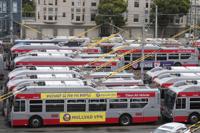
Mayor Daniel Lurie has said getting a parcel-tax measure passed to fund Muni is a top priority. The SFMTA has recommended a plan that would raise about $187 million per year.
Jeff Chiu/Associated Press
Mayor Lurie has said that one of his top priorities is getting a parcel-tax measure passed to fund Muni. The San Francisco Municipal Transportation Agency has recommended a plan that would raise about $187 million per year, with amounts rising for larger properties.
In addition, a regional sales-tax measure to fund financially strapped public-transit systems in five Bay Area counties is expected to be on the ballot. The measure, authorized by California Senate Bill 63, which was co-authored by state Sen. Scott Wiener, would allow an additional sales tax of 1% in San Francisco and 0.5% in other counties.
For the District 6 seat on the Board of Supervisors — which includes part of downtown, SoMa, Mission Bay and Treasure Island — nobody has filed to run against incumbent Supervisor Matt Dorsey, who has said he is planning to seek reelection.
By contrast, the race for District 8, which includes the Castro, Glen Park, Noe Valley, Diamond Heights, Mission Dolores and Cole Valley — an area currently represented by termed-out Board of Supervisors President Rafael Mandelman — is already spirited.
Manny Yekutiel, the owner of Manny’s, a civic events space and cafe-restaurant in the Mission that hosts a regular stream of events, declared his candidacy in September and soon announced that he had raised $123,000.
Yekutiel was a co-founder with Mayor Lurie of the Civic Joy Fund, a nonprofit launched in 2023 that funds and organizes arts and community events in The City. Yekutiel, who is gay, previously served on the SFMTA’s board of directors, was Northern California deputy finance director for Hillary Clinton’s 2016 presidential campaign, and was chief of staff at fwd.us, a nonprofit backed by tech heavyweights focused on immigration reform.
Challenging Yekutiel is Gary McCoy, a longtime aide to U.S. Rep. Nancy Pelosi. He highlights that he is in recovery from addiction and has lived with HIV for more than 20 years. He is also gay and has a history of promoting a harm-reduction response to the opioid-addiction crisis in San Francisco.
McCoy was previously the vice president of policy and public affairs at HealthRight 360, a provider of mental-health and substance-abuse treatment; a policy and community-affairs manager with the San Francisco Recreation and Parks Department; and a legislative aide to two supervisors and chief of staff to a third. He was also a gubernatorial appointee to the Homeless Coordinating and Financing Council.
Also running is Michael Nguyen, an intellectual property attorney, drag performer and LGBTQ advocate who was elected in March 2024 to the San Francisco Democratic Party Central Committee.
In District 10, incumbent Supervisor Walton will be termed out and not on the ballot.
Candidate Theo Ellington is a policy director for a law and policy firm and the founder of the “social impact” group Black Citizen. He is also executive director of the historic Ruth Williams Bayview Opera House, a cultural center for the Bayview-Hunters Point area.
Ellington was previously an executive at a public-affairs and communications firm, a director of homelessness initiatives and community development for The Salvation Army San Francisco, and public-affairs director for the Golden State Warriors. He has been on three city commissions, including the Community Investment and Infrastructure Commission.
Other contenders include J.R. Eppler, an attorney who until recently was a commissioner on The City’s Board of Appeals. Eppler is the president of the Potrero Boosters Neighborhood Association and volunteers with several other local groups.
San Francisco Assessor-Recorder Joaquín Torres and Public Defender Mano Raju will both be running for reelection.
For state offices — which require primary and general elections— District 17 Assemblymember Matt Haney and District 19 Assemblymember Stefani are both running for reelection in the June primary. The candidate filing period will begin Feb. 9 and run through March 6.
Finally, several prominent candidates are on the June primary ballot contending to succeed U.S. Rep. Nancy Pelosi in the House of Representatives district 11 seat, which covers most of San Francisco. The top two finishers will advance to the general election in November. Pelosi recently announced that she would not seek reelection.
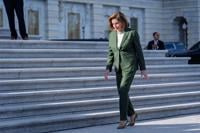
Several prominent candidates are on the June primary ballot contending to succeed U.S. Rep. Nancy Pelosi in the House of Representatives seat that represents The City.
J. Scott Applewhite/Associated Press
Among those running is District 1 Supervisor Connie Chan, who was elected in 2020 by 125 votes and in 2024 by 1,301 votes to represent San Francisco’s Richmond and surrounding areas on the Board of Supervisors. A Hong Kong native, Chan would be the first Asian American to represent San Francisco in Congress. She has been a progressive standard-bearer on a board that shifted decisively with the 2024 election of more-moderate candidates.
Also running is Saikat Chakrabarti, a wealthy tech-industry veteran who is a former top campaign official and chief of staff for U.S. Rep. Alexandria Ocasio-Cortez of New York. Chakrabarti was an early engineer at the financial-technology company Stripe, in which he held a more than $50 million stake last August, according to a federal disclosure form. He also joined Vermont U.S. Sen. Bernie Sanders’ 2016 presidential campaign and co-founded New Consensus, a progressive think tank.
In another corner is state Sen. Scott Wiener, a prolific legislator with more than 100 state laws to his name. Wiener is a former supervisor in District 8, where he lives, and a former deputy city attorney. Among other things, Wiener is known for controversial legislation that pushed San Francisco and other cities to plan for and approve more housing. He has also championed LGBTQ rights.
In addition, there will be primary and general elections for the 15th congressional district, which stretches from a southern portion of San Francisco through Daly City and along the eastern Peninsula to Palo Alto. Rep. Kevin Mullin, a Democrat, is running for reelection and has three challengers, according to federal election records.