
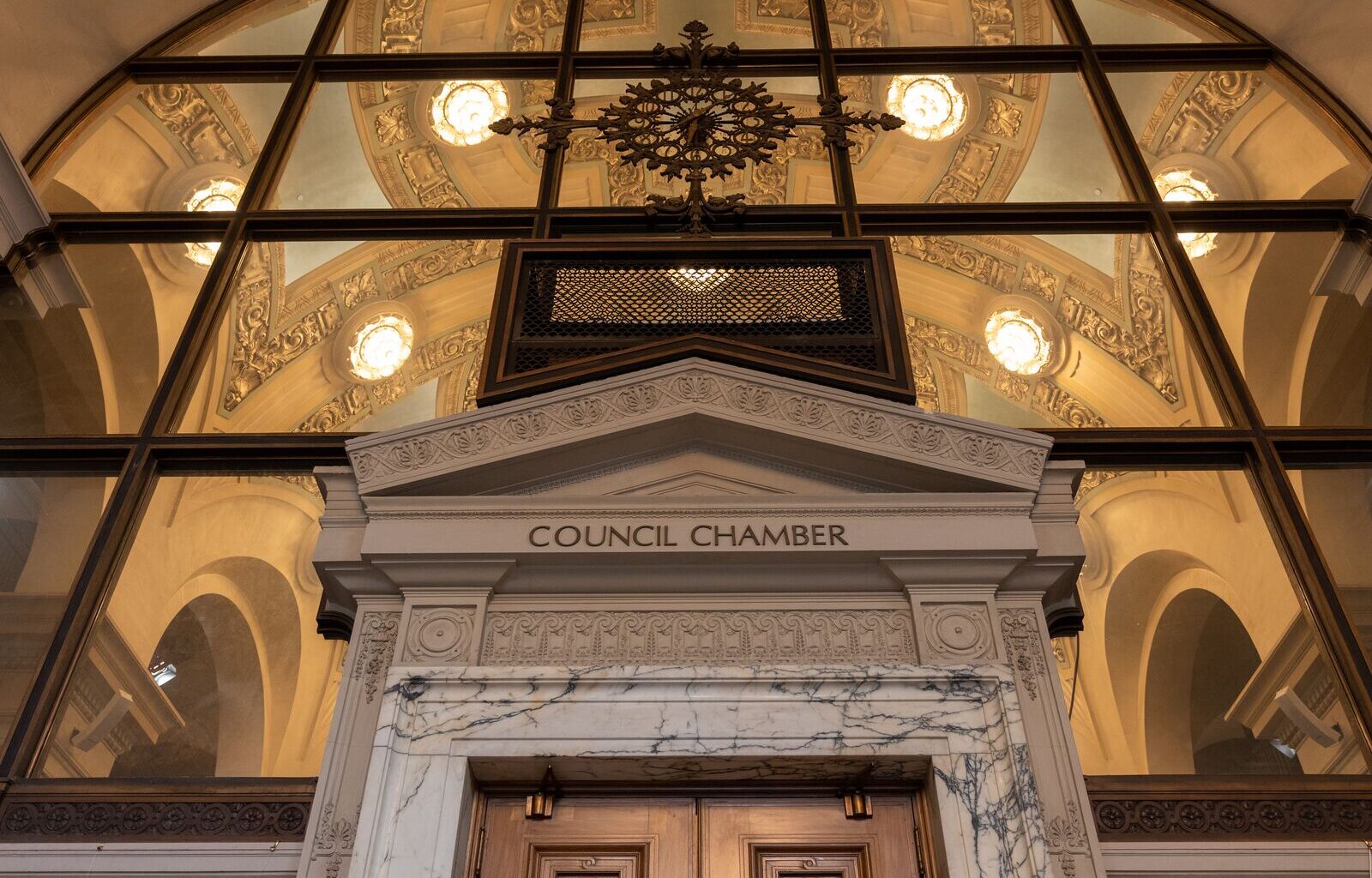
If you want to weigh in on major legislation in Oakland at public meetings in the future, be prepared to arrive at City Hall early.
Last month, the City Council approved changes that affect how the public can participate in meetings. Under the old rules, the councilmembers had to wait until 5 p.m. before they could discuss legislation that wasn’t on the consent calendar — a long list of resolutions and other legislation that the council usually approves with minimal to no discussion at the beginning of their meetings.
Now, public hearings about important policies and laws can happen shortly after council meetings start, around 3:30 p.m.
This is one of several changes to the council’s rules of procedure that Councilmembers Janani Ramachandran and Kevin Jenkins say will streamline city meetings.
Councilmembers Ramachandran, Jenkins, Ken Houston, Zac Unger, and Rowena Brown voted for the reform.
Some councilmembers argued that the change in times for public hearings will ensure lawmakers are fresh and alert when discussing contracts, ordinances, and other significant legislation.
“I am not at my best at midnight,” said Unger at a previous meeting regarding these proposed changes.
It’s not unusual for council meetings to run late into the evening. For example, the Dec. 16 meeting where the timing change was approved ran until about 9:30 p.m. At one recent meeting, a councilmember appeared to fall asleep while residents were sharing comments about a controversial plan to pay for scores of surveillance cameras.
Some members of the public say the change isn’t a good idea. During last month’s council meeting, residents who spoke about the legislation urged the council to vote against it, with most raising concerns that it will make it harder for people to participate in major decisions.
“We see this as a way to limit participation, particularly by working people who cannot come to meetings in the middle of the afternoon,” said Jeffrey Levin, a senior director of policy for East Bay Housing Organizations.
Councilmember Carroll Fife argued that people with 9-5 jobs won’t be able to address important legislation.
At the Dec. 16 council meeting, Fife was also upset with her colleagues for bringing legislation to the full City Council for a vote even though the proposals previously failed to garner support.
“I am not exactly sure why we are here today after this item failed so spectacularly,” Fife said at the meeting.
As was first reported by the Oakland Observer, Ramachandran tried several times to persuade the council to approve rule changes during a Nov. 4 meeting, but each time the vote failed to secure a majority. The council deadlocked on their final vote, which required Mayor Barbara Lee to break the tie. Lee declined to do so at a Dec. 2 meeting.
Instead of letting the legislation die, Jenkins called for the council to temporarily suspend its rules of procedure on breaking ties to address the legislation that same day. Jenkins’ attempts to resurrect the resolution at the Dec. 2 meeting failed, but the council agreed to bring the item back for discussion at the final meeting of the year.
At the Dec. 16 meeting, Jenkins said he’s had working-class jobs his entire career, citing his experience as a bus driver, UPS package handler, and school teacher. All of these jobs had him working hours that would have prevented him from attending City Council meetings.
“This argument that there is some magical time that working-class people can get here is a challenge to me — there is no magical time someone can get here,” Jenkins said. He added that the council wants as much public participation as possible and that people can do so by sending their representatives emails, leaving comments on the legislative website, and attending through Zoom.
Gallo, the council’s longest-serving member, joined Fife in criticizing the reforms.
“We’ve been at this for many years, have developed policies and procedures, not from people that just got here and want to be creative,” Gallo said.
“*” indicates required fields