
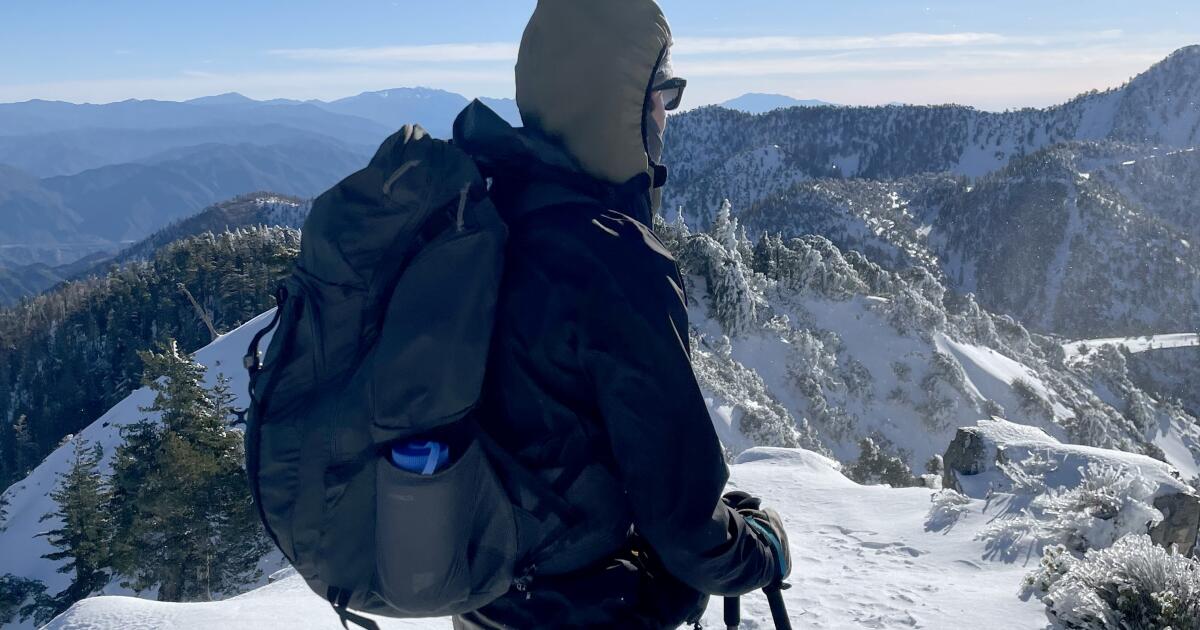
Beneath bluebird skies, two hikers made their way up Mt. Baldy last week.
Marcus Muench Casanova paused at 8,000 feet to take in the stunning views. “It’s beautiful,” the thrilled 19-year-old said in a video later found stored in his cellphone. He panned the camera over stands of pine trees framing frosted slopes, like a scene from a snow globe.
The climb grew steeper, the trail rising nearly vertically in front of him. “Forty-miles-an-hour wind,” he said in another video, his voice louder so it could be heard over the wind. “I just got hit by an icicle in the face.”
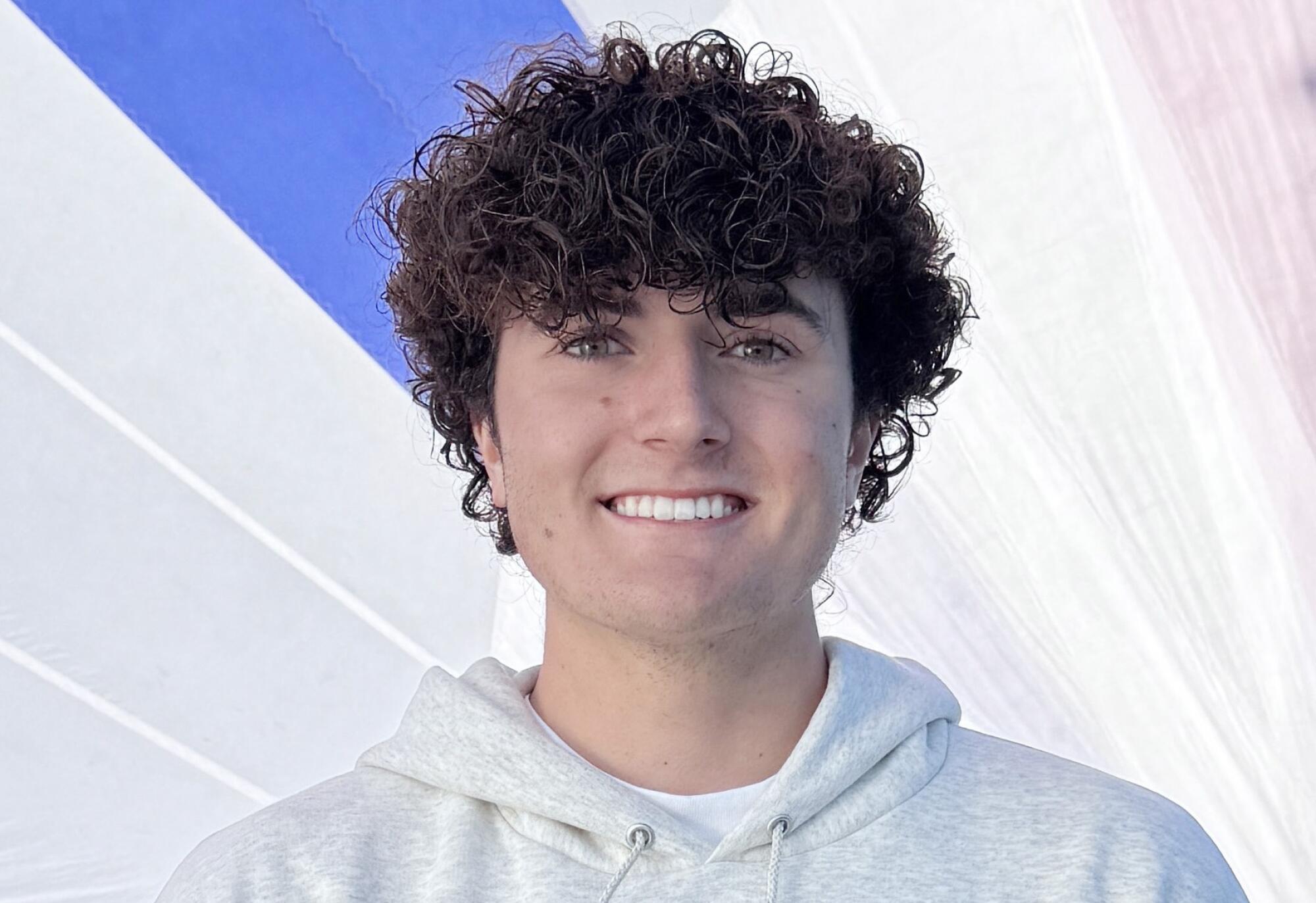
Marcus Muench Casanova.
(Ken Muench)
A short time later, Casanova slipped and fell some 500 feet, becoming the latest fatality of a mountain whose beauty and familiarity as the backdrop to the Los Angeles skyline belie its record as one of the nation’s deadliest. A helicopter searching for Casanova happened to spot two other bodies, later identified as Juan Sarat Lopez, 37, and Bayron Pedro Ramos Garcia, 36, both of Los Angeles. Investigators believe that, like Marcus, both hikers fell and died Dec. 29.
On Dec. 29 and 30, crews also rescued at least three other hikers who became stranded on the mountain and survived, San Bernardino County sheriff’s officials said. That resulted in some confusion: Authorities at one point told Casanova’s parents that their son was seen waving at a search helicopter, but they later learned the aircraft had spotted a different hiker who was eventually rescued from a different trail, said his father, Ken Muench.
Casanova’s death, along with the discovery of two other fallen hikers, has drawn attention to Mt. Baldy’s double-sided nature, particularly the exposed-ridgeline path known as the Devil’s Backbone Trail, where the men perished last week. Although the trail is considered a moderate challenge to hike in warmer weather, the winter transforms it into a perilous technical route that requires training and gear to complete safely, experienced hikers say.
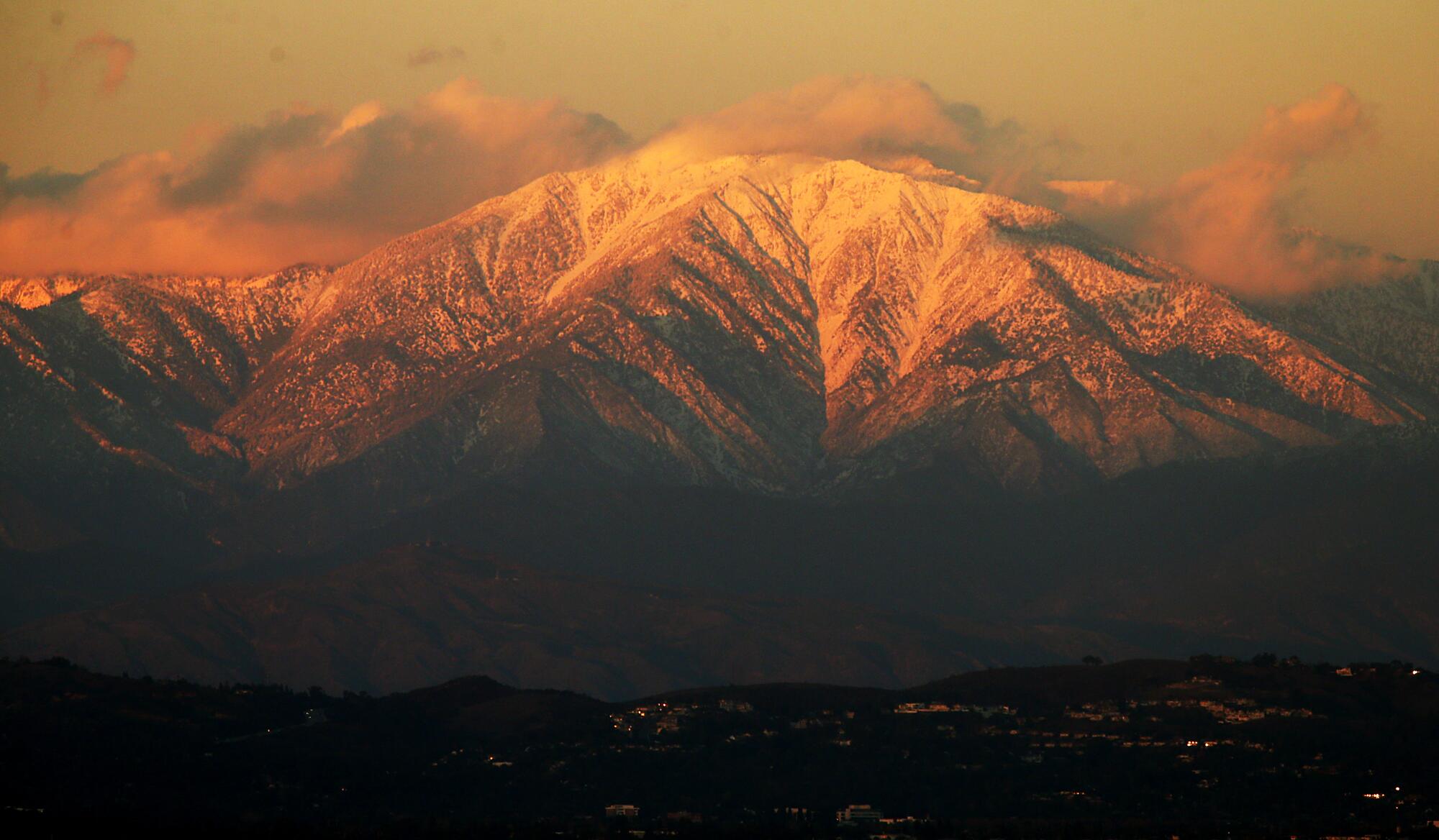
The setting sun casts a golden glow on the snow-covered peaks of Mt. Baldy in January 2023.
(Luis Sinco/Los Angeles Times)
Casanova and his best friend, who accompanied him on the hike, had researched the trail, his father said. But conditions changed rapidly in the days before they set off, with a series of powerful atmospheric river storms dumping snow and rain that hardened into slippery ice. They’d tried to get more recent information by calling the local ranger station but were unable to get through, he said.
As a result, Casanova thought that microspikes and hiking poles were sufficient to make the climb and he did not have proper winter gear such as an ice ax or crampons, said his father, who shared the details in the hopes of saving other kids’ lives.
“They went up thinking that it was a hike — a challenging hike, a dangerous hike, yes,” Muench said. “But they did not realize it was actually mountaineering, and the difference between hiking and mountaineering is a difference between black and white, a difference between life and death.”
Still, Casanova’s legacy is much more than a cautionary tale, his parents said. They described him as an old soul who loved adventure — especially ones involving water — and possessed bottomless reserves of empathy and kindness.
His mother remembered that he would write thank-you notes for his teachers, unprompted, at the end of each quarter. His father said he once chided him for yelling back at a road-raging driver, saying that people who lash out are usually hurting. Neither parent can recall Casanova ever raising his voice at them.
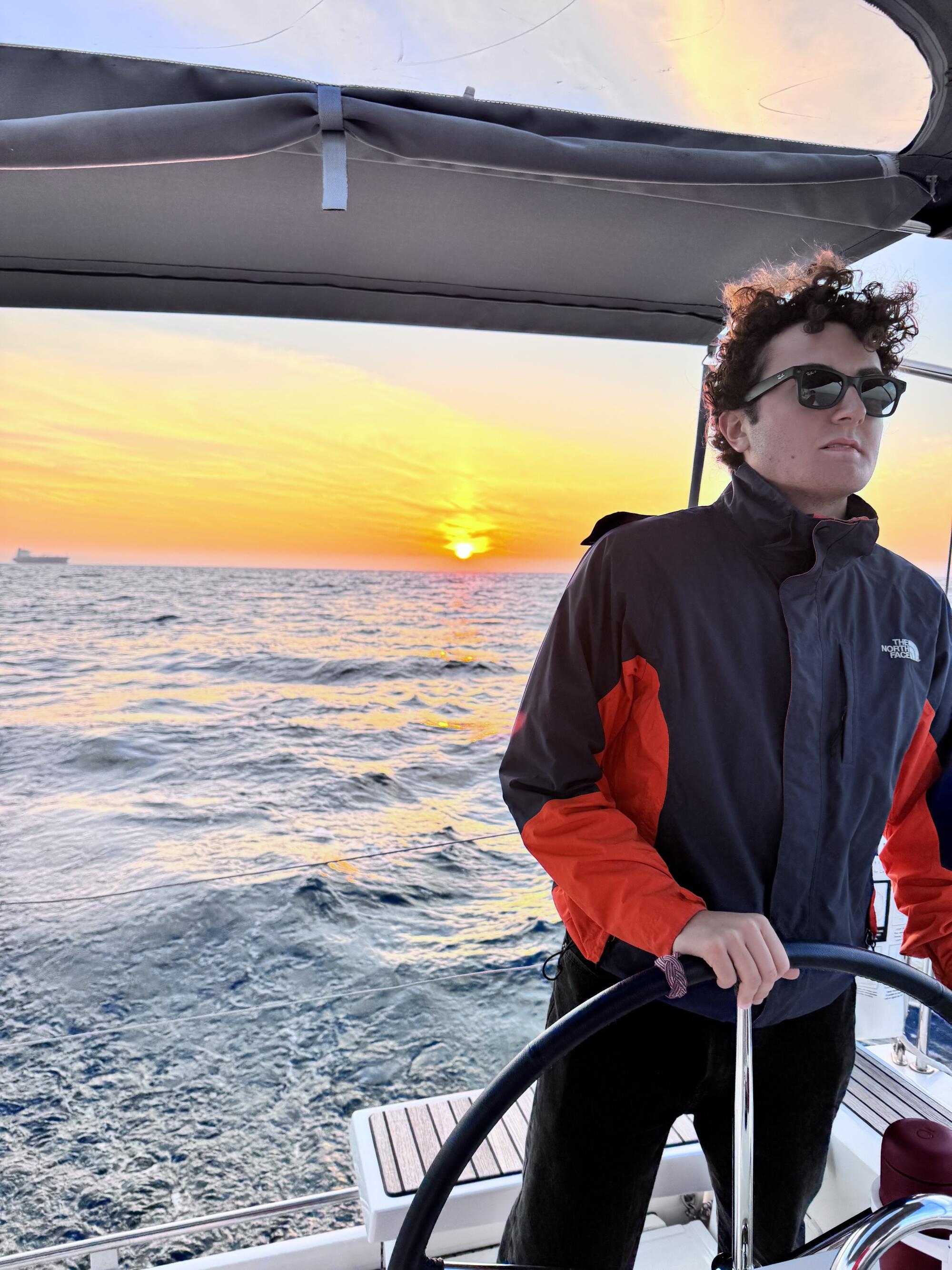
Marcus Muench Casanova steers his family’s boat off Long Beach on Dec. 21.
(Courtesy of Ken Muench)
A freshman at the Santa Clara University Leavey School of Business, Casanova had only one complaint about his first 10 weeks of college: that he was unable to go fishing as often as he would have liked, said his mother, Fabiana Muench Casanova. In high school, he and two friends bought a small, leaky boat they dubbed the Sea Donkey. They’d take it out to Point Fermin to catch sand bass, at times bailing water out of the vessel to stay afloat, she said.
“He seemed to have a grasp on life that other people don’t have,” Fabiana said.
But despite his passion for thrills, Marcus was always mindful of safety, his father said. When the two sailed together, his son would sometimes talk him into putting up a smaller sail to minimize risk and once insisted on turning back during a race from Newport to Ensenada amid high waves and strong winds, he said.
“He was very cautious and sort of measured,” Ken said, “and that’s why this thing is so difficult.”
Marcus should have turned around on Dec. 29, Ken said twice. But conditions were deceptive. It was sunny and clear, with views of Catalina from the mountaintop. There was no indication of the danger that lurked ahead on the slopes.
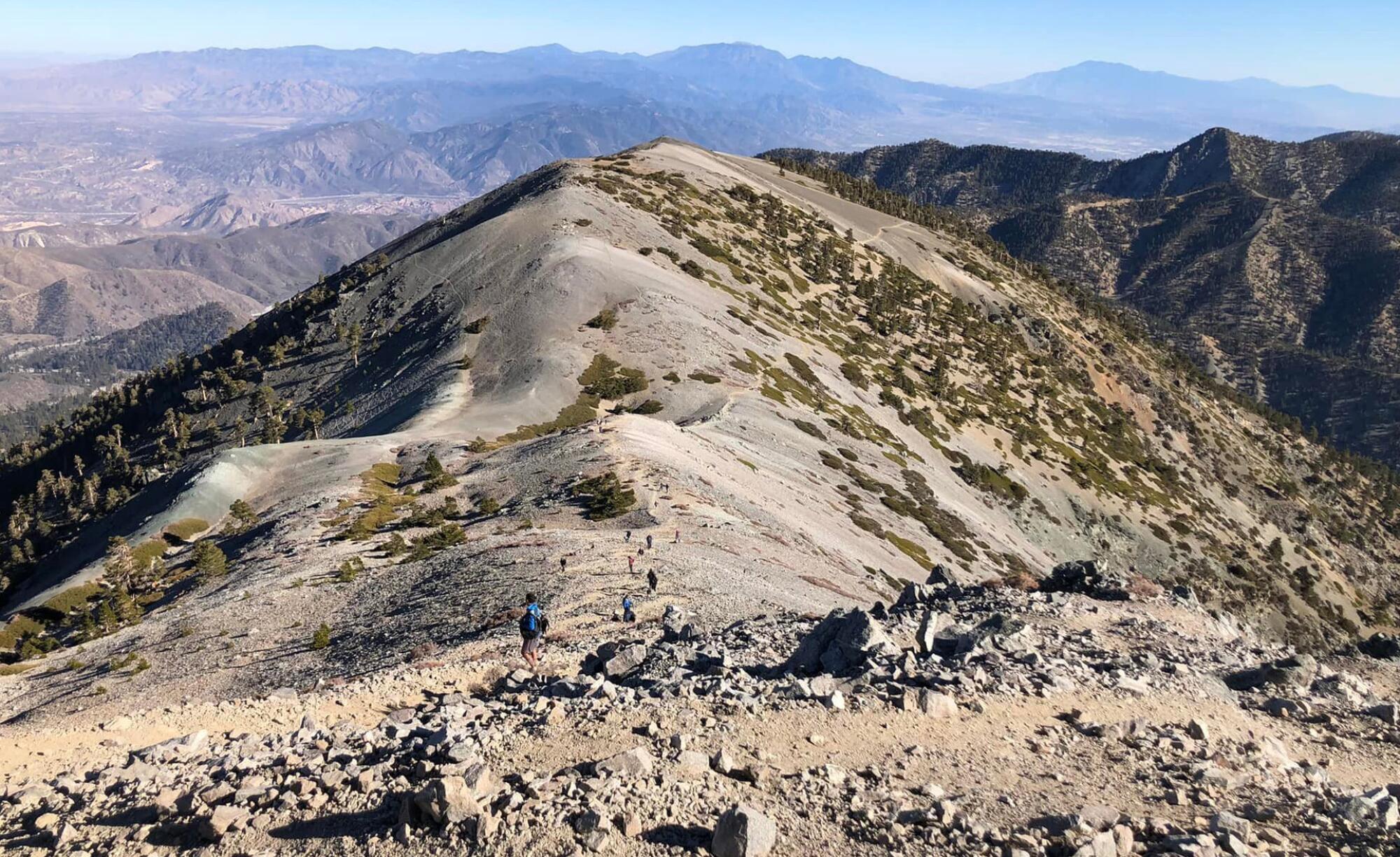
Hikers head up the Devil’s Backbone Trail in June. A moderate challenge to hike in warmer weather, the trail becomes a perilous technical route in winter, requiring training and the right gear to complete, experienced hikers say.
(Jaclyn Cosgrove / Los Angeles Times)
Marcus and his friend had made it through the portions of the Devil’s Backbone that appeared most challenging, including a ridge with a steep drop on either side, his father said. His son was reveling in the adventure — a photo his friend took as they resumed hiking after lunch shows him standing atop an overlook, gazing off at the horizon.
The two reached the south-facing slope of Mt. Harwood, one of the final mountains that hikers pass before the climb to the summit, Ken said. The section of trail didn’t look risky. It was smooth and flat, dotted with the footprints of other hikers who’d come before them, and the drop-off wasn’t particularly steep, he said. But it was slick with ice.
Marcus’ friend heard him call out and turned to find that Marcus had slipped, Ken said. At his friend’s urging, Marcus tried to use a hiking pole to stop himself, but it was too late, said his father, who estimates his son was by then sliding down the mountain at 30 mph. He hit a rock and fell out of sight.
Marcus’ friend, a firefighter trained in search and rescue, was eventually able to get a cellphone signal and call 911 as he raced down the mountain, Ken said. Marcus’ parents provided authorities with GPS coordinates from their son’s satellite communicator. A medic was lowered down that evening and found that he had died. High winds prevented rescuers from recovering his body, or those of the other two hikers, until the next day.
All three men appeared to have slipped in the same place and fallen down the same ice chute, Ken said.
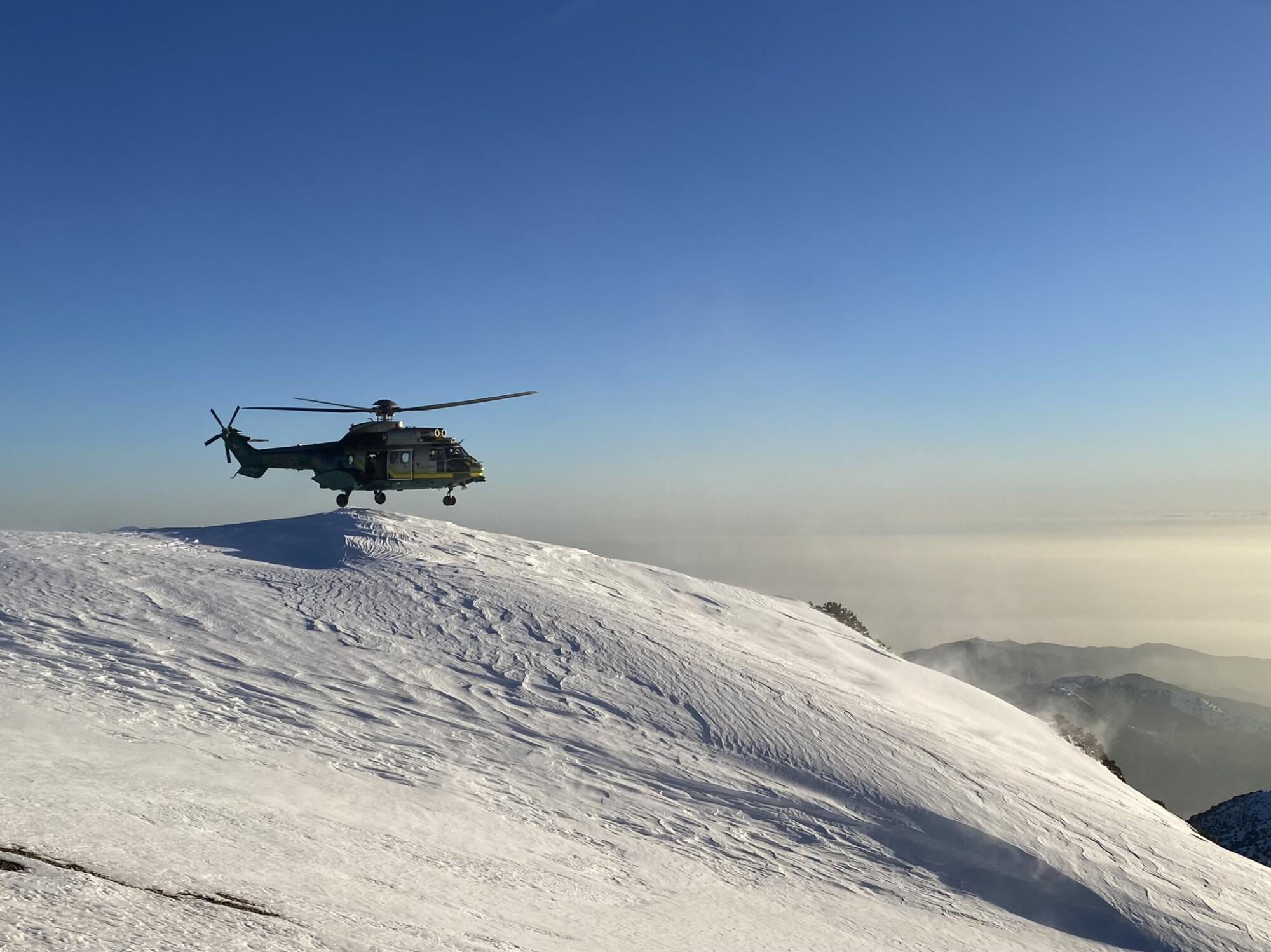
An L.A. county sheriff’s team takes part in a rescue in February 2024, when six hikers were airlifted off Mt. Baldy.
(L.A. County Sheriff SEB)
The deaths prompted elected officials to renew calls for the U.S. Forest Service to close trails leading to Mt. Baldy’s summit when conditions are dangerous, and to require permits like those needed to climb other popular peaks, such as Mt. Whitney. The Forest Service, which temporarily shut down the mountain after the hikers died, said that it already issues proactive closures when conditions warrant, and that it is looking into a range of other approaches that could help improve visitor safety.
Marcus’ parents said that one simple intervention could make an outsize difference: a sign at the beginning of the hike clearly stating that, during certain times of year, the trail can be hiked with microspikes and poles but that, in wintertime conditions, it often requires an ice ax, helmet, crampons and mountaineering training.
In addition to his parents, who live in Seal Beach, Marcus is survived by his brother, Nico, a marketing student at San Diego State who is a year and a half older.
Since his death, Ken, chief marketing officer at Yum! Brands, and Fabiana, a teacher for the Anaheim Union High School District, have been touched to learn about small gestures that revealed their son’s big heart: the succulent he bought for the attendance clerk at his high school, an apology for missing class so often to attend rowing competitions. The texts he’d regularly send his grandmother from college, just to check in.
Ken recalled that once, when he was working on his boat, he heard an older man scold Marcus for fishing from the dock. His son returned over an hour later, late for dinner. When Ken asked him why, he said he’d sat down with the man to look at photo albums and talk about his childhood. He’d promised to come back on his graduation day so the man, a retired shop teacher, could give him a gift. Sure enough, Marcus visited the dock in his cap and gown to receive a handmade wooden flower and a pair of sunglasses, his father said. “He could build a relationship with anybody,” Fabiana said.
As a part-time instructor at Long Beach’s Leeway Sailing and Aquatics Center, Marcus delighted in sharing his love of nature with children, his parents said. They plan on founding a nonprofit to provide scholarships for kids to experience the outdoors, which they’re supporting with an online fundraising effort.
They’ve tentatively named it the Marquitos Adventure Club.