
Unlike their colleagues in Florida, California’s congressional Republicans aren’t lining up with their Democratic colleagues to fight against the Trump administration’s offshore drilling proposal.
The Golden State’s 26 House Democrats and two senators are united in their opposition to the Interior Department’s draft plan, writing in a December letter that allowing oil and natural gas drilling in all of California’s coastal waters by 2030 “would be devastating to the communities we represent.”
And Florida’s entire congressional delegation is standing up against President Donald Trump’s plan to let rigs drill in the eastern Gulf of Mexico, writing in their own bipartisan letter: “The risks posed by new offshore drilling far outweigh any short-term gains.”
But so far, GOP lawmakers in California haven’t taken a similar stance. And while some of the lawmakers told POLITICO’s E&E News that they have concerns over the plan, others were neutral or supportive.
“I strongly support it,” said Rep. Tom McClintock, who represented a coastal area when he was in the state Legislature. His current inland district stretches from the Sacramento suburbs through Yosemite National Park and Kings Canyon National Park.
“Oil production is a very important part of the economy,” he said, adding that fishermen have told him fishing is better near oil rigs.
Democratic California Rep. Jared Huffman, who has taken a leading role in opposition to the drilling plan as ranking member of the Natural Resources Committee, said geography may help explain the Republican position. After former GOP Rep. Michelle Steel’s 2024 election loss, no California Republican represents a coastal area.
“I would love to have their help. We would love to have them on board,” Huffman said of his GOP colleagues.
“Certainly in places like Florida and Virginia and others on the Atlantic coast, you see that. You see Republicans who are willing to stand up for the interests of their states and their districts. Our California Republicans are a little different these days. They tend to follow Donald Trump wherever he wants to take them,” Huffman continued, calling Congress a “MAGA echo chamber.”
“It shows how out of touch they are,” he said.
The offshore drilling fight comes at a fraught time for California’s congressional delegation, which includes 53 House members. Voters in the state last year approved Democratic Gov. Gavin Newsom’s plan to redistrict ahead of the midterm elections to make five more safely Democratic seats, in response to Texas’ redistricting effort to give the GOP more seats.
Most of the eight GOP members of the California delegation won’t return next year. Only four seats in the new map are considered safe for GOP candidates. The ninth GOP member of the Republican delegation, Rep. Doug LaMalfa, died suddenly on Tuesday.
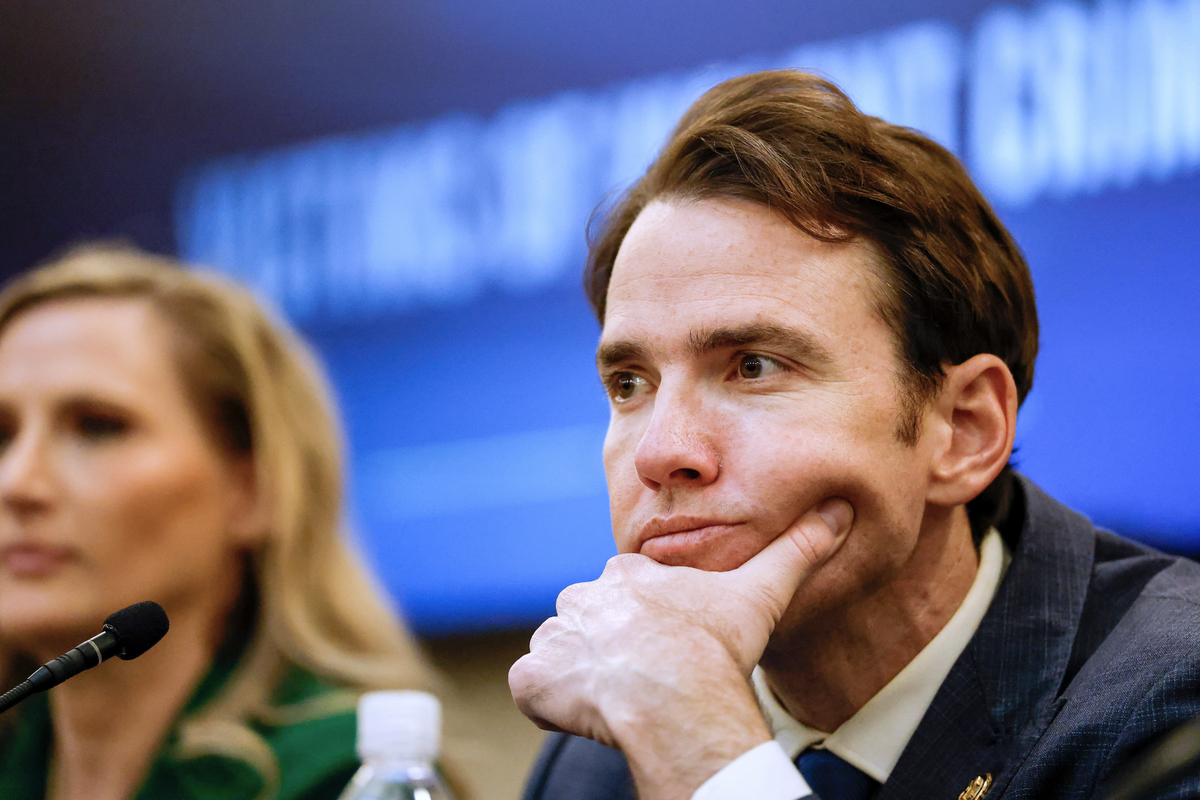
Republican Rep. Kevin Kiley, who has shown he’s not afraid to criticize his party, said he had “some concerns” with the offshore drilling proposal and planned to convey them to the Trump administration.
“Obviously, we need new sources of energy. And we need to reduce the price of gas and electricity in California. But we also need to protect our coastal communities and the beauty that makes California the place that it is,” he said.
Kiley called on the Interior Department to consider the opinions of “not just the people who live there, but also who visit and want to make sure that the values that make our state the unique place that it is are not unduly affected.”
But Kiley isn’t rushing to join Democrats in their efforts: “I haven’t decided what the best path there is.”
 This May 16, 2015, file photo shows a service boat carrying workers back to shore from a platform off Seal Beach, California. | John Antczak/AP
California was historically a major center for the oil industry, and it has a number of operating wells offshore, but hasn’t had new drilling since the 1980s.
The Golden State also has a strong history of opposing fossil fuels, stretching back to the 1969 oil spill off of Santa Barbara’s coast.
And these days, only 34 percent of California voters want more offshore drilling, compared with 65 percent in opposition, according to a poll conducted last year by the Public Policy Institute of California. But the issue is highly partisan, with 68 percent of Republicans backing more drilling.
“This has been a finding that we’ve seen over time, and it’s related to general differences that we see in attitudes that are related to climate change and environmental issues in general,” said Mark Baldassare, the institute’s survey director.
Baldassare also noted geographical differences in the state’s congressional delegation. “You don’t have coastal Republicans, and the inland Republicans are busy trying to figure out what they need to do to hold onto their seats,” he said.
Kiley showed the most concern over drilling among Republicans, but others had reservations as well.
“I haven’t really looked at it. I don’t think that’s going to happen though,” said Rep. Ken Calvert, the most senior member of the California GOP delegation.
Because of the recent redistricting, Calvert and Rep. Young Kim are competing for the same seat; Kim did not respond to requests for comment.
Rep. Darrell Issa said he wants to make sure any drilling protects the environment, but he was open to the idea broadly, noting California’s large population and economy uses a significant amount of energy.
“Am I concerned that that we need to make sure that it is done at the highest safety levels, and that there’s real respect for the environment? Absolutely. But an outright moratorium, while continuing to import other people’s oil, certainly seems to be two-faced,” he said.
Issa said Interior’s potential leasing plan is “of little value,” and he would be more interested in scrutinizing any specific plans by companies to drill before making judgments.
This story also appears in Energywire.