Love what you read? Love that it was free?

Three people do acrobatics and hula hoop in a park with city buildings and palm trees in the background. A cartoon computer screen stands with them, displaying "missionlocal.org.

Mission Local will never have a paywall. All our articles are free for everyone, always. Help us keep it that way — donate to our end-of-year fundraiser to make Mission Local free for your neighbors.

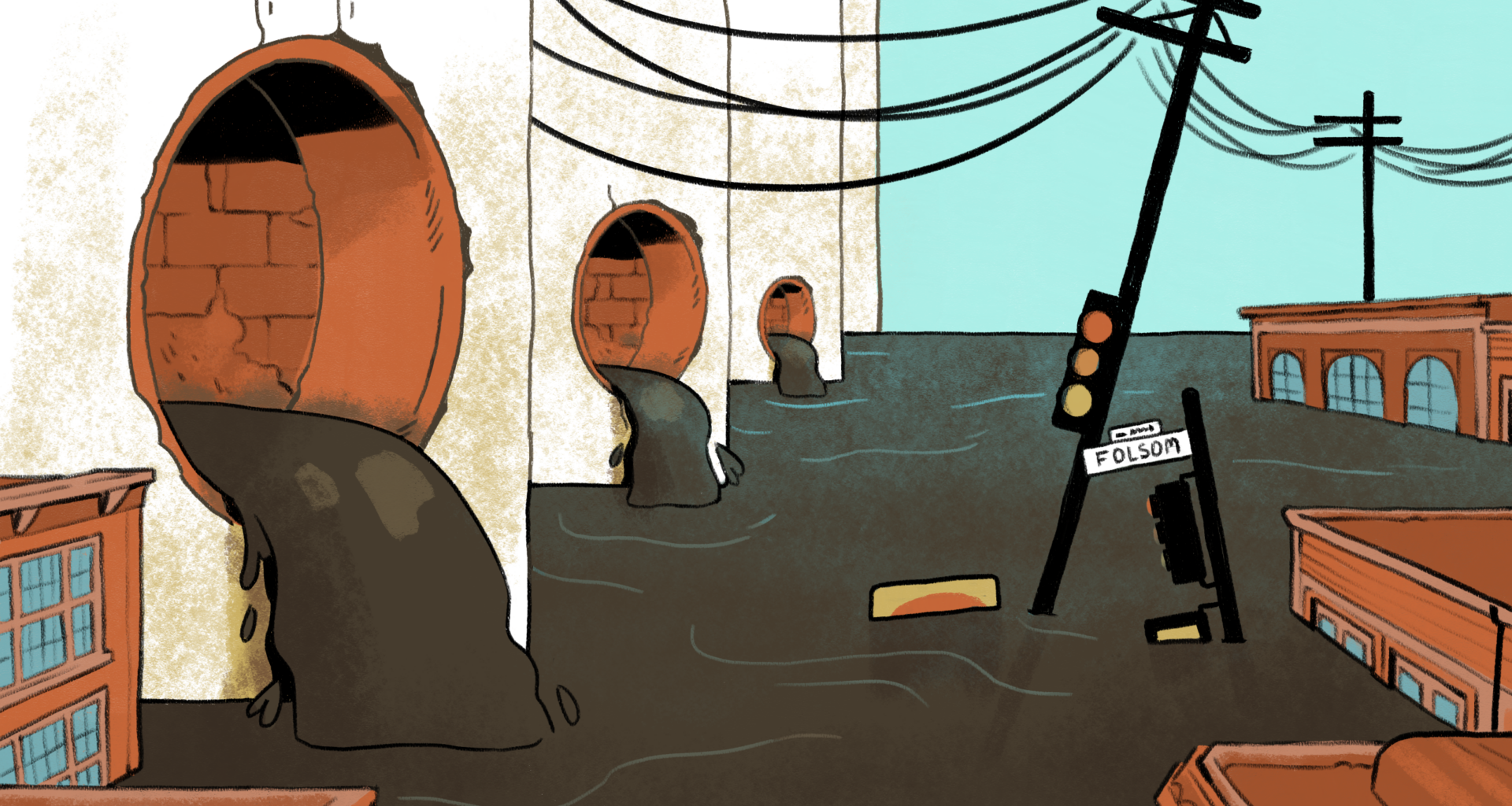
Every few years during the rainy season, certain neighborhoods of San Francisco flood.

If it rains too hard or for too long, the sewer pipes fill, pushing water (and raw sewage) out of floor drains and sewer grates.

Residents and businesses near 17th and Folsom streets in the Mission spend every winter anxiously preparing for floods. They line the sidewalks with city-issued plastic barriers and improvise their own designs. The damage is so costly, at that intersection and elsewhere, that sometimes businesses shutter.

Mission Local logo, with blue and orange lines on the shape of the Mission District

Want the latest on the Mission and San Francisco? Sign up for our free daily newsletter below.

Why do San Francisco’s sewers do this?
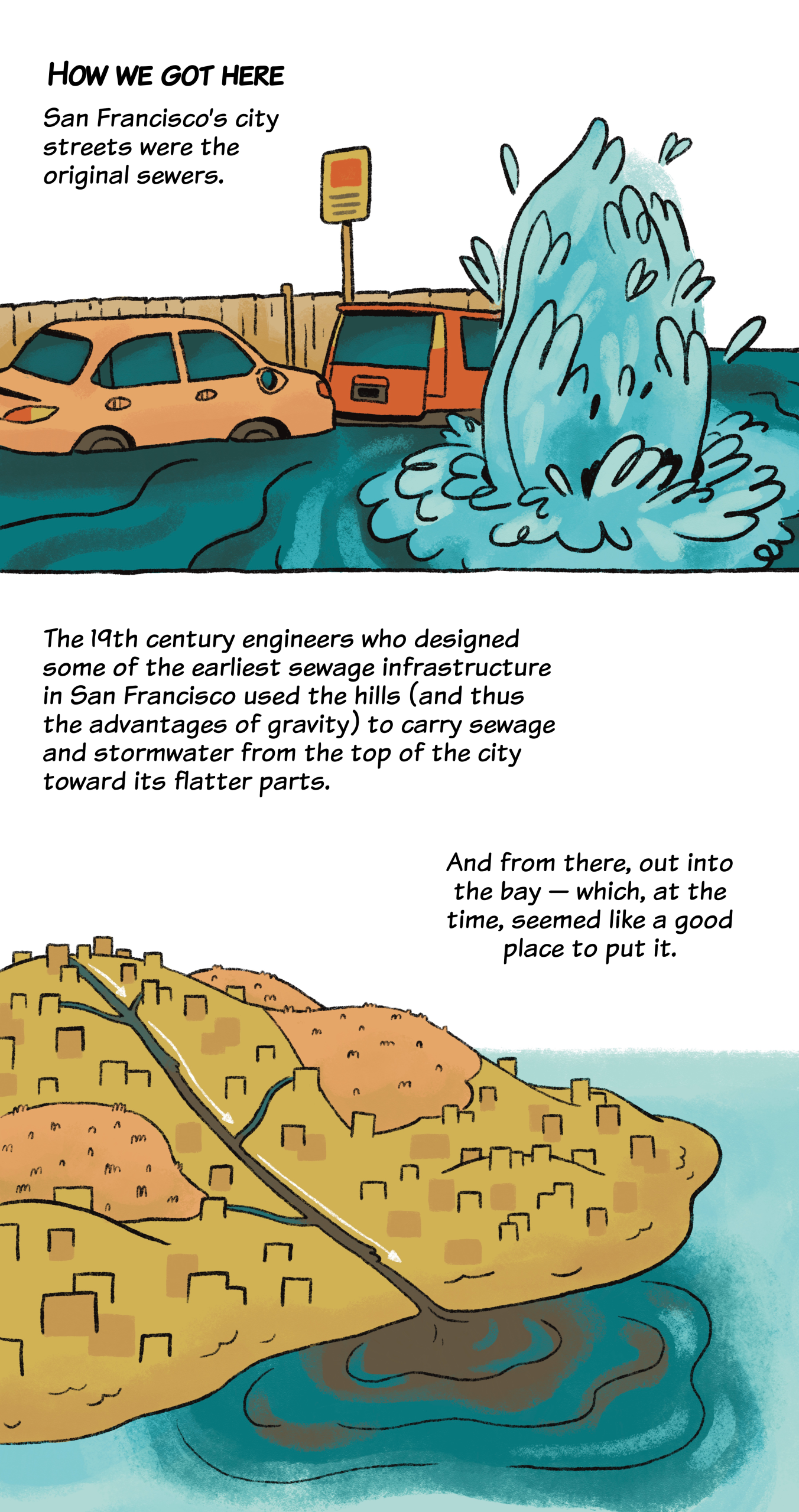
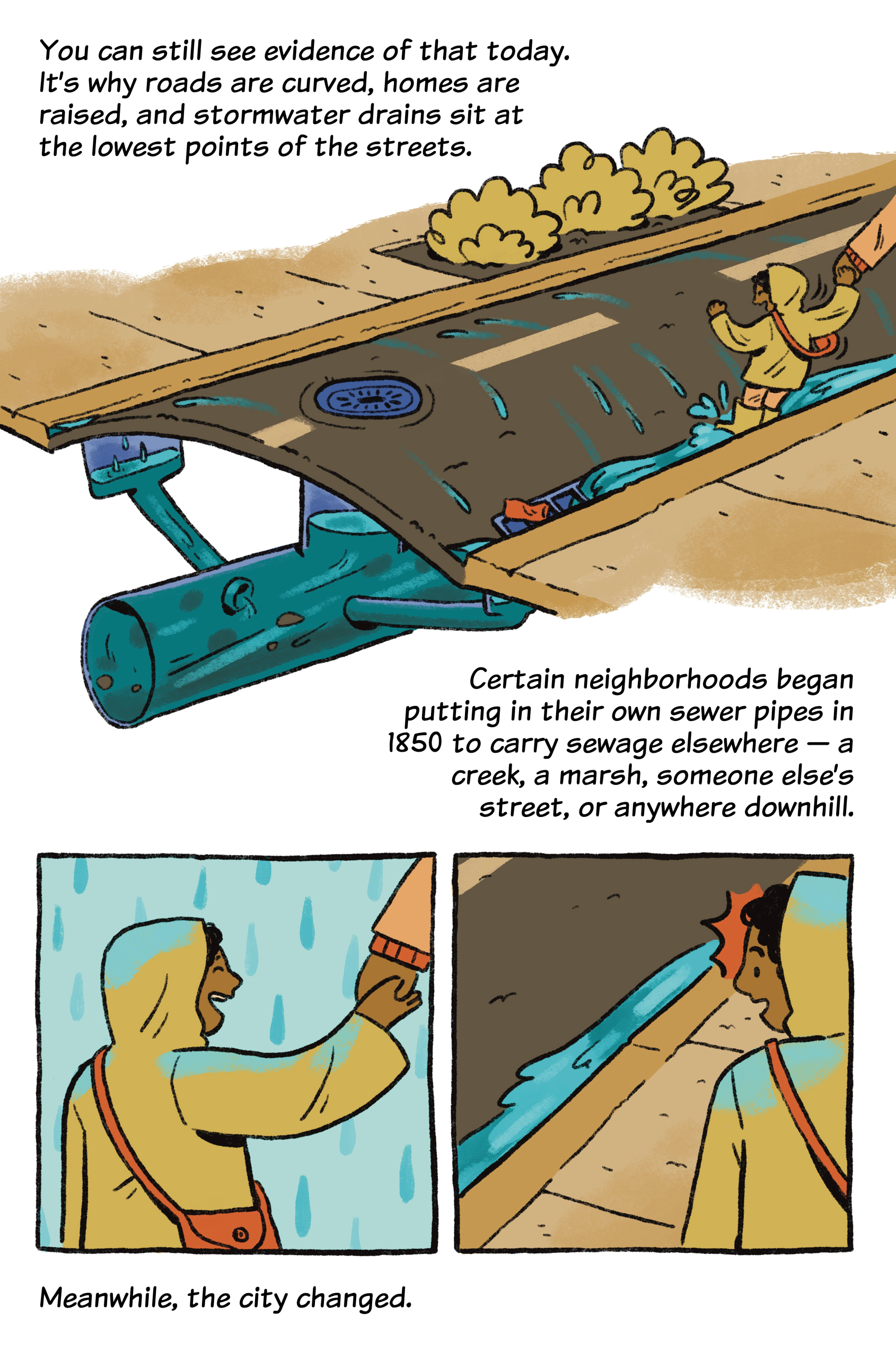
Illustration showing a car near a flooded street, a water burst, and a diagram explaining how San Francisco’s sewage flowed downhill to the bay in the city’s early infrastructure.

A worker in a raincoat opens a street drain as water flows in; nearby, another worker connects a pipe as water sprays out. Text explains how sewage systems changed cities.

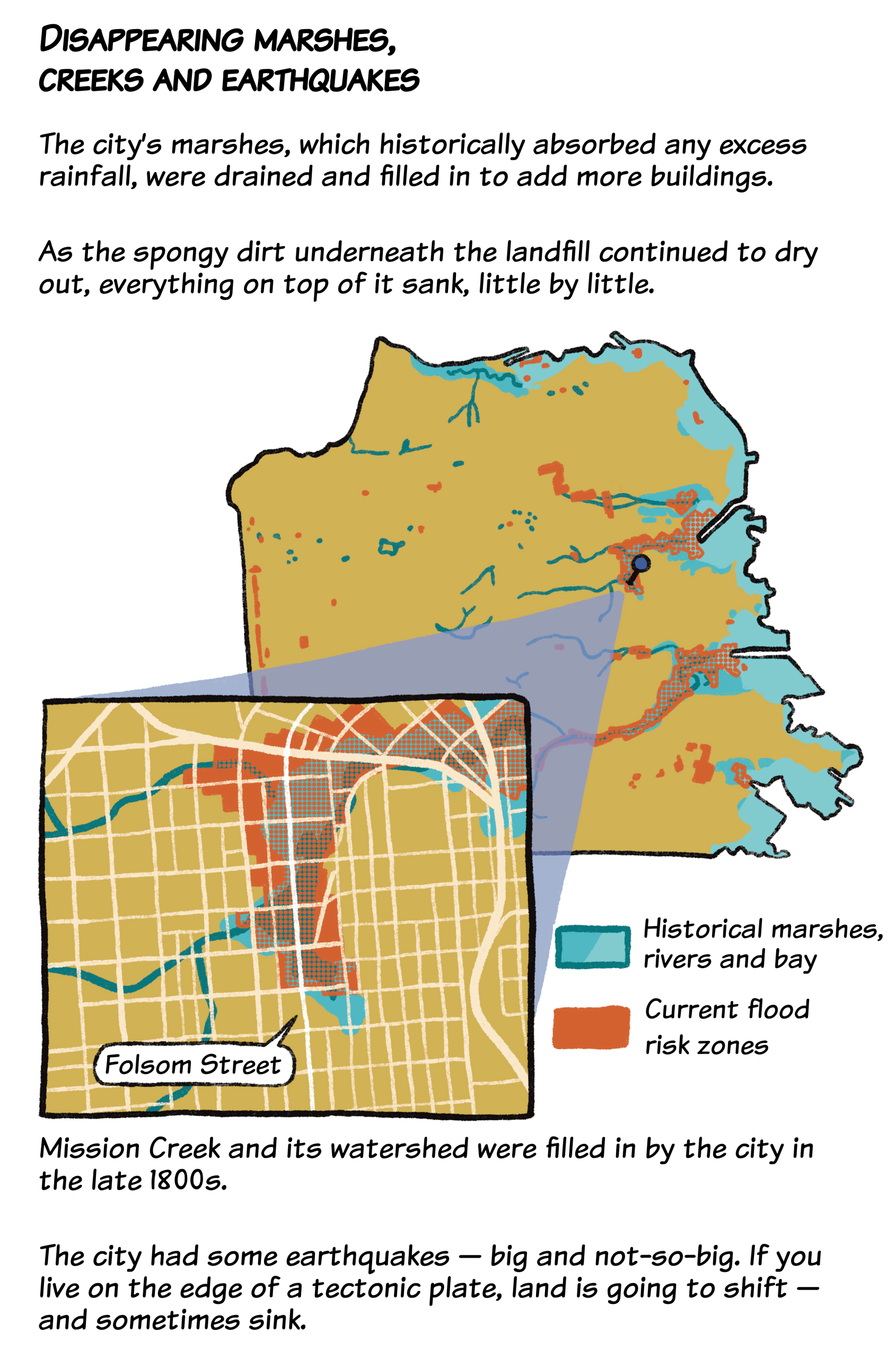
A map shows San Francisco’s lost marshes, rivers, and current flood risk zones, highlighting changes from landfill and the impact of earthquakes and flooding.

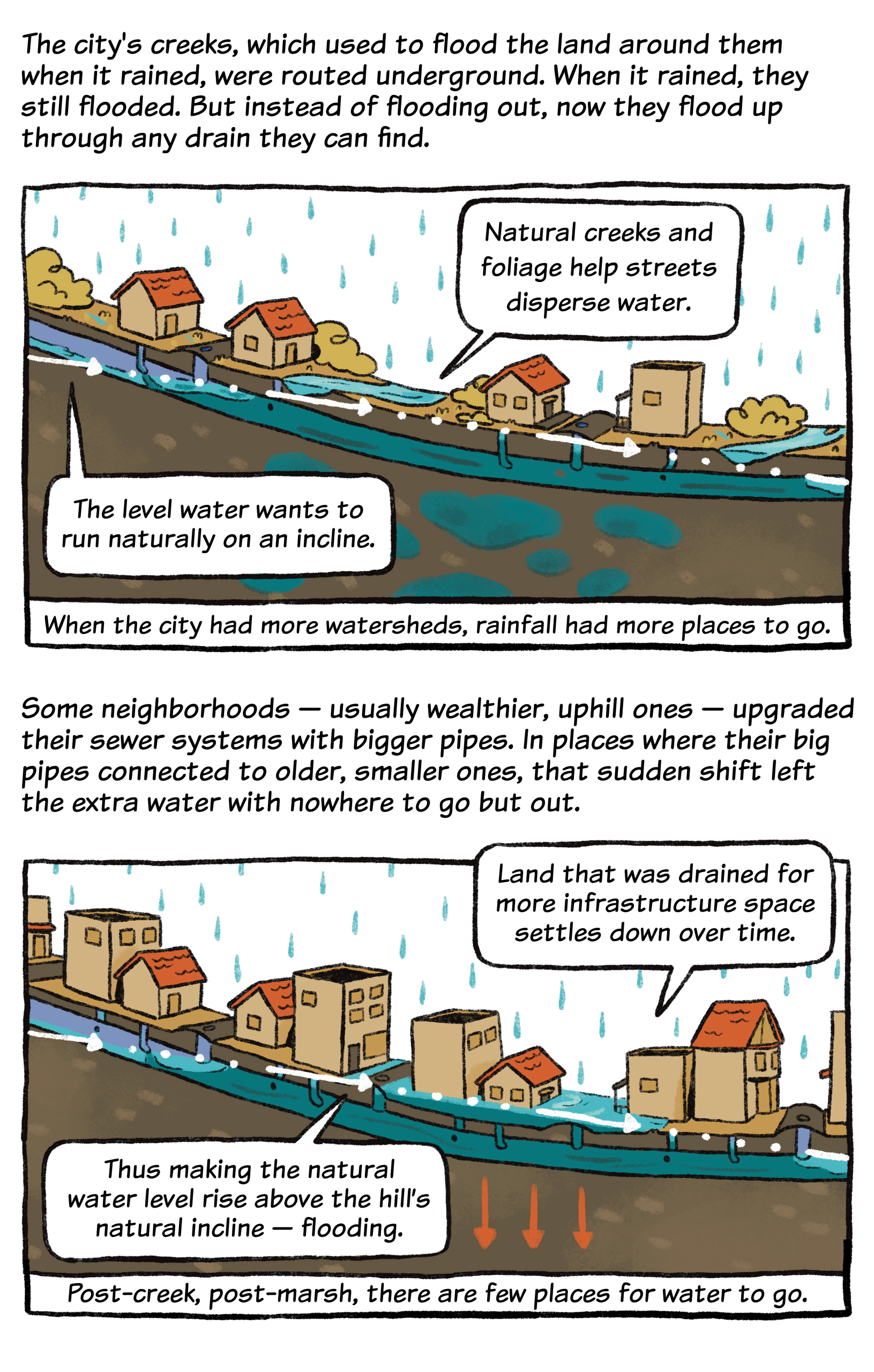
A diagram shows how city creeks and natural watersheds reduce flooding, while drained creeks and stormwater pipes in urban, uphill areas cause water to flood lower neighborhoods.

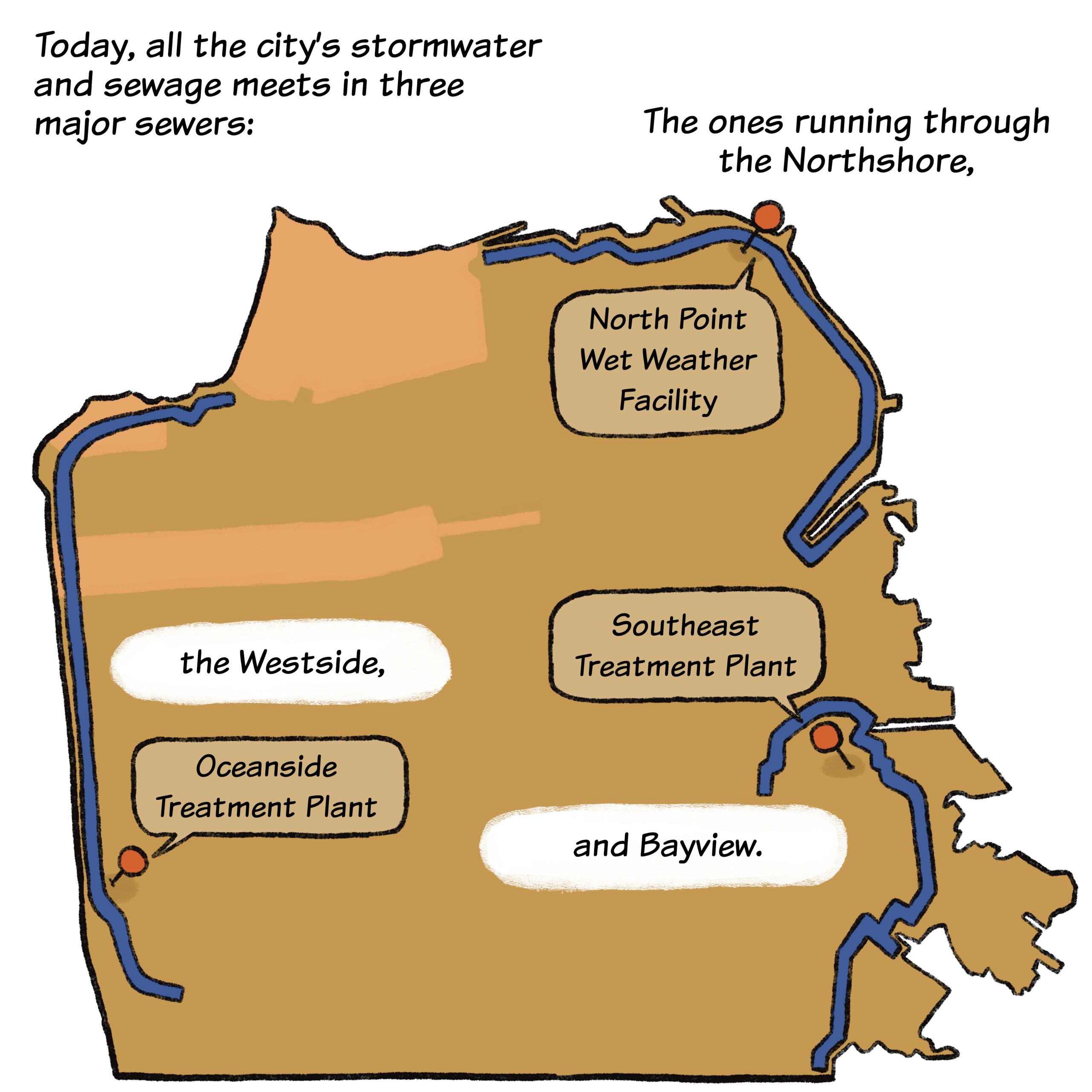
A map of San Francisco showing three major sewage treatment areas: North Point, Oceanside, and Southeast, with labeled facilities and major sewer lines.

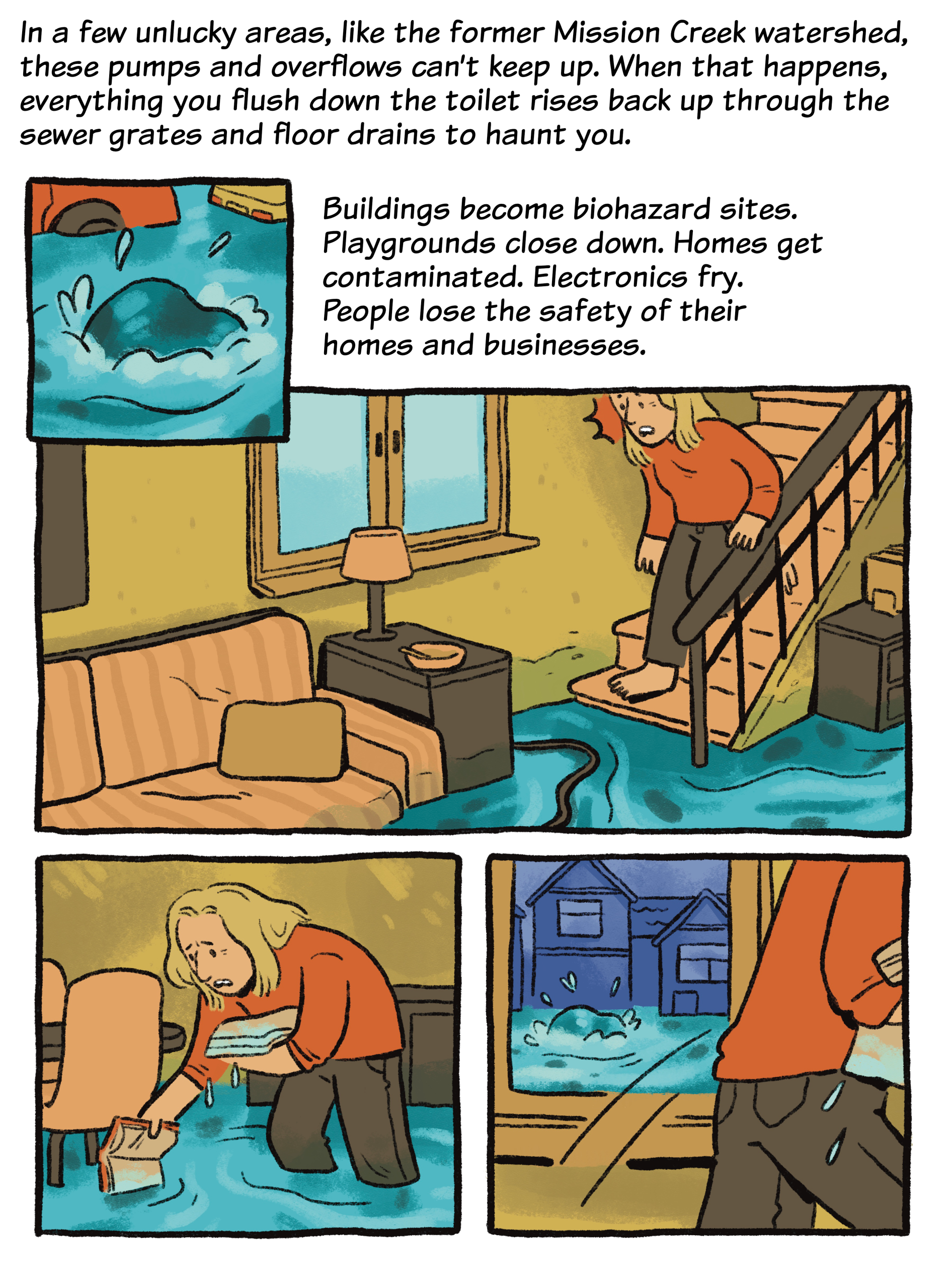
A woman reacts with concern as floodwater enters her home, covering floors and rising up the stairs. Text explains the dangers and consequences of sewage flooding homes.

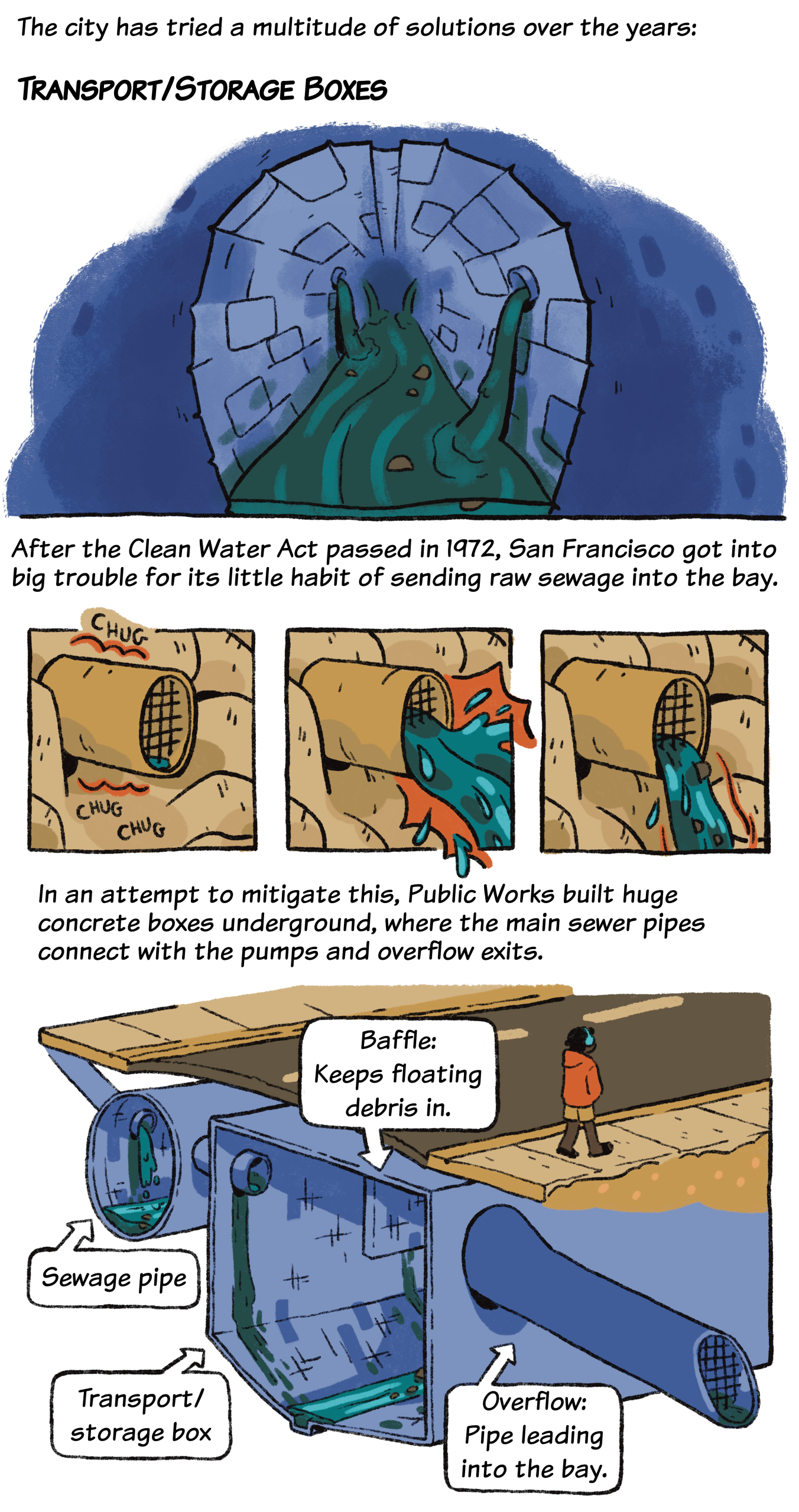
Illustration showing sewage management in San Francisco with concrete transport/storage boxes, pumps, and overflow pipe leading into the bay, explained through diagrams and captions.

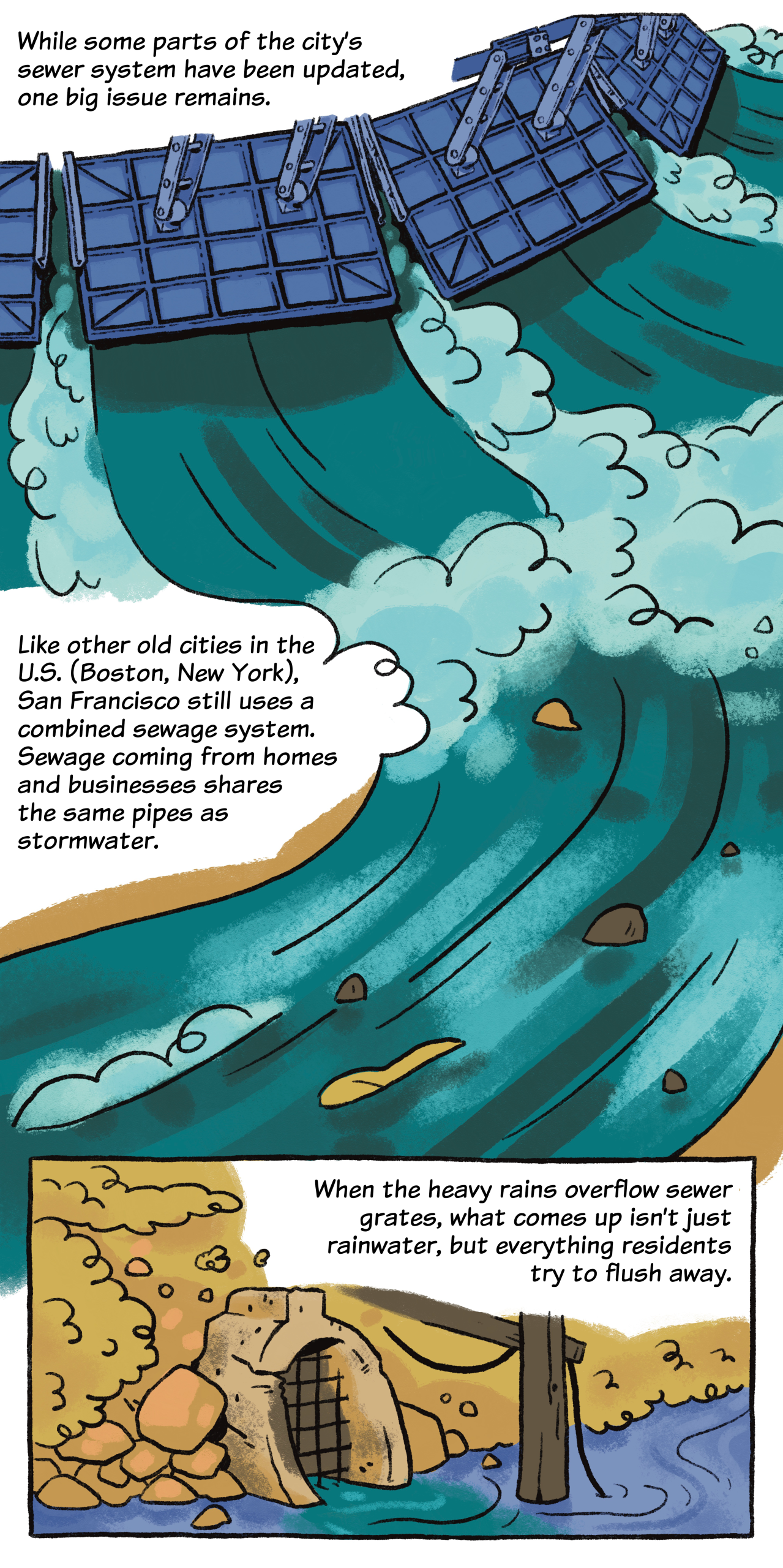
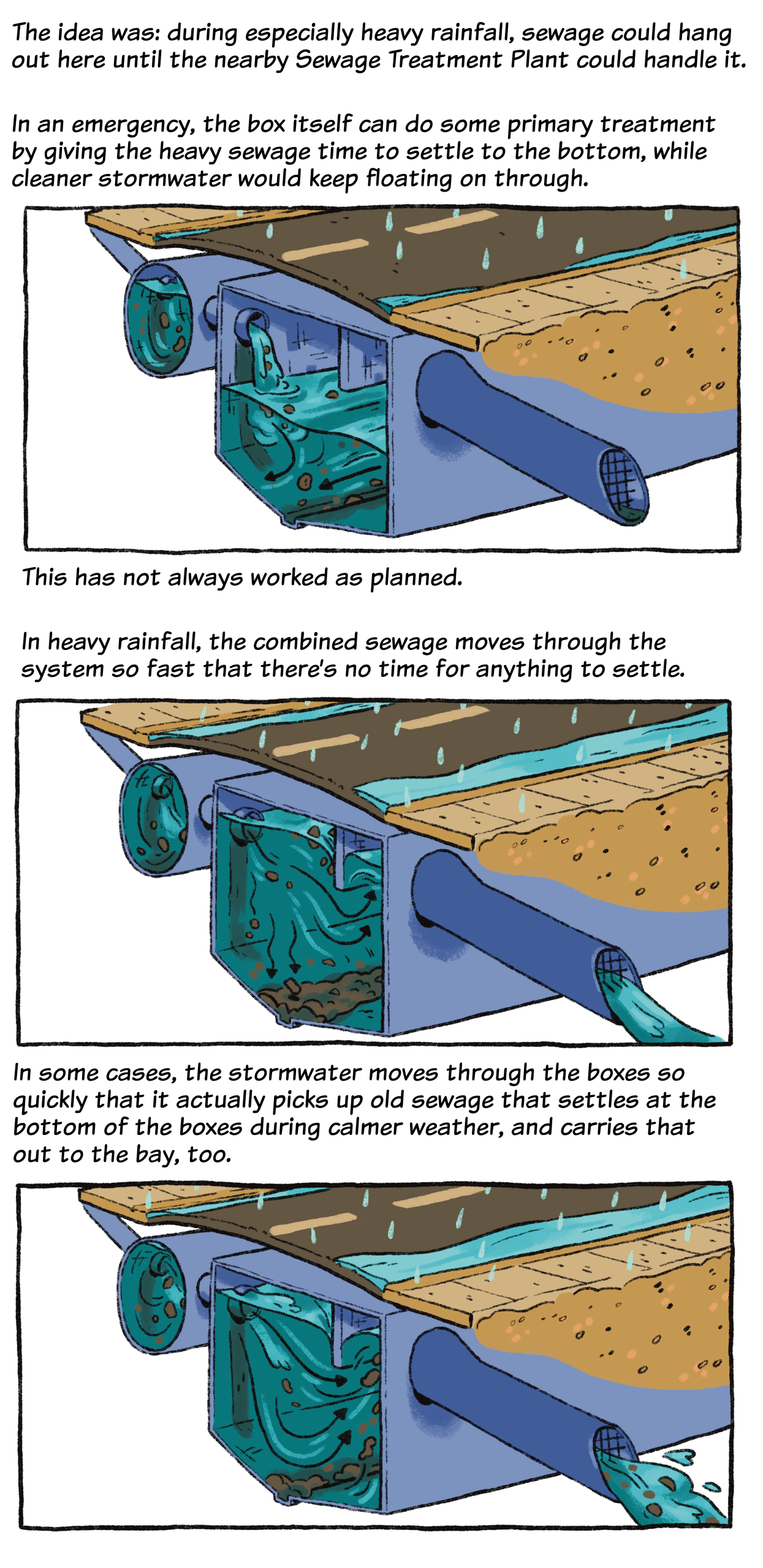
A diagram shows how stormwater and sewage mix in sewer boxes during heavy rainfall, causing untreated sewage to flow out with stormwater instead of settling.

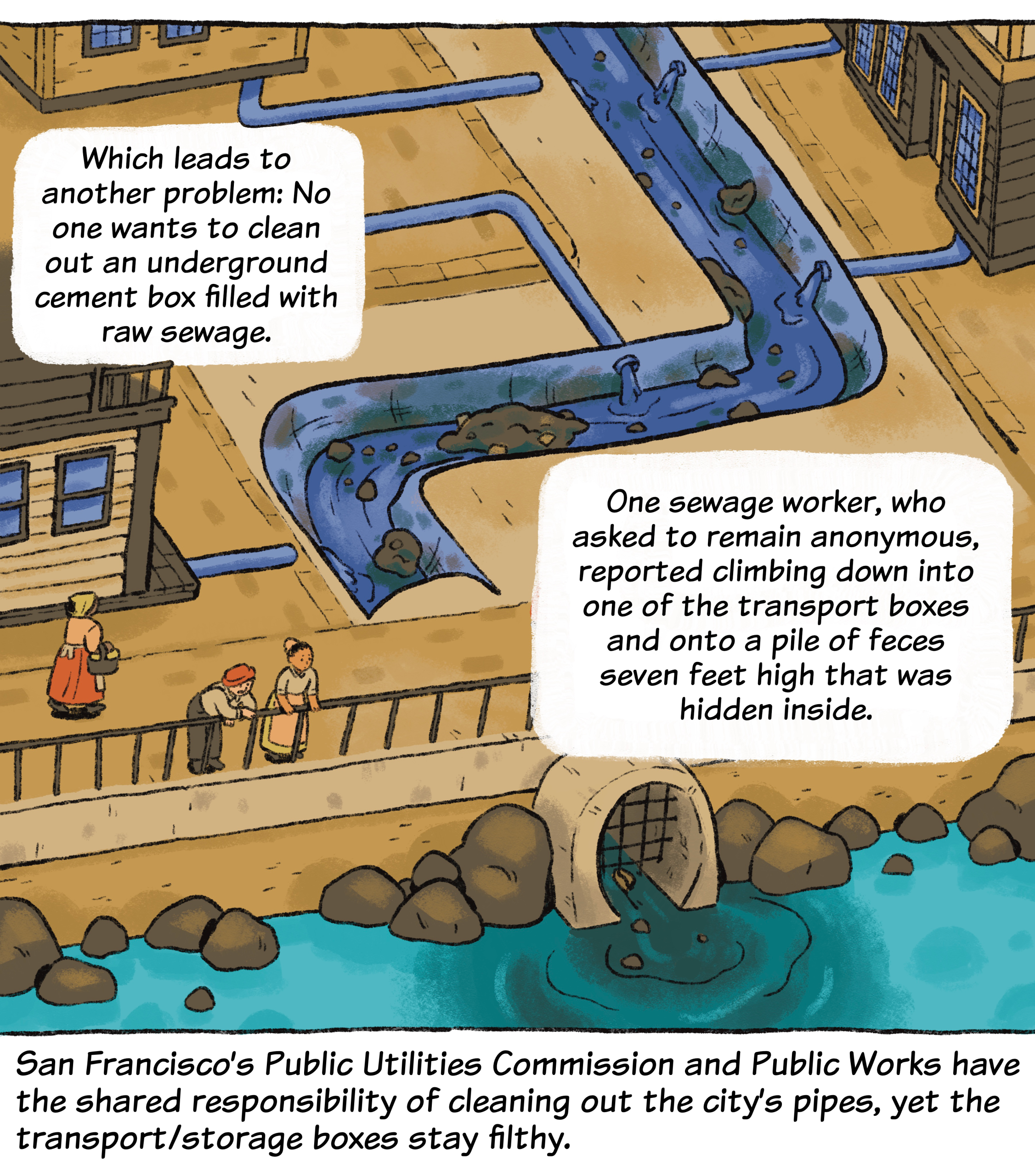
Cartoon showing sewage flowing from a pipe into a waterway. Text highlights issues with cleaning underground sewage boxes in San Francisco.

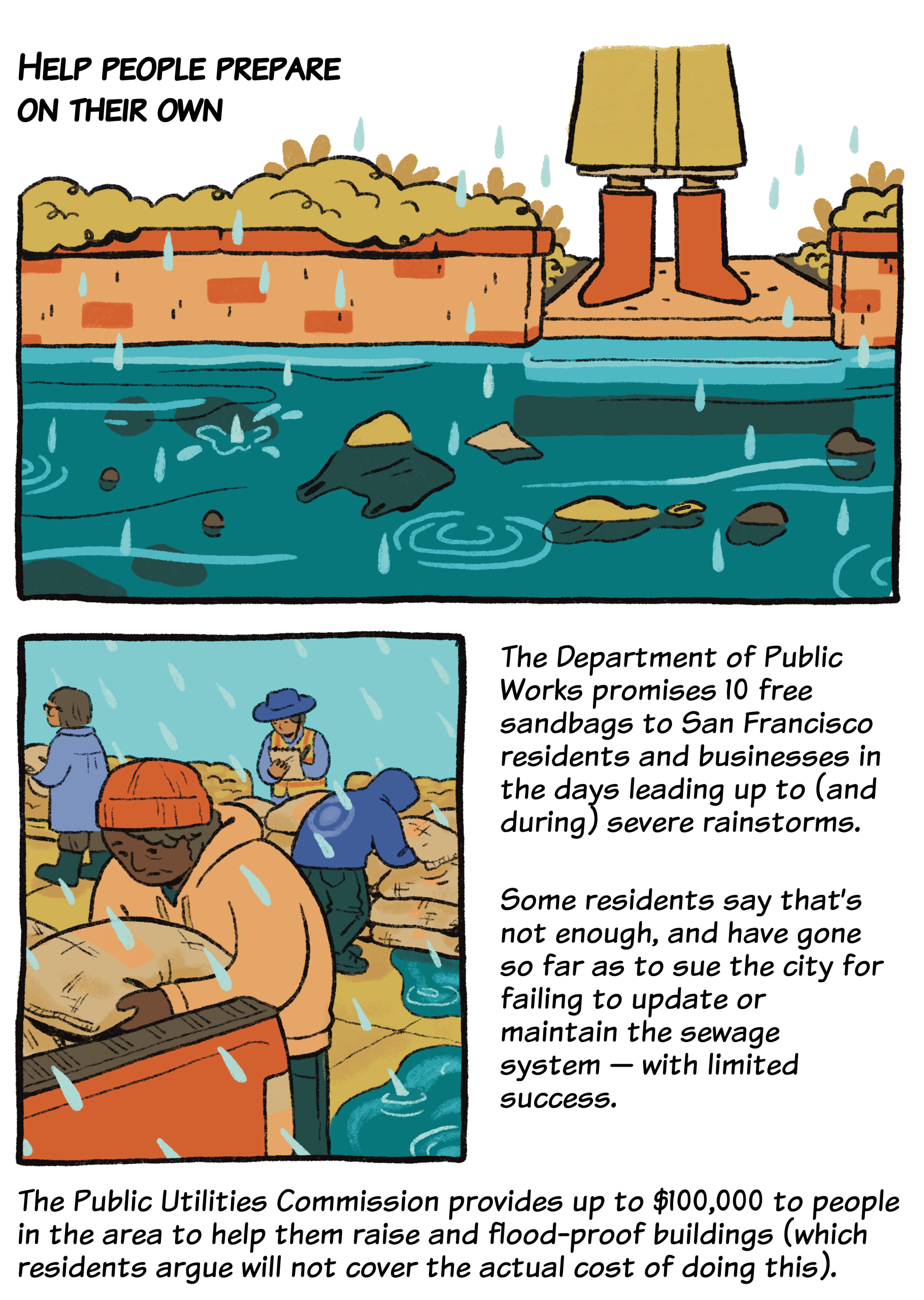
Illustration showing sandbag distribution, residents managing floodwater, and information on city flood prevention efforts and funding in San Francisco during rainstorms.

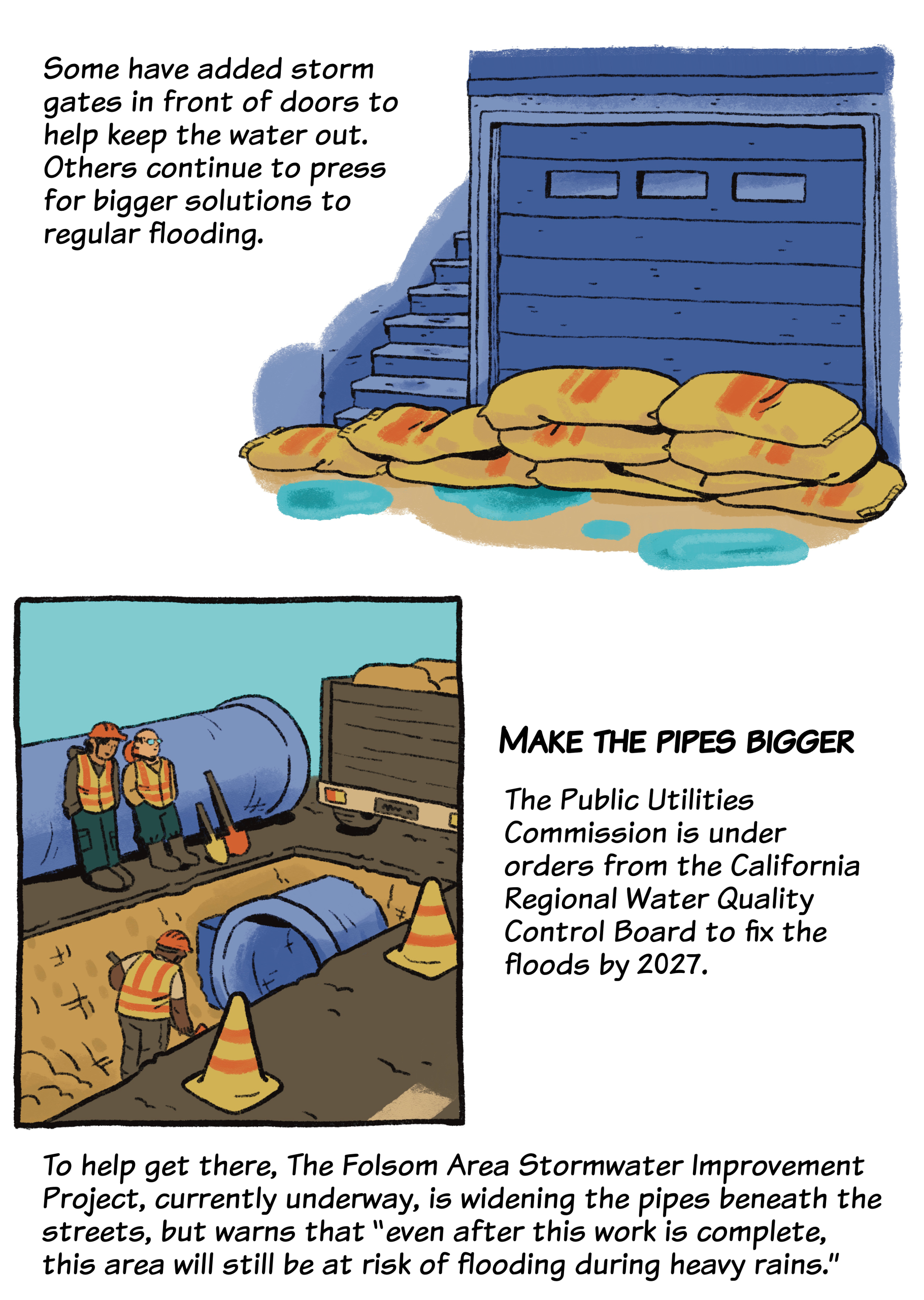
Storm gates with sandbags block a garage door; workers in hard hats work in a street with pipes; captions discuss flood prevention and infrastructure upgrades.

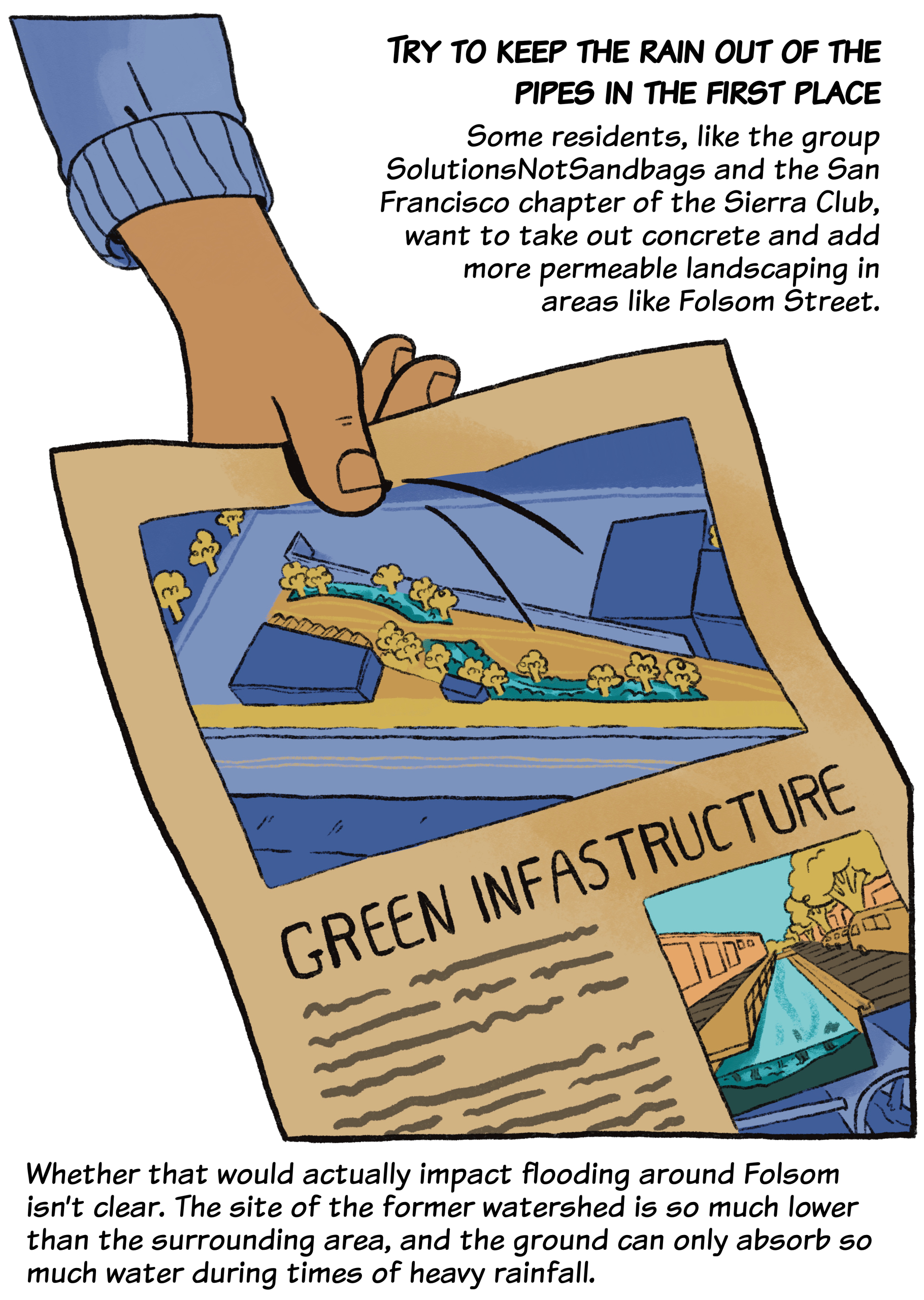
A hand holds a newspaper with the headline "Green Infrastructure" and an illustration of a street with rainwater. Text discusses solutions to urban flooding in San Francisco.

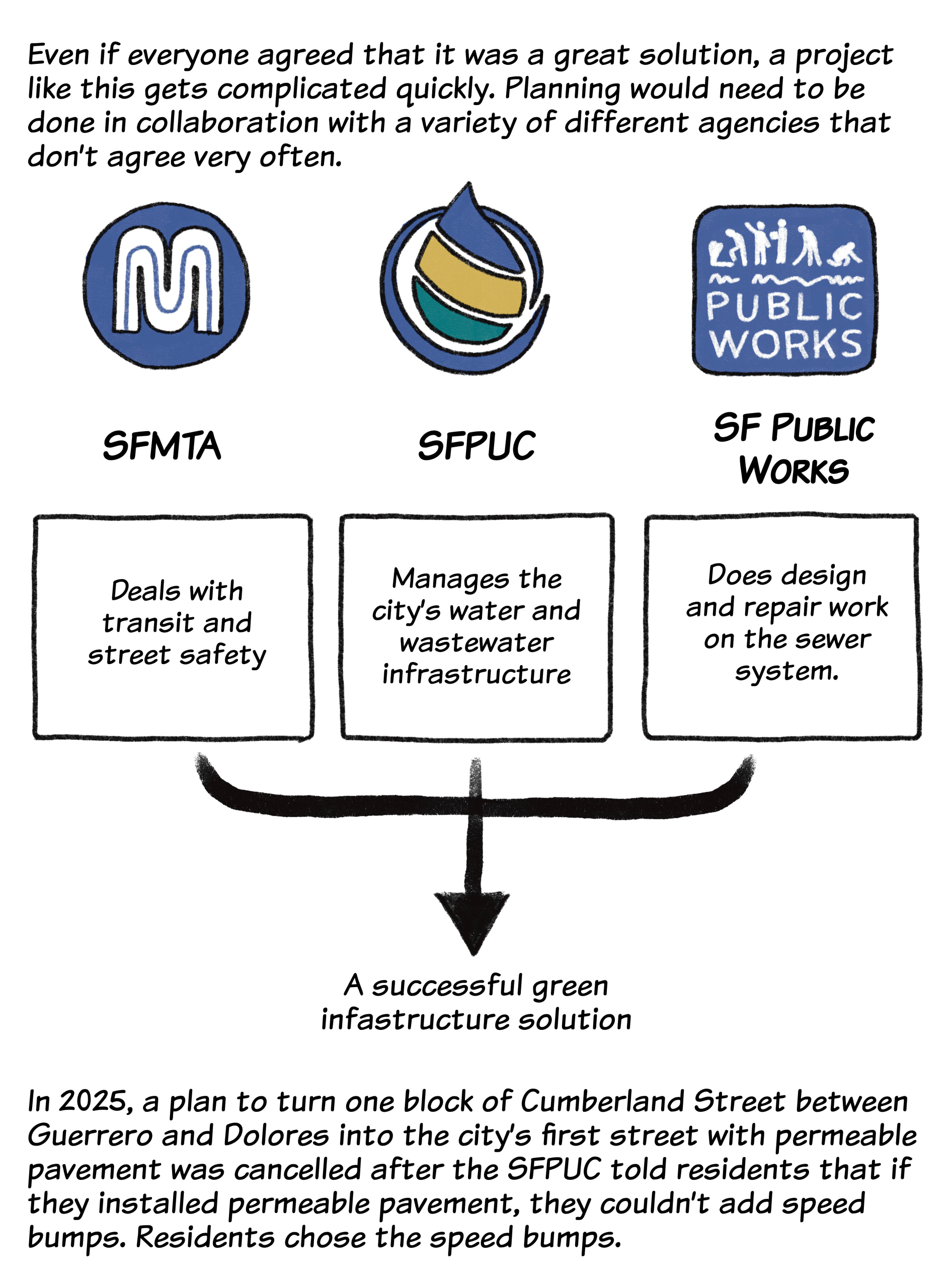
A flowchart shows how SFMTA, SFPUC, and SF Public Works must collaborate for infrastructure projects, with an example highlighting challenges in adding speed bumps to a city street.

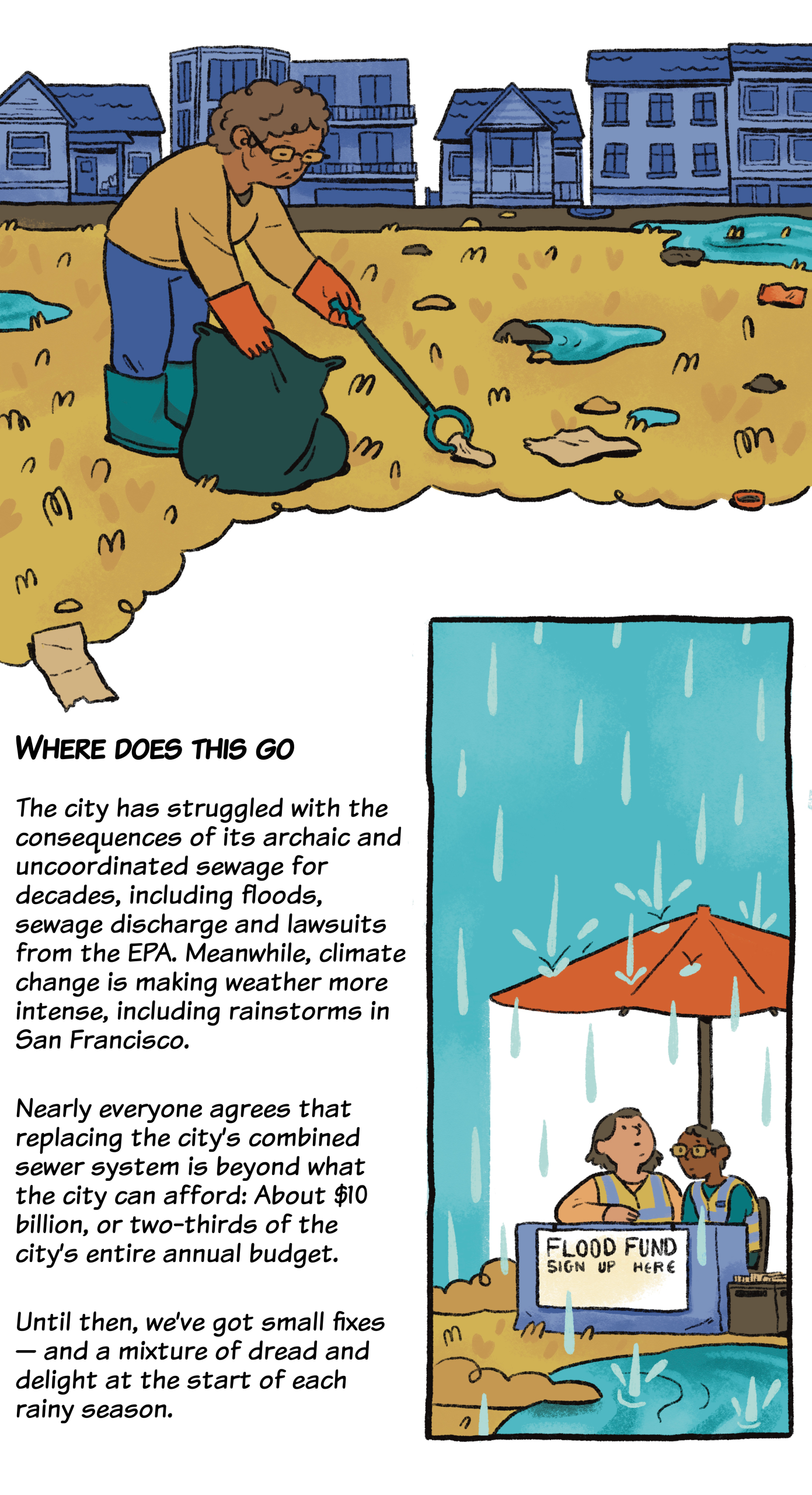
A person collects trash in a flooded urban area, while two people sit at a "Flood Fund" booth under heavy rain. Background text discusses city sewage and flooding issues.

A group of ten people standing outdoors in a park with a city skyline in the background.

Join the 3,250 readers who keep Mission Local free for all!

Because of you, Mission Local reached and surpassed our $300,000 year-end fundraising goal. All we can say is thank you. 

Thank you for choosing to invest in a local newsroom rooted in San Francisco’s communities — one that listens first and reports deeply. 

If you haven’t yet had a chance to give, it’s not too late to be part of this community. Your contribution today helps sustain the reporting our city relies on all year long.

We’re grateful you’re here — and we’d be honored to have you join our donors.

Tagged: Department of Public Works