
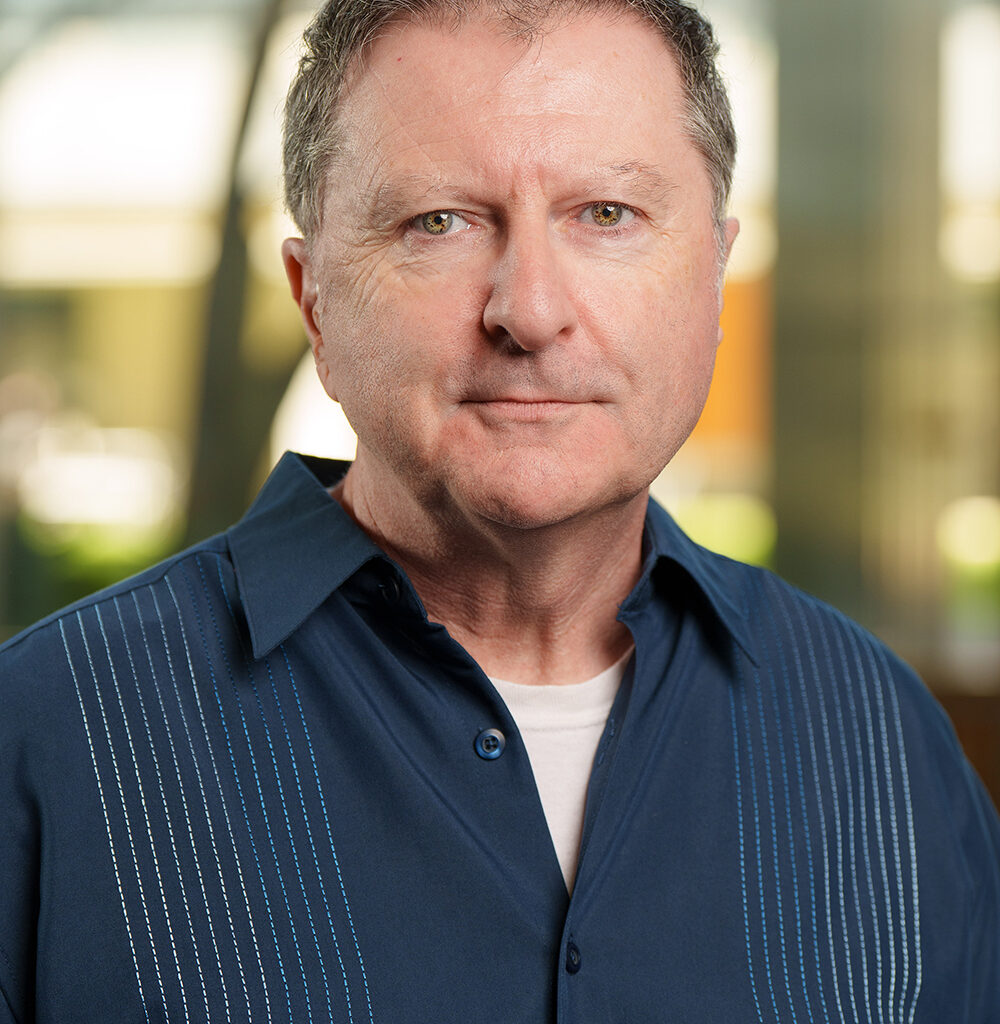
To stay ahead of potential future COVID-19 mutations, scientists at UC San Diego in La Jolla and international collaborators set their sights on the past.
In a study published recently in the Journal of Enzyme Inhibition and Medicinal Chemistry, researchers say they identified “promising molecules” that could help curb SARS-CoV-2, the virus that causes COVID-19, as it becomes less responsive to current antiviral treatments.
“It’s mutating all the time,” said Conor Caffrey, a professor in UCSD’s Skaggs School of Pharmacy and Pharmaceutical Sciences and senior author of the study. “You just have to look at the [Centers for Disease Control and Prevention] reports or even local newspaper reports to find out that [every] three, four months, a new wave [is] coming down the line. It’s quite normal for viruses when they’re circulating to be constantly mutating.”
Anticipating new strains, researchers sifted through a catalog of 141 previously synthesized compounds to identify which molecules could lead to future medications.
Those compounds, designed from 1997 to 2012, originally were aimed to inhibit Trypanosoma cruzi, the parasite that causes Chagas disease, which can further the risk of heart failure, organ damage or death. Mpro, an enzyme that allows SARS-CoV-2 to replicate in host cells, holds structural similarities.
But not all the compounds were in good shape. Since some older molecules were stored for an extended time, they had to be chemically resynthesized for further evaluation. Scientists ended up with 141 testable molecules.
Of that group, five were determined capable of inhibiting Mpro, and two, named 1a and 5a, were seen as particularly potent. Scientists also synthesized a “mirror image version” of 5a called 5b, according to UC San Diego Health Sciences.
Revisiting older chemical libraries rather than searching for antiviral candidates from scratch can move drug development forward more efficiently, researchers say.
“I think we’ve demonstrated that you can actually rustle around old stuff and come up with some new candidates,” Caffrey said.
Caffrey is the director of the Center for Discovery and Innovation in Parasitic Diseases, part of the Skaggs pharmaceutical school. The COVID-related study marked a departure from its usual focus.
“We’ve principally been involved in very early pre-clinical research for parasitic diseases, particularly diseases of poverty … infectious diseases we might not have in the United States but which are very common in developing countries,” Caffrey said.
But when the COVID-19 pandemic began in early 2020, national institutes and pharmaceutical companies moved to find a cure or a way to knock down the disease. The center was one of the groups to join the fray.
“Really, this was a side project for us,” Caffrey said. “And this was a chance for us to make a small contribution to what was a national and international emergency, and that’s how we viewed it. We were happy to contribute on that level.”
Releasing the study’s findings took awhile, Caffrey said, because the process of finalizing it was extensive.
Though the research gives scientists the capacity to do future studies, a “general post-COVID malaise” makes it harder to tap into funding, he said.
“We don’t have … immediate plans to continue on the chemistry of these molecules,” Caffrey said. “It’s really a question of finding the hands and the funding to do so. But it’s in our portfolio.” ♦